
Latest News
-
The weekly copper price is up on the back of mine supply concerns and China demand
Copper prices were on track to gain a weekly % of?1.5% this Friday. This was due to concerns about mine supply disruptions and signs of active demand from?China, the top consumer. By 0948 GMT, the benchmark three-month price of copper at the London Metal Exchange had risen by 1.2% to $14,473.50 per metric tonne. Yangshan Copper Premium This week, the price of copper in China reached its highest level in four years, after the country returned from its week-long vacation. The Shanghai Futures Exchange monitors copper inventories in warehouses. The end-of-week stock level was 58,744 tonnes, an increase of 20,000 tons over the previous week. Exchange data revealed that copper stocks at the LME registered warehouses fell to a six-week-low of 233.025 tons, after daily outflows totaling 4,700?tons. This was mainly due to warehouses in Taiwan and Hong Kong. Since 2025, copper prices have been supported by the constant transfers of metal to Comex warehouses, especially in the last six months. This is due to uncertainty about potential US import tariffs for refined copper. Comex inventories are at a record high of 711 609 tons. Cash copper contracts ended Thursday with a $97 per ton premium over the three-month contract. Morgan Stanley stated in a report that "any slowdown in US stocks could make the markets feel looser. But China's demand has been resilient, and supply is experiencing significant disruptions." The union representing Antofagasta’s?Centinela mine in Chile has said that the strike will?begin affecting output in November. Antofagasta initially downplayed its impact, but this situation has increased the risk of disruptions at other mines. Aluminium and lead, among other LME metals, rose by 1.1% each to $3,085 a ton and $1,880 per ton. Zinc rose 1.7% to $3.781.50. Tin increased 2.1% to $52,305. Nickel climbed 1.2%, to $15,730.
-
AI-related companies drive the majority of third-quarter US earnings increases
US companies will likely deliver a third-quarter earnings surge, and AI-related players, like the stock market rally, are driving most of these gains. Investors are excited about the hyper-growth of AI companies, but they are also concerned about the future of the share price and how long this trend will continue. According to Tajinder dhillon, LSEG’s head of earnings research and equity, analysts expect S&P500 earnings to increase by 31% in the third quarter. Two-thirds will come from the tech sector, including AI giants Alphabet and Amazon.com, as well as Meta Platforms. The S&P 500 reached a new record this week, ahead of earnings season. This is expected to begin unofficially next?week when banks such as JPMorgan Chase or Goldman Sachs report their results. "It is all AI, and to a lesser degree, energy and material, but this is because of geopolitics,"?Sameer samana, the head of global equity and real assets at Wells Fargo Investment Institute. It wouldn't be surprising if 70-80% growth could be attributed tech and AI. The US oil price has risen by roughly 30% during the third quarter due to the ongoing US-Israeli conflict with Iran. Samana pointed out that the?earnings estimates for the third-quarter are among the lowest. Strategists are unsure if the third-quarter growth in earnings can match the explosive growth seen in the second quarter. Most companies beat analyst's estimates and this is likely to continue in the third quarter. LSEG data shows that the S&P 500's earnings grew by 54% in the second quarter, the highest growth since 2021. LSEG data showed that excluding mark-to-market gains from Alphabet and Amazon.com for AI-related investments the growth rate was still about 35%. This is the highest level since 2021. Anthony Saglimbene is the chief market strategist of Ameriprise Financial. He said that investors should be concerned because we're approaching "peak earnings growth" in this cycle. "A lot is this AI trade built on continuing capex spending. Every quarter, as they continue to do so, the hurdle rates and scrutiny get higher." Dhillon, based upon LSEG data, said that earnings for US semiconductor firms, which are among the largest beneficiaries of the AI boom will?have risen by about 136% compared to about 158% during the second quarter. Nick Raich is the CEO of Earnings Scout. Three months ago, we were going 150 miles per hour. Raich stated that the latest reports, including those from Micron Technology, were strong and suggested other companies continue to "reap the benefits." Micron, a chipmaker, forecasted quarterly revenue that was above expectations and said customers had boosted their commitments to its long-term supply agreements up to $32 billion. This week, Google signed a huge power deal with Constellation Energy. Investors will also be paying close attention to the impact of higher interest rates on corporate profits during this earnings season. The US bond yields are rising due to concerns over inflation, high oil prices, and debt problems elsewhere. Samana warned that heavy borrowers such as utilities are at risk.
-
Campaign group warns that the new Congress in Brazil poses a threat to environmental legislation
According to a report by the climate advocacy group Observatorio Do?Clima that found almost 70% of elected legislators have no or little interest in environmental issues, Brazil's new Congress will likely pose a greater obstacle to legislation protecting the environment after elections this month. The study examined bills, legislative initiatives, speeches, and public statements made by newly elected and reelected legislators. It concluded that 64 out of 81 senators have demonstrated a "very low" commitment to environmental issues. In the lower chamber, 345 out of 511 legislators were placed in the same category. According to the study, the Liberal Party, which is home to Flavio Bolsonaro (a right-wing senator) who will be facing President Luiz Inacio Lula in a presidential runoff later this month has the lowest environmental credentials of all major parties. Bolsonaro defeated Lula in a first round despite pollsters' predictions, but he didn't get enough votes to prevent a second ballot. The environmental commitment of all 28 senators and lower house members who were elected by the party on Sunday was rated as very low. The study also found that other right-leaning political parties, such as?Novo and Republicanos, Progressistas, and Uniao Brasil showed low support for environmental issues. Observatorio do Clima stated that environmental advocates may face a more 'challenging' political landscape if Bolsonaro, whose previous?comments about climate change caused concern, is elected President. I contacted the parties named but did not receive a response. The group said that proposals to weaken environmental protections, such as measures to reduce protected lands, allow mining on Indigenous land, and ease licensing requirements for environmental matters, could gain "traction" under the new Congress. Suely Araujo is the public policy coordinator for the group. She said, "This image shows four years of hard work by those who are focused on climate and environment issues."
-
Trump's comment that Iran can 'take out Los Angeles' was misinterpreted
US President Donald Trump said on Thursday that comments he made about Iran being able to "take out" California cities were misinterpreted. He was referring instead to the need for people to tolerate higher gasoline prices. Trump made these remarks on Monday at a Nebraska political rally, where he talked about the economic sacrifices of Americans during World War II. "Remember that the 'war' is artificial, it costs a lot, but it's worth it," he said. "It is a small price to pay in order to keep the world and our country safe. They could take out an entire city. Let's?take Los Angeles out, let's?take San Diego out. It's a small price to pay and it will be over very soon." California's Democratic Leaders and some Republican colleagues quickly condemned the remarks. Trump stated in a Truth Social posting on Thursday that "a temporary increase in Gasoline prices is a small price to be paid for Iran not having a nuclear weapon." "If you want to see a huge price, can you imagine what would happen if they bombed San Diego and/or Los Angeles?" He continued by saying he loved both cities. Trump has dismissed concerns about cost of living stemming the Iran conflict in the past.
-
US to rescind methane policy against oil and gas industry
The US Environmental Protection Agency announced on Wednesday that it would be scrapping the Biden-era regulation aimed at curbing large leaks of'methane' from oil and gas operations. The move is part a broader effort by the Trump administration to reduce regulations, which it claims burden US businesses in its quest to increase fossil fuel production. "Americans should be able to afford heating their homes during the winter and filling up their cars to drive to work." The people who produce the energy cannot?do this when they are burdened by unnecessary burdens," EPA Administator Lee Zeldin stated in a press release after announcing the decision at a meeting with representatives of the oil and gas industries in New Mexico. The "super emitter program" of the EPA requires that companies react when third parties use remote sensing to report suspected methane leaks. After taking office in 2017, the Trump administration?delayed implementing this policy until next. EPA claimed that its proposal to rescind this?rule could save $45 billion a yearly. The oil and gas industry, which is a major source of methane, is responsible for the second largest?cause?of climate change?after carbon dioxide. Environmental groups have criticized the move. In a statement, Mahyar Sorour of Sierra Club's Beyond Fossil Fuels said: "This giveaway is foolish and shortsighted. It reveals to whom the Trump administration works - its political donors."
-
US seizes $3 Million in fuel shipments from Cuba as crackdown continue
The US announced on Wednesday that it had seized 90 separate shipments of biodiesel bound to Cuba, worth nearly $3 million. This is the second time this week US authorities have announced the seizure "illegal" fuel en route to Cuba. The Trump administration is continuing to choke off Cuba's energy industry, only allowing small amounts of fuel to be shipped to the private sector on the island in an effort to undercut the Cuban government. Jose Figueroa, Special Agent in Charge of Homeland Security Miami, told Miami reporters on Wednesday that the seized cargo was destined for Enetec, an Enetec-based state-owned fuel firm sanctioned earlier this year by the US. The authorities said that they intercepted fuel shipments at Port Everglades in south Florida and Houston before they left the US. Homeland Security reported that more than 600,000 gallons were seized. Figueroa stated that "an effort of this magnitude to undermine US sanction is not an accident." These actions are aimed at shipments that could benefit the Cuban government through a state controlled entity. Anyone who attempts to undermine US laws to fund, facilitate or profit from such an effort should be put on notice. Cuba's government didn't?comment immediately on the fuel seizure. Cuba's communist-run government has called the Trump administration's blockade of fuel on Cuba "economic war" and "illegal". The blockade has exacerbated the ongoing problems of blackouts, shortages of water and inflation on the island, pushing it towards a humanitarian catastrophe. US President Donald Trump stated openly that his goal is to overthrow Cuba's government with the?blockade & sanctions. Last week, the US Coast Guard announced that they had intercepted in September a large container vessel carrying fuel bound for Cuba. The Coast Guard said that the ship was attempting to evade authorities, and had large amounts of fuel hidden within its ballast tanks. In either case, the US has not disclosed the identities of the exporters.
-
Russia claims that Ukraine has struck two nuclear facilities at Zaporizhzhia
The head of Russia's state nuclear corporation said that despite the fact that Ukrainian drones had attacked two facilities at Zaporizhzhia, a Russian-held nuclear power plant in southeast Ukraine, there was no danger to nuclear safety. Alexei Likhachev said that a driver who was delivering food to plant workers had been killed by the drone attack. Likhachev said that a laboratory and a plant for the processing of radioactive waste were targeted. Ukraine has yet to comment on the incident. The plant's management announced on?Saturday that Ukrainian shelling in recent weeks has damaged the external power supply equipment. Electricity is currently provided by emergency diesel generators. The plant does not produce electricity, but it needs two external links for power to cool nuclear fuel. In the first few weeks of the war, which began with Moscow's invasion of its smaller neighbor in February 2022, Russia captured the?plant - Europe's biggest with six reactors. Since then, Moscow and Kyiv accuse each other regularly of military actions that compromise nuclear safety. The International Atomic Energy Agency (IAEA), the UN's nuclear watchdog has repeatedly taken action to ensure a ceasefire surrounding the plant so that repairs could be made to the lines connecting the facility to the main grid. UN monitors are at the Zaporizhzhia and three other plants in Ukraine. Maria Zakharova of the Russian Foreign Ministry wrote on her ministry's website that the West was enabling Ukrainian aggressions by not publicly condemning them. Zakharova wrote that "Kyiv has intensified its shelling of the Zaporizhzhia nuclear plant because Western countries have not responded appropriately to these actions, effectively facilitating new assaults." "Such an attitude toward strikes by the Ukrainian military shows the true 'value' of statements made by representatives of these nations about nuclear and physical safety at international forums."
-
The top cases in the US Supreme Court docket
US Supreme Court will hear a number of important cases in its new term, which begins Monday. These include issues like President Donald Trump's Immigration Policies, the ban on assault-style rifles, the financial responsibility of Big Oil for climate change and Republican-backed voting restriction. This is a list of some of the cases that are being argued in the current term. The term runs until the end of June. Big Oil Climate Suit ExxonMobil, Suncor Energy and Boulder officials argued on October 5, attempting to "thwart" a lawsuit filed by Boulder officials. The Justices grappled with the complex question of whether local governments should be allowed to hold oil companies responsible for harms caused by climate change. After Colorado's highest court allowed Boulder to sue them for violating state laws and seeking unspecified damages, the companies filed an appeal. Trump's administration supported the companies. The justices expressed concerns over unduly restricting the power of states to pursue litigation related to climate change, and the potential for chaos if local government across the nation were allowed to sue these corporations. The ruling is expected to be made by the end June. TRUMP'S MANDATORY DETENTION OF IMMIGRANTS The court will determine the legality Trump's policy, which subjects millions of illegal immigrants living in the US to mandatory detention while deportation proceedings are underway. Trump's policy of mass deportation includes this policy. The Supreme Court heard the Trump administration appeal of a lower-court ruling that ruled against the policy, in a case concerning a Brazilian citizen. The US administration has abandoned its long-standing interpretation of federal laws that allowed immigrants living in the US to be released under bond until their cases were heard in immigration court. Dates for the arguments have not been set yet. The ruling is expected to be made by the end June. DEPORTATIONS TO A THIRD COUNTRY BY TRUMP In December, the justices will hear arguments over the Trump administration’s policy to deport migrants to "third countries", or other nations than their home country. They won't give them the opportunity to demonstrate the harms that they might face. On September 29, the court allowed the Trump administration to continue its policy, suspending a federal judge’s ruling that deporting migrants to third-country countries was illegal. Human rights groups claim that more than 25,000 migrants were deported under this policy to 29 different countries. The ruling is expected to be made by the end June. Ban on assault-style rifles On December 2, the justices will hear arguments in a challenge against state prohibitions of 'assault style rifles. This case involves a weapon type that is often associated with mass killings. The lower courts in Cook County Illinois and Connecticut upheld the bans on powerful semiautomatic weapons such as AR-15s. Lower courts rejected arguments that these measures violated the US Constitution's Second Amendment rights to "keep and bear arms." Gun rights groups, as well as other opponents, have argued that Supreme Court precedents regarding the Second Amendment protect firearms in "common usage." The end of June is the expected date for a ruling. Voting Rights On December 8, the justices will hear arguments in a Republican led bid to reinstate voter restrictions in Arizona. This would require proof of citizenship for all voter registrants, and purge voter lists in Arizona from alleged non-US citizen voters. Republicans appealed a lower court's decision to stop certain provisions of Arizona law for violating federal voting registration laws. The Trump administration has supported key aspects of the appeal. The Arizona measure, according to critics, adds additional mandates for voting which unfairly targets Latinos and Native American voters. These groups tend to support Democratic candidates. The ruling is expected to be made by the end of June. LGBT RIGHTS On November 3, the justices will hear arguments in an appeal by the Archdiocese of Denver, and other Catholic entities, to be exempted of a Colorado program that funds preschools' nondiscrimination requirements. A lower court ruled that Colorado's program didn't violate the First Amendment rights of the Catholic plaintiffs. State funds are provided for preschools. The Catholic plaintiffs objected that the state required schools receiving funding through the program to give all children an "equal chance" to enroll in pre-school, regardless of certain characteristics. This included the sexual orientation of students and their families. The ruling is expected to be made by the end June. EPIC GAMES SUE AGAINST Apple Apple will try to avoid being found in contempt by the justices in its legal battle with Epic Games, the maker of "Fortnite". The iPhone maker had been found to be in violation of an order from a court ordering sweeping changes in its lucrative App Store as part the antitrust litigation. Apple appealed the ruling of a lower court that upheld a federal judge's decision in Oakland, California finding Apple in contempt for Epic's lawsuit against App Store fees. Dates for the arguments have not yet been announced. The ruling is expected to be made by the end June. PEPSICO TRADEMARK CASE The court will hear arguments regarding a claim by Rise Brewing, a maker of canned coffees, to hold PepsiCo responsible for an alleged trademark violation involving Pepsi’s morning energy beverage "Mtn Dew Rise." Rise Brewing appealed the ruling of a lower court that rejected the company's claim the name "Mtn Dew Rise," infringes on its trademarks, and confuses customers with its coffee brand. No date has been set for the arguments. The ruling is expected to be made by the end June.
Wall Street futures drop as tech worries linger and dollar is on course for a third weekly decline
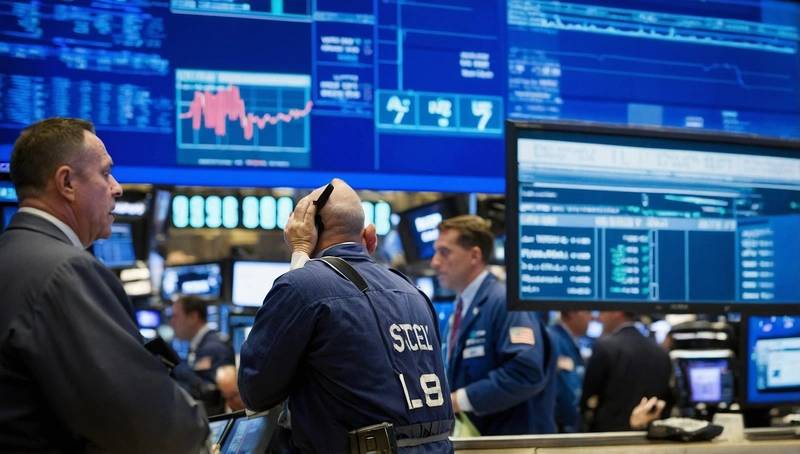
European stocks were up on Friday. They are on track to make a third consecutive weekly gain, as the Fed's recent interest rate cut boosted sentiment. However, Wall Street futures indicated some lingering caution following the previous session's sell-off in tech-stocks.
Investors were wary of artificial intelligence bets after Oracle, a cloud computing company, announced massive spending and poor forecasts. Broadcom's warning on margins added to investors' concerns.
The move on Thursday had a limited effect on the wider risk appetite, as both S&P 500 & Dow hit new highs. On Friday, Wall Street futures fell during Asian trading while struggling to gain during European trading.
Federal Reserve officials in the U.S. cut interest rates on Wednesday by 25 basis points, in a split decision of 9-3. This has left traders hopeful about further cuts in 2026.
At 1248 GMT the pan-European STOXX 600 index was up 0.2% for the day. It had reached its highest level in a whole month. The FTSE 100 rose?0.1%. Germany's DAX increased by 0.2%. France's CAC 40 gained 0.5%. The MSCI World Equity Index rose 0.2%.
S&P futures are down 0.2% while Nasdaq Futures are down 0.6%.
Ed?Hutchings is the head of Aviva Investors' developed market rates desk. He said that traders should avoid making major moves on Friday, as they prepare for the rate decisions of the Bank of England, European Central Bank, and Bank of Japan next week.
He added, "It is a moment of reflection after the Fed."
BoE will likely cut rates this Thursday. The ECB is expected to maintain rates, but traders are now speculating that it may hike them in 2026. After Governor Kazuo ueda's strong signals, the BoJ will likely hike rates.
DOLLAR STEADY; POUND FALLS Slightly on UK Data
The dollar index was up 0.2% for the day, at 98.527.
It was still within striking distance of the session low, the lowest since nearly eight weeks. And it is on course for the third consecutive weekly decline.
It has taken a hit from the Fed's less-hawkish-than-expected outlook on rates, as well as U.S. jobless claims data, which showed the number of ?Americans filing new applications for unemployment benefits increased by the most in nearly 4-1/2 years last week.
The euro fell 0.2% to $1.1719, and sterling dropped 0.2% to $1.3362. Both currencies were down after the release of data that showed the UK economy contracted by 0.1% during the three months ending in December.
The yields on German government bonds rose this week, setting themselves up for the biggest weekly increase since March. This was due to traders 'pricing in' a rise in rates in the euro zone following comments made by influential ECB policymaker Isabel Schnabel in earlier part of the week. The yield on the 10-year German government bond was 2.861%.
OIL DROPS, COPPER REACHES RECORD HIGH
Oil prices fell as traders fretted about an oversupply of oil and a potential peace agreement between Russia and Ukraine. Oil prices had been supported earlier in the session by concerns about disruptions in Venezuelan supply, as the U.S. prepared to intercept more ships carrying Venezuelan oil.
Ukraine's government bond prices rose after it sent a revised proposal to the United States for ending its war with Russia. Investors are also watching the progress made by European Union proposals for using frozen Russian assets. Many of these are held in Brussels at Euroclear, a financial institution.
Leaders of the “Coalition of the Willing” group of nations discussed the progress of the plan during a virtual conference on Thursday. The Russian central bank declared the plan illegal on Friday.
After China, the world's largest copper consumer, pledged to continue a fiscal policy that is "proactive", copper reached a new record high. The dollar's weakness helped gold reach its highest level in seven weeks. (Reporting and editing by Topra Chopra, Andrew Heavens, and Elizabeth Howcroft)
(source: Reuters)