
Latest News
-
EPA will undo carbon emissions limits for power plants during G20 meeting
The U.S. Environmental Protection Agency will announce on Monday its final 'rule' that will repeal the Biden administration’s carbon emission limits for coal and gas fired?power plants. This is a major part of their broader efforts to undo U.S. Climate Policy that they claim has hindered American energy production. The announcement will take place on the sidelines a meeting of G20 energy Ministers in Houston, where global officials will discuss "regulatory efficiencies," expanding baseload power, and energy security. In June 2017, the Trump administration proposed to repeal rules that were written by former President Joe Biden in order to reduce emissions of carbon dioxide and mercury from power plants. Biden's carbon emission rules for power plants would have cut greenhouse gas emissions from 1 billion metric tonnes by 2047. This was a key part of the administration's effort to combat climate change. Nearly a quarter (25%) of the U.S. greenhouse-gas?pollution is attributed to the electricity sector. At the time, EPA administrator Lee Zeldin claimed that this move would save businesses $120 million a yearly. Environmental?groups have criticized the proposal saying that it would cause more harm to the environment and the public health. Denying a quarter of the climate pollution in the United States is reckless. ?It'll lead to more deaths and suffering due to intense heatwaves and dramatic?storms.
-
Rosatom, a Russian company, says that a new nuclear power plant in Hungary will be able operate even when the Danube River is low.
The Russian nuclear company 'Rosatom' said Monday that the planned expansion of Paks Nuclear Power Plant in Hungary will be able to run during low water levels on the Danube River. Paks, which provides nearly half of Hungary’s electricity, was only operating at 10% capacity for a few days in August because of record-low river levels and a prolonged heatwave. Alexei Likhachev, Rosatom's head, told reporters that "as everyone knows, it has happened on occasion when the River Danube ran low and additional measures have been taken to ensure water supply." "Our project includes a number?of solutions that allow it to function even when the water levels are lower than during this dry summer. This has been taken into consideration in the project. The project, worth 12.5 billion euros ($14.41billion) to expand the Paks nuclear plant by adding two VVER reactors made in Russia was awarded without a competitive tender to Rosatom's state-owned nuclear corporation. It has been delayed for years. The comments by Rosatom's chief follow the remarks of Hungarian Premier Peter Magyar in August, who said that plans to cool the nuclear power plant using the?Danube should be reviewed. Magyar, who was elected as Prime Minister in the spring, criticized Viktor Orban's?Paks-2 as being too expensive and needing a re-evaluation. Likhachev stated?on Monday? that the Russians are still willing to discuss Paks-2? with the Hungarians but have not received any proposals. "We are ready to dialogue at any level, whether it is at the expert or government level." "We are waiting for suggestions on how to organize this work."
-
Dangote, Africa's richest person, is aiming for his biggest deal ever.
Aliko Dangote, a serial entrepreneur who began his career by selling candy to schoolmates in northern Nigeria more than 50 years ago, is now preparing Africa's largest stock market listing. The sale of $1.6billion worth of shares in the giant Lagos oil refinery - a 'public offering' that will list the refinery in Nigeria in November - valued the company at $47.5billion. This deal represents the culmination in Dangote’s efforts over the past decade to build a mega-refinery that is now among the 10 largest refineries in the world. This is also the culmination of a career which has seen him go from a schoolyard sweets seller to Africa's wealthiest man. The 69-year old has no intention of stopping there. Proceeds from the IPO will be used to expand the Nigerian refinery and launch a project in Kenya that will see the capacity doubled. SUGAR CEMENT RICE SALT Born in Kano, a northern Nigerian state, in 1957, Dangote's maternal grandfather was the primary caregiver. He credits his grandfather with inspiring his business interest. In a 2015 interview, he stated that "when you're raised by entrepreneurial parents or grandparents you pick up this aspiration." It makes you more aggressive and think that anything is possible. I was unable, despite my repeated requests, to get an interview with Dangote. In 1977, after graduating from the university in Egypt, he started trading rice and sugar with a relative. In the early 1980s he founded Dangote Industries in which he holds 85%. He built it into a multinational conglomerate that includes sugar, salt, and cement. It operates in more than a dozen African nations. Dangote’s personal fortune is estimated to be between $31 and $35 billion. This was a result of his cement business, which has been very profitable. The government policies that encouraged domestic cement production have helped Nigeria to become self-sufficient in this?essential material for building, but they have also fueled criticisms that the lack of competition keeps prices high. ECONOMIC FOLK HERO FOR SOME, VILLAIN FOR OTHERS Influence came with wealth In a 2005 cable, leaked by U.S. diplomatic sources, they said that he had been hailed as an "economic folk-hero" by many, but viewed by others as a villain, because of his close proximity to the political world. They wrote: "The truth lies somewhere between these caricatures." Dangote is often described as being reserved by those who have met him, despite his wealth and power. "He has an instinct for opportunities and the discipline to make his ambitions real," said Kenyan author and businesswoman Gina Din Kariuki. "But it wasn't his ego that stayed with my, it was the humility he showed." He avoids flashy displays and drives himself. He has a habit of threatening to purchase his favorite soccer team, London's Arsenal. But he is proud that he keeps the majority of his wealth in Nigeria. Bismarck Rewane is the CEO of Financial Derivatives Company Ltd in Lagos, and has known Dangote since more than two decades. Some people have called him a control-freak. I see it more as a passion to get things done. Local fuel traders in Nigeria, however, accuse Dangote, of using political connections to squeeze out rivals. He argues his 700,000-barrels-per-day ?refinery can now meet Nigeria's fuel needs and is battling in court to end imports. Regulators have, however, warned against the risk of a fuel supply monopoly. The Dangote Group and Dangote neither responded to inquiries for comment regarding the allegations. He has stated that the listing will help to counter concerns about monopolies. He told a conference in 2013: "They'll say that we now have shares. So let everyone have a piece of it." Dangote's mission to push Africa towards self-sufficiency was brought into sharper focus by the Iran war, which exposed Africa's dependency on fuel imports. According to a source familiar with the talks, after the conflict raised concerns about fuel supplies, Kenya approached Dangote regarding the construction of an East African refinery. Dangote announced the project two months later with Kenyan and Ugandan officials. He said that it will begin this month.
-
Yemen's displaced yearn for stability and loved ones as Houthis advance
As the Houthi militants of?Yemen, who are Iran-aligned, swept across the battered coastline of?Red Sea, thousands of people panicked fled into makeshift camps. This added to a large population of internally displaced persons. Aisha Mohammed, like other people who fled coastal areas to reach the province of Taiz in southwest Saudi Arabia, left her three sons and two daughters trapped in their homes, as fighting transformed a vital trade route into a route for displacement. "They're being shot at and blocked." Right now, we can't reach them and they can't return to us. Muhammad said, "This is a test from God", as he boiled water in a black teapot on rocks over a fire. The International Organization for Migration (IOM), said on Sunday that more than 82,000 people had been displaced since the beginning of the month. This includes over 2,000 people who crossed the Gulf of Aden into Djibouti, in the Horn of Africa. Tehran is strengthening its hand in the conflict with the U.S. as the Houthis advance, already controlling most of Yemen's north and most populous areas. Another YEMEN CRISIS Yemen is no stranger to hardship. A long civil war between the forces of an internationally recognised administration, backed by Saudi Arabia, and the Houthis has created one of the worst humanitarian crises in the world. Yemen is mired in war since 2014 when the Houthis took over the capital Sanaa, prompting an intervention by Saudi Arabia the year after. The U.N.-brokered 2022 truce largely stopped major fighting despite it expiring six months after its signing. However, efforts to make the truce into a permanent political settlement have stagnated as regional tensions intensified. With their lightning-fast western offensive, the Houthis – mountain fighters in sandals that have become a force of up to tens or thousands of missiles and drones have opened a new theatre of war. They are now in a good position to tighten the grip on?the strategic Bab el-Mandeb Strait - a crucial chokepoint for shipping oil and commodities around the world - six months after 'the U.S. Amy Pope, director general of IOM, said: "Behind each number is a lost family." "Many people have been displaced more than once. They are crossing the ocean with nothing, because they have no choice. Yemen is a nation torn apart by poverty and war, and cannot "carry this crisis on its own." IOM shared a video showing Yemenis arriving in boats along Djibouti’s northern coast being given food and water by a refugee settlement nearby. Djibouti’s finance minister, Ilyas dawaleh, stated on Sunday that?the situation was "becoming more difficult for our nation, despite our commitment to humanitarian resources". Many in Taiz are longing again for stability, including Abdullah Qaiyd an elderly man with a walking stick. "Now look at us." We are shook and tormented to the core. "We long for basic livelihood and safety", he said.
-
Rosatom, a Russian company, says that a new nuclear power plant in Hungary will be able operate even when the Danube River is low.
Rosatom, the Russian nuclear state corporation, announced on Monday that the planned expansion of Paks nuclear power plant in Hungary would be able to function during times of low water levels along the Danube. Paks, which provides nearly half of Hungary’s electricity, was only operating at 10% capacity for a time in August due to the record-low river levels during a prolonged heatwave. Alexei Likhachev, the Rosatom chief, told reporters that "as everyone knows, it has happened before when the River Danube ran low and additional measures were taken to ensure water supplies." "Well, we have incorporated a number?of solutions which allow us to continue operating even when the water levels are lower than during that dry summer." This has been taken into account in the project. The project, worth 12.5 billion euros ($14.41billion), to upgrade the Paks nuclear power plant to a 2-gigawatt facility with two VVER reactors made in Russia was awarded to Rosatom without a tender to be held by Rosatom. This has been a long-delayed project.
-
Copper falls to 3-week-low as dollar firms and LME stocks increase
The price of copper fell to a new low on Monday. It reached a three-week low as a rise in London Metal Exchange inventory?easened tightness, and the stronger dollar added further pressure to industrial?metals after last week's drop due to uncertainty over U.S. Tariffs. Benchmark 'three-month' LME copper fell by 1.2% to $14,065 per metric ton during official open outcry. It hit a low of $14 018.50 in the session, its lowest level since August 20, and it is already down 5.9% compared with the record high that was reached last Thursday. In a note published by Britannia Global Markets' Neil Welsh, the head of metals, said that "copper has led the fall and now appears to be challenging recent highs. This is extending the cautious tone after the first weekly drop since June." Neil Welsh also noted the renewed concern about tighter U.S. financial policy, which was affecting risk appetite. A stronger dollar makes greenback-denominated metals for expensive for ?investors using other currencies, while interest rate hikes are usually negative for ?economic growth. Last Thursday, after reports that the White House was still deciding whether or not to impose tariffs for refined copper imports prompted arbitrage to reduce the amount of metal shipped to the U.S. COMEX Exchange. The decline was enough to stop a run of daily gains in COMEX Copper?stocks that lasted 58 days. On Thursday, they were down slightly, to 767.504 short tons or 696.268 metric tonnes. LME copper inventories In the meantime, imports increased by 9,600 tonnes. Of these, 4,550 tons were stored in Italy. Last traded, the cash?LME contract for copper was at a discount of $36 per ton to the forward three-month contract The easing of near-term shortages is reflected in the widening of a discount from about $10 on Friday. Metals were in a weak mood. Lead lost 1% at $1,873, its lowest level since August 3. Zinc fell 1.9% to $3.807, also hitting a three-week high. Nickel fell 0.5% to $16,380 and reached a new two-month low. Tin dropped?2% to $50,300 and hit its lowest level since July 17. Aluminium, the only commodity to gain, rose 0.1%, or $3,256.
-
Iceland's last whaling firm shrugs off threats of permanent ban
Iceland's only active whaling firm?believed it could survive another?push for a ban, given previous?attempts at outlawing whale?hunting have repeatedly failed. Last week, the?government?said it would introduce a bill that could permanently end whaling in February. This would be a move to put an end to an industry that is still allowed in only three countries: Japan, Norway, and Australia. Loftsson said on Monday that "in the past decades, there have been a few attempts to ban whaling in parliament, but they all failed." "I believe that whaling is well supported in Iceland." Iceland's parliament received a similar bill in October 2023 to ban whaling for consultation, but it did not become law. Hvalur, Iceland's only remaining whaling firm still in operation. It employs 150 people and operates two catcher vessels during the whaling period, which lasts from early June until late September. Loftsson stated that the company had caught 85 fin whales this season against a 150-animal quota. The public opinion on whaling is still?divided. In June, the state broadcaster RUV reported that 41% of Icelanders are against the practice, 13%'support' it and 26% "are neutral". This was based on a Maskina survey for the Icelandic Nature Conservation Association. The International Union for Conservation of Nature has classified fin whales as "vulnerable". They are the second largest animal on Earth and the primary target of Iceland's Whaling Industry. IUCN states that populations in the North Atlantic are healthy enough to support managed harvesting.
-
Former West Ham goalkeeper Miklosko dead at 64
His family announced on Monday that former West Ham United goalkeeper Ludek?Miklosko, who was also a Czech Republic national, had died at the age of 64. Miklosko joined West Ham from Banik Ostrava and played for the club for eight years before moving to Queens Park Rangers. He retired in 2001. Ludo was a fan favorite at West Ham.?Miklosko made 373 appearances as a goalkeeper for the London club before becoming their goalkeeping coach. He returned to his home country and worked at a sports agency, helping develop young players. In 2022, he will return to Banik Ostrava as a board member and sporting director. Miklosko was first diagnosed with cancer in the year 2021. He announced in 2024 that he would stop chemotherapy to enjoy his life. West Ham said in a press release that "his famous song is sung at every match since then and in February of this year, a stunning tifo adorns the West Ham goalkeeper who will always hold a special spot in the heart of the West Ham family." "Rest in Peace Ludek. Our beloved, inspirational goalkeeper, and gentle giant of a man." Miklosko has represented Czechoslovakia and the Czech Republic on an international level throughout his career.
Argentina rejects Ganfeng Lithium but approves Galan Lithium as part of its incentive scheme
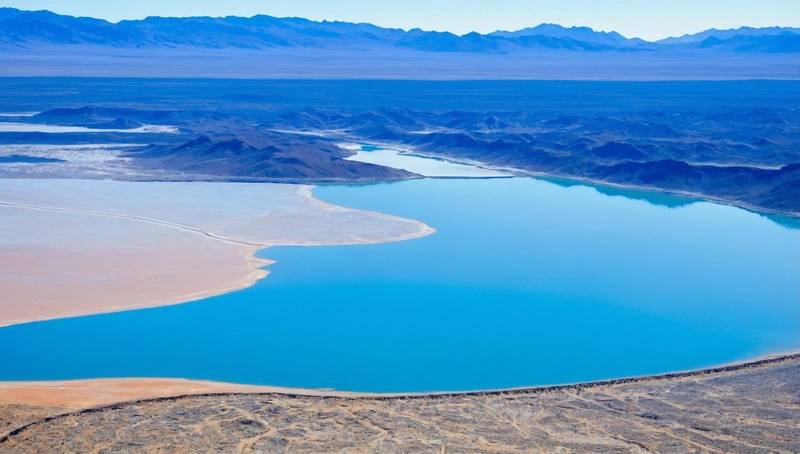
The Argentine government approved the $217 million project by Australian miner Galan Lithium in Catamarca for a new incentive program called RIGI. However, it rejected a bid from China's Ganfeng to build its Mariana lithium project.
Why it's important
Last year, the Incentive Regime for Large Investments (RIGI) was implemented as part of President Javier Milei’s efforts to encourage investments in the troubled economy. The RIGI offers benefits such as tax breaks and access international dispute courts for eligible projects.
Global mining companies have been watching closely to see if the scheme will encourage investment in the copper industry that has stagnated for years, and if it can help lithium projects during a period of low prices.
By the Numbers
Caputo stated that the project of Galan Lithium at the Hombre Muerto Salt Flat is the sixth approved investment for RIGI. This brings the total planned expenditure under the regime up to $12.8 billion. Rio Tinto’s Rincon Lithium project is the only other mining project approved to date.
CONTEXT
Argentina is the fourth largest producer of lithium in the world, which is a critical component for batteries used in electric vehicles and storage systems that use renewable energy.
THE RESPONSE
Galan Lithium and Ganfeng did not respond to comments immediately. Caputo claimed that Ganfeng’s Mariana project was not eligible because the miner began work prior to applying for RIGI.
Caputo stated that the company did not meet all the requirements to enter the regime. This included the requirement to make the minimum investment required over the next two-year period. (Reporting and Editing by Daina Bet Solomon, Editing by David Gregorio).
(source: Reuters)