
Latest News
-
Three people are killed in Gaza by Israeli strikes, say medics
Health officials reported that Israeli airstrikes in Gaza Strip killed at least 3 Palestinians on Saturday. Basir al-Bursh was killed in an air strike near the Jabalia Refugee Camp, a north-east Gaza refugee camp, according to medics and relatives. Munir al-Bursh is the director-general of the health ministry for the territory. Israel's military did not provide any further details about the strikes on Basir al-Bursh or other militants. Hamas, a militant Palestinian group which runs Gaza, has not yet commented. Munir al-Bursh, according to his family and doctors, lost a child?in a December 2023 Israeli airstrike. He was injured in the?attack. Al-Bursh, a father, was seen in video footage obtained by carrying his son, wrapped up in a blanket and accompanied by other mourners, as the ambulance rushed it to hospital. Al-Bursh said in the video: "I was in the tent with him, and he told me, Dad, that they would target us both, you and I together. I said it's fine, we can 'go to heaven together. Al-Bursh added, "He was beaten and martyred when he went outside the tent. May God have mercy on his soul." Al-Bursh, who was a patient at Al Shifa Hospital when mourners paid their respects to Al-Bursh, could barely stand. Civil defence and medics confirmed that a strike in Shejaia east of Gaza City killed a man, while another struck a vehicle in the Sheikh Radwan area of Gaza City killing a person. This brings Saturday's death count to at least 3. The?Israeli army said that the Sheikh Radwan attack targeted a Hamas terrorist. The explosion?turned the vehicle into a mangled wreck. Palestinian authorities claim that more than 73,000 Palestinians have died in Israel's attack on Gaza. The assault was launched after Hamas fighters killed about 1,200 Israelis in southern Israel back in October 2023. The US-brokered ceasefire agreement of last year called for the eventual reconstruction and rebuilding of the territory. However, negotiators failed to agree on terms for Hamas's?disarmament and Israel's withdrawal. According to Gaza's health officials more than 1,300 Palestinians have died in Gaza, mostly civilians. The Israeli military claims that four Israeli soldiers were killed.
-
Ravindra, Cricket-New Zealand’s Ravindra is doubtful for the India series following an injury sustained in a promotional shoot
Rachin Ravindra, an all-rounder for New Zealand, dislocated his left shoulder while filming a diving catching during a promotional shoot. This puts him in doubt if he is selected to play next month's Twenty20 series against India. New Zealand Cricket released a statement saying that Ravindra suffered an injury to his right shoulder during a Sky commercial shoot on Wednesday. It said that "Ravindra's return to play will be determined by the progress he makes during his first few weeks of rehabilitation." Ravindra is a 26-year-old left-handed finger-spinner who has played for New Zealand across?115 matches in all formats. He is a versatile 'batter,' who can fit?into either the middle or top order. New Zealand's top run-scorer at the 50-over World Cup 2023, and highest wicket-taker at the T20 World Cup this year where they reached the final. Mike Sandle, New Zealand's performance manager, said: "We are devastated for Rachin." As with all commercial shoots that involve our players, safety measures were in place and agreed upon by all parties. The accident was a bit of an accident and we'll review our procedures in the future. New Zealand will host India in five T20 matches starting October 22. Then, five One-Day Internationals followed by two tests and five T20 matches the following month.
-
Trump and Thune discuss bill to reduce data center electricity costs
Donald Trump stated on Friday that he is 'engaging with Republican Senate Majority leader John 'Thune about bringing a bill to the floor to protect households from rising electricity costs tied to the expansion data centers. "Well, I am talking to him about that." Trump said to reporters on Friday: "We'll see what happens." Both parties are facing constituents' growing concerns about rising electricity costs due to the industry’s increasing power demand. The Republican-majority House of Representatives passed the Ratepayer Protection Act 417-3 earlier this week. This act would force state utility regulators, to determine whether or not large electricity consumers, such as data centers, are responsible for the incremental costs of building power infrastructure to serve them. The Senate Republicans' attempt to pass the bill quickly failed on Thursday. Senator Martin Heinrich, top Democrat on Senate Committee on Energy and Natural Resources blocked the 'proposal' after its sponsor, Republican senator Jon Husted requested unanimous consent for a voting without a rolling call. Heinrich stated that the bill was not far enough because it relied on voluntary commitments from states and data centre developers. Trump is a strong supporter of data center development, believing it to be critical for leadership in artificial intelligence. Trump said that data centers are the "oil" of the next 20 to 25 years, and they make people and countries wealthy. According to a poll conducted by the University of Massachusetts Amherst, only 11% of Americans support building an AI data center in their locality.
-
Two dead and seven injured after Russian glide bomb strikes apartment in Sumy, Ukraine
President Volodymyr Zelenskiy, along with other officials, said that a Russian glide bomb struck an apartment building on Friday in Sumy, in northern Ukraine, killing two and injuring seven. Three of the injured were in a serious condition. Zelenskiy denounced "absolutely the inhuman strike" on Telegram, the messaging app. He claimed that emergency crews rescued four victims after the attack, and warned that others may still be under rubble. The third and fourth floor were directly?hitted by an aerial blast. He wrote that four people, including a young child, had already been rescued. "There may still be people underneath the rubble." Regional Governor Oleh Hryhorov stated that three of the seven injuries were in a serious state. A 13-year old girl was among the injured. Zelenskiy said that Russian forces had also?hit a clinic in Pavlohrad, a city located centrally, and a logistic centre just outside Kyiv. However, he did not provide any details about casualties. Vitali Karabanov said that an earlier Russian attack on the northeastern Ukrainian town of Balakliia resulted in the deaths of two people and the injuries to two others, Vitali Karabanov was the head?of the city’s military administration. Sumy near the Russian border has been a Russian target frequently in an area where Moscow claims it wants to create a buffer zone. Balakliia in the?Kharkiv Region was taken by Russian forces during the first weeks of the full-scale Russian invasion in February 2022. However, Ukrainian troops later recovered the area in a massive counteroffensive. Mayor Vitali Klitschko said that the Ukrainian capital Kyiv was hit by a Russian missile earlier in the evening. However, there were no reports of injuries or damage. Both Russia and Ukraine deny that civilians are being targeted in this war.
-
As central banks intensify their fight against inflation, global shares are on the rise.
The global equity index edged up on Friday as losses in Europe and Wall Street were partially offset. This was the end of a volatile week that saw a global push from 'central banks' to curb inflation. After reversing early losses, the benchmark S&P500 and Nasdaq ended higher. The Dow finished down. The declines were led by materials, utilities, and real estate while gains came from technology and industrials. The S&P and Dow posted weekly losses while the Nasdaq recorded a gain. The Dow Jones Industrial Average rose 0.40%, the S&P 500 increased 0.17%, and the Nasdaq Composite increased 0.40%. Stocks in Europe dropped 1.1%, and the week ended with a loss. MSCI's index of global stocks rose by 0.07%, but posted a loss for the week. This week's focus has been on monetary policy, because the Middle East war is approaching the seven-month mark and shows few signs of ending. The conflict in the Middle East keeps oil prices over $100 per barrel, fueling inflation fears. This has led to an increase in the yields on major government bond markets. Kieran Osborne is the chief investment officer of Mission Wealth. He said that "the market has come to realize a higher interest rate environment going forward." The Fed has clearly stated that it will likely raise rates again and central banks around the world are on a path to try and rein in inflation. The Middle East situation does not appear to be easing anytime soon. CENTRAL BANK MOVES After the Bank of Japan increased rates to a record high of 1.25 percent, the?yen fell and Japanese government bonds declined. Two board members dissented from the decision. The Japanese yen fell 0.50% to 156.76 dollars per dollar. The Japanese yen has gained 1.8% this month due to expectations that the BOJ will increase interest rates faster and signs of early repatriation by Japanese investors. The BOJ's decision concludes a series of meetings at which central bankers have increased their hawkish rhetoric. The Federal Reserve raised interest rates on Wednesday for the first time since?three years and adopted a more aggressive approach to inflation. This knocked down the yen which is now on track for its worst performance in the last two years against the dollar, falling 2%. The Bank of England left UK interest rates unchanged on Thursday, but warned that?it might have to raise them if the Iran War drags on. Last week, the European Central Bank also emphasized that it was necessary to tighten up further as they raised interest rates. The top Australian central banker said on Friday that some of the inflation risks that policymakers had flagged were now becoming real. The euro dropped 0.10% to $1.1488. The dollar index (which measures the greenback versus a basket of currencies, including the yen, the euro and others) was unchanged at 100.19. OIL PRICES RETREAT Brent crude futures dropped nearly 1%, settling at $103,87 after a report that China had asked Tehran to rein in the Houthis following their military offensive over the last week. This, along with the hope that Gulf exporters might find alternate routes to ship oil, set crude futures on a course for a weekly decline. After another brutal sale this week, bond yields have edged upwards after reaching their highest levels since 2007. The last increase was 5.73 basis points to 5%. In the past week, yields in Britain and the Eurozone also reached multi-year highs. However, by Friday they were just a little lower. Spot gold increased by 0.98%, to $4382.59 per ounce.
-
Documents show that multiple unions have threatened strikes at Barrick’s flagship Mali Gold Mine.
Documents seen on Friday show that unions representing the workers at Barrick Mining's Loulo-Gounkoto Gold Complex in Mali have issued a series strike notices to management. This raises the risk of disruptions of work starting September 28th at one of Mali’s largest gold producing operations. Unions representing the workers of SOMILO SA (which operates the mines in the complex) and GOUNKOTO SA (which operates the mines within the complex) filed the notices. Separate notices of strike were filed by Barrick’s contractor for catering and support staff, Food & Events Africa (FEA), and workers at Mali's mining regulatory and other mining administration offices. The unions announced that they would start a strike at the end of this month if their demands for overtime pay, reimbursements of mission expenses, and implementation of labor agreements are not met. Barrick and Mali’s Mines Ministry did not respond immediately to requests for comments. MALI TIGHTENS GRIPS ON MINING SECTOR Mali is one of Africa’s biggest gold producers. It has tightened its grip on mining as it seeks to increase revenues. After a dispute lasting almost a full year, the military-led government handed back operational control to Canadian miner Barrick. The mining process has begun again, but the ramp-up is gradual. According to Barrick, the complex will produce about 190,000.00 ounces in the first half 2026. This is well below the pre-dispute level. SOMILO SA (which operates the Loulo Mine) and GOUNKOTO SA (which operates the Gounkoto Mine, located nearby) have both called for four-day strike action from September 28 until October 1. They cited management's failures to respond to demands made in February. Separately unions representing FEA workers, who provide catering and support services in Loulo and Gounkoto have called five-day strike from September 28 to October 2. They accuse management of not honouring agreements on overtime pay and benefits. The unions that represent workers at Mali’s mining regulator, the National Directorate of Geology and Mines and other mining administration organizations have also called a 72-hour walkout from September 29 until October 1, over unpaid wages, allowances and bonuses in the mining sector. Mali is reopening its mining licensing regime following a two-year-long freeze, which was tied to the cleaning up of the mining cadastre. According to decrees, the authorities have renewed 14 exploration permits for gold and lithium since August 21. These permit holders include units of First Lithium as well as Cora Gold.
-
Germany to reduce energy tax in order to lower petrol prices
People with knowledge of the matter?said?on Friday that the German government had agreed to tax reductions which will reduce gasoline prices by EUR0.17 ($0.1952) per litre as a response to rising fuel prices. Sources who spoke under condition of anonymity said that the move included a?EUR0.14 reduction?in energy tax as well as an additional EUR0.03 reduction in sales tax. After Chancellor Friedrich Merz had promised to provide relief to consumers affected by the soaring gas prices, this decision was made. The decision came after extensive negotiations between the federal government and states governments on how to finance these cuts. Merz's approval rating has plummeted to new lows as a result of the Iran War, which has pushed benchmark oil prices above $100 per barrel. The national average daily price of a litre of E10 gas hit a new record earlier this week. Sunday, in the two most populous and rural areas of Germany, Mecklenburg and Western Pomerania (both heavily rural and sparsely-populated), Merz's conservative Christian Democrats are expected to be heavily punished. The results of the election will be closely monitored after the far right Alternative for Germany (AfD), party, came close to winning an absolute majority at a separate vote in the eastern state Saxony Anhalt on September 6th. In Mecklenburg/Western Pomerania the incumbent state premier,?Manuela Schwasig, has accused Merz of allowing fuel prices to?surge and called for a cap on fuel prices, based upon the Luxembourg model, which sets a maximum price across the country. The government reduced the energy tax in May and June this year. This effectively brought down the price of petrol and diesel by 17 cents a litre. There were calls for the reductions to be extended. The 'Bild' newspaper reported that Berlin was 'also working on an gasoline price cap which would be dependent on the price of oil, and plans are subject to discussions with the heads Germany’s regional states.
-
Gold prices rise to a one-week high and are expected to gain weekly on the back of lower oil prices
The gold price rose on Friday to its highest level in a week, as lower oil prices eased fears of inflationary pressures. Gold spot was up 1.2% to $4,390.11 an ounce at 2:14 pm EDT (1812 GMT) after reaching its highest level since the 11th of September earlier in that session. Bullion is up 1% this week. US gold futures closed 0.6% higher, at $4424.90. Oil has been the primary driver of inflation, so a reduction in oil prices will reduce the pressure on inflation. Investors in precious metals had anticipated a rate hike (in the US) and took short positions, hoping to profit from the expected drop in gold. These positions were 'rapidly unwound,' said Chris Gaffney. EverBank president of world markets. Brent crude oil prices continued to decline for the third consecutive session, as concerns about Saudi Arabian supply disruptions were tempered by fears of a widerning conflict in the Middle East. The lower oil prices have provided some relief to inflation fears, but the threat of a Middle East shock is still a major concern. Dollars have risen to their highest level in more than a week, making bullion priced in greenbacks expensive for those who hold other currencies. On Wednesday, the Federal Reserve increased interest rates by one quarter percentage point. It now ranges between 3.75% and 4%. The Fed also indicated that there would be more increases in the coming months. CME FedWatch shows that traders now expect a 55% probability of another rate hike in the US when central bankers next meet in October. Gold is traditionally seen as a hedge against inflation, but higher interest rates may reduce its appeal by making assets with a yield more attractive. The Bank of Japan also raised its interest rates to their highest level in 31 years and indicated that it was willing to continue to raise borrowing costs. Gold demand in India this week was subdued as buyers held back purchases in anticipation lower prices. Premiums in China, however, remained stable, supported by robust demand for investment. Gaffney said that gold is currently testing resistance near the $4,400-$4,440 range. A move above this level of resistance could "clear" a path for higher prices. Spot silver increased 2.3% at $66.70. Platinum gained 2.2% at $1,812.50. Palladium rose 1.5% to $1,310.20. All metals are headed for gains this week.
Study finds that Germany's lithium reserves can sustain domestic demand for decades
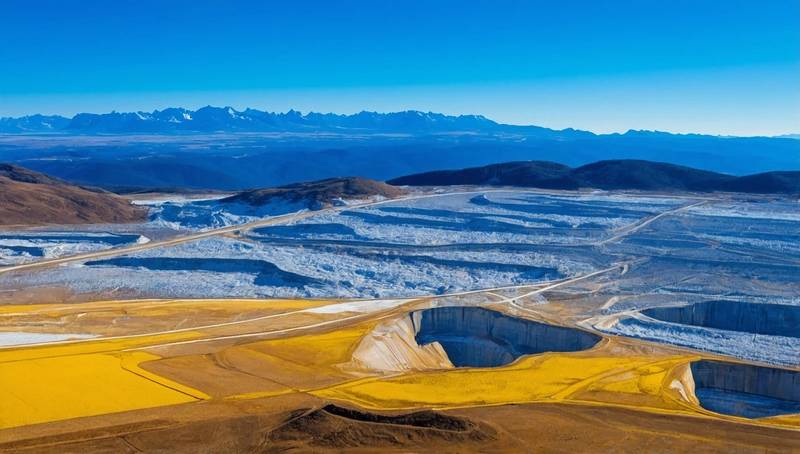
A study released on Thursday showed that Germany has enough lithium reserves for its own needs over several decades. Berlin is trying to increase its production of electric vehicles and reduce its dependence on imports.
According to the German Raw Materials Agency, Germany's lithium consumption could reach up to 0.17 millions metric tons annually by 2030. The German automotive industry imports lithium from Australia, Argentina Chile and China in order to meet its battery production requirements.
Researchers and companies are exploring ways to extract the lithium byproduct from geothermal energy in Germany's Upper Rhine Valley, to increase domestic supply as well as renewable heating and electricity solutions.
The Federal Institute for Geosciences and Natural Resources and Fraunhofer IEG found that Germany has up to 26,51 million metric tonnes of lithium in deep underground water, especially in the North German Basin and central Thuringian Basin.
This assessment of potential was new. "When you add it all up, there are surprisingly large lithium reserves lying dormant below the earth's surface," Katharina A. Alms, Fraunhofer IEG research leader, said.
Geologists estimate that in 2021 the Upper Rhine Valley, located in the Black Forest region of southwest Germany, will hold enough lithium to power more than 400,000,000 electric vehicles.
Despite concerns about the difficulty of extracting lithium, Lithium exploration in Germany has increased.
Esso Deutschland, a subsidiary of ExxonMobil, received four exploration licenses in Lower Saxony last December. Neptune Energy, a German oil company, announced in August that it had received exploration permits in the eastern state Saxony Anhalt.
Alms stated that extracting lithium from Germany is not easy as there are no high concentrations everywhere, and exploration can be unpredictable.
She added that many of the lithium deposits are trapped in rocks with low permeability, which makes extraction difficult. Surface extraction methods can also be time-consuming and complex to implement at large scales.
According to the ZVEI trade group, Germany will import 23.7 billion Euros worth of lithium batteries by 2023.
(source: Reuters)