
Latest News
-
Go slow with MORNING BID AMERICAS
The markets now expect that the Federal Reserve will raise interest rates on Wednesday as another surge in crude oil prices begins the week following more attacks and disruptions in the Middle East. The inflation report last week did not provide much comfort to the central bank's increasingly hawkish stance that its 2% inflation target would be reached any time soon. Energy prices are on the rise, but pressures on prices in other sectors and services are also a concern. The question for markets is not whether the Fed will increase rates this week but how much it will tighten up afterward. This will be influenced by the Fed's quarterly projections of economic growth and interest rates. As of now, futures strips are pricing up to four rate hikes. Brent crude oil surged to $108 per barrel after a weekend filled with fighting in the Middle East. The weekend also saw more ships targeted in the Gulf and the temporary closing of Saudi Arabia's East West pipeline. This could threaten up to 4% of the global crude oil supply. The scheduled Monday talks between Tehran, other Gulf countries and the United States on how to manage the Strait of Hormuz were also postponed. Other headlines this weekend focused on calls to "go slowly" with the rapid pace of AI development, following several apocalyptic statements from industry workers last week about potential threats to humanity. OpenAI's Sam Altman, the company's boss, said that the long-awaited IPO would be delayed to 2027. He called the idea of going public in 2019 "ill-advised". The U.S. president Donald Trump dismissed these warnings as absurd, whereas state-backed Chinese media referred to an article by Dario Amodei of Anthropic, which called for a slowdown in AI, as "Cold War tactics" aimed at China. AI-linked stocks dropped on Monday, amid safety warnings. Nasdaq Futures were in the red even before the bell rang, and Asian shares closed lower. This was mainly due to falls among big chipmakers. Chart of the Day Markets may need to factor in the possibility that a "go slow" push will also result in a slower build-out of AI infrastructure such as data centers, computing equipment, and chips. AI-related indexes are rising twice as fast as global benchmarks. MSCI's AI basket is up 120% or more since the launch in 2022 of OpenAI ChatGPT?model. Watch today's events * Canada August CPI (8:30 a.m. EDT) Listen to the latest episode of Morning Bid's daily podcast before you leave. We discuss AI safety, the surging price of oil and the possibility of a Fed rate increase this week. Subscribe to hear journalists discuss the latest news in markets and finance. Want the Morning Bid delivered to your inbox each weekday morning? Subscribe to the newsletter by clicking here. You can find ROI at the website and follow us on LinkedIn or X. The opinions expressed are solely those of the authors. These opinions do not represent the views of News. News is committed to the Trust Principles and a commitment to independence, integrity and neutrality.
-
Yemen's displaced yearn for stability and loved ones as Houthis advance
As Yemen's Iran aligned Houthi militants swept along the country's battered Red Sea coast, thousands of?panicked people fled into makeshift 'camps', adding to a vast 'population' already displaced internally. Aisha Mohammed, like other people who fled coastal areas to reach the province of Taiz in southwest Saudi Arabia, left her two daughters, and three sons trapped in their homes, as fighting transformed a vital trade route into a route for displacement. "They're being shot at and blocked. They cannot reach us right now and we can't?return them. Muhammad said, "This is a test from God", as he boiled water in a black teapot on a rock placed?over an open flame. Tehran is strengthening its hand in the conflict it has with the U.S. by the Houthis' advance, which already controls most of Yemen's north and most populous areas. Another YEMEN CRISIS Yemen is no stranger to hardship. A long civil war between the Houthis and forces of the internationally recognised Saudi-backed government has created one of the worst humanitarian crises in the world. Yemen is mired in conflict ever since the Houthis took over the capital Sanaa, in 2014. This prompted a Saudi-led intervention in the military the following year. The U.N.-brokered 2022 truce largely stopped major fighting despite it expiring six months after its signing. However, efforts to make the truce into a permanent political settlement have stagnated as regional tensions intensified. With their lightning-fast western offensive, the Houthis – mountain fighters in sandals that have become a force of up to tens or thousands of missiles and drones have opened a second theatre of war. They are now in a good position to tighten the grip on the strategic Bab el-Mandeb Strait - a crucial chokepoint for 'global oil and commodity shipping' - six months after Israel and the U.S. attacked?Iran. As fighting continues, the International Organization for Migration (IOM) estimates that 82164 people have been displaced in the poorest Arab country since September began. Some people are leaving the country. Amy Pope, the director general of?IOM, said: "Behind each number is a lost family." Many have been displaced more than once. They are forced to cross the sea without anything because they don't have any other option. Yemen is "a country torn apart by poverty and war,?and it can't carry this crisis on its own." Many, such as?Abdullah Qaiyd an elderly man with a walking stick, long for stability. "Now look at us." We are shook and tormented to the core. "We long for basic livelihood and safety," said he.
-
European shares fall as AI slowdown calls hits tech and oil surge weighs
European shares dropped on Monday, as technology stocks fell after leaders of top AI firms urged a'slower pace of development.' Meanwhile, another surge in oil prices dampened risk appetite. As of 0840 GMT the pan-European STOXX 600 index was down 0.3%, at 637.5, in choppy trade, with many major regional bourses trading downward. Technology shares were among the worst performers, with a 2% decline in line with their Asian and U.S. counterparts. Dario Amodei, CEO of Anthropic, called on AI companies on Saturday to slow down?the pace at which they advance their model capabilities because of fears about misuse. Benjamin Picton is a senior market strategist with Rabobank. He said: "That's an opinion that many of his tech peers?apparently hold. This puts founders in a unique position, not only agreeing but also favoring tighter regulations for their own businesses. Future growth will be throttled." Soitec, a French semiconductor company, was the biggest decliner in the STOXX with a 12.6% drop. Infineon, a German company, fell 7.6%. ASML, a Dutch firm, and ASMI, based in the Netherlands, both lost 5.2%. European miners declined 2.1% as they followed the weakness in commodity prices. London-listed Antofagasta fell 4%, while Germany's Aurubis dropped 3.2%. Healthcare stocks rose 2.2%, bucking the trend. GSK jumped 3.6% following the positive results of two lung cancer drugs. This added to the momentum in this sector. Oil stocks were not affected by the latest Houthi attacks in Saudi Arabia or Iranian attacks against ships in the Gulf, which compounded concerns about supply arising from a closed Saudi pipeline. Recent oil price spikes have brought inflation concerns to the forefront, further confirming expectations that central bankers?worldwide may increase interest rates in this year. The European economies are especially vulnerable to rising oil prices, as they rely heavily upon imports. The U.S. Federal Reserve will likely raise its main lending rate this week by at least 25 basis point -- a marked change from the split chance of a hike or a pause that was seen a week earlier. Last week, the European Central Bank raised rates. LSEG data shows that traders expect at least 25 bps more by year's end. The 10-year bond -- the benchmark for the region -- is at its highest level since August 2009. The centre-left opposition in Sweden looked to be on track to form the new government after preliminary results showed that it had a three-seat advantage over the ruling right-wing parties, with the majority of votes counted following Sunday's election.
-
Nigerian billionaire Dangote launches Africa's largest share sale, the IPO of an oil refinery.
Aliko Dangote, a Nigerian billionaire, launched the largest ever share sale in Africa on Monday with his initial public offering (IPO) of oil refinery. This opened up ownership to retail investors while raising funds for the expansion of the refinery. The sale of 4.1 billion ordinary share at 525 Naira each began at 8am local time (0700 GMT), and will close on October 13th. The offer would raise 2,15 trillion naira (about $1.6 billion) if it were fully subscribed. However, this could rise to approximately $2.1 billion if oversubscribed. Chris Chijioke is a businessman based in Lagos, the commercial capital of Nigeria. He said that he will buy 2,000 shares because?the size and track record of Dangote as a successful businessman makes a strong argument. He expressed concern about the price of the shares, however. He said that the price offered would not be justified if the plans to double refinery capacity were delayed. "I personally believe it is overvalued," said he. The war in Iran has benefited refineries The refinery, built on the outskirts Lagos at a cost around $20 billion, has changed the fuel market in Nigeria since it began operations in 2024. The company supplies the majority of Nigeria's gasoline. It has also benefited from supply disruptions caused by the Iran War, which led to an increase in demand for Dangote jet fuel throughout Africa and Europe. Africa's richest person has advertised?the offer? to ordinary Nigerians who can take part by purchasing as little as 10 shares via fintech and digital investment platforms. Ibrahim Abubakar is a journalist who said he would buy approximately 2,850 shares, because he thought the refinery was "too large to fail". The plant currently processes 700,000 crude barrels per day. It hopes to reach 1.4 million barrels by 2029. According to calculations, the offer values the facility at $47 billion. Dangote has said he anticipates the IPO will be 3.7 times more popular than a July private placement that was 3.7-times oversubscribed.
-
India approves the export of electricity to Nepal following deadly flood
India has approved the export of electricity to Nepal for 18 hours per day until December 31 after a devastating flood in the Himalayan nation last month destroyed about a 10th of its capacity. The deluge, caused by the collapsed glacier in Nepal and Tibet, killed more than 1,400 people and destroyed over 12 hydroelectric plants?in Nepal. More than?5,300 missing people include 900 workers from power stations. The ministry announced that it had approved the export of up to 654 Megawatts. It added that the amount of power exported from January will be reviewed in December. The approval would help Nepal meet its energy requirements during this difficult time and strengthen the long-standing and close energy cooperation between India & Nepal, it stated. The export of Nepalese hydropower, which provides?almost the entire electricity in Nepal, has been growing rapidly. The 'country' halted its power exports after the floods ravaged the Bagmati Province, which is the main hydropower producing region. It said that it would purchase electricity from India in the coming months to cover any domestic shortages. Last week, Nepali officials announced that they will ask wealthy countries and international agencies for financial assistance. They argued that they should contribute the $5 billion needed to begin the initial reconstruction.
-
Kazimir, ECB's Kazimir, shifts his focus on gas prices and sees inflation risks rising
Peter Kazimir, a policymaker at the European Central Bank, said that euro zone inflation could be higher than projected and the growth of power and natural gas prices is a growing concern. The ECB increased interest rates on Thursday for a second time this year and also raised its inflation forecasts. This has fueled market speculation that there could be up to three rate increases in the next year. Kazimir is a policy hawk who has been outspoken in his calls for higher interest rates. However, unlike other colleagues, he did not call for a rate increase. He said policymakers should be open to new ideas and that the bank would act decisively when the evidence warranted it. Kazimir, Slovakia’s central bank head, said in a recent blog that his attention was now focused less on fuel and oil prices and more on the prices of gas and electricity. Food inflation, which is so important to perceptions and expectations of the future, is also expected to increase. Gas prices have reached a record high of four years, as European nations waited to fill their gas storages in the summer months hoping that the conflict with Iran would end. Gas storage is now being rushed to fill the gap left by historic levels. Prices are soaring, which will likely increase heating and electricity prices and cause inflation. The growth in food prices is unexpectedly low, but a "perfect storm" of factors including the European drought, El Nino weather phenomenon, and the soaring prices for diesel and fertiliser, which are key inputs to agriculture, will likely push prices up in the next few months. Kazimir stated that "the inflation risks are clearly skewed to the upside." The 'energy shock' has already lasted much longer than expected. But its full effects haven't yet filtered through to the economy. Financial markets expect a rate increase by the end the year, but the ECB's next meeting is on October 29.
-
Solar Industries of India to purchase Omnia from South Africa for $1.36 Billion
India's?Solar Industries announced on Monday that its unit would acquire South Africa's?Omnia Holdings for?about $1.36billion in a?all cash?deal. The explosives and ammunition manufacturer is looking to expand their global mining business. Solar SA Investments is an indirect wholly owned subsidiary of Solar Industries. It will acquire all the outstanding shares of Johannesburg listed Omnia. This acquisition is subject to regulatory approvals and Omnia shareholders' approvals. African countries are stepping up their efforts to increase output and attract?investment in critical minerals. Zambia, a country rich in copper, is aiming to triple its production at a time when metal prices are rising. Solar expects that the expansion of its footprint will increase Africa's mining revenues by multiples from fiscal 2028. Solar Industries, based in Western India, manufactures industrial explosives, initiating systems, and other products for mining, construction, defence, and space industries. It operates more than?40 production facilities worldwide. Omnia is a company that provides services and products to the mining and agriculture industries. It operates in 23 countries, and has customers in over 40 other countries. The company reported revenue of $1.41 billion for the year ending March 31.
-
European shares tempered as oil surge, tech slide weighs
On Monday,?European stocks were?subdued? as?technology shares fell? after executives from leading AI companies called on a slowdown in development? while another rise in oil prices? dampened the broader risk appetite? As of 0810 GMT the pan-European STOXX 600 was little changed, at 638.95, in choppy trading, with most major regional exchanges trading lower. Anthropic CEO Dario Amedei called for 'AI companies to slow down the rate at which model capabilities are advanced due to concerns of misuse. Shares in technology firms fell 1.4% in line with weakness among Asian peers. Infineon, a German company, lost 5.8% of its value, while ASML, a Dutch firm, and ASMI, based in the Netherlands, each suffered losses of 4.4% and 5%. Oil prices were up more than 2% as a result of the Houthi attacks on Saudi Arabia, and Iranian attacks against ships in the Gulf. This exacerbated supply concerns after the closure of an important Saudi oil pipeline. With a 0.4% increase, the European energy sector was one of the brightest spots. The focus now shifts to the U.S. Federal Reserve and its upcoming?policies decision. Traders are increasingly betting on a rate increase of 25 basis points. Last week, the European Central Bank raised interest rates.
The US tariffs on Indian oil imports were triggered by the peace talks in Ukraine and India's Russian oil imports
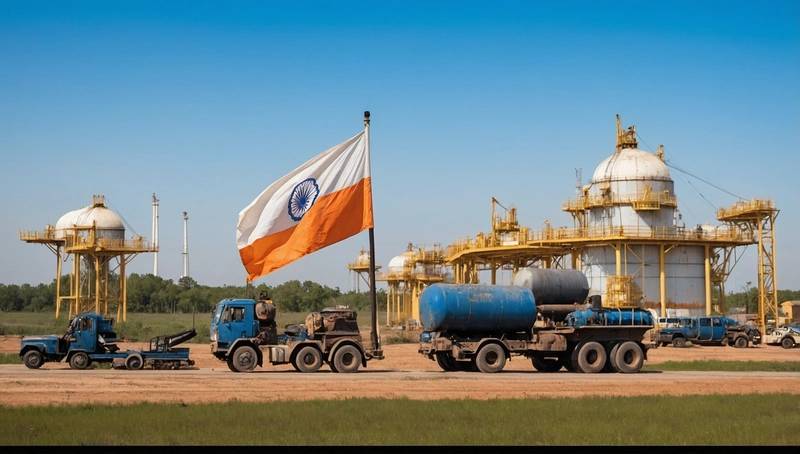
India, which is the third largest oil consumer in the world and also the biggest buyer of Russian crude oil by sea, has been caught up in the diplomatic negotiations between Russia, and the United States, to end the conflict in Ukraine.
Why has Trump imposed additional tariffs on Indian goods?
In retaliation against New Delhi's increased purchases of Russian oil, President Donald Trump has added an additional 25% to the tariffs already in place on Indian goods. This is among Washington's most severe.
Peter Navarro, White House's trade adviser, said that India's purchases were funding the war of Moscow in Ukraine. He called for an end to these purchases.
The Treasury Secretary Scott Bessent stated that India is profiting from its increased oil imports. These now account for 42% of the total purchases, up from less than 1% prior to the war. Washington called this a change in policy unacceptable.
Trump's approach is in stark contrast to that of the former Biden Administration, which welcomed India's Russian purchases to keep oil prices in check, as they reached a high of $139 per barrel in 2022.
Why is India buying Russian oil?
Since the Ukraine War broke out in 2022, India and China are the largest Russian oil purchasers. The West has shunned Russian energy imports and set price caps for Russian oil. There is no prohibition on buying Russian oil as long as the deal meets the parameters of Western sanctions.
The Indian government wants to reduce the massive import bill for crude oil and make energy affordable to its 1.4 million citizens. The import of Russian oil at discounted prices has also allowed India to diversify away from the more expensive Middle Eastern grades.
India's energy import policy will be guided by its national interests. India imports more than 85% of the total oil it needs to refining its 5.2 million barrels of crude per day.
Will India continue to buy Russian oil?
People familiar with the situation said that India will not stop buying Russian oil for now due to concerns about energy security.
According to LSEG data on trade flows, India's imports from Russia are expected to drop in September compared to August. This is because state refiners halted their purchases due smaller discounts.
Indian refinery sources said that India's Russian crude oil imports will remain low as state-refiners do not want to purchase at discounted prices and instead are only interested in distressed cargoes.
Trade sources reported that discounts for Russian Urals crude shipped to India are now about $2.50 a barrel compared to Brent dated, down from $20 to $25 per barrel at the start of the war in February 2022.
Officials in India said that it would be difficult to replace Russian oil supplies because the price of barrels will increase significantly.
How much oil does India buy from Russia?
India imported 1,73 million barrels per day (bpd) of crude oil from Russia between January-July, which accounted for more than one third of India's overall imports.
Due to logistical limitations, such as expensive and longer shipping routes, Russian oil accounted for only a fraction of India's total imports.
After increasing its Russian imports, India has reduced its crude oil intake from Middle Eastern countries and African nations.
Who are the top buyers of Russian oil in India?
Reliance Industries, a private Indian refiner, and Nayara Energy, a private Indian energy company are the two largest buyers of Russian crude oil. Reliance owns the largest refinery in the world, while Nayara's majority is owned by Russian companies, including Rosneft.
Reliance signed a contract for a set period of time with Rosneft. This is India's biggest oil import agreement with Russia. The two companies together account for approximately 60% of India's total Russian crude oil imports.
State-run refineries, on the other hand, purchase Russian oil at spot prices and pay for it as delivered.
Alternatives to Russian Oil
In recent months, Indian companies have increased crude imports to the U.S. from the Middle East and Middle East to replace Russian supplies.
(source: Reuters)