
Latest News
-
European stocks rise as oil prices fall, AI hype lifts tech
European stocks rose on Wednesday, as oil prices dropped for the sixth consecutive session. Meanwhile, a new wave of AI optimism boosted tech stocks worldwide. Saudi Arabia has reportedly resumed operations on its East-West Pipeline. It may have also re-started exports through the Red Sea port of Yanbu. US President Donald Trump said that talks with Iran had progressed in New York, but threatened to "annihilate the country" if an agreement was not reached. Brock Weimer is an analyst at Edward Jones. He specializes in investment strategy. The markets are watching reports that he may hold discussions with Trump. The global interest rate outlook will be impacted by a sustained return of oil flows through the Strait of Hormuz. But caution is still necessary as past optimism has deteriorated quickly. Cole Smead is the CEO and portfolio manager of Smead Capital Management. Brent crude futures dropped 0.40% to $98,83 per barrel, while the pan-European STOXX 600 rose?0.17%. Futures for the S&P 500 benchmark and the tech-heavy Nasdaq 100 were both up 0.10% apiece on Wall Street. After four days of gains, the MSCI index of global stocks was stable. ASIA RIDE AI WAVE As consumer demand for AI-based apps continues to drive tech stocks, Asian stocks are on the rise. The renewed buzz around AI has helped South Korean shares?gain 0.9%. Samsung is up almost 1%. Taiwan's benchmark rose 0.8%, to reach near all-time highs. Data hardware has seen a boost from the strong consumer uptake of Meta's Muse Agent, which has topped US App Download Charts in the last two weeks. Analysts now want to know how CC, a product similar from Alphabet Labs and Google, will perform with consumers. Xi Jinping, the Chinese president, arrives in Washington in the afternoon amid speculations that a trading truce will be extended between the two nations and that there may be collaboration on AI. The Japanese markets were closed due to a holiday, but Nikkei Futures traded at 66 775, about 1,760 above the Nikkei cash close on Friday. "We expect strong reopenings in Japan tomorrow with another move down in crude and calm conditions in Treasuries and rates, as well as the Nasdaq Cash and Futures markets printing new highs," said Chris Weston. Semis have also had a strong session, recording a sixth day of gains. SoftBank's debt deal of $10 billion and above has also attracted interest of more than $20 billion, according to reports. This would be one of the biggest junk bond deals in history. The drop in oil has helped Treasury futures to move higher, keeping 10-year bond yields below the pain threshold of 5.0%. Both Tom Barkin, President of the Richmond Fed and Susan Collins, president of the Boston Fed, expressed support on Tuesday for the recent increase in interest rates due to inflation concerns. The dollar's technical background improved as the prospect of higher interest rates helped it to eke out multiple-week highs against the Euro, Sterling and Canadian Dollar. The euro was pinned at $1.1414 - a two-month low. Analysts pointed out that a Trump call to ban US exports of diesel could be bad news for European inflation, since the region relies heavily on US fuel shipments. The dollar held firm against the yen, at 157.76. Speculators were wary of provoking more Japanese intervention if it rose above 160.00.
-
Copper and industrial metals are falling as the dollar strengthens
Copper fell on Wednesday as a result of?gains made by the US dollar. This also impacted?other industrial materials. By 7:00 AM GMT, the benchmark three-month copper price on the London Metal Exchange was down 0.66% to $14,651 per metric tonne. The Shanghai Futures Exchange's most traded copper contract fell 0.21% to 110,990 Yuan ($16.549.37) per ton. Investors now expect further tightening by central banks. The US dollar has hit a high of two months on the prospect of interest rate increases in the near future. The?expensiveness of the dollar can make dollar-denominated products such as copper more expensive for buyers who use other currencies. The red metal in China has not been as popular. The Yangshan Premium The price of a ton of copper in China fell to $117 on Tuesday but was still higher by 62.5% than it was at the beginning of the month. The Chinese demand was boosted because of the purchases made before the smelters shut down for their public holidays. The next holidays in China are from September 25-27 and October 1-07. The US has been importing a lot of copper in recent months, which helped to support the price. However, the demand for the metal weakened when it was reported that US officials are worried that tariffs could increase the costs for manufacturers. Analysts from the Chinese broker Jinrui Futures said in a report that "US weekly imports are down." SHFE nickel, meanwhile, was up by 0.97%. Prices on the LME rose late Tuesday, after PT Indonesia Morowali Industrial Park said that a water shortage had forced some smelters in Indonesia to reduce their nickel pig iron output. Aluminium lost 0.78% on the LME, while?zinc, lead, and nickel all lost 0.59%. Tin was only up 0.04%. Aluminium fell 0.14% on the SHFE. Zinc dropped 0.64%. Lead lost 0.61%. Tin dropped 0.09%.
-
Portugal claims that China's State Grid will not be affected by the entry of REN into grid operator REN
Portugal's government has said that its purchase of a'stake' in the power and gas grid operator 'REN' will not have any impact on China's State Grid's 25% stake, which it wants to'remain' a 'key shareholder'. The Chinese state-owned utility acquired a 25% stake in REN during this period, and became its largest shareholder. The Portuguese government intends to increase its stake to up to 20%. In a late-night statement, the?Finance Ministry stated that Lisbon informed Beijing?that State Grid's 25 percent stake in REN would not be affected by the entry of the state into REN capital. It said: "On?the?other hand, it's in the interest of the Portuguese government for State?Grid?to remain a reference shareholder? in REN." The Ministry of Energy said that the growing geopolitical insecurity and the strategic importance of energy infrastructure justifies its investment in REN. It argues that electricity and natural gas networks are crucial to energy security, energy transition, industrial growth and attracting investments. The report said that the move was "part of a global movement towards greater government participation in strategic sectors". It noted that Portugal was the only European Union member without a stake in its national electricity grid operator. According to the ministry, most EU countries still retain significant state shares or state ownership in their national electricity grid operators. The investment will give REN's strategy a long-term alignment with national priorities and allow the state to have greater control over a strategic asset. The decision was also justified by the 'geopolitical changes and the increasing importance of electricity, in particular, in the drive to electrify and modernize the economy, as well as attract investment into artificial intelligence and data centers.
-
South Korea: Trump welcomes progress on US strategic investment projects
Seoul's Presidential Office said that during a 30-minute discussion on the sidelines of the UN General Assembly on Wednesday, South Korean President Lee Jae Myung welcomed "significant progress" on strategic investment projects. The meeting took place after the South Korean Industry Ministry briefed legislators on Tuesday about implementation plans under countries' $350-billion investment package. A Texas gas-fired project was identified as a possible first investment as well as potential investments in nuclear energy, and an Alaskan Liquefied Natural Gas project. National Security Advisor Wi Sung Lac told a press briefing that "the two leaders appreciated the significant progress in discussions between the two countries on strategic investment project." Wi reported that based on the Joint Fact Sheet released after their November summit, Lee and Trump agreed to continue and deepen discussions and cooperation on nuclear fuel enrichment, reprocessing and reprocessing. They also agreed to discuss nuclear-powered subs, shipbuilding, and the transfer of Wartime Operational Control (OPCON) by the US to South Korea. Wi reported that Trump reaffirmed his willingness for dialogue with North Korea. The two leaders agreed to stay in close contact in pursuit of peace. According to Wi, Lee said that the US-China Summit scheduled for Thursday will be important for regional development, including South Korea's relations with China. The White House didn't immediately comment on Trump-Lee's meeting. The State Department reported that US Secretary of State Marco Rubio called on Friday for the quick execution?of South Korean investments commitments?during a meeting?with?South Korean foreign Minister Cho Hyun. In a blog post, Lee stated that he and Trump had a detailed discussion on the progress of investment projects. They also reaffirmed the commitment to strengthening the alliance. GOLF DISCUSSED NORTH KOREA Lee had earlier told the UN General Assembly on Wednesday that Seoul would work to create a lasting peace framework and support efforts for reviving dialogue with North Korea. He also sought broader international support for these efforts. Separately, a senior official of the South Korean government told media that Lee told Trump that he hoped that Trump would advance engagement with North Korea. Trump responded that he was willing to do so. Media reports stated that Trump had also stated he has a good relationship Kim Jong Un. However, there is no indication of any contact taking place at the moment. According to the official, Trump and Lee also spent a lot of time discussing OPCON transfers. Trump reportedly gained a better understanding about Seoul's stance. The US side emphasized the need to complete the process and meet the requirements as quickly as possible. Officials said that the South Korean side expressed a desire to speed up talks about developing nuclear submarines and outlined plans for increased defence spending. Officials were quoted saying that progress in discussions on investment in US projects had helped pave way for the summit. Initially, it was not expected to happen. Officials said that the two leaders were briefed about the 'negotiations' and they welcomed the progress. However, discussions are still ongoing on the specifics of the package, and the manner in which it will be announced. The official quoted by the media said, "The larger framework is almost completed." Lee said later on X, that Trump reminded him about their plan to golf together that was first discussed in France, in June. He hoped that they could continue the discussion at the G20 Summit in Miami, later this year.
-
Asia stocks rise on tech wave, but oil prices continue to fall
On Wednesday, Asian shares aimed for a sixth consecutive session of gains as the consumer appetite for AI apps continued boosting tech stocks. Meanwhile, oil prices dropped further due to'reports about increased supply from the Middle East. Saudi Arabia has reportedly resumed exports through the Red Sea port Yanbu and may already have done so, according to sources. US President Donald Trump claimed that talks with Iran had progressed in New York, but threatened to "annihilate the country" if no deal was reached. The markets are agog at reports that he could hold talks with Trump. Brent futures fell 0.9% to $98.37 per barrel, while US crude fell 1.3% to $89.32 per barrel. Xi Jinping, the Chinese president, arrives in Washington at the end of the day amid speculation that a trade truce will be extended between the two nations and that there may be some cooperation on AI. The renewed buzz about AI has helped South Korean shares?gain 0.5%. Samsung is up more than 2%. Taiwanese stocks have firmed by 0.7%, nearing all-time highs. MSCI's broadest Asia-Pacific share index outside Japan rose 0.3%. It has now been rising for six days in a row. Chinese blue?chips fell 0.5%. The Japanese market was closed due to a holiday. However, Nikkei Futures traded at 66.735, nearly 1,700 points higher than the Nikkei Cash close on Friday. "We expect strong reopenings in Japan tomorrow with another'move lower' in crude and calm conditions for rates and Treasuries. The Nasdaq Cash and Futures markets will also print all-time highs," Chris Weston said, the head of research at broker Pepperstone. "Memory stock has taken the 'leadership baton. Backed by another strong session, semis have recorded their sixth consecutive day gains." CONSUMERS FALL FOR AGENTS OF AI Data hardware has seen a boost from the strong consumer adoption of Meta's Muse Agent, which topped US app charts for downloads in the last two weeks. Analysts now want to know how CC, a product similar from Google Labs, will perform with consumers. SoftBank's debt deal of $10 billion and above has also attracted interest of more than $20 billion, according to reports. This would be one of the biggest?junk bonds deals ever. S&P 500 and Nasdaq Futures on Wall Street were both slightly firmer. In Europe, EUROSTOXX Futures, DAX Futures and FTSE Futures all rose by almost 0.4%. Oil prices dropped, which helped Treasury futures to rise and keep 10-year yields under the?5 % pain barrier. Investors priced in the possibility of further tightening by the Federal Reserve, and the yields on two-year bonds reached their highest level since mid-2024. Both Tom Barkin, President of the Richmond Fed and Susan Collins, president of the Boston Fed, expressed support on Tuesday for the recent increase in interest rates due to concerns over inflation. The futures market indicates that 54% of the time, the Fed will raise interest rates again in October. By year-end, 33 basis points tightening is priced into the markets. The prospect of higher interest rates has helped the dollar to reach multi-week highs against the Euro, Sterling and Canadian Dollar, improving its technical backdrop. The euro is stuck at $1.1430, near its two-month low. Analysts pointed out that a Trump call to 'ban U.S. Diesel exports' could be bad news for European inflation, since the region relies heavily on U.S. fuel shipments. Europe is already facing a natural gas shortage that could drive energy prices up into the winter. Dollar was slightly firmer against the yen, at 157.60. Speculators were wary about drawing Japanese intervention if it went beyond 160.00. Gold fell 0.3% on the commodity market to $4,341 per ounce, and copper has risen 18% this year.
-
Andy Home: Indonesia's nickel production limits are not convincing the market.
Indonesia has learned that gaining a dominant position on the nickel market is easy. It is much more difficult to use its influence on supply to control the prices. Southeast Asia now accounts for more than 60% of the global production of a metal that is used both by stainless steel manufacturers and battery makers of electric vehicles (EVs). Indonesia's dramatic rise to become a?nickel power? is due to a 2020 ban on exports, which forced operators into building domestic processing capacity. The country has become a'model for other developing nations, especially those in resource-rich Africa. It's also worth noting how difficult it can be to match demand with supply when you are the largest producer in the world. TAMING THE TIGER Jakarta has cut mining quotas this year, tightened environmental controls and lowered ore prices to curb its nickel industry. The London Metal Exchange nickel prices reached a high of $20,000 per tonne in May after a commitment to reduce mining quotas to between 250 million and 260 million tons from the 379 million metric tonnage last year. As the market has lost confidence in Jakarta's ability to tame this nickel tiger, the price has dropped back to $16,500. The dilemma for policymakers has been how to reduce nickel output without affecting their nickel processors. Some of them have only just begun ramping up their production this year. The mid-year review has led to higher allocations for specific operators. French mining group Eramet has restarted operations at Weda Bay after having been forced to suspend its work in May due to exceeding its 2026 quota. It is hard to determine the full extent of this upward trend, since neither?Jakarta or its nickel operators reveal details. It's also clear that some operators have adapted to lower mining rates in the country by importing, primarily from Philippines. According to the World Bureau of Metal Statistics, which gathers data from government sources, Indonesia increased imports of Philippine ore from 15.3 to 11.4 million tonnes last year. Arrivals were also up?67% from January to July. Solomon Islands is also a regular source of smaller imports. According to the Indonesian Nickel Miners Association, if all of Indonesia's nickel-processing plants operated at full capacity, 315 million tonnes of ore would be needed each year. It is still a very difficult task to balance the captive demand and mining rates. Expectations that are tempered At the beginning of this year, the nickel market was hopeful that Jakarta would be able to do enough to stop another year of global surplus supply. In April, the International Nickel Study Group dramatically revised its estimate of expected market balance for 2026 to reflect lower production in Indonesia. The forecast for this year was a modest deficit of 32,000 tons, compared to a 261,000-ton expected surplus at the previous meeting in October 2025. The global stock of refined nickel has been steadily increasing. The combined inventory of the LME and Shanghai Futures Exchange, on and off warrant, is currently 478,000 tonnes, which can supply the global market with enough product for seven weeks. The surplus could be greater than the visible stock. China is stockpiling metal in order to take advantage of the low prices. In the first seven month of 2018, the country imported 170,000 tons (up 28 percent year-on year) of refined nickel, the highest rate since 2016. China's refined nickel output has grown at an accelerated rate, thanks to Indonesian raw material flows. This suggests that some of the imports may be for strategic purposes rather than commercial ones. WAITING FOR DEMAND Jakarta can take heart from the fact that it would have had a much larger surplus this year if it hadn't done anything to limit its production growth. The price of coal is now above $16,000 per tonne, not below as it was in 2025. Even some Indonesian producers are still struggling to break even. More demand is what Indonesia and the nickel markets really need. There are signs of hope. According to Worldstainless, stainless steel production increased by 5% annually in the first half 2026. EV sales are increasing everywhere except the US market. There's still a lot nickel in the exchange storage that can be used to meet any surges in demand. This means Indonesia has a long way to go to control production and price. You like this column? Open Interest (ROI) is your new essential source of global financial commentary. Follow ROI on LinkedIn and X. Listen to the Morning Bid podcast daily on Apple, Spotify or the app. Subscribe to the Morning Bid podcast and hear journalists discussing the latest news in finance and markets seven days a weeks.
-
MORNING Bid EUROPE-A$ is a minor player as AI steals show
Wayne?Cole gives us a look at what the markets will be like in Europe and around the world today. It's been a day when the Australian dollar has reached parity with its Canadian cousin, for the first time in eight years. Wall Street futures barely moved and European stock-futures are modestly up. Asian stocks began strong, but have since weakened. This suggests investors are running out of steam following five consecutive sessions of gains. It's still buzzing about Meta's Muse, which shows that consumers are tempted to?take up AI agents in mass. Google's CC Agent is the focus of attention now to?see if it can match this breakout success. Investors have reportedly shown more than $20 billion interest in Softbank's debt deal worth $10 billion. This would be one of the biggest junk bond deals ever and a barometer for lender confidence in AI. The 10-year futures are up 6 ticks today, which is a sign of increased 'competition' for government debt. Brent is still below $100 per barrel, in part because Saudi Arabia has restored flows to its East-West pipeline at a surprising pace. Tehran claims it has engaged with the United States via a Qatari intermediary in New York, to?present their conditions for opening up the Strait of Hormuz. But most of them have already been rejected. Trump claimed at the United Nations that the talks had made progress. He's been saying the same thing for months, and then he sourred the mood with a threat to annihilate Iran. The markets are buzzing with reports that Trump could hold talks with Iranian President Masoud Pezeshkian. Xi Jinping, the Chinese president, arrives in Washington later that day amid speculations of a possible trade truce being extended between the two nations and possibly a collaboration on AI. The following are key developments that could influence the markets on Wednesday. - Flash?PMIs from Europe, UK, and US for September - Speakers include Fed Governor Michael Barr, ECB Supervisory Board member Pedro Machado, ECB Board member Piero Cipollone, ECB chief economist Philip Lane, ECB Vice President Boris Vujcic
-
Copper and industrial metals are falling as the dollar strengthens
Copper fell on Wednesday as a result of the rise in the US dollar. By 0300 GMT, the benchmark three-month copper contract on the London Metal Exchange was down 0.66% to $14,651 per metric tonne. The Shanghai Futures Exchange's most traded copper contract fell 0.23% to 110,960 Yuan ($16.550.57) per ton. Overnight, the US dollar climbed in choppy trade as volatile oil prices and geopolitical uncertainties buffeted traders. The price of the dollar increases, and this can make commodities like copper more expensive to buyers who use other currencies. This dampened the continued interest in buying red metals from China. The Yangshan Premium The price of copper, a measure of China's demand for imported copper, fell to $117 per ton on Tuesday but was still 62.5% more expensive than it was at the beginning of the month. The Chinese demand was boosted by the purchase of metals ahead of smelter closures due to public holidays. The next holidays in China are from September 25-27 and October 1-7. The US has been importing a lot of copper in recent months, which helped to support the price. However, the demand for the metal slowed down after reports that US officials are worried that tariffs could increase the cost of manufacturing. Analysts from the Chinese broker Jinrui Futures said in a report that "US weekly imports are down." SHFE nickel, meanwhile, was up 1.16 percent. Prices on the LME rose late Tuesday - after Indonesian nickel hub PT Indonesia Morowali Industrial Park said a water shortage had forced some smelters into reducing nickel pig iron. Aluminium?lost 0.63 %, Zinc?lost 0.68 %, Lead?lost? 0.52% and Nickel?lost? 0.43%. Tin?lost? 0.38%. Aluminium, zinc, lead and tin all rose 0.11% among the SHFE metals.
Asia shares are up, but bonds remain steady despite some tariff relief
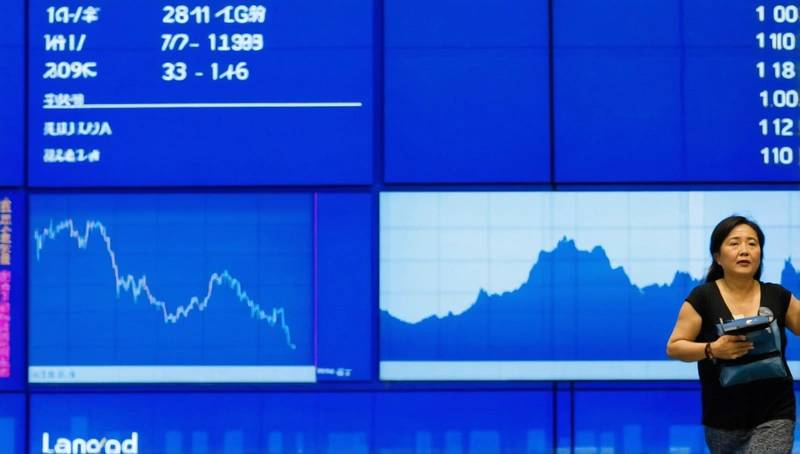
Asia shares were slightly higher on Monday, with gains made by automakers after U.S. president Donald Trump said he may grant exemptions to auto-related taxes already in place.
U.S. Treasury Bonds steadied after staging a recovery over night following last week’s historic selloff. Meanwhile, the dollar continued to lose favour with investors.
Trump said Monday that he is considering a change to the 25% tariffs on imports of foreign autos and auto parts from Mexico, Canada, and other countries. These tariffs can increase the cost of a vehicle by thousands of dollars. Trump stated that car companies need "a little time" to manufacture cars in the United States.
This followed Trump's Friday decision to exempt some electronics, including smartphones, computers and other electronic devices from his "reciprocal tariffs" in the U.S. His administration stepped up investigations into semiconductor imports after Trump announced on Sunday that he would announce the tariff rate in the coming week.
Illiana Jain is an economist with Westpac. She said, "When we see these exemptions flowing through, it helps the markets to think that tariffs aren't going to be something that will be all-encompassing and that they may actually be reprieved."
After last week's massive selling, investors took any good news and drove shares higher. The broadest MSCI index of Asia-Pacific stocks outside Japan rose 0.3%.
Japan's Nikkei index rose by 1%. Shares of automakers Toyota and Denso, which makes auto parts, were among the biggest gainers.
Gains were modest as the uncertainty surrounding Trump's trade policy and his back and forth on tariffs continued to cloud markets and global economic outlook.
U.S. Futures fluctuated between losses and gains, closing the last trades lower following an overnight gain in Wall Street.
Nasdaq and S&P futures both fell by close to 0.2%. In Europe, EUROSTOXX futures dropped 0.14% while FTSE Futures rose 0.25%.
Bank of America, Citigroup and other big banks will be reporting earnings this week. The numbers from chipmaker TSMC will be a highlight later in the week.
The Shanghai Composite Index and China's CSI300 blue chip index each fell more than 0.4%, while Hong Kong’s Hang Seng Index reversed its early gains to drop 0.16%.
Bharat S. Sachanandani is the head of flow strategies and solutions in Asia Pacific for Societe Generale.
The asset markets seem to indicate that the higher prices of U.S. consumer goods will lead to a reduction in demand, and the probability of a recession is increasing.
U.S. RATE
After a wild selloff that resulted in the biggest weekly rise in borrowing costs for decades, U.S. Treasuries managed to hold onto their overnight gains on Monday. Bond yields are inversely related to bond prices.
The benchmark 10-year rate was unchanged at 4.3564% after falling nearly 13 basis points the previous session.
The yield on the two-year bond was also little changed, at 3.845% after slipping 12 basis points on Monday.
Analysts have also cited comments made by Federal Reserve Governor Christopher Waller as contributing to the decline in yields.
He said that on Monday, the Trump administration’s tariff policies were a major shock for the U.S. Economy and could cause the Fed to lower rates in order to avoid a recession even if the inflation rate remains high.
Raphael Bostic of the Atlanta Fed Bank, on the other hand, suggested that U.S. Central Bank should remain on hold until more clarity is available.
The markets are pricing in an easing of about 85 basis points by December. Most expect the Fed to keep rates at their current level next month.
The dollar was near its three-year low against the euro, at $1.13245. It was also not far off from the decade-low it had reached against the Swiss Franc.
Sachanandani, of SocGen, said that the U.S. Dollar's behaviour has changed recently. It now ignores rate differentials and responds more to capital flow.
The U.S. Dollar does not like the prospect that U.S. companies will be less profitable and U.S. consumers will face higher inflation. Foreign investors' appetite for U.S. assets is also declining. assets."
The latest exemptions from tariffs announced by Trump boosted oil prices. Brent crude futures rose 0.2% to $65.01 a barrel, while U.S. oil was up 0.24% at $61.68.
Gold spot was nearing a record price of $3,221.45 per ounce.
(source: Reuters)