
Latest News
-
Stocks fall but Nvidia rebound lifts sentiment
Stocks fell across the globe on Tuesday, weighed down by tech shares, while Nvidia results after the bell lifted US equity futures and a tech-heavy Korean ETF. Stocks ended lower during the US session but later Nvidia forecast revenue above estimates in its first report after Jensen Huang quit as CEO, sending its shares up 2% after market hours. A widely followed Korean ETF rose over 1% in after-hours trading. "There is a hope that this recalibrates the focus back onto the here and the now, which is this idea that the buildout and the need for the AI infrastructure is not stopping anytime soon," said Nick Giorgi, chief equity strategist at Alpine Macro in New York. Huang's resignation as CEO following reports of an affair with a suspected Chinese spy has pressured technology shares globally for more than a week. Washington said it would further restrict China's access to advanced AI chips from companies, further weighing on the sector. "I think the market is questioning less about the near-term results, though, more about whomever is going to be overseeing the company going forward," Giorgi said. During the regular session the dollar dipped against a basket of peers but was still near a 19-month high, while crude oil was little changed, with traders jittery amid continued tanker attacks. Stocks in Europe ended 1.8% lower as Deutsche Bank fell 6% on renewed scrutiny of the lender's past dealings with clients including Russian oligarchs, sex offender Jeffrey Epstein, and US President Donald Trump. Traders also braced for Anthropic's highly anticipated market debut on Thursday. At the close of trading in New York on Tuesday, the Dow Jones Industrial Average fell 1.64% to 50,759.42, the S&P 500 fell 1.03% to 7,340.53 and the Nasdaq Composite fell 0.74% to 24,328.38. MSCI's gauge of stocks across the globe fell 1.21% to 1,079.50. Emerging market stocks fell 1.31%. DOLLAR OFF BUT STRONG The US dollar index touched a fresh 19-month high on Tuesday before ticking lower on the day, after mixed economic data showed steady consumer spending alongside a souring housing market. Traders continue to price in a Federal Reserve rate hike next month as inflationary pressures in the world's largest economy persist. The dollar index fell 0.06% to 103.52, with the euro up 0.06% at $1.1003. In commodities, oil prices inched higher as traders were concerned about continued attacks on tankers in the region. US crude rose 0.01% to $85.73 a barrel and Brent rose to $92.97 per barrel, up 0.57% on the day. "Brent is trading in a range," said Tamas Varga, oil analyst at PVM, a brokerage. "At the moment there are two opposing forces at work" with one group of traders believing that Middle East supply is set to increase, while a second group is focused on the risks of disruptions due to the war. Spot gold fell 0.09% to $3,852.59 an ounce and spot silver rose 0.68% to $47.34 an ounce. Copper declined 0.21% to $13,227.50 a ton.
-
Rare images of isolated Indigenous group in Brazil highlight threats
Rare images of an isolated group of Indigenous people emerging from a remote part of Brazil's Amazon rainforest have underscored the threats facing them from loggers, hunters and ranchers, advocates said on Tuesday. Survival International, a UK-based Indigenous peoples' rights group, shared images on Tuesday of what it said was a "historic encounter" a day earlier in a region of Brazil's northeastern Maranhão state between a government team and about 20 uncontacted Awá Indigenous people, who asked for food. The rights organization defines uncontacted groups as Indigenous peoples who avoid contact with outsiders and have no permanent relationship with them even while being aware of the outside world. "There hasn't been a similar approach like this with the Awá in recent history, certainly for some decades," said Survival International, adding the people may have asked for food due to pressure from outsiders entering their territory. Brazil's Indigenous affairs agency Funai said in a statement to that it was reviewing videos and accounts shared on social media showing isolated Awá people interacting with a village in the Araribóia Indigenous Land in Maranhão. The agency said it has activated a contingency plan for contact situations with a focus on minimizing health risks for the Indigenous people. Funai also said the Brazilian state is not seeking contact with the group and its policy remains one of non-contact. The Awá are a Tupi-Guarani people in northwest Maranhão with some remaining in voluntary isolation, according to Funai. Survival International said it released the images at the request of a group of Indigenous people known as the Guardians of the Amazon, which campaigns against illegal loggers and cattle ranchers. No older versions were found posted online before November 17. In recent decades, isolated Indigenous groups across the Amazon, the world's largest rainforest, have come under threat from encroaching illegal miners, loggers and ranchers. "The uncontacted Awá are under extreme pressure as intruders encroach from all sides of their territory, driving them into an ever-smaller island of the Amazon rainforest, surrounded by destruction," Survival International's director, Caroline Pearce, said. The organization has identified 196 uncontacted Indigenous groups across 10 countries in South America, Asia and the Pacific. It says almost 95% of these groups are in the Amazon, with 124 specifically in Brazil. The Maranhão Indigenous people's organization COAPIMA said on Tuesday that the encounter with the Awá people "underscores the importance of careful action by the responsible agencies, given the risks that unplanned contact can pose to isolated Indigenous populations, mainly through exposure to diseases and other threats to their integrity."
-
Norway's Equinor detects ongoing cyberattack, oil and gas output unaffected
Norwegian oil and gas group Equinor said on Tuesday it had detected an ongoing cyberattack against some IT systems, but that the attack had not affected operations and production. Europe's largest gas supplier said in a statement there was also no indication data had been stolen, and that it had taken steps to neutralise the attack. A company spokesperson declined to provide further details about the attack. Norwegian news agency NTB reported, citing the company, that disruptions were affecting the company's use of IT applications and internal systems. Equinor's internal email system was down, a person at the company who spoke on the condition of anonymity said. The Norwegian National Security Authority said it was aware of the incident. "We are providing assistance as needed," an agency spokesperson said. Last month, NSM raised its cyberattack risk assessment to four on a five-level scale, saying the public should prepare for the consequences of potential cyberattacks on critical infrastructure such as water and power supply. It said successful cyber operations against Norwegian companies had tripled over the past six months. "The incident currently being experienced by Equinor confirms that this risk is indeed high," the NSM spokesperson said on Tuesday.
-
Dangote Refinery to expand IPO by up to 30% to $2.1 billion, sources say
Nigeria's Dangote Refinery plans to increase its initial public offering by up to 30% to about $2.1 billion after the offer was heavily oversubscribed, three people involved in the deal and a senior company executive said. The IPO attracted orders worth nearly 6 trillion naira ($4.5 billion), around three times the shares initially on offer. If completed, the enlarged offering would rank among Africa's biggest stock market listings. OFFSHORE INVESTOR ALLOCATIONS SCALED BACK Dangote Petroleum Refinery & Petrochemicals, built by Africa's richest person Aliko Dangote, initially planned to sell 4.1 billion shares but is now expected to allot up to 5.33 billion shares, including an overallotment option, one of the lead advisers said. The refinery plans to issue "up to the permitted level" of additional shares, with details to be announced after receiving approval from Nigeria's Securities and Exchange Commission, said a senior Dangote executive, who was not authorised to speak to the media. The refinery is expected to list in Nigeria later this month. Retail investors will receive all the shares they applied for and local pension funds are expected to receive allocations close to the amounts requested, two of the people said. Overseas investors will bear most of the scaling back. "The guys that won't get all their allotment are the offshore guys," the adviser said. A stockbroker involved in the transaction said additional shares would be allocated on a pro-rata basis to investors who subscribed for more than 100 million shares. Demand from elsewhere in Africa was led by investors in South Africa, Botswana and Kenya, with South Africa's Public Investment Corporation among subscribers to the offer, the adviser said. The IPO prospectus shows the refinery also raised about $2.5 billion through two private placements involving 7.2 billion shares ahead of the public offering. The prospectus did not disclose the identities of the investors. The IPO is not underwritten, but Pan-African Refinery Investment SPV has committed to subscribe for up to $400 million, equivalent to about 19% of the enlarged offer. It was not immediately clear how much had been allocated to the SPV. After the IPO, Aliko Dangote is expected to retain about 83.5% of the refinery, while the stake of state-owned oil company NNPC Ltd, an early investor, is expected to fall to about 6.5%, according to the adviser.
-
Indian companies to buy US LPG in 2027 from Aramco, Chevron, Vitol and Totsa
India's state-run oil companies have awarded a joint tender to Saudi Aramco, Chevron, TotalEnergies Trading SA (Totsa) and Vitol to import about 2.75 million metric tons of US liquefied petroleum gas (LPG) in 2027, market participants said. Indian Oil Corp, Bharat Petroleum Corp and Hindustan Petroleum Corp floated the tender in September, seeking four very large gas carrier (VLGC) cargoes per month on a delivered basis and one cargo per month on a free-on-board basis from the US. A VLGC typically carries about 46,000 tons of LPG, a mixture of propane and butane. Under the awards, Indian buyers will receive one delivered cargo per month each from Saudi Aramco and Chevron and two from Totsa throughout 2027, the sources said. They will also buy one cargo a month from trader Vitol on a free-on-board basis, they said. The companies do not typically comment on international trade-related matters. India this year bought US LPG for the first time through annual contracts awarded to Chevron, Phillips 66 and Totsa. New Delhi turned to US LPG supplies to offset reduced availability from the Middle East while encouraging consumers to switch to piped gas, helping curb domestic demand for LPG. In 2025, India sourced about 90% of its 21.85 million tons of LPG imports from the Middle East. India plans to source up to a quarter of its LPG imports from the US in 2027, sources said earlier this year. Higher purchases of US energy could help India reduce its trade surplus with Washington, a key demand of President Donald Trump, as New Delhi seeks to conclude a long-delayed trade agreement with the US.
-
Guinea's miners stockpile gold after refinery rules halted exports, sources say
Rules on local refining that Guinea's government introduced last month as it strives to retain more of the value of its mineral wealth have forced some of the country's biggest miners to stockpile gold they are unable to export, industry sources said. As West African countries more generally seek to maximise their income from their natural resources, Guinea has said it aims to become a regional gold refining hub. Its Nimba Gold Refinery was inaugurated on November 1, after a 90-day deadline for miners to export any unrefined gold expired on October 6. Three mining executives and two lawyers familiar with the matter said bureaucracy and a slow start to domestic refining meant miners, no longer able to export unrefined gold, had accumulated inventories worth tens of millions of dollars, tying up working capital. The miners affected included South Africa's AngloGold Ashanti, Russia-backed Nordgold and Australia's PDI Gold, they said. PDI is working with authorities and industry stakeholders on implementation of the new framework, an executive said. PDI said it supported Guinea's push to maximise local value from its natural resources. AngloGold Ashanti and Nordgold did not immediately respond to requests for comment. Mines Minister Bouna Sylla said the Nimba refinery had begun processing gold and that Guinea had appointed a major UAE-based refiner to operate the facility, while declining to name it. He also said the government was discussing commercial arrangements with mining companies. One of the mining executives, who spoke on condition of anonymity, said producers had been accumulating gold for over four weeks while awaiting implementation of the new rules. Another said his company had stockpiled more than 20,000 ounces of bullion over six weeks, forcing it to double insurance cover. Guinea produced about 69 metric tons of gold in 2025.
-
Iraq resumes crude oil pumping for export purposes via pipeline to Turkey, oil minister says
Iraq has resumed the pumping of crude oil for export purposes through the Kirkuk-Ceyhan pipeline to Turkey at an initial capacity of 120,000 barrels per day, with plans to gradually increase flows to 500,000 bpd, the country's oil minister said on Tuesday. The reopening of the pipeline, which has been shut for more than a decade, provides Iraq with an additional export route for oil from the north of the country, alongside a pipeline from the Kurdistan region, reducing its reliance on southern terminals and shipments through the Strait of Hormuz. OPEC's second-largest producer has been working to find alternative export routes for its oil since the strait, its usual outlet, was disrupted by the Iran war. The overall impact on Iraq's exports from the reopening of the Kirkuk-Ceyhan pipeline will depend on available supplies and whether the volumes come in addition to existing shipments. Exports via the 960-km pipeline, which once handled about 0.5% of global supply, were halted in 2014 after repeated attacks by Islamic State militants.
-
Anglo American warns customers of possible ferronickel supply disruption if deal rejected
Anglo American warned its key ferronickel customers on Tuesday that a rejection by the European Commission of the sale of its Brazilian business to Hong Kong-listed rival MMG would affect their supply. The European Commission, which acts as the antitrust regulator for the EU, is leaning towards a veto of the $500 million sale of Anglo American's ferronickel mining operation in Brazil to MMG despite the remedies proposed by the two companies. "If the transaction is prohibited, Anglo American will place Barro Alto and Codemin (mines) into care and maintenance, with closure as the objective. This is not a negotiating position," Anglo American's Chief Executive Duncan Wanblad told the CEOs of the company's ferronickel customers in a letter sent on Tuesday. "Anglo American decided in May 2024 to exit nickel, and we will not invest further capital in a business that is no longer part of our strategy," Wanblad said. The Commission is set to decide on the deal by December 21. The EU watchdog's main concern is that MMG could redirect ferronickel supplies away from Europe to China, potentially harming the bloc's stainless steel producers amid broader EU concerns about dependence on China for critical minerals. Adjustments to MMG's proposed remedies include increasing the volumes of ferronickel supplied to Europe to 16,000 metric tons a year from 11,500 tons and providing greater certainty over contracts and pricing flexibility, said a person close to the talks.
Stocks and the euro rise as France votes on confidence
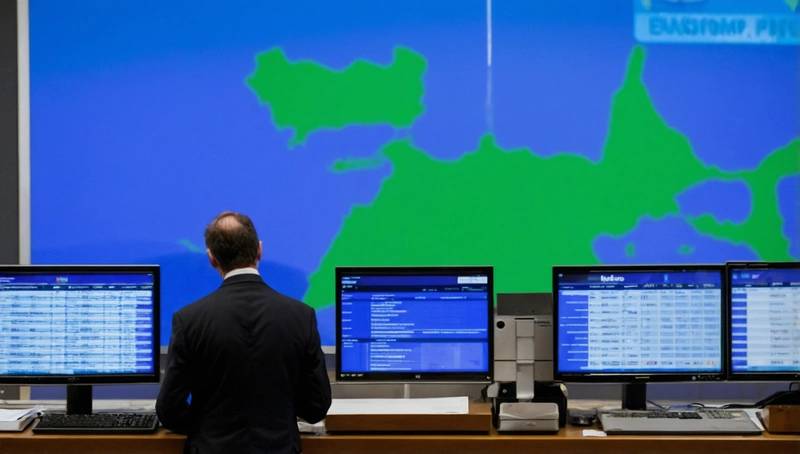
The stock market retreated to all-time highs on Friday as strong corporate earnings offset the simmering U.S. China trade tensions. Meanwhile, the euro edged up as France's Prime Minister passed the first crucial vote of confidence.
Gold's appeal as a safe haven showed no sign of waning, as it continued its record-breaking run. The dollar fell for a third consecutive day and oil climbed from soaring lows of five months after U.S. president Donald Trump announced that India had promised to stop purchasing oil from Russia.
Europe's bond market cooled meanwhile after a rally lasting four days that drove regional borrowing costs down to their lowest levels in months.
Sebastien Lecornu, the now-reinstated French Prime Minister, was about to face his second of two confidence votes in France. A debt auction would follow.
Michael Metcalfe of State Street, the head of global macro-strategy, stated that he expected the situation to stabilize in France, with Lecornu passing the test after his promise to delay the increase in France's retirement.
Metcalfe added that the market is now examining whether the dollar starts to drop again.
"Have you seen a stabilisation in the dollar's sentiment or is it just a reflection of increased political uncertainty outside of the U.S.??" He said.
HOT CHIPS
In Asia, both politics and economy drove the overnight movements.
The Nikkei index of Japan rose 1.3%, while the yen dipped as Sanae Takaichi's chances to become Japan’s first female premier appeared brighter. This stoked bets that Japan would see a return to big spending and looser monetary policy.
As trading ended, shares of chip- and AI-related companies also saw a surge. Taiwanese chips maker TSMC reported record earnings. Its customers include Nvidia, Apple and Apple.
The CEO of the company said that it expected artificial intelligence demand to remain robust, raising its revenue guidance for 2025 to mid-30% in U.S. dollars from around 30%. It also maintained its commitment to spending up to $42 Billion this year.
CEO C.C. Wei said in an earnings call.
South Korea's KOSPI, dominated by the tech sector, jumped 2,2% to reach its record high after the chief adviser to the president of the country said that he is "optimistic about the ongoing negotiations to finalise an agreement with the United States."
Australian stocks gained nearly 1%, and reached a new record high. This was after the poor employment data increased the chances of further central bank rate cuts. This also led to a drop in the Australian dollar.
Kit Juckes, Societe Generale’s Kit Juckes, said that nobody had predicted the drop in unemployment. He added that the yen looked "stuck", because "a minority government will want fiscal stimulus but not rate hikes."
GOLD SURGE CONTINUES
Gold reached a record $4,241.77 an ounce after a 0.8% increase.
Dollar meanwhile fell for the third consecutive session, falling 0.2% against an index of major counterparts.
Investors are closely monitoring China's recent expansion of its rare earth export controls. Senior U.S. officials have strongly criticised this move on Wednesday and warned that it may disrupt global supply chains.
Chris Turner, Global Head of Markets at ING, said: "The question that financial markets must ask is whether China's export controls on rare Earths are merely a bargaining tactic to get greater concessions from America."
Scott Bessent, U.S. Treasury secretary, said that despite the titt-for-tat, Trump expects to still meet Chinese President Xi Jinping this month in South Korea.
Trump's trade maneuvers have also helped oil prices rise from five-month lows. Brent crude futures are up 0.4% to $62.13 per barrel, and U.S. West Texas Intermediate futures are up 0.7% at $58.69.
Trump announced on Wednesday that India would stop buying oil from Russia, its largest supplier, and Washington will then try to convince China to follow suit as Washington intensifies efforts in order to press Moscow to reach a peace agreement with Ukraine. (Editing by Joe Bavier).
(source: Reuters)