
Latest News
-
Russia claims that Ukraine has struck two nuclear facilities at Zaporizhzhia
The head of Russia's state nuclear corporation said that despite the fact that Ukrainian drones had attacked two facilities at Zaporizhzhia, a Russian-held nuclear power plant in southeast Ukraine, there was no danger to nuclear safety. Alexei Likhachev said that a driver who was delivering food to plant workers had been killed by the drone attack. Likhachev said that a laboratory and a plant for the processing of radioactive waste were targeted. Ukraine has yet to comment on the incident. The plant's management announced on?Saturday that Ukrainian shelling in recent weeks has damaged the external power supply equipment. Electricity is currently provided by emergency diesel generators. The plant does not produce electricity, but it needs two external links for power to cool nuclear fuel. In the first few weeks of the war, which began with Moscow's invasion of its smaller neighbor in February 2022, Russia captured the?plant - Europe's biggest with six reactors. Since then, Moscow and Kyiv accuse each other regularly of military actions that compromise nuclear safety. The International Atomic Energy Agency (IAEA), the UN's nuclear watchdog has repeatedly taken action to ensure a ceasefire surrounding the plant so that repairs could be made to the lines connecting the facility to the main grid. UN monitors are at the Zaporizhzhia and three other plants in Ukraine. Maria Zakharova of the Russian Foreign Ministry wrote on her ministry's website that the West was enabling Ukrainian aggressions by not publicly condemning them. Zakharova wrote that "Kyiv has intensified its shelling of the Zaporizhzhia nuclear plant because Western countries have not responded appropriately to these actions, effectively facilitating new assaults." "Such an attitude toward strikes by the Ukrainian military shows the true 'value' of statements made by representatives of these nations about nuclear and physical safety at international forums."
-
The top cases in the US Supreme Court docket
US Supreme Court will hear a number of important cases in its new term, which begins Monday. These include issues like President Donald Trump's Immigration Policies, the ban on assault-style rifles, the financial responsibility of Big Oil for climate change and Republican-backed voting restriction. This is a list of some of the cases that are being argued in the current term. The term runs until the end of June. Big Oil Climate Suit ExxonMobil, Suncor Energy and Boulder officials argued on October 5, attempting to "thwart" a lawsuit filed by Boulder officials. The Justices grappled with the complex question of whether local governments should be allowed to hold oil companies responsible for harms caused by climate change. After Colorado's highest court allowed Boulder to sue them for violating state laws and seeking unspecified damages, the companies filed an appeal. Trump's administration supported the companies. The justices expressed concerns over unduly restricting the power of states to pursue litigation related to climate change, and the potential for chaos if local government across the nation were allowed to sue these corporations. The ruling is expected to be made by the end June. TRUMP'S MANDATORY DETENTION OF IMMIGRANTS The court will determine the legality Trump's policy, which subjects millions of illegal immigrants living in the US to mandatory detention while deportation proceedings are underway. Trump's policy of mass deportation includes this policy. The Supreme Court heard the Trump administration appeal of a lower-court ruling that ruled against the policy, in a case concerning a Brazilian citizen. The US administration has abandoned its long-standing interpretation of federal laws that allowed immigrants living in the US to be released under bond until their cases were heard in immigration court. Dates for the arguments have not been set yet. The ruling is expected to be made by the end June. DEPORTATIONS TO A THIRD COUNTRY BY TRUMP In December, the justices will hear arguments over the Trump administration’s policy to deport migrants to "third countries", or other nations than their home country. They won't give them the opportunity to demonstrate the harms that they might face. On September 29, the court allowed the Trump administration to continue its policy, suspending a federal judge’s ruling that deporting migrants to third-country countries was illegal. Human rights groups claim that more than 25,000 migrants were deported under this policy to 29 different countries. The ruling is expected to be made by the end June. Ban on assault-style rifles On December 2, the justices will hear arguments in a challenge against state prohibitions of 'assault style rifles. This case involves a weapon type that is often associated with mass killings. The lower courts in Cook County Illinois and Connecticut upheld the bans on powerful semiautomatic weapons such as AR-15s. Lower courts rejected arguments that these measures violated the US Constitution's Second Amendment rights to "keep and bear arms." Gun rights groups, as well as other opponents, have argued that Supreme Court precedents regarding the Second Amendment protect firearms in "common usage." The end of June is the expected date for a ruling. Voting Rights On December 8, the justices will hear arguments in a Republican led bid to reinstate voter restrictions in Arizona. This would require proof of citizenship for all voter registrants, and purge voter lists in Arizona from alleged non-US citizen voters. Republicans appealed a lower court's decision to stop certain provisions of Arizona law for violating federal voting registration laws. The Trump administration has supported key aspects of the appeal. The Arizona measure, according to critics, adds additional mandates for voting which unfairly targets Latinos and Native American voters. These groups tend to support Democratic candidates. The ruling is expected to be made by the end of June. LGBT RIGHTS On November 3, the justices will hear arguments in an appeal by the Archdiocese of Denver, and other Catholic entities, to be exempted of a Colorado program that funds preschools' nondiscrimination requirements. A lower court ruled that Colorado's program didn't violate the First Amendment rights of the Catholic plaintiffs. State funds are provided for preschools. The Catholic plaintiffs objected that the state required schools receiving funding through the program to give all children an "equal chance" to enroll in pre-school, regardless of certain characteristics. This included the sexual orientation of students and their families. The ruling is expected to be made by the end June. EPIC GAMES SUE AGAINST Apple Apple will try to avoid being found in contempt by the justices in its legal battle with Epic Games, the maker of "Fortnite". The iPhone maker had been found to be in violation of an order from a court ordering sweeping changes in its lucrative App Store as part the antitrust litigation. Apple appealed the ruling of a lower court that upheld a federal judge's decision in Oakland, California finding Apple in contempt for Epic's lawsuit against App Store fees. Dates for the arguments have not yet been announced. The ruling is expected to be made by the end June. PEPSICO TRADEMARK CASE The court will hear arguments regarding a claim by Rise Brewing, a maker of canned coffees, to hold PepsiCo responsible for an alleged trademark violation involving Pepsi’s morning energy beverage "Mtn Dew Rise." Rise Brewing appealed the ruling of a lower court that rejected the company's claim the name "Mtn Dew Rise," infringes on its trademarks, and confuses customers with its coffee brand. No date has been set for the arguments. The ruling is expected to be made by the end June.
-
Bonds resume selling after bonds climb, but stocks rise following weak US job data
The dollar and major stock indexes fell on Friday, as expectations of a Federal Reserve rate hike this month dropped after weaker-than-expected US jobs data. The bond market resumed its ongoing selloff, which has seen global yields reach levels not seen for two decades. The closely watched Labor Department employment report revealed that nonfarm payrolls increased by 29,000 jobs in August, falling short of the 90,000 expected increase according to economists surveyed. The Labor Department's closely watched employment report showed that nonfarm payrolls?increased?by 29,000 jobs last month, short of the 90,000 expected gain according to economists polled by. After the report, bets on a Fed rate hike in October, after it raised rates last month for the first since 2023, dwindled. The Fed is now seen as having a 21% chance of raising rates by 25 basis point in October. This was compared to a 26% chance before the report. Joseph Purtell is senior vice president at Neuberger, and portfolio manager. He said that the labor market was not as hot as it had been in August. Purtell described the labor market as stable. As Friday's employment report came out, expectations for a rate hike in October had already begun to decline. This week, two top policymakers stated that they needed more data to decide 'what to do with interest rates next. LSEG says that the odds of a December rate hike initially decreased following the data, but then increased. Rates that are higher can be seen as negatives for stocks, because they raise the borrowing costs for consumers and businesses. The Nasdaq Composite gained 319.27 point to 27,190.86, a 1.2% increase. The Dow Jones Industrial Average?rose by 250.40 or 0.5% to 51,176.96. The S&P?500 grew by 56.27 or 0.7% to 7,722.72. The MSCI index of global stocks rose by 7.01 points or 0.6% to 1,140.27. The pan-European STOXX 600 rose by 0.75%. The dollar fell against the euro and the yen. The euro last rose 0.16% to $1.1259 The dollar fell 0.18% against the Japanese yen to 157.79. The gap between German and French yields is the widest since 2011. US Treasury yields initially fell following the jobs report, but later rose on the same day. Some investors noted that the jobs reports was not so poor that it eliminated chances for the Fed? to raise rates in the coming months. In recent weeks, global bond markets have steadily sold off as the US-Israeli conflict with Iran has pushed energy prices up. This has complicated the inflation outlook while further stretching already stretched public finances. Benchmark US 10-year yields closed the month of September with their largest quarterly increase since 1994. The yield on the benchmark US 10-year note was up 4.93 basis point at 5.283%. The yield on the 2-year note, which moves typically in step with Fed interest rate expectations, was up 4.63 basis points at 5.283%. The European Government Bond Markets remained volatile on Friday, with the difference between German and French 10-year Yields reaching the highest level since the Euro Zone Debt Crisis in 2011. German 2-year bond rates were flat at 3.05% after swinging between session lows of 2.943% to highs of 3.063%. French 2-year bonds were about 4 bps higher, at 3.73%. They had risen as much as 3.84% earlier. Italian 2-year bond yields are down 7 basis points at 3.547%. The yields on 2-year German bonds fell by nearly a quarter of a point this?week. Meanwhile, those on 2-year French debt rose nearly 14 basis points. Brent crude futures rose, while US West Texas Intermediate retained a part of its earlier losses. This was after European leaders accepted US President Donald Trump’s request for the release of diesel reserves. Brent rose 46 cents or 0.45% to $102.77 per barrel by 2:20 pm EDT (1820 GMT). WTI fell 1% to $91.90 per barrel.
-
US FDA links Mexico facility to outbreak of lettuce parasites after closing probe
The US FDA announced on 'Friday that it had concluded its investigation of a summer parasite epidemic, and linked the illnesses with recalled'shredded iceberg lettuce' from Taylor Farms de Mexico. The regulator stated that while 'investigators' could not determine definitively how the contamination occurred, tests showed the parasite cyclospora was present in the environment of the lettuce growing and processing. Investigators discovered the parasite during the investigation at the Taylor Farms?de Mexico processing facility as well as at a lettuce field in Mexico. The regulator confirmed that two samples collected during inspections in Mexico were positive for cyclospora. One sample was taken from the tank of wastewater that Taylor Farms de Mexico used to process its products, and?the second came from an irrigation ditch at a?iceberg-lettuce grower who had been identified as part of a traceback investigation by the US Food and Drug Administration. Taylor Farms de Mexico didn't immediately respond to our request for a comment. The FDA stated that the FDA's analysis of patient illness reports and supply chain tracking clearly supported the linkage between the recalled lettuce, and the multistate outbreak which caused intestinal?sickness. The regulator is still analyzing the results of the genetic testing on both positive samples. The FDA also announced a 10-point plan for preventing similar outbreaks before the growing season of 2027. Actions include:?more surveillance of produce historically associated with the parasite, increased outreach to growers, and an outbreak investigation report with recommendations for prevention. On?September 11, the US Centers for Disease Control and Prevention (CDCP) declared that the outbreak was over. The CDC received reports on September 14 of 19883 cases of cyclosporiasis that were confirmed in the laboratory and two deaths.
-
Global M&A deals slow down in the third quarter due to rising borrowing costs
M&A activity totaled $993 billion in the past three months, a 41% drop compared to second quarter 2026. This is the first quarter that has fallen below $1 trillion, since the second half of 2025. The ten megadeals worth more than $10 billion announced during the third quarter included Gold Fields' $25.7 billion bid to acquire Northern Star Resources and Banca Monte dei Paschi’s $32 billion offer for Banco BPM. This was the lowest quarterly number since the fourth quarter 2024. The surge in energy costs has fueled inflation and raised expectations about interest rates. The benchmark 10-year US Treasury Yield hit 5.34% Thursday, its highest since 2002 after posting the largest quarterly increase this century in three months up to September. John Collins, Morgan Stanley's global head of M&A, said that "at the margins (higher yields) makes valuations sometimes harder." "It's hard to quantify the impact, but I am not yet ready to declare a slowdown." The number of transactions fell by 8%, to levels not seen since the year 2020. Carsten Woehrn is Goldman Sachs’ co-head for M&A in Europe Middle East and Africa. If the current pace is maintained, he believes that the total value of the deals will surpass the peak in 2021. Woehrn stated that "Megadeals continue and we have seen significant activity in the past few months." Boards are feeling more pressure to close strategic deals. The?technology industry has seen unprecedented levels of investment, and strategic stake purchases of these companies have accounted for approximately one quarter of all global M&A deals so far in this year. Earlier this summer, Anthropic - the maker of Claude - and ChatGPT - the maker of OpenAI gathered tens billions of 'US dollars in investment. While US and European M&A fell dramatically in the last quarter, Asia Pacific M&A reached $242 billion. This is up 8% compared to the second quarter, and 36% compared to the same period last. The third quarter of this year saw a decline compared to the same period in the previous year. The cross-border business continues to be a major theme in this year, with a 32% increase compared to the same period of last year. We're seeing US companies considering acquisitions in Europe, for the first-time. They are taking advantage of the strong dollar. People are investing in the U.S. to take advantage of higher growth opportunities in the country, said Charlie Bouckaert. DEALMAKING AND TRILLION DOLLARS IPOs The new listings, especially in the tech sector, has given companies the currency they need to acquire rivals. SpaceX bought AI coding startup Cursor days after its blockbuster Nasdaq debut. The company's valuation soared to over $2 trillion. Collins stated that "one of the driving forces behind activity is that larger companies may be able to navigate the transition to?AI more effectively." SpaceX's June IPO helped to drive $215 billion in global initial public offerings (excluding SPACs) in the past year, the highest amount since 2021. This was despite a smaller number of deals compared to the same period in 2017. In the past three months,'stock sales' raised US$284 Billion, which is 26% less than proceeds raised in equity capital markets for the second quarter. However, this represents a 39% rise from the third?quarter 2025 thanks to offerings by SK Hynix, and Intel. Bankers warned that investors might be hesitant to invest in certain technology and AI deals. Andreas Bernstorff is the global head of equity markets at BNPParibas. Some IPOs were delayed in recent weeks as higher interest rates, and setbacks within the data center eco-system threaten to derail a slew new issues. Bankers are confident despite the uncertain future. Bouckaert stated that "strong secular trends, such as AI, are driving activity and we expect to see 2027 be another prosperous year."
-
Officials claim that Israeli settlers killed Palestinians in West Bank
Palestinian officials reported that Israeli militant settlers killed one Palestinian and injured the other in an attack on Yasuf village in the Israeli-occupied West Bank, on Thursday. According to the UN, Israel's military, including settlers, has killed over 80 Palestinians since the start of 2026 in the West Bank. Jumaa Abdul Fattah, head of the village council, said that settlers killed Mashour Yassin during an attack against his home, which was located on the outskirts Yasuf. Fattah claimed that the?assailants' came from a settlement outpost near the village, which was built about two months ago. He added, "The settlers have attacked the village continuously ever since the outpost's establishment." Israeli soldiers claimed that Palestinians threw stones at "Israelis approaching the village" and the military dispersed the villagers. The Israeli military also fired at the Palestinians. The report did not explain why Israeli settlers had encroached on the village. Fattah claimed that the settlers shot two Palestinians before Israeli soldiers arrived. The Israeli military didn't immediately comment on timing. The rights groups claim that the growing presence of settler on the outskirts of villages is part of a?campaign to seize land and to eat away at the?territory in which Palestinians?aim to create a state. Israel captured the West Bank of Palestine in 1967. Since then, the territory is under Israeli military occupation. The settlers are encouraged by the government of Benjamin Netanyahu who has overseen the massive expansion of Jewish settlements. Most countries and the UN consider Israeli settlements illegal under international law that governs military occupations. Israel disputes that interpretation, claiming the status of the territory is in dispute.
-
VAROPreem CEO: Europe's defense spending supports the shrinking refining industry
The CEO of Europe's largest refiner said that the sector's shrinking size is a result of the rising demand for fuel to support government defense plans. Data from the European Council show that in 2025, European Union member states' defense spending increased?for?the?11th consecutive year to EUR418.9 billion ($472 Billion), marking a 75 percent increase since 2021. Further gains are expected for this year. "Every conversation that I have with European governments is about resilience and continuity of supply. Dev Sanyal, CEO of VAROPreem, said on Thursday that the focus between 2015 and 2020 was to'shut down refineries. "European governments are aware that more fuel is needed. He added that there was a (also) need for more fuel because Europe wanted to gain a competitive edge in AI. FuelsEurope, an industry group, said that since 2009, 30 out of 100 European refineries have closed or been 'converted', and at least seven have been converted into biorefineries. This has severely reduced the production capacity for diesel, gasoline, or jet fuels in the European Union (EU), Britain, Norway, and Switzerland. "Now that defence spending is increasing, you realize that F-35s, Leopard tanks or US-made fighter planes don't run off biogas," said CEO of the Swiss-based VAROPreem. The company has refineries in Sweden and Germany, as well as refineries located in Switzerland, Germany, and Switzerland. According to the most recent Statistical Review of World Energy published by the Energy Institute, the refining capacity of EU countries, Britain and Turkey, as well as the Ukraine, Switzerland, and the Ukraine stood at 14,4 million bpd. This is down from the 17.5 mbpd of '2009. The price of diesel has risen dramatically since the Iran war cut off vital shipping routes and after sustained attacks on Russian refinery infrastructure. The benchmark European Diesel Futures Contract has reached highs of over $1,500 per metric ton, last seen after the Russian invasion of Ukraine 2022. Sources said that US retail diesel prices have hit a record of $6.50 a gallon in the last month. The US is increasing pressure on Europe to reduce diesel stocks.
-
Asia's gas margins skyrocket on outages and China export ban, traders claim
The 'gasoline margin in Asia reached a new record on Thursday, as a result of various refinery outages and reports that Chinese refiners had halted fuel imports for the month of October. The crack or refining profit. Brent crude oil rose by $50.53 to $50.53 for gasoline. Four people who were briefed in the matter confirmed that Chinese refiners had suspended oil exports to October. Beijing is looking to preserve its domestic stock, and this move will further depress fuel markets already under pressure due to war. Brent futures were rolled over to next month's contract on Tuesday, resulting in a drop in the crude oil price. This would have?contributed to the crack widening. News of China's?reduction in product exports also supported the tightening of the Asian market," Alan Gelder said, senior vice-president, refining chemicals and oil markets, at Wood Mackenzie. The price of benchmark fuel has risen to $150.69 a barrel, its highest level since March this year. A Singapore-based gasoline dealer said, "Inventories have been low and there are refinery problems too. This is pushing prices up." The state-run Mangalore Refinery and Petrochemicals Ltd. (MRPL) in India cancelled Wednesday three spot tenders for refined gasoline after a fire broke at a processing facility. The refiner told the exchanges that the export tender would be refloated shortly after an evaluation of the situation. Market sources reported that a major South Korean refiner shut down its gasoline production unit as well due to "some issues". Singapore, China, India and South Korea are the top gasoline exporters of Asia. Enterprise Singapore data showed that Singapore's stocks of light distillates, including naphtha, gasoline and other fuels, had fallen to a 5-year low, falling to 10.514 billion barrels during the week ending September 30. This was largely due to an increase in exports of transport fuels. The period saw a total of 187,000 metric tonnes (approximately 1.5 million barrels) in gasoline imports, while exports rose to approximately?672,000. Australia led the way with 189,000 tons of gasoline exported, followed by Indonesia with 160,000 tons. China led the way with nearly 78,000 tonnes of gasoline inflows, followed by South Korea with about 46,000.
The impact of tensions between the US and Iran on world markets
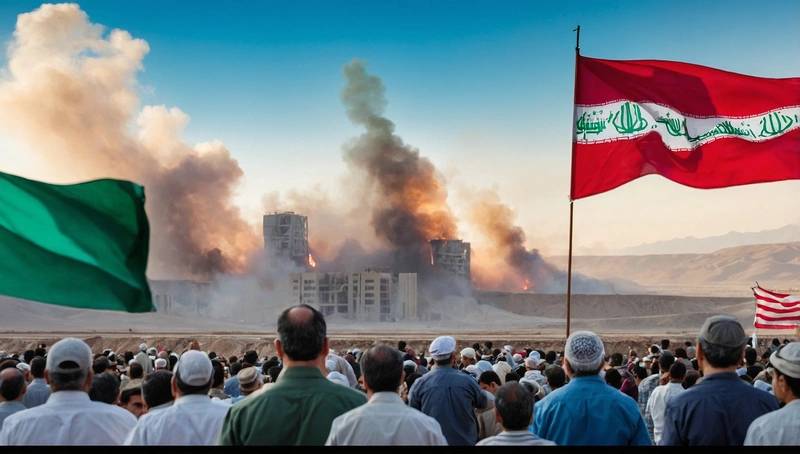
On Saturday, the United States and Israel attacked Iran's leadership. President Donald Trump claimed that this would eliminate a security risk and give Iranians an opportunity to overthrow their rulers.
As fears of an escalation increased, the?strikes placed nearby oil-producing Gulf Arab nations on edge. Tehran responded by firing missiles at Israel.
Here's a look at how the conflict could affect world markets.
OIL SPIKE
Oil is the main barometer for Middle East tension.
Iran is one of the world's major oil producers and lies across the Strait of Hormuz from the oil-rich Arabian Peninsula, where about 20% of the global oil supply travels. Conflicts could restrict oil from entering the world market and drive up prices.
Brent crude traded at around $73 per barrel on Friday, up a fifth so far this year.
Four trading sources reported on Saturday that some oil majors, as well as top trading houses, had suspended crude oil and other fuel shipments through the Strait of Hormuz due to the attacks.
William Jackson, Chief Emerging Markets Economist at Capital Economics said that Brent could rise to around $80, the price during the 12-day conflict in Iran last June.
He said that a prolonged conflict could affect supply and cause oil prices around $100. This would add 0.6-0.7 percentage point to global inflation.
WILD SWINGS EVERYWHERE
The conflict will likely?exacerbate volatility on global markets. These have already been wildly volatile this year due to Trump's trade tariffs and sharp tech sales.
The VIX volatility indicator has increased by a third in the past year and implied U.S. Bond volatility is up about 15%.
Analysts say that currency markets will not be immune to volatility.
CBA reports that the dollar index dropped by about 1% in June. This fall, however, was only temporary and reversed after three to four days.
CBA analysts wrote in a recent note that the size of the fall will depend on the length and the extent of the conflict.
If the conflict lasted for a long time and disrupted the oil supply, we expect the U.S. Dollar to rise against the majority of currencies except the Japanese yen or Swiss franc. The U.S. benefits from higher gas and oil prices if the oil supply is disrupted.
Iran retaliated quickly against Israel on Sunday.
It fell 5% when the war began in June 2024. Also, it dropped after Israel attacked the Iranian consulate in Damascus and when Iran fired missiles on Israel that October.
All episodes were brief and quickly followed by a shekel rebound. JPMorgan stated that it may be different if the conflict or a rise in risk premia proves to be more persistent.
The Wall Street bank stated that "this would be especially the case if a confrontation with Iran also triggers more intensive operations" against Iran's proxy forces.
SAFE-HAVENS DO WHAT THEY DO
Swiss National Bank is likely to be under pressure as the Swiss Franc, which is widely seen as a safe-haven currency in turbulent times, continues to rise. The Swiss franc is up by 3% against the U.S. dollar this year.
Investors may also want to make a second rush for gold. It has been on an incredible run, with a 22% increase so far this year. They could also look at silver, which is also on a good run.
The conflict could also increase demand for U.S. Treasuries, whose yields had been declining in recent weeks.
Bitcoin is no longer regarded as a safe haven. It dropped 2% on Sunday and has lost more than a quarter in value over the past two months.
WATCH MIDDLE-EAST MARKETS
The trading in Middle East bourses on Sunday will be a first 'indicator' of investor sentiment. This includes Saudi Arabia and Qatar. These markets are closely linked to oil prices. However, an escalating war could have a ripple effect on the economies.
Ryan Lemand is the chief executive and co-founder at Neovision Wealth Management. He said, "I think markets will be lower if hostilities continue throughout the day." Depending on how bad the conflict is, Gulf?equities may drop as much as 3-5%.
Saudi Arabia's benchmark index fell 1.3% over five days through Thursday. This is the second week in a row that it has declined. Dubai's main stock market, which will reopen on Monday, has fallen in the past two weeks.
STOCKS FOR AIRLINES & DEFENCE
Global airlines cancelled flights in the Middle East Saturday. Their stocks may be affected if the conflict continues and more airspace is closed.
The demand for European weapons could increase by 10% in the coming year.
(source: Reuters)