
Latest News
-
MORNING BID EUROPE - Shipping oil becomes more difficult and expensive
Wayne Cole gives us a look at what the future holds for European and global markets. Brent oil is now back at $107 a barrel as the Houthis are closing in on Bab el-Mandeb. This is the second key route for oil exports from the Middle East. Ship tracking sites indicate that vessels continue to use the narrow waterway near the southern 'entrance to the Red Sea. However, the Houthis have reportedly warned them they will strike Saudi Arabian vessels if they try to pass. The Suez Canal is still open to tankers to reach Asian markets. However, the journey will take 22 days and cost a lot more in fuel and hiring. Last week, tanker rates reached record levels, and bunker fuel was in short supply. This increased the cost of shipping. Around 80% the world's commerce is transported by ships. Drone attacks from Iraq also targeted Saudi Arabia's East-West oil pipeline, which was carrying between 4 and 5 million barrels per day. The postponement of a Monday meeting between Iran, other Persian Gulf countries and the United States to discuss a safe route through the Strait further disappointed. This?left Brent at $107.81 per barrel, while U.S. crude rose 2.9% to $102.94. Federal Reserve doesn't want prices to remain high. The markets are now priced at 86% for a 25 basis point hike on Wednesday. This would be the first increase since mid-2023. Goldman Sachs and JPMorgan are among the major U.S. Investment Houses that switched their stance to a rate hike on Friday. Even Citi, which had long called for a rate cut, now admits one is likely to happen this week. Investors view this as a test for the credibility of the Fed under Chairman Kevin Warsh. However, it is likely to anger President Trump, who continues to make his novel argument that the U.S. has the lowest interest rates in the entire world. The concern over inflation is so great that even if the Fed keeps rates steady, longer-dated bonds will likely continue to yield more. In fact, the 10-year bond is already a hair away from the psychological barrier of 5.0%. If the Fed decides to hike rates, then the focus will shift to the dot plots in order to determine the likelihood of future moves. Warsh's press conference is also likely to be a focal point. Futures prices are pricing around 90 basis point? of tightening in the second half of next year. Markets suggest that the Bank of Japan is likely to raise rates on Friday by 25 basis points, to 1.25%. They also sound hawkish about a?further tightening of the currency. Markets indicate that the Bank of England will meet on Thursday, and there is only a 25% chance of an increase. However, it's likely to be split decision. Even OpenAI CEO?Sam Altman warned that AI may cause the extinction of humans by the end of this decade. SoftBank, a major loser in Japan and South Korea's tech share market, was blamed on the mounting political pressure to slow down work on AI. Market developments on Monday that may have a significant impact ECB Board Members Isabel Schnabel Piero Cipollone Pedro Machado and Christine Lagarde will be making appearances.
-
Nikkei reports that Chubu Electric's president will resign after nuclear data scandal
Nikkei reported that the president of Japan's?Chubu?Electric?Power is expected to resign following a?finding?that the firm?had?falsified?seismic?data in its application for restarting the Hamaoka Nuclear Power Plant. The paper reported that Chubu would withdraw its request to restart two nuclear units at the?plant. Chubu's Hamaoka nuclear plant in central Japan was undergoing a safety assessment in order to restart its reactors. Japan's nuclear regulator had suspended an investigation following the data scandal. On Monday, Chubu released its investigatory report. The incident could derail Japan’s efforts to restart its nuclear reactors. All 54 were shut down in 2011 after the Fukushima earthquake. In the first half of this year, Tokyo Electric Power restarted Kashiwazaki Kariwa, which is the largest nuclear power station in the world. The Nikkei reported that the resignations of Kingo Hayashi, President and Chairman of Chubu Electric, as well as Minoru Yasui who is currently an executive director, will be announced Monday. Separately Chubu?said that it altered documents submitted to Japan’s nuclear?decommissioning funds manager in relation to the No. 1 ?and No. There are 2 plants being demolished at Hamaoka.
-
As oil prices rise and rate hikes loom, shares in Asia plummet
On Monday, the Asian share markets fell as supply concerns caused oil to spike again. Investors braced themselves for interest rate hikes this week in both Japan and the United States. Brent oil prices rose 3% after new attacks on Saudi Arabia, and on ships in the Gulf. This came as nerves were tested following an attack on Saudi Arabia's oil pipelines and the Houthis' advance into Yemen. The meeting between Iran and Gulf Arab States, which was scheduled to take place in Oman on Monday, for the purpose of discussing a deal about opening the Strait of Hormuz has been postponed. Analysts fear that oil prices will remain high for a long time, causing inflation worldwide. A report showing an uncomfortably high U.S. consumer price index on Friday prompted the markets to estimate that 86% of the time, Federal Reserve rates will be raised by 25 basis points by Wednesday and again by December. This would be the first rate hike since mid-2023. Michael Feroli, JPMorgan's chief U.S. economist, said: "We expect the Fed will hike twice this fiscal year, in September, and in December." At this stage, failing words with actions could put the institution's credibility at risk. He added that the data will determine whether these actions are a recalibration of sorts or a start to a longer-term hiking cycle. "We expect the first scenario, but we see risks in the second." Brent futures rose last 2.6% to $107.36 per barrel after gaining almost?9% the previous week. U.S. crude oil rose 2.4% at $102.48 a barrel. South Korea's Nikkei dropped by 3.3%, while Japan's Nikkei declined by 1.7%. MSCI's broadest Asia-Pacific share index outside Japan fell 0.8%. In Europe, EUROSTOXX Futures dropped 0.5%. DAX Futures declined 0.4%, and FTSE Futures fell by 0.1%. S&P futures on Wall Street fell 0.5% while Nasdaq's futures dropped 1.1%. High Yields Test Evaluated Equities The yields on 10-year Treasury bills were slightly lower, at 4,967%. They had been heavily sold in recent weeks. In just one week, the yields on 2-year Treasury notes rose by 26 basis points. The yields on 10-year Treasury notes also increased by 19 basis points. Ben Snider is the chief U.S. Equity Strategist at Goldman Sachs. He said that strong corporate earnings will support Wall Street in case borrowing costs increase. He added: "Equity prices tend to fall when the Fed begins to raise rates, but we expect the bull to continue." "The S&P 500 generated an average return of -2.2% over a three-month period at the beginning of seven hike cycles in the past few decades." "Yet, the S&P 500 generated an average return +9% over the 12-month period following the first increase." The markets also suggest that the Bank of Japan is likely to increase its cash rate on Friday by a quarter-point, or 1.25%. BOJ will also be expected to sound more hawkish about further tightening, as it tries to prevent the yen from falling back to its 40-year low after it was helped by market intervention. The dollar held steady at 153.49?yen after falling around 4% in the past two weeks and moving away from its July high of 163.99?yen. The euro was also not much changed at $1.1592, after finding support at $1.1570 last Friday. The pound was unchanged at $1.3522, with the Bank of England likely to keep its rate at 3.75% Thursday. However, the decision may be divided again. Gold fell 0.3% on the commodity market to $4,336 per ounce, as bond yields increased, reducing the appeal of gold, which does not pay interest.
-
As oil prices rise and rate hikes are looming, shares in Asia fall.
On Monday, Asian share markets fell as oil prices spiked again due to supply concerns. Investors were also bracing for interest rate hikes this week in the U.S. and Japan. Brent rose 3% as new strikes against Saudi Arabia and?ships?in the Gulf tested nerves. This was after an attack on Saudi oil pipelines and an advance of Yemen's Houthis, which threatened to worsen wartime disruptions to global energy supply. The meeting between Iran and Gulf Arab States, which was scheduled to take place in Oman on Monday, for the purpose of discussing a deal regarding opening the Strait of Hormuz has been postponed. Analysts fear that oil prices will remain high for a long time, causing inflation worldwide. The markets have priced in 86% of the chance that the Federal Reserve will raise rates by 25 basis point on Wednesday and again by December. This would be the first rate hike since mid-2023. Michael Feroli, JPMorgan's chief U.S. economics, said: "We expect the Fed will hike twice this calendar year, in December and September." At this stage, if the institution does not follow up its words with actions, it could be at risk. He added that the data will determine whether these actions are a recalibration of sorts or a sign of a new, more consistent hiking cycle. "We expect the first scenario, but we see risks for the second." Brent futures rose?3.1% to $107.84 per barrel after gaining almost 9% the previous week. U.S. crude oil rose 2.8%, reaching $102.85 per barrel. Nikkei Futures fell 2% to 63,260 compared to a close in cash of 64,011. S&P futures on Wall Street fell 0.5% while Nasdaq's futures dropped 1.0%. High Yields Test Evaluated Equities Treasury futures firmed up a bit in early trading after being heavily sold in recent weeks. Last week, the 2-year yields jumped 26 basis points in a single week. The 10-year yields also rose 19 basis points. Ben Snider is the chief U.S. Equity Strategist at Goldman Sachs. He said that strong corporate earnings will support Wall Street in case borrowing costs increase. He added that "stocks typically suffer when the Fed begins to raise rates, but we anticipate the bull market?to continue." "The S&P 500 generated an average return of -2.2% over a three-month period at the beginning of seven hike cycles in the past few decades." "Yet, the S&P 500 generated an average return +9% in the 12 months after the first hike." The markets also suggest that the Bank of Japan is likely to raise its cash rate by a quarter-point, or 1.25% when it meets this Friday. BOJ will also be expected to sound "hawkish" on tightening further as it struggles against a relapse of the yen following market intervention that helped it recover from a low for 40 years. The dollar held steady at 153.77yen after falling 'around 4% in the last two week? and away from its July peak of 163.99. The euro is also little changed, at $1.1600. It was $1.1570 last Friday. The pound was unchanged at $1.3518, with the Bank of England likely to keep its rate at 3.75% Thursday. However, the decision may be divided again. Gold fell 0.3% on the commodity market to $4,336 per ounce, as bond yields increased, reducing the appeal of gold, which does not pay interest.
-
Oil prices rise by more than $3 following new attacks on Saudi Arabia Strait of Hormuz
Oil prices increased by more than $3 per barrel at Monday's market opening, following new strikes on Saudi Arabia and on ships in the Gulf on Sunday. Brent crude futures increased by $3.62 or 3.46% to $108.23 per barrel as of 2214 GMT on Sunday. WTI futures increased $3.15 or 3.15% to $103.20 a barrel. Saudi Arabian media released footage on Sunday showing damage to homes and mosques from an attack they said was carried out by the Houthis in southern Jazan Province. The Houthis claimed they also attacked a Saudi military base in a neighboring province. The British maritime security agency UKMTO reported on Sunday that a vessel in the Strait of Hormuz had been struck by a stray projectile. This caused a fire, forcing the crew to evacuate the vessel. Iran reported that four members of the crew were injured and one person killed aboard a commercial vessel which was struck off its coast. The oil prices were expected to increase on Monday due to growing concerns over the supply of oil from Saudi Arabia, which is the largest oil exporter in the world. Last week, an Iraqi drone struck and shut down its East-West pipeline, cutting off oil supplies to Saudi Arabia. Tony Sycamore, IG's market analyst, said that unless the talks this week in Oman result in something operational -?or if the East-West Pipeline is brought online quickly - crude oil could continue to?expand its gains towards the $119.48 peak of?early march," he wrote in a Sunday note. Omani Foreign minister?Badr albusaidi stated on X?later Sunday that the scheduled meeting between Gulf countries, Iran and Oman to discuss the Strait of Hormuz on Monday had been postponed.
-
Swedish election in dead heat as voters question liberal traditions
The results of the national elections in Sweden were deadlocked on Sunday. A partial count by the?election authority indicated a one-seat majority for?the centre-left opposition bloc, which could stop Sweden's 'drift' away from its liberal heritage. According to the Swedish election authority, the bloc headed by Social Democrats party leader Magdalena Andersson was expected win 175 of the 349 seats in the Riksdag based on votes cast from 4,853 out of 6,312 districts. As the ballot counting continues, it appears that Prime Minister Ulf Kritersson's right-wing bloc has won 174 seats. While the election is unlikely to alter Sweden's pro Western and pro Ukraine stance, it will determine whether Kristersson continues his push for a hard right clampdown on immigration. The winner of this race may not be known until several days after the overseas votes have been counted. Kristersson, in a pre-election promise, broke a long-standing taboo by saying he would bring the Sweden Democrats into government, a far right party with Nazi roots, to form a majority-right alliance. Right-wing voters say that a victory would be a vote in favor of policies which have reduced immigration and gang violence. Some Swedes are wary, stating that Kristersson's invitation of the extreme right is a step too much. Maria Malmer Stenergard is a member Kristersson’s Moderate Party and the Minister for Foreign Affairs. She said: "I believe it will be a long evening." "Maybe the results won't be known until Wednesday, when overseas votes arrive." Kristersson had gained ground in the last weeks of campaigning after he fell behind in polls for his entire four-year tenure. Andersson's Social Democrats were losing ground. Critics claim that the Kristersson government’s immigration policies undermine civil liberties by imposing incentives and penalties on migrants to either conform to Swedish cultural norms, or leave the country. The far-right parties in Europe would welcome the Sweden Democrats' electoral success, especially after the victory of the anti-immigrant Alternative for Germany at a German state elections last week. The National Rally, which is a far-right party in France, hopes to gain the presidency of France next year. 'DOES NOT LOOK LIKE SWEDEN Jimmie Akesson, long-time leader of the Sweden Democrats, said that the suburb in Rinkeby near Stockholm "doesn’t look like Sweden" because it is home to the largest Swedish-Somali population. Kristersson took power in Sweden?four years back. Sweden had been one of Europe's most tolerant countries towards immigrants for many years. His government abolished the permanent?residency of refugees, tightened welfare regulations and increased expulsions for those without a legal right to remain. The Sweden Democrats admit that they were founded by neo Nazis and white supremacists during the 1980s. However, they claim to have removed these extremists and apologized for their past. After an updated projection by Swedish broadcaster SVT, the party of Sweden's Democrats was greeted with cheers after an exit poll had shown a much smaller gap than the initial one. The original exit poll had placed the centre-left opponents ahead with 51%. You cannot imagine how nervous I am at the moment. "I feel like my life's work hangs in the balance," Ludvig Aspiling, a member of parliament and immigration spokeswoman for the Sweden Democrats. It's going to be a very tight race. He said, "We still have a shot."
-
Trump tells Ukraine's Zelenskiy to stop hitting Russian diesel
U.S. President Donald?Trump called on Ukrainian president Volodymyr?Zelenskiy on Sunday to stop attacking Russian diesel infrastructure. He said the attacks are causing a fuel shortage that "hurts the world". In recent months, long-distance Ukrainian?drone attacks on Russian oil refineries have reduced the country's fuel production. This has led to gasoline shortages in all of Russia. Ukraine, which is regularly attacked by Russia on its own energy infrastructure says that refineries are legitimate targets. According to GasBuddy, the U.S. average price of?diesel - used in trucks, trains and ships, as well as farm equipment - rose above $6 per gallon on Thursday for the first ever time. Trump said to journalists that Zelenskiy must stop knocking down diesel fuel in Russia. This was during his visit to the Irish Open in west Ireland, which is held on a course owned by Trump's family. "We spoke to Mr. Zelenskiy. There are a number of other targets. ?Don't hit diesel fuel. He said, "That's bad for the world." Trump said that the global shortage is not caused by the Middle East but by Russia and Ukraine. According to a draft government forecast, the war has caused Russia to reduce its oil production forecast for this year to a 17-year-low and to revise its fuel exports forecasts for 2026 and 2027.
-
Russian nuclear head says Ukraine attacked fuel trucks, endangered Zaporizhzhia plant
The head of Russia’s state nuclear corporation, accused Ukraine on Sunday of attacking diesel fuel truck and killing two Russian servicemen. He also said that Ukraine was deliberately compromising safety at the Zaporizhzhia Nuclear Power Plant in Ukraine. Alexei Likhachev stated that 'the attack took place on Friday, and resulted in other Russian soldiers being injured. In the first weeks of the Ukraine War that erupted in February 2022, Russian forces seized the Zaporizhzhia Plant, Europe's biggest with six reactors. Both sides have accused each other of taking actions that "endanger the safety of the plant" and increase the likelihood of a nuclear disaster. Likhachev?issued a?statement saying Ukrainian forces launched "a number of combined strikes" Friday against fuel trucks that?deliver Diesel to the station. He said that the strikes were very close to the station's perimeter. Two servicemen died, and many Russian soldiers, some of them seriously, were injured. All of them were involved in supporting a purely civil mission. Diesel generators are vital for the plant, as they provide the power needed to cool the nuclear fuel in the reactors when the two external power lines of the plant go down. Both links were down for almost a three-week period in August and Septembre. Moscow has rejected the Ukraine's demand that Russia abandon the station and return its operation to Kyiv. Currently, the fuel?generates zero electricity. The International Atomic Energy Agency (IAEA), the U.N.'s nuclear watchdog, has permanently stationed a team of observers at the station along with Ukraine’s three other working plants. The agency has "repeatedly" acted as an 'intermediary? when disputes arise. Last month, it helped to arrange a local truce in order for repairs to be carried out and external power connections restored.
Saudi Arabian crude exports reach a six-month high during August
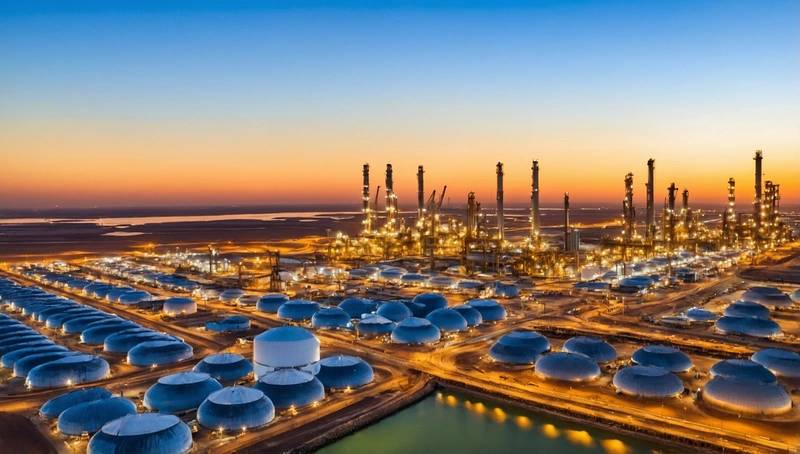
Data from the Joint Organizations Data Initiative showed that Saudi Arabian crude oil exports rose in August to their highest levels in six months.
Crude exports rose to 6,407 million barrels per days (bpd) in July from 5,994 million bpd, their highest level since Febuary 2025.
Saudi Arabia, which is the largest oil exporter in the world, increased its crude production to 9.722 millions bpd from 9.201 in July.
JODI data showed that the refinery crude throughput fell to 2.902 mbpd in august, a 2.6% drop from July's 2,978 mbpd. Direct crude burning also decreased by 1,000 bpd at 607,000 bpd.
The demand is still somewhat contained, according to UBS analyst Giovanni Staunovo. "They have unwound production cuts so there's more oil and they produce more, but the official selling price was still very high," he said.
"September should be a higher month, just because the temperatures in the Middle East are declining and there is more crude oil available for export."
JODI publishes the monthly export figures of Saudi Arabia and its other OPEC member countries.
OPEC+ had announced earlier in October that it would increase oil production targets by 137,000 bpd beginning November. This was the same incremental rise as October, amid concerns about a possible supply glut.
The OPEC+ Alliance, which includes Russia, and other smaller producers has increased oil production targets this year by over 2.7 millions bpd, equivalent to approximately 2.5% of the global demand.
The International Energy Agency predicted earlier this week that the global oil markets could experience a surplus of up 4 million bpd in 2019, as OPEC+ producers and their rivals increase production while demand remains low.
Sources familiar with the situation said that Saudi crude exports are likely to fall in November, to around 40 million barrels. Chinese refiners will then switch to cheaper spot supplies coming from other Middle East producers. Reporting by Anmol Chaubey, Bengaluru. Editing by Shailesh Kumar.
(source: Reuters)