
Latest News
-
Former DeepMind researcher from Google adds to the warnings that AI will 'kill humans'
Former Google DeepMind employees warned on Monday that AI technology could "kill off all humans", and that time was running out for the avoidance of this outcome. The public is becoming more concerned about the potential danger of AI. Anthropic researcher Jacob Coxon announced last week that he was resigning, partly because "people who are building AI believe it will kill us by the end the decade." Evan Hubinger, an anthropologist, responded to?Coxon’s comments by saying that he agreed with him and believed that there was a higher than?10% probability that AI would kill all humans in the next decade. Bilal Chughtai, a writer for X, wrote: "I recently resigned... from Google DeepMind where I worked on AGI alignment and safety research." "I honestly believe that AI could kill us all, and we may be running out of time." Chughtai was a research engineer at Google DeepMind and worked as such until July 2026. His LinkedIn profile states that he left the company. Google didn't respond to an outside of regular business hours request for "comment". Anthropic CEO Dario modei, in response to recent concerns, called for a halt in the pace of AI?development. He received rare support from SpaceXAI’s Elon Musk and OpenAI CEO Sam Altman, sparking a discussion on AI "doomerism." Chughtai said that steering AI safely is?possible, but coordination would be required "to avoid the manic race between AI companies." He added, "We must pace AI development at a rate that the society can handle. Emerging risks should be addressed before extreme harm occurs." The President Donald Trump has, however, dismissed the warnings. He said on social media that the AI industry's calls for regulation are a "hoax."
-
Arbitration sought by Combined BHP Ports Unions over wage dispute
The union announced on Tuesday that it would take BHP, the world's largest?miner, to arbitration if the two parties could not agree on the?terms of a new wage?deal in Western Australia for the Port Hedland Iron Ore Operations. Port Hedland, the largest iron ore export center in the world and BHP's main shipping gateway to the Pilbara region, is the hub for BHP Pilbara operations. The union, which represents 450 workers on the site (operators and maintenance), will apply for a "intractable bargaining statement" which allows the Fair Work Commission to determine the terms of the agreement. Over the past nine months, both sides have been in talks to determine a wage agreement that will last four years. They've met almost weekly in recent weeks, with Fair Work Commission as a facilitator. ".....BHP refuses to negotiate an accord that reflects their specialized skills, the extreme conditions they work in and the personal sacrifices made by the employees who have generated more than $13 Billion in profits for the company?this past year", the Combined BHP Ports Unions stated in a press release. In response to a?request for comment, a BHP spokesperson stated: "Our focus is on delivering an?fair?and reasonable?agreement." BHP offers a 17% increase in pay for most workers over the four-year agreement. This includes a 'transition payment' of A$25,000 (17,802.50 USD) spread over two years as well as a rise in roster allowances. The union claims that 40% of workers would be worse off if this proposal were to go through.
-
India's Tata share price jumps as RBI decision revives holding company's listing prospects
The shares of several Tata Group firms soared?on Tuesday, after India's Central Bank?rejected Tata Sons?application?to deregister as a non-bank lender. This revived prospects for a stock exchange listing for the holding company. Tata Chemicals shares jumped by 20% while Tata Motors Passenger Vehicles shares rose by 4.4%. Tata Consultancy and Tata Investment, a major provider of IT services, both advanced by 10% and 4.4%. Tata Sons'?potential listing could increase valuation and unlock value for Tata-linked companies. Tata Chemicals, Tata Motors, and Tata Investment?are listed Tata firms that own stakes in Tata Sons. Tata Sons assets alone totaled 1.75 trillion rupees (18.25 billion dollars) as of March 2025. The company has been privately owned for more than 100 years. It controls companies such as Tata Consultancy and Tata Motors. Tata Sons has been classified as a "core investment company" and is subject to RBI rules for non-bank lenders, which require that companies with assets over 1 trillion rupees or those with direct or indirect access to public funds be listed. Tata Sons announced last month that Chairman N Chandrasekaran will not seek reappointment. This has added to the 'uncertainty' surrounding the future leadership of the group.
-
Mayor of Kyiv: Russia has hit petrol stations and warehouses in Kyiv
Vitali Klitschko, the mayor of Kyiv, Ukraine, said that a drone struck a petrol station early Tuesday morning. He also added that a drone had also struck warehouses in another part of the city. Witnesses heard an explosion in Kyiv The attack follows a?U.S. Donald Trump stated on Monday that Ukraine had agreed with Russia not to?hit each other's targets. Recently, Russia began targeting petrol stations in Kyiv and expanded the scope of facilities that were targeted. In the last few months, Russia has targeted around 300 petrol stations, mostly in or near Ukraine's frontline areas. In a social media statement, Poland's Armed Forces stated that as a precautionary measure, it had begun military aviation operations to secure its airspace. A regional governor on Telegram said that a Ukraine missile strike?damaged a warehouse owned by the ecommerce company Ozon, in the southern port of Taganrog. Separately, a?industrial facility?in the Samara Region on the Volga River was hit by a drone, said Governor Vyacheslav Federishchev on Telegram without naming this particular industrial facility. A number of large oil refineries are located in the?region. It was not possible to independently verify all the reports. Volodymyr Zelenskiy, the president of Ukraine, said that Kyiv would only support a U.S.-proposed ceasefire between Russia and Ukraine on energy sites if Washington could guarantee that Moscow was truly ready to end its conflict with Ukraine.
-
China's oil throughput in August is up for the second consecutive month amid Iran war
China's oil throughput in August?rose for a second consecutive month but was still?6.9% lower than a year ago, according to?data released on Tuesday by the National Bureau of Statistics. In August, the world's largest oil buyer processed 59.07 metric tons crude oil, or 13,91 million barrels per day. This is an increase of 11.2% compared to July. Oil throughput in the first eight months was 456.12 millions metric tons or 13.7 million bpd. This is down 6.6% compared to a year earlier. According to data, China's domestic crude oil production in August rose by 0.8% on the year to a total of?18.43 metric tonne, or 4.34 millions bpd. Beijing does not release information on its reserves. However, calculations that add official crude imports and domestic production, then subtract refinery output, estimated a drop of 639,000 barrels per day (bpd) in August. This was the second largest drop since the Iran War began, following a decline of 936,000 barrels per day?in June. The data also revealed that the crude oil production for the year to date was 146.39 millions metric tons. This is a 0.9% increase from last year. The natural gas production in August increased by 0.8% from the previous year to?21.4 billion cubic meters (bcm). The output for the year to date is 175.7 bcm. This represents a 1.1% increase from a previous year.
-
New Hope coal miner in Australia pays out highest dividends since 2022
New Hope Corp, a thermal coal -miner in Australia, declared its 'largest ever final dividend' on Tuesday. This was despite the fact that their annual profit had more than halved and they missed expectations. The shares rose to their highest level in over 3-1/2 years. Rob Bishop, CEO of. "We had a good year and we were able to pay out a large dividend," said he. New Hope announced a final dividend per share of 30 Australian cents for fiscal 2026. This is the highest since 2021 when it was 31 cents and surpasses last year's 15 Australian cents. The company's shares rose by as much as 4.1% in the early trading, reaching their highest level since January 2023. As of 0056 GMT, the broader market was down 0.5%. Sales and production of saleable coal increased by 7.6% and 11.8% respectively. This was due to the ramp-up at its New Acland Mine in Queensland, and the strong performance in the second half of the year at the Bengalla Mine in New South Wales. The annual net profit after taxes fell by 63.4% compared to the previous year, falling to A$161 million ($114.94 millions), the lowest level since fiscal 2021 when A$79million was recorded. Visible Alpha's estimate of A$182.2 millions was also not met. New Hope said that its earnings were negatively affected by a decline of 8.8% in the average realized sales price to A$143.2 per tonne. This was due to unfavourable exchange rate fluctuations, as well as an increase in the percentage of sales with high-ash across the group. The company's Bengalla Growth Project and ramp-up at the New Acland Mine?also contributed to the decline in profits. The company stated that it expects thermal coal prices will be well supported in the medium to long term, due to a shortage of supply caused by ageing assets and a lack of investment in new projects.
-
Asian shares fall as oil prices and yields increase ahead of Fed and BOJ meetings
Asian shares struggled on Tuesday, as investors considered Middle East tensions. Industry figures also called for a halt in AI development. Meanwhile, higher oil prices and bond yields heightened caution ahead of 'key' central bank meetings taking place in the U.S. Yemen's Houthis, who are aligned with Iran, launched a new offensive on Saudi Arabia Monday. Riyadh had blamed Iran-backed fighters based in Iraq for an assault on the east-west oil pipeline of the kingdom that could disrupt up to 4% global supply. Gulf Arab states have also delayed planned talks with Iran. Brent crude was up by 1.21% at $106.96 a barrel, while U.S. Crude rose 1.27% to $102,68 per barrel. In a recent note, Yokoo Akihiko, an analyst at Mitsubishi UFJ Bank said that the markets are likely to continue to focus on the possibility that higher crude oil costs could contribute to 'inflationary forces, and in turn, drive interest rates higher. Leading AI figures have called for a'slow down in development of AI technology. This has continued to resonate through the markets, even as U.S. president Donald Trump has played down concerns about misuse. He said that existing U.S. protections are adequate and China would benefit from any doubts regarding AI development. MSCI's broadest Asia-Pacific share index outside Japan fell 0.12%. South Korea's 0.25% drop led the way. Japan's Nikkei index edged up 0.19% after reversing its early losses. Shares of chip-related companies were mixed. South Korea's Samsung Electronics lost 0.2%, while Japan's Kioxia rose 3.3%. Federal Open Market Committee will begin its two-day session later that day. The markets have priced in a 90% probability of a rate increase, which would be the first since mid-2023. Morgan Stanley analysts said in an?address that "while inflation continues to decelerate" recent upside surprises have made the pace of disinflation slower and less convincing. They expect a 25 basis point hike on Wednesday and December. "We can see both arguments for a hike or a hold. However, signs of second-round impacts from energy prices and strong demand linked to AI-related investments, as well as a neutral rate which is temporarily higher and concerns over credibility, mean that the balance of risk now argues in favor of a slightly more restrictive policy." Overnight, the benchmark yield on 10-year U.S. Treasury bonds reached 5% for first time in 2023. Germany's 10-year yield rose above 3.51% to its highest level since 2009, and U.S. Treasury bond yields also touched 5% overnight. Tuesday, Japan’s benchmark 10-year government bond rate jumped back to 3%. Bank of Japan will likely raise its interest rate to 1.25% by 25 basis points at the conclusion of its two-day session on Friday, and signify that more tightening is to come. The Bank of Japan is looking to bolster the yen following intervention that helped move the currency away from a low for 40 years. The dollar index, which measures greenbacks against a basket including the yen, and euro, increased 0.05%, to 99.53. Meanwhile, the euro fell 0.03%, to $1.1543. The dollar rose 0.17% against the Japanese yen to 154.61. Spot gold fell 0.15%, to $4,291.59 per ounce. Spot silver dropped 0.31%, to $63.03 per ounce.
-
SB Energy will sell shares worth up to $500,000,000 to Japanese investors as part US IPO
A filing on Tuesday showed that the SoftBank Group-backed Data 'centre developer SB Energy will sell up to $500 million worth of shares to Japanese investors as part a a U.S. public listing. The filing stated that the firm would issue new shares to the Japanese investors and the funds raised would be used for "general operating costs" for the development of data centres, "power generation", and other infrastructure projects. The filing did not disclose the size of the U.S. Initial Public Offering. SoftBank could be looking for a $50 billion valuation for SB Energy. SB Energy's investment prospectus from September reported that Nvidia had committed to investing $1.5 billion at the IPO price in a private placing, while OpenAI was issued warrants valued at approximately $5.5 billion. Investor interest in artificial intelligence led to a flurry of 'public listing' in related firms this year. SpaceX listed in June, and Anthropic is preparing to list in the second half of.this year. Japanese investors?secured a total of $2.2 billion in SpaceX shares at its IPO.
RPT, the aunt of Trafigura Mongolia's boss, ran its main partner company
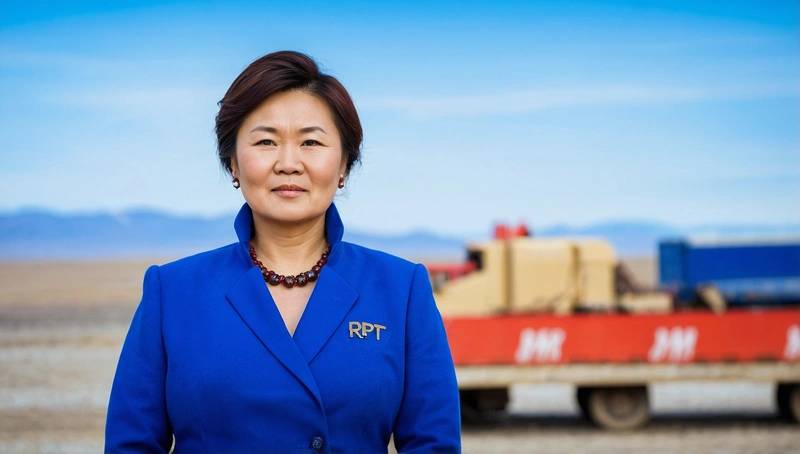
Trafigura’s top executive for Mongolia has been suspended pending an investigation into a fraud scheme worth billions of dollars at the Swiss trading firm. The executive, however, lent more than $500 million from Trafigura to a company owned by his aunt.
Lex Oil is Trafigura’s main counterparty in Mongolia. According to three sources and a document, it belonged to Erdenetuul who is the aunt of Trafigura’s suspended local boss Jononbayar Erdenesuren.
Trafigura announced last October it had suffered a loss of $1.1 billion after an internal investigation found that employees within its Mongolian petroleum product supply business engaged "serious misconduct". This included manipulating documents and data to inflate the amounts paid by Trafigura, and concealing overdue receivables.
Trafigura's principal counterparty, the company stated, owes Trafigura a "substantial portion" of money. However, the company did not identify the counterparty nor any individuals because the investigation is still ongoing.
Sources claim that Jononbayar sold and lent hundreds of millions to his aunt's business.
Sources interviewed by Trafigura said that the risk department at Trafigura should have looked into family connections to determine if there were any conflicts of interest. This cast doubts over the level of oversight in one of the largest traders of energy and commodities.
Trafigura has been briefed on the concerns of two banking sources. They are concerned that Trafigura will uncover further fraud.
The reporting was based on the three sources familiar with Trafigura's Mongolia operations. It also included the two banking sources and an undated document issued by the Department of State Registration in Mongolia that showed Lex's ownership information.
A spokesperson for Trafigura said that an external investigation is ongoing. The company refused to respond to questions about the status of an investigation, which staff members have been terminated or suspended, and whether they were aware of Jononbayar’s links with its main trading partner.
According to three sources familiar with Trafigura, Jononbayar joined Trafigura in 2012, as his LinkedIn profile reveals.
According to sources familiar with the situation, he is one of a few, unspecified employees who were placed on suspension last year.
Jononbayar's aunt Lex Oil and an attorney for the firm have not responded to comments sent via LinkedIn or by email. I was unable identify the lawyer who represents Jononbayar.
CUSTOMS LINK
The three sources claimed that in addition to Erdenesuren's work at Erdenetuul, Erdenesuren's mother also worked for the Customs General Administration of Mongolia, which supervises fuel imports.
Trafigura was Mongolia's largest fuel supplier by 2014, said the same sources. The sources claim that Erdenesuren was employed by the CGAM risk department from 2014 until 2018.
Erdenesuren or CGAM didn't respond to requests for comments on LinkedIn or via email.
Trafigura did not name any employees when it made its statement on the issue. It said in an October statement that they were taking "appropriate discipline action".
Three sources confirmed that Trafigura's internal investigation found no evidence to support the claim that Lex or Trafigura was treated preferentially by the CGAM.
Trafigura announced in October that it had conducted a review of the risks associated with its global network. It identified locations at higher risk, but did not identify them. The review revealed no significant findings.
EARLIER SCANDAL
The banking sources reported that Trafigura's bank traders were rattled by the $1.1 billion loss in one of the company's smallest markets, particularly as the incident followed a nickel fraud in Singapore, which cost the company nearly $600 million.
Trafigura released very few details regarding the latest incident but determined that the serious misconduct of individuals in Trafigura's Mongolian business occurred between 2019 and 2023.
According to its website and three trading sources, Lex Oil was established in 2019. It formed a partnership Trafigura.
According to two trading sources, Lex received credit for Trafigura, with which it gave credit to local fuel consumers so that they could purchase diesel imported by Trafigura and Lex from Russia and Singapore. Trafigura did not loan money to Lex, according to documents.
In 2020, the COVID pandemic halted Mongolian coal exports to China. This affected the mining sector and its fuel demand. Lex Oil, however, continued to blend fuel and lend to local companies, accumulating debts to Trafigura.
Trafigura reported in its December annual report that it had discovered evidence of "deliberate manipulating of data and documents, and concealment overdue receivables". In its annual report in December, Trafigura said it had found evidence of "deliberate manipulation of data and documents and concealment overdue receivables".
According to a screenshot from the ownership document, Erdenetuul will sell Lex Oil to Dashnyam chinbat in 2022. He did not reply to a comment request. The records were removed from the website of the government, but the ownership changes are still visible on the non-profit Mongolian database OpenDataLab which tracks government disclosures.
According to a source in the Mongolian government, the new government elected last year has launched an investigation, but it is too early for the findings to be revealed.
Trafigura's annual report stated that the company had "increased its scrutiny" over the past few years.
It said: "We are building and extending on this work urgently." (Reporting Dmitry Zhdannikov; additional reporting Marwa Rashad, editing by Jason Neely).
(source: Reuters)