
Latest News
-
Trump urges Tehran to 'not get cute' after he says that he has seen activity at Iran's Pickaxe Mountain
On Wednesday, President Donald Trump stated that the United States could strike Iran's Pickaxe Mountain and urged Tehran to be "cautious". "We've noticed that Pickaxe is a little busy." Trump told the Republican Convention that he would advise Iran to not be cute, because they will have to be hit very hard. Pickaxe Mountain is located near Iran's badly damaged Natanz uranium-enrichment facility. It has two deep-buried tunnel systems. Trump has been threatening strikes on Pickaxe Mountain at least since mid-July. Trump and the Republican Party are concerned about the rise in gas and oil prices as a result of the U.S. and Israeli war against Iran in the run-up to November's midterm elections. U.S.-Israeli'strikes on Iran and Israeli attacks on Lebanon have killed thousands and displaced millions. U.S. and Israeli?strikes against Iran and Israeli attacks on Lebanon have caused thousands of deaths and millions to be displaced. Trump said that he believed the war would end after the midterm elections, and that Tehran was trying influence the elections which will determine whether Republicans maintain control of Congress. Pickaxe Mountain is located 220 km (140 mi) south of Tehran, and only 2 km away from the Natanz complex. In March, the U.S. and Israeli military attacked Iran, including Natanz, which was home to two Iran's uranium-enrichment plants. Israel also struck Natanz in last year's 12-day Israel - Iran war. According to the Institute for Science and International Security (a U.S. think tank focusing on non-proliferation), "the tunnel facility under construction" at Pickaxe Mountain wasn't targeted during either of these wars. Trump's war objective is to weaken Iran's nuclear capability. Iran claims it does not possess nuclear weapons, and that its uranium-enrichment program is only for peaceful purposes. The U.S.?is a nuclear power. Israel is widely believed to be the sole nuclear-armed nation in the Middle East, but it has never confirmed or denied this publicly.
-
Brent Brent rises above $100 after tanker attacks exacerbate supply fears
Sethuraman, N. R. NEW DELHI, September 10 - Oil prices held steady on Thursday, after Brent crude surpassed $100 per barrel. Traders braced for further supply disruptions, as 'Iran and United States launched their biggest attacks?on shipping since the six-month conflict began. Brent crude futures fell by 0.1%, to $101.10 per barrel at 0256 GMT. U.S. West Texas Intermediate Crude was $96.24 per barrel, an increase of 0.2%. Brent prices are up nearly 30% since the lows of early August. A permanent agreement between the U.S.A. and Iran on a cease-fire never materialised. Iran announced on Wednesday that it had attacked ten ships near the Strait of Hormuz, after the U.S. destroyed five Iranian oil tanks. The Islamic Revolutionary Guard Corps (IRGC) said it would 'escalate its response to further attacks. In a client letter, ANZ analyst Daniel Hynes stated that the tit-fortat attacks indicate oil?flows? from the Persian Gulf 'are likely to be disrupted in the near future. The Strait of Hormuz is still far below the pre-war level of oil flows. This waterway, which before the war transported about a fifth of the world's oil and gas, remains at a much lower level than it was during the war. The pressure is increasing on alternative routes for Gulf oil exports. Iran-aligned Houthi militants are stepping up their attacks against Saudi Arabia and threatening crude shipments through the Red Sea. In a recent note, OCBC analyst Christopher Wong said that uncertainty about actual oil volumes from the Strait of Hormuz as well as?continued?shipping?disruptions keep physical markets tight. This in turn supports a geopolitical premium on oil prices. According to LSEG data, the Brent crude benchmark price, which is used as a measure of how much oil is being sold, has been over $100 per barrel since September 3. Energy Information Administration (EIA) raised its oil prices forecasts on Wednesday for this year and the next as global stocks drop due to Middle Eastern supply.
-
Brent Brent rises above $100 after tanker attacks exacerbate supply fears
NEW DELHI, September 10 - Oil Prices held firm on Thursday, after Brent crude broke through $100 per barrel. Traders braced for further supply disruption as Iran and the United States launched their biggest attacks against shipping since their six month-old conflict began. Brent crude futures were up 0.1% at $101.34 per barrel as of 0107 GMT. U.S. West Texas Intermediate Crude was $96.55?a barrel up 0.5%. Iran announced on Wednesday that it had 'attacked 10 ships near Strait of Hormuz following the?U.S. The U.S. sank five Iranian tankers and the Revolutionary Guard Corps of Iran said that it would escalate its response if any other?attacks were made. In a note to clients, ANZ analyst Daniel Hynes stated that the tit-fortat attacks imply oil flows out of the Persian Gulf will likely remain disrupted in the near future. The oil flow through the Strait o'Hormuz is still well below the pre-war level. U.S. Energy Information Administration raised their oil price predictions for this year and next as global stocks drop due to Middle Eastern supply loss. Hynes stated that the "widening of the conflict" could lead to an even greater disruption in oil supplies, which had already caused the oil market to scramble to adjust.
-
WSJ reports that Trump advisors warn Iran war may continue through the end of Trump's term
The Wall Street Journal reported Wednesday that top 'White House' advisers, including Vice President JDVance and Secretary Marco Rubio have privately warned Donald Trump that the conflict could last 'throughout the rest of his presidency. The White House did not respond immediately to a comment request. Journal: The 'advisers' told Trump privately in the Situation Room and the Oval Office that Iran could continue to resist U.S. Pressure, possibly prolonging the conflict past Inauguration day in January 2029. The reported warning is in contrast to Trump's public statements about the war. The president stated on Wednesday that he expects 'the 'war to end 'immediately following" the U.S. Midterm Elections in November. He argued?that Iran is trying to influence the vote, but will be unable to maintain a resistance for much longer. Trump acknowledged that diplomatic talks are still possible, but not his preferred option.
-
Sources say that Venezuela's opposition will soon lose control of US refiner Citgo
The Venezuelan opposition-controlled boards that have supervised U.S.-based refiner Citgo Petroleum for ?the last seven years are preparing to ?wind down as soon as this ?month, ?following a shake-up by Venezuelan interim President Delcy Rodriguez, two sources involved in the preparations said. Rodriguez started preparing to take control of the refinery owned by Venezuela earlier this year after Washington recognized her government. Her government replaced Nicolas Maduro’s administration, after he had been captured by U.S. troops in January. According to U.S. courts filings, the interim president's administration replaced law firms who had previously?represented Venezuelan and state-run PDVSA oil company in lawsuits and arbitral cases abroad. They were hired by a National Assembly led by opposition. One source said, "The boards no longer have the support of all legal and political counterparts. They can't continue." This is unfortunately happening without any prior discussion. The Venezuelan oil ministry, PDVSA and Citgo, as well as the supervising board, did not respond to comments immediately. Following U.S. imposition of sanctions on Venezuela's energy sector in 2019, Houston-based ?Citgo severed ties with its parent, Caracas-headquartered ?PDVSA, under orders from a National Assembly that the opposition then controlled. Even after the Venezuelan government lost control over the assembly, opposition-led boards in other countries continued to supervise the refiner. They were also involved in the appointment of its board of directors. CITGO AUCTION LOOMS: STATUS Unrealized is a U.S. court auction, in which a judge accepted a bid from an affiliate hedge fund Elliott Investment Management for Citgo Holding Company to pay creditors who are pursuing the refiner. The sale is awaiting final approval by the U.S. Treasury Department which has been protecting Citgo against creditors in recent years. Treasury extended the protection of a license to September 17 in early August. The U.S. Court of Appeals, which is considering the challenges against the 'auction process', has set an October hearing. After that date the court will rule on refiner ownership. The administration of Rodriguez has labelled the court-ordered sales as "theft", but it's unclear what it will do next as it works with Washington to revive OPEC's country's oil industry. The sources stated that Citgo's board and executive team led by CEO Carlos Jorda will not be changing anytime soon. Citgo remains profitable under the Venezuelan opposition?oversight. Citgo has recently gained access to Venezuelan crude oil for refining. The company registered a net income of 936 million dollars in the second quarter. This is up from 100 million dollars in the same period in last year, despite solid margins.
-
Wall Street falls as investors worry about inflation and $100 oil
Wall Street closed lower on Wednesday as 'oil prices' remained at $100 per barrel, despite ongoing Gulf tensions. Inflation fears and Gulf tensions continued to weigh on investors. The three major U.S. indexes all ended the day in a lower position. The Dow Jones Industrial Average fell by 0.77%. The S&P 500 was down 0.48%, and the Nasdaq composite shed 0.64%. MSCI's global stock index fell 0.52% after the U.S. close. The stock market was down all day as headlines focused on the oil price surging above $100 per barrel for first time since last July. Iran claimed it had attacked ten ships near the Strait of Hormuz following the U.S. sinking of five Iranian oil tanks. Brent crude closed the day up?3.4%, or $101.11 a barrel. U.S. West Texas Intermediate CLc1 rose $3.02 or 3.25% to $96.05 per barrel. These were the two highest closing prices since May. The Treasury Department announced that it would purchase up to $6 billion of 10-to-20-year bonds. The Treasury Department had originally indicated a $4 billion buyback. However, the actual amount was $6 billion. Analysts had expected a bigger purchase to support bonds with longer duration. Brent breaking above $100 marks a significant psychological milestone for the markets. But what it means for inflation is of greater concern. "A prolonged oil shock may keep prices high and complicate central bank policy," said Lukman otunuga, FXTM's head of market analysis. CENTRAL BANK BANK DECISIONS AHEAD The euro edged up ahead of Thursday's European Central Bank policy decision, with markets expecting a rate increase due to inflationary forces from the Iran War. As traders redeemed their short positions, the yen rose to a level not seen in nearly seven months. There are growing expectations for Bank of Japan rate increases and the potential of a rush of Japanese capital repatriation. The dollar index, which measures greenbacks against a basket including yens and euros, increased 0.05% to reach 98.83. The U.S. consumer and producer price reports will be released this week. Policymakers are looking for more evidence that inflation is continuing to cool. In the latest survey, about 70% of economists expect that the Federal Reserve will keep rates stable at its next policy meeting. This is below the 90% of economists who expected the same thing in August. Matthew Ryan, Head of Market Strategy at global financial services company Ebury, said: "Financial market participants are genuinely divided over whether the FOMC will increase rates at its September meeting next week. This is an unusual level of uncertainty so close to a deadline." Gold rose by 0.98%, to $4,396 per ounce.
-
S&P 500 closes down as oil reaches $100 per barrel
U.S. stock prices closed lower on the day as oil 'prices' soared over $100 per barrel. Apple also fell and Treasury yields increased?ahead of?important inflation data due later this week. Brent crude soared above $100 per barrel on concerns about global oil supplies and an increase in Middle East tensions. This is a critical level for the stock exchange. The U.S. and Israeli war against Iran, which is now in its seventh-month, has stoked fear of a broader conflict within the region, while high oil prices are fueling inflation. All other sector indexes declined, but the S&P 500 Energy Index rose. Treasury Department announced it would purchase up to $6 billion of 10-to-20 year government bonds. Some analysts expected a bigger purchase in the $8 billion to $100 billion range. Stocks are less appealing to investors when they have higher yields on government bonds. Rob Haworth is a senior investment strategist with U.S. Bank Wealth Management, Seattle. The Federal Reserve will look at the U.S. Producer Price Index on Thursday, and consumer prices on Friday to determine its interest rate path. The Fed is expected to raise interest rates by 60% at its next policy meeting. The S&P 500 fell 36.36 points or 0.47% to 7,637.16 while the Nasdaq Composite dropped 164.77 or 0.62% to?26.256.64. The Dow Jones Industrial Average dropped 403.65 points or 0.76% to 52,382.42. The S&P is down around 2% from its record-breaking close on August 13, and remains about 12% higher in 2026. Meta jumped, and the S&P 500 declined less after the social'media company rolled-out a much-touted AI Assistant that can automatically send emails,'sell a car, or make travel reservations on behalf of its users. Alphabet declined to bid after Google parent announced it would invest $15.1 billion over the next two years in 'AI infrastructure' in Finland, including a large deal for the supply of nuclear energy. Advanced Micro Devices gained on the Philadelphia Semiconductor index. Dow dropped after Bloomberg News reported that the chemicals manufacturer was considering ending its $20 billion partnership agreement with Saudi Aramco.
-
Oil and Treasury yields rise as stocks fall
Brent crude prices soared to $100 per barrel on Wednesday, and the yield on 10-year Treasury bonds hit its highest level since November 20, 2023. Middle East?and inflation fears weighed on Wall Street. Brent crude reached $100.27 a barrel at midday, an increase of 2.4% for the day. This is the first time the price has breached the symbolic level since July 24. After Iran claimed it had fired ballistic missiles against a U.S. military base in Jordan, and both sides claiming to have attacked vessels. Treasury Department announced that it would purchase up to $6 billion of?10 to 20-year government securities. The Treasury Department had initially indicated a $4 billion buyback, but analysts expected a larger amount as part of?a bid to support long-duration bonds. Globally, stocks were down amid Middle East turmoil as well as looming action from several central bankers including the Federal Reserve. All three major U.S. All three major?U.S. The MSCI index of stocks around the world fell by 0.42%. Brent breaking above $100 marks a significant psychological milestone for the markets. But what it means for inflation is of greater concern. "A prolonged oil shock may keep prices high and complicate central bank policy," said Lukman otunuga, FXTM's head of market analysis. CENTRAL BANK BANK DECISIONS AHEAD The euro rose ahead of Thursday's ECB policy announcement, as markets were expecting a rise amid inflationary pressures caused by the Iran War. The currency hit a high of $1.16493, which is higher than the previous week's. As traders retreated from short positions in the Japanese currency, the yen gained strength and reached a high of nearly seven months. There are growing expectations for faster Bank of Japan interest rate increases and a possible rush of repatriation of Japanese capital. The dollar index fell by 0.03%, to 98.75, measuring the greenback in relation to a basket including the yen, the euro and other currencies. The U.S. consumer and producer price reports will be released this week. Policymakers are looking for more evidence that inflation is continuing to cool. In the latest survey, 70% of economists expect the Federal Reserve will keep rates stable at its rate-setting session next week. However, this certainty is below the 90% of economists who expected rates to remain steady in August. Matthew Ryan, Head of Market Strategy at global financial services company Ebury, said: "Financial market participants are genuinely divided on whether the FOMC is going to raise rates next week at its September meeting. This unusual uncertainty comes so close to the decision date." Gold rose 1.5% to $4,417 per ounce.
Germany ought to remain on green energy path despite Trump, minister says
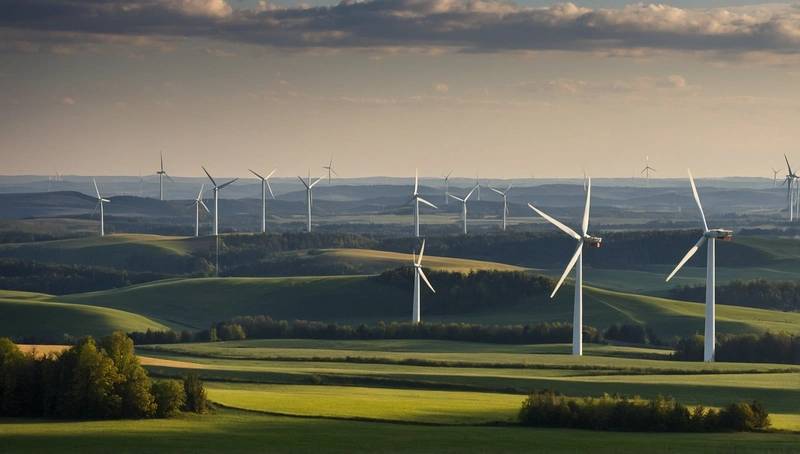
Sticking with development strategies for green energy is the very best action to Donald Trump after the U.S. president's deadly transfer to withdraw from the Paris environment accord, German vice chancellor Robert Habeck said on Tuesday.
We have to bring our own technologies to the fore, stated Habeck, the architect of strategies to make 80% of electrical power green in Germany by 2030, speaking at the Handelsblatt annual energy conference in Berlin.
The move by Trump, a climate change sceptic, to withdraw from the Paris environment treaty was commonly expected and even more threatens the arrangement's central objective to limit an increase in international temperatures to 1.5 degrees Celsius above pre-industrial levels.
Germany, Europe's biggest economy, holds a nationwide election on Feb. 23, where Habeck's Greens are trailing in opinion surveys as a cost-of-living crisis and an economic recession has actually shifted some voters' focus away from environment protection.
Economy minister Habeck said self-reliance through domestic green energy remained the best action to reliance on energy imports and high expenses, especially as Russian gas supplies to Europe dwindle following the invasion of Ukraine in 2022.
Habeck urged parliament to pass a draft costs offering more digital control of expanding sustainable capability to assist rein in increasing costs and reduce customer expenses.
Another unfinished plan, a capability market for power, was likewise a priority, he stated. Otherwise, coal-burning power plants, that offer stable supply, would have to run beyond the targeted 2030 cut-off date.
(source: Reuters)