
Latest News
-
Ukraine prepares for harsh winter after Russian attacks on economy
Officials in Ukraine warned that the country is bracing itself for a harsh winter, as Russian attacks on its infrastructure and export industries compound a growing budget crisis. The Economy Minister Oleksandr Kravchenko stated that the damage to Russian infrastructure and fixed assets was estimated to be close to $10 Billion this year. In addition, the wider economic costs and de facto blocking of its ports are seen as about 1.5 percentage points on the gross domestic product. Kravchenko stated that "we anticipate a difficult winter, both in terms critical infrastructure which is destroyed by Russian attacks every day, as well as the overall economic situation in the country." He told diplomats, investors and officials at a YES Conference in Kyiv that "this all happens when the budget is very tight and fiscal?space is extremely constrained." Russia and Ukraine are increasingly targeting each other's economic assets and logistics networks to try and undermine the other's war efforts. Since more than two weeks, Russia has been launching near-constant attacks on Kyiv, using jet-powered drones that are faster. This has disrupted life, business, and government operations. Both Russia and Ukraine deny that they deliberately target civilians during air strikes. Moscow has also blocked Ukraine's Black Sea port by intensifying air strikes on the southern regions of the country. Kravchenko stated that the blockade could result in a loss of about $40 billion dollars in export revenues. Ukraine's major exports, agricultural products and steel and iron, are shipped through its Black Sea port. Budget Revenue Falls Behind The domestic budget has been under pressure as Russian attacks have damaged infrastructure and industry. Roksolana Piedlasa is the head of the budget committee of the parliament. She said that domestic revenue was $1.35 billion below expectations in the first eight month of the year. A quarter of these losses were recorded just in August. She said that the war is becoming more expensive and Ukraine cannot fully fund its defense needs with domestic resources as it did in previous years. In the first eight-month period of this year, Ukraine spent about $42 billion for its defence. This does not include in-kind support. Pidlasa stated that domestic revenue generation and borrowing from local sources only yielded $39 billion during this period. She said, "Unfortunately this year the war is so expensive that we cannot even cover our own share of the costs." She said that the daily cost of war increased to $190 million in this year, compared to $140 million by 2024, due to inflation, an increase in troop numbers, increasing social payments to families of fallen soldiers, and a higher consumption of ammunition. Ukraine will face a?funding gap for its defense through the end this year. The government is trying to find ways to reduce or delay non-military spending, and is in negotiations with its Western allies on financial support. But so far there hasn't been a clear solution.
-
Moscow claims that it has hit ships and plants in Ukraine. Six people have been killed.
Officials said that Russian air strikes on Saturday in various Ukrainian regions killed six people and injured dozens. They also damaged infrastructure, residential buildings, and residential areas. In the last two months, civilian deaths in Ukraine have risen dramatically as Russia intensifies its attacks on infrastructure and 'power plants. Ukraine has attacked energy facilities and storage warehouses in remote parts of Russia, and both sides have targeted shipping. Vitaliy Bunechko is the governor of Ukraine’s Zhytomyr Region west of Kyiv. He said that a Russian attack on a grocery shop in Zvyahel killed two people. He said that two petrol stations, as well as a "foreign-invested enterprise" unidentified by him were also attacked. Volodymyr Zelenskiy, the president of Ukraine, reported earlier that attacks had been carried out in Kryvyi Rih and Zaporizhzhia?in the south-east. Ivan Fedorov is the governor of Zaporizhzhia Region. He said that two people have been killed and eleven injured in attacks on Zaporizhzhia, and other areas. Oleksandr Vilkul is the head of Kryvyi Rih’s military administration. He said that two people were killed overnight in attacks on?the city. The Russian military claimed that its forces had attacked Ukrainian steelmaker Zaporizhstal in the city of Zaporizhzhia. They also said they hit the Interpipe Steel Complex in Dnipro, several plants in Kryvyi Rih including the Northern Iron Ore Benefitation Works complex. It was impossible to independently verify the accounts of either side. Oleh Kiper said that in Odesa Region 37 people including an infant were injured overnight. Two people are missing. The Russian Defence Ministry stated that Moscow's forces have continued their strikes against Ukrainian ports. It claimed to have hit a cargo vessel in Odesa, which was carrying military goods. The ministry announced earlier in the day that its forces had hit two cargo ships overnight in the Black Sea port of Chornomorsk. Ukraine's military claimed it had caused a fire at one of Russia's biggest synthetic?rubber manufacturers in Togliatti?in the Samara area. It said that the Togliattikauchuk factory specialised in producing synthetic rubbers and fuel additives used in fuel for Russian missiles. Interfax reported that Russian regional governor Vyacheslav Federishchev claimed that Ukrainian drones had attacked industrial facilities in the?Samara Region, but did not specify which ones or whether they were damaged. Ilya Sukhikh, the mayor of Togliatti, in Samara Region, reported that several residential buildings had been?damaged, and one person injured. Svetlana Kambulova, the local mayor, told TASS that four commercial properties in Taganrog, in the Rostov Region, were also set ablaze.
-
Iceland could ban whaling, leaving Norway and Japan in isolation
Iceland's Government will present a bill?on whaling in February that could ban it. This move?would leave Norway and Japan the only countries in the World to continue commercial whaling. Animal welfare activists and Hollywood celebrities have been protesting against Icelandic whaling for years. The government, which holds a majority in parliament, announced on its website that it is examining possible options for updating its whaling laws, paying particular attention to the option of an outright ban. According to Humane World for Animals (an animal welfare group which tracks the catches), 80 fin whales have been caught in this year's hunt season. This runs from June until the end of the month of September. The quota allows for 150 fin whales to die this year. Wendy Higgins is a spokesperson for Humane World for Animals. She said that there was a lot of public and political support for the bill. There are also compelling ethical, legal, veterinary and conservation reasons for hoping it passes. The International Union for Conservation of Nature has classified fin whales as vulnerable. Iceland's interim Government issued a license for five years to its sole remaining whaling firm in 2024. According to the International Whaling Commission, only Japan, Norway, and Iceland have engaged in 'commercial whaling' over the past few years. Iceland and Norway both resumed commercial whale hunting in 2006 despite an international moratorium in place since 1986. Japan withdrew in 2019 from the International Whaling Commission and resumed commercial whale hunting in its territorial waters and exclusive economic zones. The moratorium allows indigenous peoples to hunt whales in certain parts of the world such as Greenland or Alaska because whale products are vital for their cultural and nutritional lives.
-
Trump claims that Iran is likely responsible for the attack on Saudi pipeline
U.S. President Donald 'Trump' said on Saturday that Iran is probably responsible for the aerial attack that shut down Saudi Arabia's East-West Pipeline, which was one of the Kingdom's main routes for exporting oil while bypassing the Strait of Hormuz. When asked by reporters in Dublin if Iran is?responsible? for the attack on a?vital oil pipeline, Trump replied: "I think that they are. They probably?are." The President of the United States, Donald Trump, also said that he had spoken with Saudi Crown Prince Mohammed bin Salman. He described him as a "good friend." The?U.S. Trump said that the Iran-aligned Yemeni?Houthis called his administration and expressed their desire to not have the United States directly involved in this conflict. "They'd much rather not have us involved and are letting the majority of?ships through." Trump added that there's "just one" country with which they aren't too pleased.
-
US court rejects Trump administration's bid to keep Michigan coal plants open
On?Friday, a federal appeals court threw out a President Donald Trump administration order that had?forced a Michigan coal-fired plant to stay open past its planned retirement date. According to court documents, a unanimous?ruling?by a three-judge panel of the U.S. Court of Appeals 'for 'the District of Columbia Circuit determined that the Department of Energy had exceeded its authority in a rarely invoked emergency provision of federal legislation. Michigan challenged the DOE order after DOE instructed J.H. Campbell plant to stay online in 2025, shortly before the planned closure. The decision is a blow to the administration's efforts to maintain coal-fired power at a moment when the demand for electricity in the United States has increased due to the expansion of data centers. The coal-fired electricity is one of the biggest sources of carbon dioxide that contributes to climate change. "By forcing its continued operation, DOE attempted a tactic never before used to illegally support the aging J.H. Campbell coal plant, which nobody wanted to keep. Ratepayers are now stuck with the bill for an aging facility that should have retired over a year ago. "I'm relieved that the Court saw right through this façade and overturned DOE's order, which had no basis in reality," said Michigan Attorney?General Dana Nessel. The Trump administration has been using emergency powers under the Federal Power Act since 2025 to continue operating coal plants that were scheduled for retirement in Michigan, Indiana and Washington State, as well as those in Colorado, Washington State, Washington, and Michigan. DOE did not immediately respond to an inquiry for comment. This decision comes one month after DOE extended an emergency order to keep J.H. Campbell Generating Plant will remain open until November 14. Consumers Energy's plant was scheduled to close by 2025, because it "wasn't economically viable." According to the Michigan Attorney General's Office, the utility spent $295 million between May 2025 and June 2026 on its continued operation. Brian Wheeler, spokesperson for Consumers Energy, said that the company is reviewing this ruling. He said that "while that happens, we will continue to comply with the 90-day Department of Energy Order that keeps the Campbell Plant operating." Environmental groups have welcomed the ruling. Michael Lenoff of Earthjustice said that the 'DOE should stay within its lane and only use emergency powers in actual emergencies. "An emergency power should not be used to prevent the retirement of coal plants due to market forces in order for a coal-friendly agenda to gain traction."
-
USDA cuts corn harvest forecast after hot summer weather
The U.S. Department of Agriculture announced on Friday that U.S. farmers will harvest less corn this fall than they had previously anticipated, following hot weather during the summer. Prices recently reached a 'three-year high' due to uncertainty over the size of the crop. Farm diesel fuel is used to run harvesting equipment by farmers. Diesel prices are also at record highs, above $6 per gallon, as they prepare for the harvest of crops in Midwestern fields. Jim McCormick is the chief operating officer of AgMarket.net. He said that "the cost to get this crop out has gotten really expensive." In a report published monthly, the USDA said that farmers will harvest 15,8 billion bushels (or 178.5 bushels) of corn and 4,535 billion bushels (52.8 bushels) of soybeans. USDA estimated corn production in?August at 16.013 billion bushels with an average of 180.7 bushels/acre and soybean production was 4.519 billion with an average yield?of 52.7 bushels. Analysts said USDA could lower its crop estimates further in future reports. Corn futures prices briefly rose on the Chicago Board of Trade. Jim Gerlach of A/C Trading said, "It is not a bad harvest?but by a wide margin it's less than last year's." Farmers have enjoyed the highest prices for about three years, due to uncertainty over U.S. grain yields and disruptions in Russian and Ukrainian grain exports out of the Black Sea area. Prices for soybeans reached a three-year peak on Friday, thanks to optimism over Chinese?demand ahead of a'summit' between Donald Trump and Xi Jinping. USDA increased its estimates of average U.S. corn prices by 60 cents per bushel and 30 cents per bushel. Farmers who face fuel and fertilizer prices that have skyrocketed since the U.S. began its war against Iran, causing trade disruptions in the Strait of Hormuz, are not guaranteed to make a profit. Many farmers order fuel and supplies for spring planting. Randy Place, an analyst with?the Hightower Report, says that "this is not the time for a large rally" of these prices. It is unclear whether crop prices can remain high for a long time to offset the steep input costs, and reverse the downturn of the agricultural economy in the last four years. Both growers and economists agree that the current business climate is one of the worst since 1980s, when a wave foreclosures and bankruptcy crippled U.S. Farmers. STOCKS ENDING TIGHTEN A lower estimate of corn production could help support prices. According to a poll, analysts had expected a corn harvest of 15,785 billion bushels with a yield average of 178.2 bushels/acre and a soya bean crop of 4,501 billion bushels with a yield average of 52.5 bushels/acre. USDA estimates that U.S. ending corn stocks will reach 1.567 billion bushels by August 31, 2027, after crops are exported to feed livestock in the U.S. and make biofuels. Stocks of soybeans were estimated to be 310 million bushels. Analysts expect 2026-27 corn stocks to be 1.528 billion bushels and soybean stocks to be 298 million bushels. The USDA estimated?corn stock at 1.653 billion?bushels and soybean stocks at 318 million?bushels in August. USDA estimates that the 2026-27 wheat ending stocks will be 717 million bushels. This is unchanged from August, and slightly lower than analysts' expectations (719 million bushels). USDA has lowered its estimate of wheat exports to Ukraine and Russia by 1 million tons metric tons each, as compared with a month earlier.
-
White House official: Russian official will attend G20 Energy meeting in Houston next Week, White House official claims
An official from the White House said that a Russian official would attend a G20 Energy meeting in Houston next Friday. The U.S. invited 'Russian Finance minister Anton Siluanov' to a G20 meeting in North Carolina last month. This was the first time that Russia had sent a finance minister to the forum since the Russian invasion of Ukraine in 2022. The G20 Ministerial Meeting on Energy Abundance is scheduled to take place between Monday and Wednesday. U.S. officials attending include Interior Secretary Doug Burgum; Energy Secretary Chris Wright; and Jarrod Agen, a White House official. The White House has not yet announced who will be attending the next-week's meeting in Russia. Attendees will include energy officials from Europe and Asia. Auditors said that the European Union's efforts to become independent of Russian oil and gas have faltered, as it enters winter with "unusually low" gas stocks. The wars in Ukraine and Iran, despite the meeting's name, have caused energy security to be a concern for many countries. The price of U.S. Diesel has reached a record of $6 per gallon, and the Strait of Hormuz is largely closed for oil and gas shipments. Donald Trump, the U.S. president, said on Wednesday that he and Russian President Vladimir Putin had a 'great' conversation earlier in the week. He also stated that Putin wanted to make a pact with the U.S. in order to end the conflict in Ukraine. Intelligence officials in the U.S. and Europe, as well as in Ukraine, doubt that Putin is serious about ending "the war" despite recent visits by U.S. ambassadors to Moscow and Kyiv. It is likely that the U.S. House of Representatives, during the G20 summit, will vote 'on new Russian sanctions. But it is not clear if this bill will be passed by the chamber - as it was in the u.s. Senate. The Trump administration imposed sanctions on Russia for its war in Ukraine, first blocking transactions and freezing assets at its two largest oil companies, Rosneft, and Lukoil, in October 2025.
-
US court rejects Trump administration's bid to keep Michigan coal plants open
On Friday, a federal appeals court overturned an order of the Trump administration that would have forced a Michigan coal plant to stay open past its scheduled retirement date. According to court documents, a unanimous decision?by a panel of three judges?of the U.S. Court of Appeals for?the District of Columbia Circuit?found that the Department of Energy had exceeded its authority in a rarely-used emergency provision of federal legislation. Michigan challenged the DOE order after DOE instructed that the plant remain online in 2025, shortly before its planned closure. The decision is a blow to the efforts of the administration to maintain coal-fired power in the face of?soaring U.S. electricity demand tied to the expansion data centers. The coal-fired power industry is one of the largest contributors to climate change, with carbon dioxide emissions. The Trump administration has been using emergency powers under the Federal Power Act since 2025 to keep a number of aging power plants that were slated for retirement running, including coal plants in Michigan and Indiana. DOE did not respond immediately to a comment request. The DOE made the decision a month after extending the emergency order for the J.H. Campbell Generating Plant will remain open until November 14. Consumers Energy's plant was scheduled to close by 2025, as it was no long economically viable. According to the Michigan Attorney General's Office, the utility spent $295 million between May 2025 and June?2026 on its continued operation. Consumers Energy will review the ruling, said spokesperson Brian Wheeler. He said that "while that happens, we will continue to comply with the 90-day Department of Energy Order that keeps the Campbell Plant operating." A spokesperson for Michigan’s Attorney General did not respond immediately to a comment request. Michael Lenoff said, "The DOE must stay within its boundaries?and only use its emergency powers?in real emergencies" in a recent statement. Michael Lenoff is an attorney for the environmental group Earthjustice. "Preventing market-driven retirements to advance a coal friendly agenda is not an appropriate use of emergency power."
Leaders of Eastern and Southern African blocs are seeking solutions to the Congo conflict
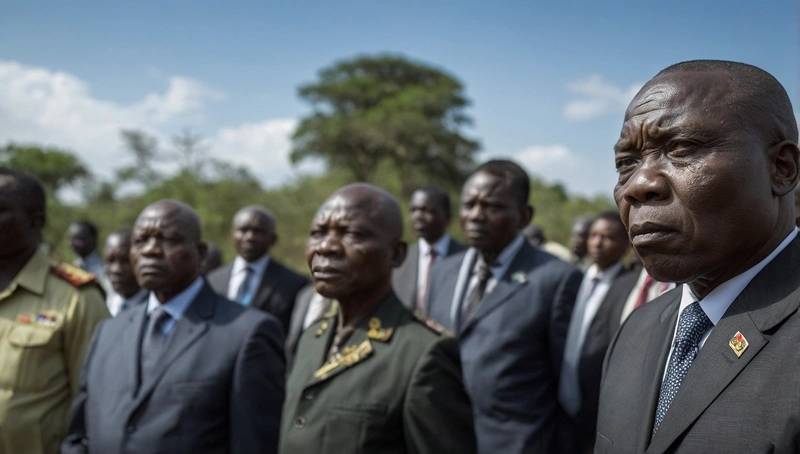
On Saturday, leaders from the Eastern and Southern African region blocs met in Tanzania to find a resolution to the conflict in eastern Congo. Rwandan-backed fighters have taken over a major city during the worst fighting in a decade.
Last week, M23 rebels captured Goma in eastern Democratic Republic of Congo. They have marched southwards towards Bukavu despite announcing an unilateral ceasefire. This rapid offensive has resulted in thousands of deaths and raised fears about a regional conflict.
Sources say that Felix Tshisekedi, the Congolese leader, and Paul Kagame, his Rwandan counterpart, have agreed to attend, although Tshisekedi could call in remotely.
Dar es Salaam will be looking for a breakthrough, after two peace processes have stalled in Luanda (and Nairobi) as tensions increase.
In a Friday report, the Institute for Security Studies in South Africa stated that "given the increased tensions, the immediate priorities are a cessation of hostilities and the opening of supply routes in order to facilitate humanitarian access."
It said that a single, unified peace initiative would prevent Rwanda and (Congo) from forum shopping... favoring mediators perceived as supporting their side.
M23 has made rapid advances in the last month, gaining control of North Kivu's lucrative mines for coltan, tin, and gold. This has led to the uprooting of thousands, in one the most severe humanitarian crises around the world.
As health workers rush to bury at least 2,000 bodies killed in the Battle for Goma before the disease spreads, aid groups are helping relieve overcrowded hospitals.
Volker Turk, the United Nations' chief of human rights, said that prosecutors at the International Criminal Court are closely monitoring reports of rapes, gang-rapes and sexual slavery.
The United States warned against possible sanctions for Rwandan and Congolese officials ahead of the summit. This raised the stakes of finding a resolution to the conflict, which is rooted in long-term fallout of the 1994 Rwandan Genocide and the struggle for Congo's minerals resources.
M23, a well-trained and professionally armed rebel group led by ethnic Tutsi in Congo's volatile eastern region, is the latest of a long list of ethnic Tutsi rebel groups to emerge. Congo's government claims it is a Rwandan proxy group, but the rebel group denies this.
Rwanda denies that it has thousands of troops fighting alongside M23, but claims to be acting in self-defense.
It accuses the Congolese military of joining with Hutu militias, which it claims are intent on killing Tutsis and threatening Rwanda. Kinshasa has been repeatedly urged to directly negotiate with the rebels.
(source: Reuters)