
Latest News
-
Copper prices are on the rise, thanks to China's growing factory activity
Copper prices rose on Wednesday, as data revealed that Chinese factory activity had returned to growth. However, trading was subdued due to a holiday week for 'the top metals consumer. The benchmark three-month copper price on 'the?London Metal Exchange' rose by 0.23% at $14,471 per metric ton as of 0330 GMT. Meanwhile, the most traded November copper contract in Shanghai Futures Exchange gained by 0.21%, to 109,530 Yuan ($16340.20) per ton. This is expected to finish a week that will be shortened due to the upcoming long holiday, 0.52% down. China's official purchasing managers' index increased to 50.1 in September from 49.8 a month earlier. A RatingDog private survey revealed that factory activity?expanded faster than expected: its PMI measurement rose to a 5-month high of 52.1, from 51.5. The trading was relatively quiet before China's National Day. SHFE will be closed from Thursday and reopen October 8. The physical copper demand has also been reduced heading into the holiday break. The domestic premium The price of a ton of copper continued to fall from its peak on Tuesday, to 1,050 Yuan. The Yangshan copper price premium is still high The price of imported materials in China, which is a measure of the appetite for these materials by Chinese consumers, has risen?slightly' to $119 per ton. The US dollar was stable, headed for a 2% rise in the next month, supported by higher US yields. The stronger the dollar, the more expensive metals are for holders of other currencies. Brent crude also remained steady, hovering at $100 per barrel. This kept inflation fears and expectations of another rate increase by the US Federal Reserve alive. Nickel gained 0.23%. Lead was flat. Aluminium fell 0.35% on the SHFE. Zinc dropped 0.26%. Lead declined 0.12%. Nickel dropped 1.00%. Tin was flat.
-
US Trade chief considers trade deal tariff caps for excess capacity probe
US Trade Representative Jamieson Greer stated on Tuesday that the Trump administration would take into account tariff caps negotiated in trade agreements with countries when weighing potential 'new duties' as part of an investigation on excessive industrial capacity. Greer told reporters that he didn't want to make any assumptions about the results of a Section 301 investigation, which is expected to be focused on excess capacity within?China and key trading partners. Greer said: "I'm not going to speak before the report and proposed actions, but let me say that we value these deals.?And we will definitely take them into consideration when we look at any outcome of this report." Greer told a group of CEOs and Trade Ministers that many of these deals actually go a long ways to mitigate the effects of any excess capacity in those countries. The Trump administration used its G20 presidency this year to bring attention to China’s excessive production capacity and overreliance on exports as a growth driver. All G20 countries, except China, agreed to take?actions in response to such policies at the G20 Finance Ministers Meeting held in Asheville (North Carolina) at the start of September. Maros Sefcovic, the European Union's trade chief, told CEO roundtable participants on Tuesday that he was pleased with the Trump administration's emphasis on combating excess industrial capacities at the G20 summit. Sefcovic said that the EU is pushing for reforms in excess capacity within the G20 framework as well as at the World Trade Organization. Sefcovic also stated that the EU is working to strengthen cooperation with the US and other allied countries on key minerals in order to secure supply chain and avoid the "weaponization". Production of these materials, which are currently dominated mainly by China, has been a priority for the EU.
-
Stocks fall, US 2-year yield drops after Fed's Williams cools down rate hike bets
Investors reduced their bets that the Federal Reserve will raise interest rates next month after comments made by Fed Bank of New York president John Williams. Major stock indexes also eased, as yields for longer-dated bonds remained near multi-decade-highs. Williams' comments and the optimism over AI lab Anthropic’s plan to go public tempered the stock market's weakness. Williams stated that he does not see "urgency" in further action following the US central bank's rate hike earlier this month. Based on the pricing of Fed Funds futures contracts traders now expect a 50% chance of a quarter-point increase at the Fed's next meeting in October. This is down from 70% earlier in day. Williams, who believes that a single rate hike will occur by the end of the year is what has influenced the price of short-term rate contracts. Investors remained concerned about the rate outlook, even though the 30-year US Treasury Bond had earlier reached its highest level since 2002. The'monthly US jobs data is also due this week. Investors are getting ready for the PCE tomorrow. "If we see an acceleration in inflation, then I believe that this will cement a rate increase in October," said Peter Cardillo. Chief market economist at Spartan Capital Securities, New York. Bond yields are rising due to concerns about inflation and higher oil prices. Fed increased interest rates this month, the first time they have done so since 2023, to combat inflation. Investors digested other Fed officials' comments?on Tuesday. Chicago Fed President Austan G. Goolsbee said that allowing the inflation to remain above the Fed target for five-and-a half years was "playing with Fire." He noted that the Fed might need to respond to an supply shock which has long lasting effects. Data showed that US consumer confidence fell to its lowest level in over 12 years in September. Households expect both the business environment and the labor market will weaken in the next six-month period. The yield on the 2-year bond, which moves typically in line with expectations of interest rates for the Fed was down 3.51 basis point to 4.889% last week, after previously touching 4.9596% - its highest level since May 2024. The yield on US benchmark 10-year notes rose 1.32 basis points to 5.255% after previously reaching 5.2932%. This was its highest level since June 2007. After reaching its highest level since the morning of June 2002, the 30-year bond rate rose by 3 basis points to 5,592%. The Dow Jones Industrial Average dropped?131.59, or 0.26 percent, to 51349.92. The S&P 500 declined 12.85 points or 0.17% to 7,670.84 while the Nasdaq Composite lost 22.84 points or 0.08% to 26,797.54. Anthropic’s IPO prospectus revealed that the AI lab had grown rapidly in the past year, but also suffered larger losses. The company aims to reach a valuation of $2 trillion or more, which could set a new benchmark for Wall Street's assessment of AI leaders. MSCI's global index of stocks fell by 3.41 points or 0.30% to 1,135.86. The pan-European STOXX 600 fell by 0.09%. The yields on French 10-year debt were near their 2008 highs of 4.74%, and they were expected to rise the most in a single month since 2022. The sovereign yield is a key anchor for the global markets. It's a price reference for riskier stocks, and it's a benchmark when it comes to mortgages and corporate borrowing. Rates that are higher put pressure on the budgets of government, corporations and households. OIL FALLS Investors focused on signs that crude exports to the Middle East were recovering. Oil prices have risen despite the fact that hopes of a US-Iran deal on the horizon are fading. US President Donald Trump has said that he offered Iran nothing in order to end the conflict. He rejected media reports citing?US officials who claimed he would be willing to ease sanctions or?release funds frozen for "concrete steps" regarding Iran's nuke program. US crude futures declined $3.22, to settle at $89.38 per barrel. Brent futures fell by $2.69, to settle at $100.59. The euro rose 0.01% to $1.1341 in the last currency update. The dollar gained 0.03% against the Japanese yen to reach 157.32. The Australian dollar was almost flat against the greenback, at $0.6984. Australia's central banks raised rates earlier to the highest level in 15 years. Spot gold increased 1.46%, to $4174.26 per ounce.
-
Talen Energy names Terry Nutt as CEO and expands its share repurchase programs through 2028
Talen Energy announced on Tuesday that it has named President Terry Nutt its new chief executive officer. This will take effect January 1, and the company also expanded its share repurchase authority through 2028. Nutt succeeds Mac McFarland who will continue to serve as CEO, a member of the board and senior advisor until his retirement in march 2027. Talen is undergoing a leadership transition as it aims to capitalize on the growing demand for electricity from data centers and artificial intelligence, while also returning cash to its shareholders via a large share repurchase program. Nutt will be joining the board as soon as he takes over the role of CEO. He has been 'Talen’s president' since December and was previously the chief financial officer. The independent power producer increased its remaining capacity in its share repurchase programs to $3 billion by December 31, 2028 and entered into $1.5 Billion of accelerated share purchase agreements. By the end of 2027, it is expected that Talen will have repurchased more than 10% its outstanding shares. The company stated that it would 'primarily' fund the accelerated repurchases by'monetizing future capacity revenues from PJM, which is the largest US power grid operator. Talen predicted about $4 billion of adjusted free cash flow in the second half 2026 to the end 2028.
-
First visit by the UAE Vice President to Saudi Arabia since the rift
Sheikh Mansour bin Zayed Al Nahyan, UAE Vice President, visited Saudi Arabia on Tuesday. He met with Crown Prince Mohammed bin Salman of Saudi Arabia and the Kingdom's Defence Minister. This was the first official visit by a senior UAE official to the kingdom since the Gulf Powers fell into a deep split last year. Saudi Arabia's Defence Minister, Prince Khalid bin Salman invited the Saudi ambassador to visit the Kingdom. Riyadh is under increasing pressure by the Iran-backed Houthis who have been firing missiles and drones for weeks at the kingdom. Saudi Arabia 'has been trying to rally international assistance to face the Houthis. But it wasn't immediately clear if this request extended to UAE. Saudi Arabia was once the main regional partner of the United Arab Emirates in the war against Houthis. According to a Saudi Defence Ministry post on X, Sheikh Mansour discussed with Prince Khalid topics of mutual interest and ways to improve cooperation and coordination between both countries. In a separate meeting on Tuesday with Saudi Crown Prince Mohammed bin Salman, Sheikh Mansour reviewed "fraternal relationships" between the countries and the developments in the area, according to the Saudi state media agency. In?December, the UAE and Saudi Arabia brought their years-long differences over everything from geopolitics to energy policy to light when an advance by a UAE backed southern Yemeni rebel group brought them close to Saudi border. Saudi Arabia has condemned the UAE's involvement in Yemen and conducted an airstrike against a UAE-linked weapon shipment at Mukalla port. The UAE announced that it had withdrawn its entire force from Yemen, but tensions remain. Yemen has been in a 12-year civil war ever since the Houthis took over the capital Sanaa and prompted a Saudi-led intervention.
-
After soaking Baja California Sur, Hurricane Polo hits Sonora in northwest Mexico
Hurricane 'Polo' made its second landfall in Mexico on the northwestern Pacific Coast on Tuesday, after flooding the southern Baja California Peninsula. Landfall occurred near the port of Guaymas, on the Sea of Cortez. Sonora State. Emergency evacuations were ordered by state authorities in several southern municipalities, including Guaymas and Empalme. Officials reported that 543 people were huddled in shelters when the storm hit. The US National Hurricane Center reports that the maximum sustained winds were around 120 km/h (75 mph). In its bulletin, the NHC stated that "rapid weakening" is to be expected as "the center of Polo" moves further inland. Private forecaster AccuWeather warned that the remnants of the hurricane, which are moisture-laden, could cause a flood in the US Southwest and Plains. Damage to Property but No Casualties Polo, a stronger Category 2 storm that smashed trees and turned streets into rivers, pounded the Baja California Peninsula earlier. According to Baja California Sur Governor Victor Manuel Castro, no deaths were caused by the storm. Storms are expected to drop 4 to 6 inches (10-15 cm) of rain across the southern and central parts of Sonora, with maximum amounts of 8?inches in isolated areas. According to the NHC, Baja California Sur may see another 1 to 2 inches in rain with the potential for life-threatening floods and mudslides. "At my house, we secured everything. We were very prepared. Bertha Lopez of Loreto, Baja California Sur said, "We expected it to be stronger, but thank God it wasn't as disastrous." Laura Velazquez of Mexico's Civil Protection Agency said that nearly 700 people took refuge in emergency shelters and would be returning home throughout the day. Mexico's?"Secretariat of the Navy" posted on X that a ship had brought 2,000 food hampers, 8,000 liters?? of drinking water, and other items to the area.
-
The US finalizes a sharply lower vehicle fuel efficiency standard
Officials said that the?US?Transportation department will on Monday finalize a sharply lower vehicle's fuel economy standard through 2031. This is reversing an effort by the Biden Administration to force automakers into building more electric vehicles. Donald Trump announced that he has approved new fuel efficiency standards for cars, trucks and buses. He said this will reduce the cost of new vehicles. Sean Duffy, Transportation Secretary, said that "a major victory is coming for America's automobile workers on Monday." According to the department's estimates, new standards would reduce vehicle costs but increase fuel consumption. Trump's move comes at a time when American motorists are struggling with steeply higher fuel costs since the U.S. - Israel war began against Iran in February. The government under Democratic President Joe Biden 'tried to push automakers into building more electric vehicles in order to meet the rising fuel efficiency standards. Biden increased the required fuel efficiency of cars by 8% per year for model years 2024-2025, 10% per year for 2026, and 2% each year from 2027-2031. In December, the Trump administration proposed to retroactively reduce the fuel efficiency standard for 2022 model years and then raise it between 0.25 and 0.5% per year through?2031. The Transportation Department proposed that fleetwide fuel efficiency would average 34.5 miles per gallon (14,7 km per liter), down from the 50.4 miles per galon (21.4km per liter), under Biden. It estimated that its proposal would reduce average new vehicle prices by $930 per vehicle. The department stated that it would increase fuel consumption by 100 billion gallons by 2050. Fuel spending would also rise by $185 billion, and carbon dioxide emissions about 5%. Trump's decision?will allow automakers to offer consumers less-efficient vehicles. Pete Buttigieg who was the Transportation Department head under Biden said that lowering?standards would accelerate what Trump has already done: giving the future of clean tech to China, and forcing Americans to spend more money at the pump. Biden's focus was on reducing US greenhouse gas emissions, fossil fuel usage and accelerating the transition to clean energy. Clean-energy manufacturing and technology is a key component of the US's global leadership.
-
Falling oil prices provide support for bonds in trouble
US Treasury yields stabilized on Friday, with benchmark 10-year note yields moving lower for the day as oil prices fell, after having earlier reached new'multi-decade highs', and traders priced in more Federal Reserve interest rate increases. The AI industry continued to be a source of optimism, which boosted the stock market. The oil price fell by about 3% as traders grew more hopeful of a possible truce between Iran and the US. However, they were also concerned that the Houthi fighters' increased attacks on Saudi Arabia could cause a disruption in the Middle Eastern producers supply. The US Treasury yields are at their highest level since the financial crises, mainly due to persistent concerns about inflation. While the latest signs of 'diplomatic progress' in the Middle East may have temporarily eased geopolitical worries, the market is still unconvinced of the prospect of a normalization of the global energy supply," said Ian Lyngen, BMO Capital Markets head of US rates. The bond market is experiencing a daily downward trend. The benchmark 10-year Treasury Yield fell 0.37 basis point to 5.158% after earlier reaching 5.2297% - the highest since 2007. The 30-year bond rate rose by 2.63 basis points, to 5.4883%. It had previously reached 5.5319%. The ICE BofA MOVE Index is a measure for?bond market volatility. It has risen by about 30% in the last week. This is the biggest increase since April 2025's Liberation Day tariff chaos. A survey released on Friday showed that US consumer sentiment fell to a new low of four months in September, amid fears?that rising prices would reduce the purchasing power of households. Japan's 10-year bonds yield reached 3.121% elsewhere, a record level last seen in 1996. Five of the most influential central bankers in the Group of 10 have increased rates this month. The rest have signaled a pending hike or warned of increasing inflation. STOCKS STAY BOUGANT The stock market has remained resilient despite bond market turmoil. US stocks have rallied on AI-driven optimism, and hope for improved Middle East oil supplies. The Dow Jones Industrial Average increased by 0.93%. The S&P 500 rose by 0.51%, and the Nasdaq Composite grew by 0.48%. Microsoft's 2026 gain jumped to 7% after it unveiled new features in its Copilot application, such as a coding app and an AI agent that is always on. The MSCI?gauge for stocks around the world rose by 0.53%. The pan-European STOXX 600 rose by 0.35%. US President Donald Trump hosted Xi Jinping, the Chinese President, at 'the White House' on Thursday. The lavish summit was laden with symbolism, but lacking in substance. There were no signs of progress on thorny topics such as AI and trade, Taiwan, or even the 'war with Iran. DOLLAR OPTIMISM Analysts expect further Fed tightening to keep the US currency strong. Morgan Stanley analysts, led by David S. Adams, said in a report on Friday that they expect the dollar to remain strong through 2027. They cited?favorable rate differentials against peers, robust US economic growth and heightened political risks in Europe. The euro rose 0.14% to $1.1395. The dollar fell 1.01% against the Japanese yen to 157.22. Satsuki Katayama, Japan's Finance minister, said that Trump expressed concern over the yen during a meeting with Japanese Prime Minister Sanae Takayichi this week. Spot gold increased 0.31%, to $4.291.25 per ounce.
Tesla's European Sales Slump for Fifth Month
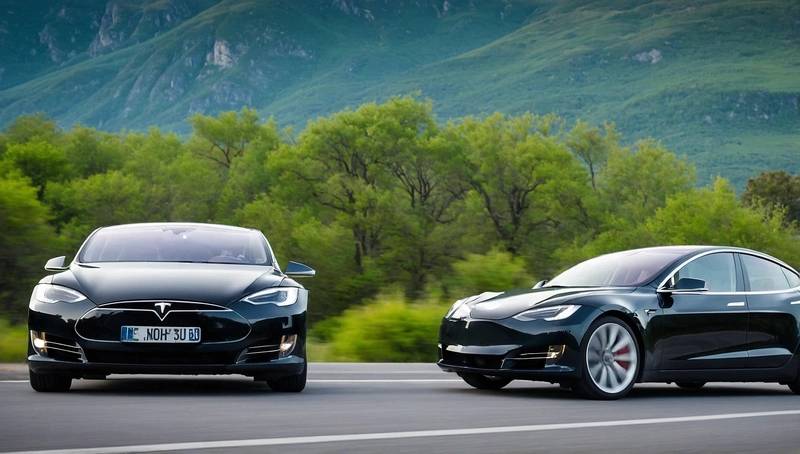
Tesla's European new car sales fell by 27.9% from a year ago in May, even though sales of fully-electric vehicles in the region jumped by 27.2%. The revised Model Y has yet to show any signs of reviving Tesla's fortunes.
The European Automobile Manufacturers Association's (ACEA) data showed that overall car sales in Europe increased by 1.9%. Plug-in hybrids grew the most, followed by cars using alternative fuels.
Why it's important
Tesla's European Sales have fallen for the fifth consecutive month as customers opt for cheaper Chinese EVs, and in some cases protest against Elon Musk.
Tesla's European Market Share dropped from 1.8% to 1.2% in just one month.
The new Model Y will revamp the company's aging model range, as Chinese and traditional automakers launch EVs in a rapid rate amid trade tensions.
According to data released by Jato Dynamics on Tuesday, Chinese manufacturers maintained their strong growth last month in Europe despite EU tariffs against Chinese EVs. They sold 65,808 vehicles and doubled their market share from 5.9% to 5.9%.
BYD sold nearly as many cars as Tesla in May.
Outselling
It is April.
By the Numbers
ACEA data show that new vehicle sales in May in the European Union (EU), Britain, and the European Free Trade Association increased to 1,11 million vehicles. This follows a decline of 0.3% in April.
The registrations of SAIC Motor, a Chinese state-owned company, and BMW in Germany rose by 22,5% and 5,6% respectively. Mazda's registrations fell by 23%.
Total car sales in the EU have declined by 0.6% this year.
This is despite the growing demand for EVs. Registrations of battery-electric cars (BEV), hybrid-electric vehicles (HEV) and plug-in hybrids (PHEV) have increased by 26.1% respectively.
In May, the EU sold 58.9% more BEVs than HEVs or PHEVs. This is up from 48.9% by May 2024.
In the EU's largest markets, sales of new cars in Spain and Germany increased by 18.6% and 1,2%, respectively, whereas in France and Italy, they fell by 12.3%, and 0.1%.
Registrations in Britain were up by 1.6%.
(source: Reuters)