
Latest News
-
Moeve, a Spanish company, says that the energy market has been upended and green hydrogen is now being produced as a EUR1 billion project.
Maarten Wetselaar, CEO of Spanish energy company Moeve, said that the Iran War has re-energized demand for cleaner alternatives. The company approved its Onuba project in March, which involved more than 1 billion euros ($1.15 billion), including more than 300 million euros in EU subsidies. This is the beginning of a larger project that will eventually reach 2 GW of electrolysis capacity. Moeve owns 51% of Onuba. Other investors include Hy24, a French public-private financial institution and COFIDES, a Spanish public-private finance institution. Wetselaar, the CEO of the company that officially launched the project in southern Spain, said: "Right now, green hydrogen is competitive because the natural gas prices are very high." He added that "interest in green molecules, in general?and in green hydrogen in particular has increased," without going into further detail. Grey hydrogen is made from natural gas and is green if it is made using renewable energy. Green hydrogen projects around the world have had a hard time attracting customers, as they are still more expensive than natural gas-based hydrogen. Moeve has also built a biofuel plant, which is expected to begin production next year. The total investment to date amounts to EUR2.4 billion. Moeve, owned by the?Abu Dhabi-based fund Mubadala as well as U.S. private equity firm Carlyle Group in 2024, rebranded itself from Cepsa to reflect a shift towards?low carbon businesses within an EUR8 billion transformation plan. Since 2022 it has sold the majority of its oil production assets including Abu Dhabi and South America. Wetselaar stated that he expects the remaining assets of the company in Algeria to be sold by 2030 without providing any details. He said that he would be "very surprised" if those assets were still in the portfolio by 2030. Moeve, Portugal's Galp and their fuel retailers have been in discussions since January to combine their businesses. Wetselaar is confident that it will receive all the necessary approvals by the end the year.
-
ROI-LNG spot price surge deters Asian buyers, but saves Europe: Russell
High spot prices are deterring buyers from China and South Asia, resulting in Asia's lowest September imports in eight years. According to data compiled by Kpler, the top-importing continent will see arrivals of?20.09 million tons of super-chilled gasoline in September. This is the lowest figure for this month since September 2018 when 19.88 million arrived. Asia's imports have dropped?from 22.27 millions tons in September of last year and also from 22.25 in August. The slump in Asian LNG demand has freed up cargoes to Europe, where it is struggling to store enough natural gas ahead of the winter. The European Union's natural gas stocks are currently at 68%, or 16 percentage points less than the average for the past five years. Kpler estimates that September LNG imports will reach 7.98 million tonnes, up from 7.55 millions in August. This is the highest since May. Kpler estimates October arrivals at 10,53 million tons, and November arrivals at 10,62 million. These levels are in line with those of 2025. Data shows that Asia has once again opted out of cargoes. This allows Europe to purchase?more LNG at a higher price. The market has become tighter due to the ongoing loss of Qatari LNG as a result of the conflict between the United States of America and Iran over the Strait of Hormuz. Before the war began on February 28, Qatar shipped nearly 20% of all LNG globally and competed with Australia to be the second largest shipper after the United States. Qatar's shipments are down dramatically, as Kpler shows that only 70,000 tons or one cargo managed to leave the Strait of Hormuz last August. This is down from an annual average of 6.51 millions tons between the months of February and August. Spot prices have risen 45 months in the absence of Qatari LNG, with cargoes bound for North Asia. The week ending September 11 saw the price of a million British thermal unit (mmBtu), assessed at $26.00. The price of spot LNG is now 150% higher than the $10.40 per million Btu it was in the week ending February 27. This means that the rise in Brent crude oil futures has been 50%. CHINA CURBS China is still reducing its LNG imports. Kpler estimates that September arrivals were 4.32 million tonnes, down from the 5.20 million tons in August and the 5.32 millions in September last. The current spot price of oil is more than double what it would be if China continued to import at fixed prices or oil-linked rates. India, Asia's largest LNG buyer, also shows signs of price pressure, with September imports expected to drop to 1,86 million tons - the lowest since March - and down from 2,09 million last September. In September, Pakistan will receive just 120,000 tons, compared to 490,000 tonnes in the same period last year. The global LNG market's overall dynamics are largely similar to the last major crisis of 2022. This was triggered by the loss in Russian gas pipelines into Europe following the Russian invasion of Ukraine in February that year. In August 2022, spot prices in Asia reached a record high at $70.50 per million Btu. While this was only a temporary spike, the price remained above $20 through January 2023. Asia's LNG imports dropped from 2021 to 2022, and then didn't increase until 2024 when they reached a record of 287.16 millions tons. Europe's LNG exports, on the other hand, soared in 2022. They reached a record of 124.54 millions tons, a 59% increase from 2021. In the absence of Russian pipeline gas, Europe's LNG imports have remained high. A new peak?of 125.2 million tons was set in 2025. Kpler has already estimated that imports will reach 117.01 millions tons in 2026. This figure is expected to rise during the final quarter. You like this column? Open Interest (ROI) is your new essential source of global financial commentary. ROI provides data-driven, thought-provoking analysis on everything from soybeans to swap rates. The markets are changing faster than ever. ROI can help you keep up. Follow ROI on LinkedIn, X. These are the views of the columnist, an author for.
-
Haniel sells majority stake of BauWatch to Carlyle CVC
The private equity firms announced on Thursday that Haniel had agreed to sell a majority stake in the Dutch security technology provider BauWatch. According to two sources who are familiar with the deal, the value of the company is around EUR1 billion ($1.15billion). Carlyle, CVC and Haniel each will acquire 45% of the company, while Haniel retains a 10% stake. BauWatch, founded in Apeldoorn, central Netherlands 17 years ago, provides video surveillance systems and alarms for construction sites, critical infrastructure, and industrial facilities. BauWatch has seen its revenue increase from EUR59m to EUR153m since Haniel purchased the company in 2021. Haniel has taken another step towards its transformation from a holding company into a diversified group of investment. Haniel CEO Joachim Drees stated that the proceeds from 'the sale, along with the planned sale its 'Ceconomy?stake would strengthen the financial position of the company and support its strategy. Simon Pex, Carlyle's?director of research and development, said: "We are interested in?technology driven growth stories." BauWatch is currently the number one brand in Germany and Benelux, but it has a lot of potential in Europe.
-
A timely MORNING BID AMERICAS
Investors digested the Federal Reserve’s first rate hike in 3 years as they awoke on Thursday. The central bank raised the benchmark rate a quarter-point to 3.75%-4.00%, and indicated that more tightening was to come. While shorter-dated Treasury yields increased, longer-dated Treasury yields dipped a little, suggesting that investors are growing more confident in Fed Chair Kevin Warsh’s ability to "do whatever is necessary" to bring inflation down to the 2% target. The rate increase was in line with "market" expectations, but the message was a little more hawkish that many expected. Warsh was responsible for the unanimous decision to increase the policy rate. Moreover, 16 out of 18 policymakers who submitted a projection of interest rates in the "dotplot" were expecting at least another quarter-point increase by the end 2026. The Fed chairman, who does not like forward guidance, didn't submit a projection. However, his comments following the release were hawkish. In the policy statement, it was noted that the move "would support a quicker return" to the target rate of 2%. Warsh justified his decision by pointing out persistently high inflation and recent signs of an improving economy. Trump, who has long advocated easing policies, responded by calling for a reduction in interest rates. However, he did not criticize Warsh. This was a stark difference from the way he treated Warsh's predecessor, Jerome Powell. Rates could bring more bad news to the president. Fed funds futures indicated late Wednesday that there was a 50% chance of an increase at the next central bank meeting in October. This would be just before midterm elections which will determine control of Congress. The markets seem to be satisfied with the Fed’s decision, even though the future is still unclear. After initially increasing slightly, the 10-year Treasury yield fell below 5%. The 30-year Treasury yield also dipped but remained near a recent?high of 19 years. Wall Street futures also point higher before the bell on Thursday after major indices closed lower on Tuesday. The Bank of England is expected to hold steady today, and the Bank of Japan will likely hike again on the Friday. Oil prices continued to fall on the energy markets Thursday, after Brent and WTI had settled a day earlier about 3% lower. Sources claim that Saudi Arabia has offered to ship additional crude through Oman. This is expected to help reduce the impact of recent attacks on the Kingdom’s East-West Pipeline. Saudi Arabia and Yemen’s Iran-backed Houthis fought more fiercely on Wednesday, as they exchanged further strikes. This opened a new front for the Middle East conflict that has given Iran a major strategic boost. Trump says that he is hopeful about the end of the Iran War. The U.S. House of Representatives passed a sweeping'sanctions and tariffs bill' on Wednesday, intended to increase the economic pressure on Russia for its invasion of Ukraine. The bill is now sent to President Trump to be signed into law. Chart of the day Bank of England interest rates are expected to remain unchanged at 3.75% this Thursday. The financial markets indicated on Wednesday that there was an 80% likelihood of a rate hike at the next BoE meeting in November. Energy prices were high and inflation, which is already above target, accelerated in August. Watch today's events * U.S. Weekly Jobless Claims (8:30 am EDT), August Housing Starts (8:30 am EDT),?Philadelphia Fed Business Index for September (8.30am EDT). * U.S. 10-year TIPS auction (1 p.m. EDT) * Bank of England announcement of interest rates (7 am EDT) Listen to the Morning Bid Daily Podcast before you leave. We'll be discussing the Fed's hawkish stance and other central bank policy decisions that are due this week. Subscribe to the podcast and hear the latest news in markets and finance. Want to receive Morning Bid every morning in your email? Subscribe to the newsletter by clicking here. You can find ROI at the website and follow us on LinkedIn or X. The opinions expressed are solely those of the authors. These opinions do not represent the views of News. News is committed to the Trust Principles and is dedicated to integrity, independence and freedom from bias.
-
Special Report- Trump's pressure against NATO is changing Europe's defences. Will it end the alliance?
Mihail Kogalniceanu Airport in Romania was designed to make Americans feel comfortable. The streets of the base are named Alabama (the state), Ohio (the state), Alaska (the territory) and George Washington. Since 1999, the base has been home to U.S. soldiers who have supported America's wars against Iraq and Afghanistan. About half of the roughly 2,000 American soldiers in Romania last year, the majority of whom lived at the base, left as the Trump administration began to realign the U.S. Military presence in Europe. The departures in Romania, a North Atlantic Treaty Organization bordering Ukraine country, caused alarm. MK, as it is called, sits at the eastern flank of the alliance, during a period when Russian drones are repeatedly crossing into NATO territory. When I visited MK back in July, it told a much more complex story about President Donald Trump’s efforts to remake NATO. Nine U.S. KC-135 Stratotankers parked at the base, which were deployed to refuel American bombers and jets during the Iran War. The crews and support staff of the KC-135 Stratotankers had offset earlier troop departures. This was a reminder to Washington that it still heavily relies on European bases. The Stratotankers remained in place for more than two months. This paradox is at the heart of Trump's conflict with the 32-nation coalition. He has threatened to cut troops, badgered allies about defense spending, and criticized European governments for not supporting the U.S. - Israeli war against Iran unconditionally. A?examination on U.S. military activities in Europe revealed that the Trump administration is continuing to invest in NATO facilities, and relying upon them to project its power throughout Europe, the Middle East and even beyond. In order to assess the impact of Trump's campaign against NATO, we interviewed over 50 Western officials and experts in defense, including former ambassadors from the United States, senior Trump administration officials and congressional aides. Journalists also visited NATO bases in Romania and Estonia and watched NATO military exercises near the coast of North Carolina. Reporting revealed a relationship under strain, but not yet broken. Nine former and current U.S. government officials said that powerful U.S. defence contractors with large European customers and Congressmen Republicans and Democrats have the political power to stop a U.S. withdraw from NATO, something Trump has threatened to do repeatedly. Trump's attacks have damaged the 77-year old alliance in ways that both European and American analysts say are hard to reverse. Europe is questioning America as a partner in security, according to a new study. These doubts now influence defense spending, weapon procurement, and long-term planning on the continent. Many interviewed spoke of a decline in transatlantic confidence that has undermined NATO's main deterrent, Article 5, which states that "an armed attack against one member is treated as an attack against all." An unreliable U.S. leading a failing NATO could be disastrous for Europe's safety, as it faces an aggressive and openly expanding Russia on its eastern border. The study found that despite the increase in military spending across NATO, eight countries, including Canada, Poland and Denmark, are diversifying away from their dependence on U.S. technology, weapons and defense companies. Trump's attempt to get Europe to increase its defense spending could backfire if it causes some of his allies to become less dependent on U.S. military contractors and technology. "The pressure was effective, but it caused real uncertainty," said J.C. Lintzenich. He is a former senior U.S. military official in the intelligence community who left government service in February, after advising top Pentagon officials and policymakers at Congress. "Europe is spending a lot more money, is taking its defense more seriously and is accepting more responsibility. That is a great success." There is a genuine fear in Europe that America could abandon them. Olivia Wales, White House spokesperson said that President Trump had done more than anyone for NATO. "He will unapologetically promote America's interest." Trump's claim to credit for increased European defense spending is a lie. It has been fuelled by Russia's full scale invasion of Ukraine 2022 that has destroyed cities, killed thousands and forced millions of Europeans to flee. Matthew Whitaker told reporters that "a strong alliance is one where allies hold each other accountable." NATO released a statement pointing to remarks made by Secretary General Mark Rutte who praised Trump's efforts in driving up defense spending throughout the alliance. Trump's ability, however, to remake NATO is hampered by significant limitations. According to two U.S. government officials, U.S. Secretary of Defense Pete Hegseth planned to announce the reduction of 25,000 U.S. soldiers in Europe before leaving for a NATO Ministerial Meeting in Brussels, in June. According to two U.S. officials, the proposed cuts would have brought American forces in Europe under the 76,000-troop mandated by Congress and signed into law last summer. Hegseth, instead, faced resistance from Trump's administration and delivered a warning to NATO's curved glass-and-steel headquarters in Brussels. The Pentagon will conduct a six month review of America's forces in Europe. It will pay particular attention to countries that refuse or say they are unsure or waiting and seeing when Washington asks for support. Hegseth stated that the review would be thorough. "Some countries are going to fail." According to a copy reviewed by, the Pentagon has kept quiet about the review. However, in August, it created a document that included 57 questions aimed at assessing allies' military, financial, and ideological commitments to the U.S. One question asks, for example, if a country "publicly supported U.S. Foreign Policy Priorities." The review revealed a Washington struggle over how far to reduce the U.S.'s role in Europe, without compromising its own military power. Five senior congressional aides, both Republicans and Democrats, said there was a growing bipartisan mistrust of Hegseth’s handling of NATO. One of the aides stated that Republican and Democratic Senators were concerned the Pentagon would announce "a decision which might not be beneficial for NATO or U.S. National Security." Three people with knowledge of the situation said that Hegseth may propose the same reduction as he had announced in June, i.e. 25,000. The Pentagon and Hegseth did not respond to written comments. A senior Pentagon official said: "This serious review is designed to be rigorous and consultative." According to audits by the government and testimony from Congress, there are more than 81,000 U.S. military personnel stationed in Europe. This number fluctuates as troops rotate across Europe on exercises and deployments. In 2017, four years before Trump took office, the U.S. had an average of 65,000 troops in Europe. This number grew to 74,000 troops during Trump's first term and then to 105,000 under Joe Biden following Russia's invasion of Ukraine. By the time Trump was re-elected in 2025, this number had dropped to current levels. Trump's battle with NATO is part and parcel of his broader effort to overturn the international order that the U.S. built after World War Two. His administration is challenging institutions, norms, and alliances that have been in place for decades with an "America First" transactional approach that puts the U.S.'s dominance above treaties and multilateral collaboration. Trump's attack on the global justice system was detailed in previous reporting, which included crippling U.S. Sanctions against the International Criminal Court as well as his scrambling American diplomacy through hollowing out U.S. Embassies and threats to both friends and enemies. TROOPS & TRUST The majority of allies agreed to Trump's demand for increased defense spending. This turned the potentially explosive NATO summit at Ankara in July into a meeting that Trump described as "very successful". The Pentagon's six month review is the main uncertainty that hangs over the alliance. Some European officials think that NATO's military leadership could manage a U.S. withdrawal without exposing Europe's vulnerabilities. Some fear that the process will lead to a race for Washington's favour. Officials in Romania and Poland have said they have been lobbying discreetly, but intensely, to keep American soldiers on their territories. Why do these countries want American soldiers on their soil? George Scutaru is a Romanian expert in defense and the head of New Strategy Center (a Bucharest-based think tank). "Because a human shield is the best deterrent." The Iran War shows how Washington is still dependent on European geography even when its relations with its allies are strained. Reports state that Italy denied permission to some U.S. aircraft in late March to land in Sigonella, Sicily, before they headed to the Middle East. By late June, however, over 500 U.S. aircraft had passed through Italian bases. This included 343 aircraft transiting through Sigonella, and 211 aircraft passing through Aviano, in the north of Italy. Many of these aircraft were carrying munitions. Trump still attacked Italian Prime Minister Giorgia Melons in a post on June 20, saying that "she would not even let us use Italy’s landing strips or airports, which is a great logistics inconvenience." The Italian Government did not respond to an?ask for comment. Since 1949, NATO is a cornerstone in American power. It helps the U.S. station forces throughout Europe, deter enemies, project military force, and anchor a block of democratic allies. In exchange, Europe received the protection of one of the most powerful militaries in the world, which helped sustain a period of peace and prosperity that was unprecedented in modern history. This bargain has enjoyed wide support in Washington, irrespective of party affiliation. Trump is not one of them. In his four decades in public life, Trump's position that other countries should not be protected by the United States has been remarkably consistent. In a 1987 CNN interview, he stated that "Many people are tired of other countries ripping the United States off." Trump stated during his presidential campaign in 2016 that allies must pay up, or else "get out". "And if that breaks up NATO, then it breaks NATO." Trump, in his first term as president, demanded that allies raise defense spending from 2% to 4%. He pushed for the 5% just before returning to his office in 2025. He told reporters that if they didn't pay he wouldn't defend them. NATO reports that European allies, including Canada, will spend 2.3% of their GDP combined on defense by 2025. Except for Spain, all of them have committed to spending 5% on security and defense-related investments in 2035. Kay Bailey Hutchison is a former Republican U.S. Senator who served as Trump’s ambassador to NATO during his first term. She said Trump appears to believe the U.S. benefits more from his relationships with rival powers like Russia and China rather than through alliances, such as NATO. She said, "I have always wanted the President to understand that we need allies if China is our long-term enemy." Trump, despite his attacks on NATO and the European military establishments that he has funded during his second term, has continued to fund major infrastructure projects. Washington has not backed down from the Naval Station Rota and Moron Air Base in Spain, which Trump called "a terrible NATO partner" at the Ankara Summit. The U.S. announced in May and June that they would be re-enforcing aircraft facilities at Moron and awarding $400 million worth of construction contracts to Spanish firms to improve and maintain the base for the next decade. Rota and Moron can be difficult to replace. They provide access to the Atlantic, Mediterranean and North Africa and extend U.S. Military power into the Middle East. The Spanish Prime Minister Pedro Sanchez stated at a press conference during the Ankara Summit that the U.S. had made a "sovereign" decision to deploy American forces in Europe and that Spain has "excellent" military relations with the U.S. The U.S. invested over $100 million into the expansion of Mihail Kogalniceanu Air Base in Romania. This was done alongside a $2.7 billion Romanian-funded project that will make Mihail Kogalniceanu Air Base the largest NATO base in Europe by 2040, with a capacity for up 20,000 personnel. Trump criticised then-Prime Minster Keir starmer in March for Britain's lack of support for U.S. attacks on Iran. According to a presentation made in March by a U.S. Air Force group that manages the base infrastructure, the U.S. spends more than $4.2billion on current and upcoming project at seven British air bases. U.S. Bombers have carried out missions against Iranian targets at least from one of these British bases. This reinforces the strategic importance Europe has for U.S. military activities well beyond Europe. At least a dozen former and current officials from Europe and the U.S., as well as Canada, cautioned Trump that he doesn't have to withdraw formally from NATO in order to cripple the alliance. The anti-NATO rhetoric of Trump alone could signal to Russian President Vladimir Putin that the West was divided and more vulnerable than appeared. These officials fear that Putin is testing this assumption by a series of sabotage events across Europe, which European nations blame on Russia. In August, there was a drone attack on an airport in Germany and a fire in a Polish drone manufacturing factory. NATO sent Romanian fighters to intercept a Russian drone which had infiltrated Romanian territory. This was just two days after NATO's visit to Romania's MK Air Base. A Romanian F-16 flying from another base shot it down. In the days that followed, two more drones believed to also be Russian were shot down. A Russian cruise missile then landed in Poland in late July. Poland is another NATO frontline ally. Denis Gonchar denied that Russia was involved in the incidents which occurred in Germany, Poland, and Romania. He called the provocations "dirty" and attributed them to Ukraine and others who were trying to "drag NATO, the European Union, and Russia into a direct confrontation." European officials blame Moscow for the increasing brazenness of these incursions, and claim that they are part a campaign to undermine support for Ukraine, and test NATO unity. Marius Lazurca is the national security adviser to Romanian president Nicusor Dan. He said that a drone shot over Romania by a Spanish pilot in a U.S. fighter jet demonstrated NATO solidarity. Scutaru is a Romanian expert in defense. He said, "It's clear that Russia tests Romania's defence capabilities and NATO response." What Washington expects from its allies is less clear for many. Poland and Germany increased their defense spending, but still face the possibility of U.S. troop reductions. Denmark spends a higher share of its GDP on defense than does the U.S., but Trump continues to threaten Greenland. The Federal Foreign Office of Germany said that the U.S. will continue to play an "important role" in Europe's defense as Europe becomes more responsible. The Danish Defense Ministry did not respond to a comment request. Pentagon officials are exploring ways to punish allies Trump views as being disloyal. U.S. officials revealed in an internal email that was previously published by the U.S. Elbridge Colby, the Under Secretary for Defense Policy, discussed with Spanish officials the possibility of suspending them from NATO if they refused to support Iran strikes. This was despite NATO having no way to suspend members. Allies were braced for a confrontation at the Ankara Summit, only to hear Trump switch from attacking Spain to praising "the tremendous love" that he felt towards NATO. Look Beyond Canada and Europe NATO governments do not wait for Washington to provide clarity. Rearmament is taking place at a rate not seen in decades, and in some cases they are looking for alternatives to American technology. Trump's threats against NATO and Russia's war on Ukraine have been the driving forces behind the increase in European defense expenditure. NATO reported that its European members, Canada and the United States increased their combined defense expenditure by 20% between 2025 and 2015. Trump said that U.S. Defense contractors would enjoy a windfall. He said, "We'll manufacture it and they're paying for it," at a White House meeting with NATO chief Mark Rutte. "We're going to make a lot of money." Trump said at a White House meeting with NATO chief Mark Rutte in July 2025. At least eight NATO members, including Canada, Poland and Denmark, as well as Spain, Norway and Turkey, are looking for ways to reduce their reliance on U.S. technology, weapons and defense companies, as concerns grow over the durability of U.S. assistance. Wendy Gilmour said that such doubts were not surprising. She was a former NATO assistant secretary general in charge of defense investment. She said that many people thought Trump's election was a "fluke" and assumed the U.S. remained a reliable ally. "The second vote feels deliberate and it feels like America is not the exceptional democracy we thought it was. As they look to reduce their decades-long reliance on U.S. defence firms, Canada and Poland, among others, are purchasing more equipment from non-U.S. companies, including radar systems and jets. This has caused concern at the Pentagon. Colby, Pentagon's top adviser on policy, wrote in a social media post from July that allies should work with the U.S. Defense Industrial Base "rather than try to replicate or replace it." Canada, embroiled in an ongoing trade war with Trump offers a glimpse at the tensions that are emerging within the alliance. Three senior Canadian government officials who recently left their posts said they received mixed messages about Canada's attempts to diversify its defense procurement from the Pentagon. Canada selected an Australian Arctic radar system worth $1.7 billion over its U.S. rival in June. Former senior Canadian officials directly involved in the decision stated that the Pentagon supported the selection because the Australian company promised to deliver the Arctic radar system years sooner than its U.S. competitor. Pentagon officials expressed concerns about Canada's decision to purchase early-warning Radar planes from Sweden rather than the U.S. and to consider buying some Swedish-made Gripen jet fighters instead of additional U.S.-made F-35s. One Pentagon official questioned whether Canada is a "credible" partner in the mutual defence of North America. Canada's Defense Ministry said in a statement that it has not yet decided if it will buy additional F-35s beyond the first batch expected to arrive this summer, or if they'll pursue alternatives. The ministry stated that the review of the F-35 continues as it works to maximize the economic benefits for Canadian workers and businesses. Gijs Tuinman was the Dutch Minister of Arms Procurement and Personnel until February. He said that efforts to end dependence on U.S. arms could have significant consequences. He said that he thought anti-Trump sentiment could push some governments in Europe to reconsider their participation in major American defence programs. Experts say this could cost U.S. firms billions. The risk is enormous. Tuinman told an interview that it was on the verge of happening. Lockheed Martin, the company that makes the F-35 fighter jet, said it was seeing "strong demand" from NATO member countries for its fighter plane and other products. According to a Pentagon document, Poland and Finland are expected to receive their first F-35s in this year. Canada and Germany will follow. Gonchar said that the Russian threat is being exaggerated in order to encourage Europeans continue to buy expensive American military gear. It will take time to untangle Europe from the decades-long military integration with the United States. It takes years to develop manufacturing capacity. The development of most new weapons takes even longer. Many European, American, and Canadian officials said they view the dependence on U.S. supply chains, technology, and political leadership, as a strategic threat for Europe. "I do not think that a responsible European Leader can place the future security of their country in the United States' hands, as European countries have done, of course, since the end the Cold War," Chris Chivvis said, the senior U.S. Intelligence Officer for Europe during Trump’s first term. "There's been a sea change in Europe." In her State of the European Union address, delivered on Wednesday, Ursula von der Leyen, President of the European Commission captured the new mood. In a speech lasting 70 minutes, in which she did not mention the U.S. once, the EU chief warned that the "international rules-based system is fractured" and stated that Europe "must urgently reinvent our partnerships." She then invited Canada to be the EU's "associate members," signaling a closer cooperation on issues such as defense, trade, and others. After the speech, Canadian Prime Minister Mark Carney received a standing applause. EUROPE REVOLUTIONS The European governments, at least publicly continue to express their confidence in the Alliance. Portugal, Norway Germany and Spain, four governments who responded to requests for comments, said NATO remains united despite recent tensions. Norway called the U.S. "our most important allie" while Portugal stated that NATO would be impossible without it. A spokesperson for the Federal Foreign Office in Germany said that U.S. contractors continue to account for "a significant share" of German procurement. Many European officials say that for NATO to be effective in deterring Russia and other enemies, they must believe the U.S. will protect Europe. Recent opinion polls have revealed that a majority of Europeans do not believe that the U.S. will defend Europe, and that a record number dislike Trump and mistrust his country. According to a Pew Research Center poll conducted in July, China is now seen as more favorable than the U.S. by most of the 36 countries that were surveyed. This includes nine NATO member nations: Canada, France Germany, Greece Italy, The Netherlands, Spain and Sweden. In an interview, Senator Jeanne Shaheen said, "That is really troubling." She is the senior Democrat of the Senate Foreign Relations Committee, and the co-chairperson of the Senate NATO Observer Group. "They no longer view President Trump as an ally." According to 12 current and former Western military and government officials, Trump's plans for Greenland have damaged trust the most. Jody Thomas, Canada’s national security advisor for 2022-2024, said: "This isn't the United States that we knew." "What they are doing is no more reasonable, no longer rational." In his speech in Davos, Trump said that he would not take control of the Danish territories by force. He still wants it. In August, he posted a photomontage on his social media page, which showed him towering over the mountains and houses of Greenland, with the words "Hello Greenland!"
-
The AI data center boom in Silicon Valley is met with local opposition
Residents and environmental groups in Silicon Valley's largest city are organizing against the wave of proposed data center projects that officials have courted to try and?position? the city as a hub of AI infrastructure. The clash highlights the challenge facing policymakers across the country: how to support a sector deemed by business and government leaders to be critical to the economy's competitiveness, while also responding to public concerns over the impact of infrastructure on electricity, water and air pollution. This debate is especially fraught in California because it is home to many companies that are driving the AI boom including Google, Meta OpenAI, and Anthropic. San Jose is the third largest city in California, with a population of almost 1 million. It has embraced this industry's rapid growth. Last year, the city announced an agreement with utility PG&E that would speed up power delivery to large energy consumers such as data centres. Each new facility is estimated to generate tax revenue of between $3 and $6 million annually, which could be used for police, fire protection and libraries as well as roads, parks and roads. Many residents of Silicon Valley are not convinced that the growth of AI-focused AI facilities, which is a result of the tech-driven boom, will benefit all. Ellina Yin is a member of the grassroots I Love San Jose Coalition. She said, "The companies must prove to us that they deserve our resources as well as how they plan to give back to the community." Yin, along with others, are calling for a stricter public'review and more transparency in energy and water usage. They also want to see studies on health and environmental effects before projects are approved. Matt Mahan, the mayor of San Francisco, says that the solution is not to stop data center development. Instead, he believes it's important to make sure they are done in a responsible manner. People are entitled to ask, "Is it increasing my energy costs?" Does it use our clean water resources? Does it affect the quality of life for residents in my city? Mahan said: "These are fair questions." California Governor Gavin Newsom is weighing a package bill intended to protect residents of the state from the cost of powering data centres and increase transparency about their energy and water use. PG&E stated that new large customers could help spread grid costs over a broader base of customers and lower bills. The air quality is of particular concern. In April, a Coalition led by the Center for Biological Diversity asked the Bay Area Air?Management District for a stronger oversight of diesel backup Generators used in data centers. They argued that existing regulations predate recent expansions of AI-related facility. The district said that it will investigate if stronger protections would be warranted. NEW LEGISLATION PENDING Sacramento, California's capitol, is increasingly concerned with the issues raised in San Jose. The state Senate and Assembly recently approved several bills that address data centers. These include measures to ensure that large electricity users are responsible for their grid costs, and requirements to increase?transparency in energy and water usage. California, according to State Senator Steve Padilla who wrote several of these measures, has an obligation to be a leader because many of the largest technology companies in the world are located there. The?Data Center Coalition', an industry trade association whose members include Google, Meta and OpenAI, has said that it supports responsible growth, but argues the bills unfairly target data centers over other large industrial and business electricity users. The group said the bills could discourage investment, and send jobs, tax revenues and projects to other States. Newsom will have until the end the month to sign or veto legislation. His office declined comment as the bills were still before the governor.
-
GLOBAL-MARKETS-Shares and short-term yields edge up after Fed hike, focus turns to BoE
The dollar climbed to a seven-week peak on Thursday after the U.S. Federal Reserve raised interest rates for the first time in more than three year and oil prices dropped. This helped ease a global bond selloff which has been rumbling for months. Bank of England is now the focus, which will likely leave UK rates unchanged later. However, all eyes are on the BoE to see if it indicates a possible November rate hike given the pressures of high energy prices. Bank of Japan is expected to raise interest rates this Friday. The main European share markets opened 0.2% to 0.5% stronger. Brent oil was still $104 per barrel despite a 1% decline in the price. The Fed's overnight action added to the feeling that central banks were now getting a jump on inflation. In currency markets, the U.S. Dollar was at its highest level in seven weeks. This was largely due to an increase in short-term Treasury rates as markets increased their bets that Fed might have to raise interest rates again. The benchmark 10-year and 30-year yields barely moved. Lisa Wang, head of EMEA Investment Strategy at Franklin Templeton Investment Solutions said that Wednesday's decision made for "a credible Fed" and caps long-term rates, instead of pushing them higher. She added that despite recent warnings, money will continue to pour into AI. "Overall, we remain bullish?globally?on risk." Europe is now focused on the BoE interest rate announcement at 1100 GMT. Investors are looking for any signs that the BoE will follow the Fed and European Central Bank in raising interest rates. The price of Brent crude and British natural gas futures has risen by nearly 20% in the last month. This is bad news for countries heavily dependent on imported energy. Money markets indicate that there is a 80% probability of a BoE rate hike of one quarter point in November. This could be the first of up to four increases over the course of the year. It seems that economists are not as convinced. Only one out of eight respondents to a recent survey expected an increase in November. OIL SLIPS BELLOW Futures for the S&P 500, Nasdaq and Dow Jones Indices indicate that Wall Street will gain around 0.8% when trading resumes. Sterling was up 0.10% to $1.3395 before the BoE's decision. The dollar had just begun to ease off the seven-week-high it had reached following the Fed’s move. Its Chair Kevin Warsh had described the Fed’s action as removing “a dose of flexibility”. Benchmark UK gilt yields for 10-year benchmarks are slightly higher at 5.3%. German Bunds are at a little over 3.53%, while U.S. 10-year Treasuries hover just below the 5% threshold. The Fed's overnight quarter-point increase in interest rates?had been unanimously decided. The central bank's dot-plot chart predicted one more rate hike for this year but did not indicate any move next year. Tai Hui is the APAC chief market analyst at JPMorgan Asset Management. He said that investors will need to reassess valuations of?assets, especially tech stocks, if the Fed remains hawkish into 2027. "We believe the chances of U.S. policies rates returning above 5%?are still limited." He added that a catalyst for extending the equity bull is unlikely to happen in the near future. The overnight dollar rise also hurt commodity markets. Brent crude futures fell another 1%, after falling 2.7% overnight. This was due to reports that Saudi Arabia offered crude cargoes via Oman. This had eased some of the fears about the Middle East supply disruption following the recent escalation in the seven-month-long war, after the attacks by Iran-backed Houthi-backed fighters on Saudi-based cities. Gold showed resilience however, rising by 0.7%, to $4,293 per ounce. This was a recovery from the overnight fall. Wang, a Franklin Templeton representative, said that "we are still neutral about the dollar at this time" and explained that the "bigger issue" was whether the status of the dollar as the top reserve currency in the world would decrease over the long term.
-
Libyan power cuts drive small businesses and tired citizens to the brink
Naseem al-Akkari has been experiencing power cuts for many years. He owns a restaurant chain in the capital of Libya, Tripoli. It wasn't until the summer heatwaves of this year that his business was put in danger. He lost an estimated $40,000 within a few months. The generator must run in order to keep the goods from spoiling. "You have no other choice than to buy diesel on the black market in order to keep running," he said during an interview where the power had gone out more than ten times. The combination of rising temperatures and global energy disruptions, as well as a host of domestic issues ranging from aging infrastructure to fuel smuggling rampantly, has created an acute electricity and gas crisis in Libya. This is a major oil producing country that wants to increase its gas exports to Europe. Since the 2014 civil war in Libya, petrol queues can stretch to up to 2 km. The black-market price for diesel is now 11 Libyan dinars (about $1.70), compared to a subsidised rate of 0.15 dinars. This has caused severe and unexpected costs to businesses like Akkari's. Akkari stated that power outages in Qasr bin?Ghashir can last for up to 36-hours. This means that generators cost about 10,000 dinars a day, or nearly $1,600. Sufian Boshaala is the manager of a pastry shop owned by a family in Benghazi. He said that power outages forced him to lay off employees and close the business for days. The General Electricity Company of Libya, the state-owned company, declared a blackout, and cut off water from Libya's Great Man-Made River Project. This is a network of pipes that transport groundwater from the Sahara. GECOL has not responded to a request for a telephone interview. Hanna Tetteh, U.N. Special Representative for Libya, described the power outages in an August briefing as a "striking contradiction" in a nation that spends over $1 billion per month on fuel imports. HEATWAVES Heatwaves pushed air conditioning use up and put strain on power lines. Jalel Harchaoui is a contributor at the Royal United Services Institute, a British think tank. He added that this, along with "convergence" of factors, including shortfalls in natural gas production, has pushed some electricity plants to convert to fuel, which is being strained due to widespread smuggling. Libya, despite having the largest known crude oil reserves in North Africa, relies heavily on imported refined products that it sells for subsidised prices. Analysts and U.N. experts claim that a large amount of oil has been diverted illegally to be sold overseas for profit. The Sentry, a U.S.-based watchdog group, estimated that Libyans were losing $6.7 billion in fuel smuggling every year. "More than half of imported fuel is stolen by criminal networks," The Sentry said. Infrastructure issues also play a part. Ahmad al-Mesllati is the spokesperson for Brega Petroleum Marketing which manages Libya's fuel supply. He says that nine storage tanks destroyed in Tripoli during the war of 2014 have not yet been repaired. Libya's five major refineries are theoretically capable of processing about 380,000 barrels a day, but the actual output is much lower, according to an audit report released in June by Libya's Audit Bureau & Anti-Corruption National Authority. The situation worsened following a drone strike last month against an oil complex located in Zawiya - a city situated west of Tripoli, home to the main refinery for Libya. According to Mesllati, disruptions?to shipping routes along the Strait of Hormuz caused fuel shipments to be delayed by up 12 days. Tim Eaton, a British think tank called Chatham House, said that the outages "are a perfect encapsulation" of Britain's current problems. He said that while the country imports more fuel than is necessary to generate electricity, much of it ends up leaving the system because "politically sanctioned graft, corruption and institutional dysfunction." The Libyan people pay the bill and receive little in return. To help ease the crisis Brega Petroleum marketing?established mobile refuelling stations with a maximum of 300 litres for each vehicle. Even with this, queues for petrol can last up to an hour. Khaled al-Turki, who was waiting for fuel in central Tripoli, said: "We're living through a farce - an outrageous one." Is it possible that a state producing oil cannot find a way to solve the gasoline and diesel crisis? What kind of a state is this?
Solar stocks fall after Senate proposal to phase-out tax credits by 2028
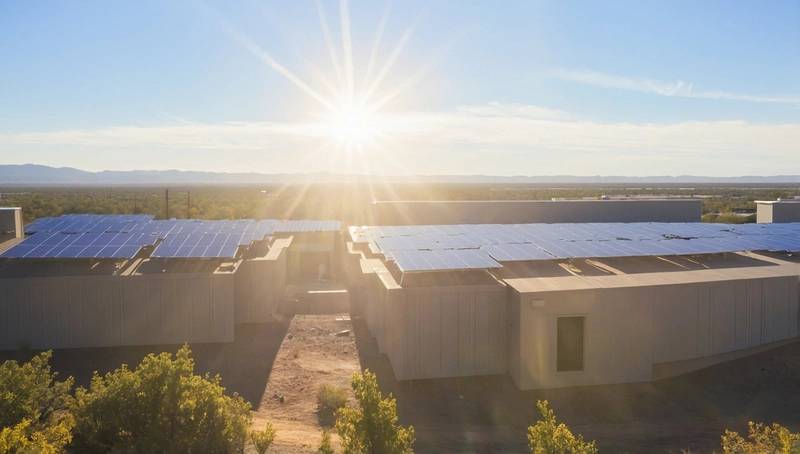
U.S. Solar stocks fell in premarket trade on Tuesday, after a Senate committee proposed that solar and wind energy credits be phased out completely by 2028. This was part of the changes suggested for President Donald Trump's tax-cutting and spending bill.
Enphase Energy, a manufacturer of solar inverters, was one of the largest decliners in the S&P 500 at the start of trading. Its shares fell 17.2% to $35. SolarEdge Technologies and Sunrun, both solar panel suppliers, each fell more than 20%. First Solar fell 10.5%.
The draft bill, circulated last month by the U.S. Senate Committee, contains several changes to Trump’s budget, also known as "One Big, Beautiful Bill Act", which the House narrowly approved.
The committee chair's language envisages the gradual phase-out of subsidies for solar and wind that were enshrined in the Biden era 2022 Inflation Reduction Act by 2026, by reducing it to 60% of its original value and terminating it by 2028.
Tax credits will not be phased out under current law until 2032.
Citi strategists stated that they "remain in a sell mode on residential solar."
The bill had a phase-out beginning in 2029, and credits would be eliminated in 2032. This is a small improvement over the previous abrupt termination of credits when projects were not in service before 12/31/2028.
Solar companies already face pressure due to a weak residential demand in the U.S., which is partly caused by high interest rates as well as metering reforms implemented in California's top market. These reforms have decreased the credits that customers receive for feeding excess electricity into the grid.
Sunrun shares have fallen 27% over the last year while Enphase Energy has dropped 63%.
Invesco's Solar ETF dropped by 22.8% in the last year.
The Senate panel's proposed amendments to Trump's Budget extend tax credits for geothermal, hydro and nuclear power until 2036.
Nano Nuclear Energy, Oklo, and other nuclear-related companies saw their shares rise by 2.2% and 2.1% respectively.
The different versions of the bill in the two narrowly Republican-controlled chambers of Congress could complicate party leaders' goal of passing the bill, which is the centerpiece of Trump's domestic agenda, before a self-imposed July 4 deadline. (Reporting and editing by Devika Syamnath in Bengaluru)
(source: Reuters)