
Latest News
-
Texas penalizes data centers for violating water laws
On Monday, the 'governor' of Texas, a state that is one of the fastest-growing areas for artificial intelligence infrastructure, instructed'state regulators to penalize any data centers who fail to provide details regarding their water usage. Texas, which has halted new data center connections to the state's?electrical grid, pending an assessment of the facilities' water and power use, amongst other issues, re-examines its regulations for server warehouses. Governor Greg Abbott has directed the Texas Water Development Board to "impose legal consequences" to data centers and large water-using entities that fail to report their water usage. Abbott's office issued a statement saying that "major water users including data centers appear to have violated civil and criminal laws by failing to provide TWDB the required information about water usage." The 'Texas water regulator tries to survey data centres about their 'water use and consumption expectations. The data center will be denied new or renewed environmental permits if it fails to submit the survey by the deadline.
-
Interior Secretary: US oil export ban unlikely lower energy prices
U.S. Interior Secretary Doug Burgum stated on Monday that a ban on U.S. fuel or oil exports was unlikely to help lower energy prices for consumers in the midst of the Iran War. Burgum, speaking to reporters at the G20 meeting on energy in Houston, said: "We'd consider an export prohibition if it actually could lower prices. But that's not true." Burgum, a Trump appointee, stated that a ban on the export of oil, gasoline, or diesel could result in retaliatory measures from other countries. This could harm consumers in California, whose energy imports are largely dependent on. Burgum stated, "We stopped exporting products, and then someone said, "We're not going to export to California." Burgum stated that California has already shut down several oil refineries which has contributed to the rise in fuel prices. Burgum stated that California already has the highest gas and diesel prices in the nation due to their policies. We don't want to make it worse. The Trump administration has run out of options to reduce prices for diesel and oil, which recently reached a record-high above $6 per gallon, and are even higher in California. The White House is considering how it can use the Cold War Defense Production Act in order to increase U.S. refinery capacity.
-
US EPA will undo carbon emissions limits for power plants during G20 meeting
The U.S. Environmental Protection Agency announced Monday rules to repeal former President?Joe Biden?s limits on carbon emission from coal-and-gas-fired power stations and to prevent future climate regulations of these facilities. The move is part President Donald Trump’s effort to undo U.S. Climate Policy, which his administration claims has hampered energy production. The announcement was made at the sidelines of the G20 Energy Ministers' meeting in Houston this week, where global officials will discuss "regulatory efficiencies," expanding baseload power, and energy security. EPA Administrator Lee Zeldin stated that 'new measures to prevent future regulation on greenhouse gas emissions in the power sector would enable the U.S. build new generating infrastructure to meet the skyrocketing demand for electricity. He said that the Americans have demanded more common sense from federal agencies under President Trump’s leadership at a press conference held in Houston. "That means reducing red tape so that we can build a new power-generating system." Environmental groups slammed this new proposal. They said that it would be more expensive in terms of damage to the public and the environment. Nearly a quarter (25%) of U.S. emissions are attributed to the electricity sector. In June 2017, the Trump administration proposed to repeal regulations written by Biden that would have reduced emissions of mercury, carbon dioxide and other air pollutants at power plants. Biden's carbon emissions rules for power plants would reduce greenhouse gas emissions by one billion metric tonnes by 2047 as part of his administration’s fight against climate changes. This rule would have required that coal-fired power stations and new natural gas-fired generators install equipment to capture emissions in the next decade before they reach the atmosphere. This requirement made zero-emissions options like solar and wind attractive. Denying the existence of climate pollution that accounts for a quarter in the United States is reckless. Maggie Coulter said on Monday that it would 'lead to greater suffering and loss of life from extreme heatwaves, severe storms and destructive 'wildfires', similar to those we have seen this summer. According to a report by a reporter, Under Secretary of Energy Kyle Haustveit said that the new regulations would boost 'coal-fired electric power in the U.S. which has been steadily declining due to the availability and cheaper natural gas. He said, "President Trump has ended the war against beautiful, clean coal." "Coal has many advantages: it is affordable, reliable and secure."
-
VTB sanctions imposed by the U.S.
Treasury Department: The United States imposed Iran-related Sanctions on Monday against?Russia's VTB Bank Public Joint Stock Company accusing it of involvement in Iranian sanctions evasion. Washington is seeking to increase economic pressure on Tehran. This action is a continuation of the sanctions that were imposed in 2022 against VTB, Russia’s second largest?lender. The bank was targeted following Moscow's full-scale invasion into Ukraine. Treasury Secretary Scott Bessent stated that "Under Operation Economic Outcast Treasury will continue to target those who provide material or financial support to the Iranian regime to enable it to maintain its terrorist enterprise." Treasury will not tolerate any regime support and will continue to expose and isolate Iran’s "enablers." Bessent warned that the Trump administration will sanction a "large bank" as it continues to exert economic pressure on Tehran in order to end a six-month conflict between the U.S. and Iran. Since the conflict began in February, the 'United States' has taken a number of economic measures to target Iran, including oil exports, shipping networks, channels for weapons procurement, financial intermediaries and digital asset exchanges.
-
European shares fall on AI concerns and inflation fears
European shares dropped on Monday, as technology stocks were under pressure following leaders of top AI companies who pushed for a slower pace of development. Meanwhile, a surge in global bond yields and oil prices dampened risk appetite. The pan-European STOXX 600 index was down by 0.5%, at 635.99. The majority of regional markets fell, but London and Zurich's indices rose by 0.4% and 0.8% respectively. As AI-linked stocks fell globally, technology shares were among the worst performers, falling 2.1%. Dario Amodei, CEO of Anthropic, called for companies to halt the advancements in AI models due to misuse concerns. This view was backed by xAI’s Elon Musk as well as OpenAI CEO Sam Altman. The STOXX 600 was led by the French chipmaker Soitec, which fell 12.5%. However, software stocks gained. Octave Intelligence, Capgemini, Sage and Relx all rose between 5% and 75%. Chris Beauchamp is the chief analyst at IG. He said, "These stocks were victims of SAASpocalypse on fear AI would wipe their businesses out." "Those fears were exaggerated, but if the AI giants put their foot down, the outlook for revenue for Sage, RELX, and their SAAS brothers globally becomes much brighter. Even if this only delays a long-term loss of biz." European miners declined 2.5% as a result of the weakness in commodity prices. Healthcare stocks rose 2.7%, bucking the trend. GSK grew by 4.7% following the positive results of two lung cancer drugs. This added to the momentum in this sector. Energy stocks fell 0.8% but crude prices rose 2% as supply concerns increased after new strikes on Saudi energy infrastructure, and attacks against ships in the Middle East. Recent oil prices have heightened inflation concerns, which has led to expectations that central banks around the world could raise interest rates this year. The European economies are especially vulnerable to rising oil prices, as they heavily rely on imports. ECB policymakers warned 'on Monday' that euro zone inflation may exceed high forecasts. Traders now price in an additional 25 basis-point ECB rate increase by the end of the year after last?week?s rate hike. Government bond yields soared as a result of the developments. The 10-year bund - considered to be the benchmark for the region - was at its highest level since mid 2009. The benchmark U.S. 10-year Treasury yields also rose to a psychologically important level of 5%. The U.S. Federal Reserve is widely expected to raise its main lending rate by at least 25 basis point this week --?in stark contrast to the split chances between a hike or a pause that were seen only a week earlier. After a close election, which reduced the influence of the far right, Sweden's opposition centre-left appeared most likely to win power on Monday.
-
German Finance Minister demands UniCredit CEO to meet certain conditions regarding possible Commerzbank acquisition
On Monday, German Finance Minister Lars Klingbeil outlined a list of demands to UniCredit CEO Andrea Orcel regarding the possible acquisition of Commerzbank by the Italian bank. The German Ministry of Finance said that these included Commerzbank staying listed on the stock market, maintaining its base in Frankfurt, and continuing to fund German medium-sized businesses?at home as well as abroad. After Berlin failed to stop a takeover, the meeting in Berlin marked an important turning point in the two-year struggle for control of Germany's largest bank. Klingbeil said, "In a productive discussion with Mr. Orcel I made it clear to him that future negotiations should be conducted responsibly." Orcel stated in a press release that the meeting was "a good and constructive first discussion that will be quickly followed by others." He said, "Both sides should now reflect on this initial discussion to find a way forward that is in the best interests of all stakeholders and shareholders."
-
The UK government is looking to buy out an insolvent steel specialist
The British government announced on Monday that it was drafting a plan to buy Speciality Steel UK, a manufacturer who formerly supplied the automotive, aero, and defence industries and entered liquidation at the end of August 2025. Speciality Steel was a part of Liberty Steel before it went into liquidation. Liberty Steel is owned by the commodities tycoon Sanjeev Gupta. The government announced that it was moving toward public ownership, after it decided it couldn't support a private sector bid. This company?has locations in Northern and Central England and supports more than 1,300 jobs. "We don't interfere in private companies lightly." "We cannot simply sit back and let the future of this company and its 1,300 employees be decided by default," said Jonathan Reynolds, business minister. Working towards public acquisition 'will keep options open while we work with workers, local leaders, industry, and investors to determine the best?long-term?"future? for these sites." The government stated that any purchase would be subject to a due diligence process and would be funded by existing government budgets. The government did not specify how much an acquisition might cost.
-
EPA will undo carbon emissions limits for power plants during G20 meeting
The U.S. Environmental Protection Agency will announce on Monday its final 'rule' that will repeal the Biden administration’s carbon emission limits for coal and gas fired?power plants. This is a major part of their broader efforts to undo U.S. Climate Policy that they claim has hindered American energy production. The announcement will take place on the sidelines a meeting of G20 energy Ministers in Houston, where global officials will discuss "regulatory efficiencies," expanding baseload power, and energy security. In June 2017, the Trump administration proposed to repeal rules that were written by former President Joe Biden in order to reduce emissions of carbon dioxide and mercury from power plants. Biden's carbon emission rules for power plants would have cut greenhouse gas emissions from 1 billion metric tonnes by 2047. This was a key part of the administration's effort to combat climate change. Nearly a quarter (25%) of the U.S. greenhouse-gas?pollution is attributed to the electricity sector. At the time, EPA administrator Lee Zeldin claimed that this move would save businesses $120 million a yearly. Environmental?groups have criticized the proposal saying that it would cause more harm to the environment and the public health. Denying a quarter of the climate pollution in the United States is reckless. ?It'll lead to more deaths and suffering due to intense heatwaves and dramatic?storms.
Gold prices rise on Middle East tensions, but all eyes are on the Fed meeting
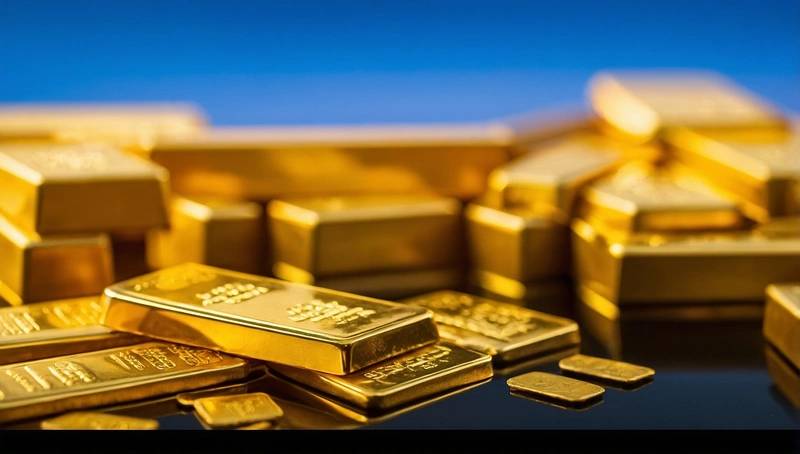
The gold price rose on Tuesday, as geopolitical tensions in the Middle East escalated. Attention also turned to the U.S. Central Bank's policy announcement on Wednesday. Silver surged to its highest level in 13 years.
As of 10:00 am (14:00 GMT), spot gold rose 0.2%, to $3,390.73, while U.S. futures gold fell 0.2%, to $3,410.40. Jim Wycoff is a senior analyst at Kitco Metals. He said that geopolitical uncertainties, such as the Israeli-Iran conflict, which will likely escalate before de-escalating, would keep the market's safe-haven bids in check.
Israel's Military said Iran's Military Leadership is "on the Run" and that they killed Iran's Wartime Chief of Staff Ali Shadmani over night four days after his appointment, replacing another top commander who was killed in the strike.
U.S. president Donald Trump stated that he wants a "real ending" to the dispute over Iran's nuclear program and suggested he might send senior American officials in order to meet the Islamic Republic, as the Israel-Iran war has raged on for the fifth day.
On Wednesday, the Federal Reserve announces its policy decision, followed by Jerome Powell's Press Conference.
It is expected that the U.S. Central Bank will keep its benchmark overnight rate at 4.25% to 4.50%, as it has done since December.
Gold's appeal is boosted by a low-interest rate environment, as well as geopolitical unrest.
A survey by the World Gold Council revealed that central banks expect to see their gold holdings increase as a percentage of their reserves over the next five year period.
The data showed that retail sales in the United States fell more than expected, but consumer spending was still supported by wage growth.
Spot silver rose 2.1% to $37.1 an ounce, its highest level since Feb 2012.
Wycoff said, "The next target for silver bulls is 40 dollars. I think it's possible in the next few weeks or even sooner."
Palladium rose 1.7%, to $1 047.23, while platinum increased 0.4%, to $1 251.81. (Reporting by Sarah Qureshi in Bengaluru; Editing by Jan Harvey)
(source: Reuters)