
Latest News
-
Mizuho Bank files a case against Radiant World, Singapore
According to the website of the Singapore Supreme Court, Japan's Mizuho Bank Ltd filed a case against the Singapore Iron Ore Trader Radiant World's 'operating entity'. A court listing revealed that Mizuho Bank is the banking division of Mizuho Financial Group and they are seeking an injunction to stop Radiant World Corporation from doing business. Could not find any other public legal action taken by a Radiant World creditor. Radiant World accounts have been frozen by some banks and trading houses have cut ties with the company over concerns that it had submitted invalid invoices to raise funding. Singapore Police confirmed last week that reports had been filed and investigations were underway. The court listing didn't provide any details about the injunction requested. Mizuho Bank declined comment. Radiant World's spokesperson did not respond to a request for comment after UK business hours. Radiant World stated in a July statement that the claims made were unsubstantiated and inaccurate. Radiant World was founded by Pinkesh Nahar in the early 2000s. According to its website, it trades over 80 metric tons of iron ore per year. Bloomberg News reported in August that Deutsche Bank and KBC Group NV had frozen Radiant 'World's Singaporean bank accounts. Other lenders reportedly suspended credit lines. (Reporting and Additional Reporting By Anton Bridge, Editing by Jacqueline Wong.)
-
Stocks turn cautious before Warsh's speech; bonds, FX and hold their breath
The shares in Asia were cautious after the technology rally fueled by Nvidia, and currency and bond markets awaited the words of the world's largest central banker on U.S. rates. The oil prices are headed for a weekly loss as Iran and Oman have 'agreed' to share revenues and administer traffic in the Strait of Hormuz, even though Washington has shown little interest in restarting direct talks with Tehran. Brent fell 0.1% to $89.63 per barrel, but the weekly decline was expected to be over 5%. The Nikkei, Japan's stock market index, rose 0.5%. Taiwanese stocks gained 1.2%, after Nvidia's shares jumped almost 9% overnight. The chipmaker announced robust results and indicated that the AI spending boom still has many years to run. South Korea's KOSPI fell 1% and Hong Kong's Hang Seng dropped 0.3%. S&P 500 and Nasdaq Futures both fell by 0.1% while the?EURO STOXX50 futures rose 0.3%. The Federal Reserve's Jackson Hole Symposium is the focus of attention. Kevin Warsh, the chair, will?speak at the end of the day. Three Fed officials already raised the alarm over sticky inflation, but the new chief of the central bank has refused to provide any forward guidance on where interest rates will go. Futures prices indicate that there is a 35% probability of the Fed raising interest rates at its meeting on September 16. They are fully priced to move in December. In a client note, ANZ analysts said that while they do not expect him give any forward guidance, the markets hope he will help reduce the uncertainty around the Fed's response function. "We don't expect this to be forthcoming, but given the recent volatility on rates markets, it could cause a negative market reaction if Warsh offers a too small amount." After the Fed's meeting in July, yields on longer-dated bonds have increased as Warsh is perceived as not having offered enough concrete steps to address persistently high inflation. Warsh is also leading a Fed divided, as several policymakers are calling for an increase in interest rates to curb 'price pressures. The 30-year Treasury yields are little changed on Friday at 5.1973%. They were down 8 basis point?this past week after briefly reaching?5.3%, the highest since 2007. This prompted a surprise intervention by U.S. Treasury, which increased its buyback program. The yields on ten-year bonds were unchanged at 4.6723% this week and down 7 basis points, while the yields on two-year bonds were stable at 4.2279%. The dollar's value against major currencies was 99.12 at the end of last week, but it is now up 0.3%. After a hot inflation rate report this week, the Reserve Bank of Australia re-evaluated its interest-rate outlook. The Aussie reached a three-month high of $0.72, and was on track for a 0.4% weekly increase. This is the ninth consecutive week of gains. Gold dropped 0.3% on the commodity market to $4,587 per ounce. It was expected to drop 0.2% in this week.
-
Sources say that the US is close to a deal with Venezuela to gain long-term access its oil reserves.
Sources with knowledge of the negotiations said that Trump administration officials were working on a deal to secure long-term?access to a part?of Venezuela’s crude reserves. This could lower the price of crude imports. Sources said that the agreement, which may be signed soon and made public, will allow the U.S. to lock in a grouping of Venezuelan oilfields that are to be developed by American firms. They added that the U.S. would receive a guaranteed supply. One source said, "This is a real issue and it's being discussed at the highest level of the U.S. government and Venezuelan government." Separately, a source stated that a "lease", as a legal model for?the deal to work was being considered. A further auction or tender would be held to distribute each field among U.S. producers. The list of 17 fields under negotiation, seen by?by, includes green fields along the Orinoco Belt and mature areas on Lake Maracaibo. Some of these are currently operated a small Chinese company whose contract was signed during Maduro’s administration. The White House directed questions to the U.S. Department of Energy. The Energy Department, Venezuela's Oil Ministry and the state oil company PDVSA did not respond to requests for comment. Paula Henao, Venezuela's oil minister, could not be reached to comment. The current hydrocarbons regulations in Venezuela, the country with the largest reserves of crude oil, do not include leases on oil fields, and the Constitution leaves the core activities of the industry to the government. Recent reforms to oil legislation allow oilfield operations through joint ventures or production-sharing agreements. The Venezuelan government has prohibited foreign producers for decades from booking Venezuela's oil reserves. Experts say that while the full details of a potential deal between Washington, DC and Caracas are still unknown, they could raise constitutional issues and legal challenges. Axios reported the first on Thursday, and stated that U.S. Energy Sec. Chris Wright plans to visit Caracas by next week. Washington is trying to ensure a steady flow of Venezuelan crude oil for U.S. refining plants, while promoting American investments in the OPEC nation's deteriorated, 1,25 million barrels of crude per day, energy industry. The Trump administration is under pressure to lower gasoline prices ahead of the midterm elections later this year. This could be achieved by reducing oil costs and increasing production. The U.S. has also been searching for ways to replenish the Strategic Petroleum Reserve (the world's largest stockpile of emergency oil), including possible crude?swaps between U.S. producers. SPR has a total capacity of 290 million barrels. This is 41%. The administration has been hampered by funding shortages and maintenance issues at the reserve. This is after it was tapped in response to the Russian invasion of Ukraine and again in February after the Iran War began. Reporting by Marianna Paraga in Houston, Jarrett Renshaw at Washington and Lisa Shumaker and Nathan Crooks.
-
Sources say that the US is close to a deal with Venezuela to gain long-term access its oil reserves.
Sources familiar with the negotiations confirmed on Thursday that officials in the Trump administration are working to reach a long-term agreement to give the United States, which oversees Venezuela's oil exports, access to a part of Venezuela's crude reserves. Sources?said that the agreement, which is expected to be signed and made public soon?, would allow the U.S. Government to lock in?a group Venezuelan oilfields that will be developed by American firms, and that the supply would be?guaranteed for? the U.S. One of the sources stated that "this is real and being discussed on the highest level of the U.S. government and Venezuelan government." Separately, a source stated that a "lease", as a legal model for the deal to work, was being considered. A further 'auction or tender' would be held to distribute each of the?fields?among U.S. producer. The White House directed questions to the Department of Energy in the United States. The Energy Department, Venezuela's Oil Ministry and state oil company PDVSA did not respond to requests for comment. Paula Henao, Venezuela's?oil?minister, could not be reached to comment. Reporting by Marianna Pararaga in Houston, Jarrett Renshaw and Nathan Crooks; editing by Nathan Crooks
-
Rivian's Finance chief joins GE Vernova
Rivian announced on Thursday that Claire McDonough, Chief Financial Officer, has decided to leave the electric vehicle manufacturer. This comes as the company ramps up its rollout of smaller, more affordable SUVs in response to the fragile demand for EVs in the U.S. McDonough, who will replace Ken Parks as CFO of GE Vernova in 2027, will be joining the company later this year. Ken Parks joined the power equipment manufacturer before its spin-off from General Electric in 2024. McDonough is a former banker at JPMorgan, Credit Suisse and?Irvine in California. He joined Rivian, the California-based company, early in 2021. McDonough led Rivian through its initial public offer. She played a 'key role in Rivian’s launch of its?flagship R1T pick-ups and R1S SUVs. She also led cost-cutting efforts and fundraising as the company raced to build a brand new plant, develop autonomous driving technology, and turn profitable. Her departure comes at a critical time for Rivian. The company began delivering the lower-priced R2 SUVs in late June, and increased its annual delivery forecasts last month. This optimism was fueled by the firm's belief that these vehicles are critical to its success. In extended trading, shares?of Rivian?were down by more than 1%. Rivian said in a press release that McDonough would help with the transition, and then'step down' at the end October. Rivian also added that a search was already underway to find McDonough s successor. In the interim, it is expected that Derek Mulvey, vice president of finance at the?company, will take over. (Reporting from Abhirup Roy, San Francisco; Additional reporting by Deborah Sophia in Bengaluru and Pranav Mathur; Editing by Leroy Leo & Vijay Kishore).
-
Argentina, Chile revive cross-border mining framework for investment
Argentina and Chile want to "unlock billions in mining investment" by advancing regulatory and legal frameworks which would allow companies to share infrastructure and resources throughout the Andes Mountains. The Mining Integration and Complementation Treaty was revived by the two countries in July, after years of stagnation. They are now looking to move forward with a new generation copper projects. The Chilean government released a statement without revealing any further details. At the meeting, both countries approved operating protocol for the Vicuna and NexoAndino mining projects. Their mineral deposits span the border between Argentina’s?San Juan Province and Chile's Atacama Region. Both the conservative Chilean president Jose Antonio Kast and the libertarian president Javier Milei of Argentina are attempting to increase private investment. Chile's Mining minister?Daniel Mas stated this month that the framework could unlock more than $20,7 billion in investment. It would also add 540,000 tons of copper to the annual production. Investors are attracted by the 'potential of Argentinean projects near the Andes to access Chilean port infrastructure and tap into the largest copper-producing industrie in the world, reducing cost, shortening transportation routes, and assisting with the bringing new mines on line. The Chilean Mining Ministry said that the meeting on Thursday would be devoted to advancing the review of projects which could benefit from this treaty. The development of binational projects... creates immense opportunities for Chilean Suppliers, for the use and benefit of Chilean Infrastructure, for supplying services to Argentine Industry, and for developing partnership," said Joaquin Villarino. He is the head of Chile’s Mining Council which represents the major mining companies. Alvaro Gonzalez, Chile's Deputy Minister of Mining, said that there is no set timeline for the implementation of the measures being considered by both governments. The mining integration seminar in Santiago, Chile is scheduled for Friday. Representatives of three projects that are likely to benefit from a renewed framework will be meeting. McEwen Copper’s Los Azules project in Argentina, Glencore’s El Pachon, and Vicuna - a cross border copper project between Lundin Mining & BHP - are the three projects. Vicuna has said that it intends to use desalinated ocean water, but it didn't specify if it would be dependent on Chilean infrastructure. It also declined to comment about the government-level discussions. Los Azules 'does not plan to use or export desalinated waters through Chilean ports. However, a spokesperson for the company said that it was interested in the discussion due to the proximity of the project to the border. BHP hasn't clarified if the company plans to use the infrastructure that is already in place. Argentina, which has long been reliant on agricultural exports, is no longer producing copper after the closure of Alumbrera in 2018. Analysts say that a pipeline of projects in development could put Argentina among the top 10 copper producers worldwide by 2030. It could form part of an important supply hub, along with Chile, for a critical metal to the energy transformation.
-
Oil prices settle at 2% after Trump rejects the return to Iran ceasefire terms
Brent crude prices rose by 2.1% Thursday, ending a losing streak of three sessions, following a Wall Street Journal report that said U.S. president Donald Trump was 'not interested' in returning to the terms of an agreement reached with Iran in July. The report cited people who were familiar with the issue to say that the Trump administration had repeatedly told mediators that it was not interested in reviving June's agreement. This has complicated a flurry diplomatic efforts this past week to restart the talks. Brent crude futures ended up $1.86 or 2.1% higher at $89.70 per barrel. U.S. West Texas Intermediate Crude futures closed up $1.30 or 1.6% to $83.53. Both benchmarks recovered as investors reduced expectations of a diplomatic break that could?boost oil flows from Middle East. UBS analyst Giovanni Staunovo believes that a lack of progress in the talks combined with the continued restriction of flows could have led to a change in market perceptions. Washington had confirmed earlier on Thursday that it was not engaged in any talks with Iran, despite diplomatic efforts from other countries to reengage the two parties. "We don’t want to talk to them." Trump said to reporters in the Oval Office that the U.S. is focused on punishing Tehran financially and will penalize countries who do business with Iran. The U.S. announced "the toughest sanctions in the history" against Iran on?Monday. Treasury Secretary Scott Bessent said the measures will reduce the need for new major military operations. Ebrahim Azizi is the head of the national security committee in Iran's parliament. He said that sanctions are "inhumane" and "hostile", but they have lost their effectiveness. Qatar's Prime Minister visited Tehran Thursday to try to restart diplomatic talks in order to end the U.S. - Israeli war against Iran. This was on the eve its six-month anniversary. Mohsen Rezaei, Iran's top official in charge of security, warned that Tehran will target U.S. economic and military interests if Washington causes any "mischief", during talks with Qatari officials. PROLONGED UNCERTAINTY The dispute is centered around Iran's nuclear program, which will not be resolved soon. Iran also recognizes the importance of its geographic position and the leverage it has over the Strait of Hormuz, so there remains the risk of prolonged insecurity, according to Priyanka Sahdeva, Phillip Nova's head of market insight. Before the conflict started in late February, the Strait of Hormuz was responsible for about one-fifth of daily global oil and liquefied gas supplies. According to Kpler, the flow of vessels through the strait increased slightly on Wednesday. Ten commodity vessels were able to?transit the waterway. This is up from recent lows, but still lower than the 10-day-average of 15. The vessels that left the strait were a fuel tanker for medium-range travel, a bitumen carrier and a bulk ship. The consultancy?IIR reported that Kuwait Integrated Oil Industries?Co, a state-owned company, had restarted at 60% capacity all three crude units of its Al-Zour oil refining facility with a daily production rate of 615,000 barrels. In May, Iranian drones had attacked the refinery. Geopolitical tensions also escalated when Russia said it would strike British military targets in and outside Ukraine as a response to Ukrainian attacks on Russian territory with British-supplied cruise missiles. Trump, on the other hand,'said that Russian President Vladimir Putin would not attack a North Atlantic - Treaty Organization (NATO), and he played down media reports this week that CIA Director John Ratcliffe had warned Russian officials about such an attack. Britain was one of NATO's founding members. (Reporting from Siddharth Cavale and Laila K. Kearney, Robert Harvey, in London, Emily Chow, in Singapore, and Anushree Mukerjee, in Bengaluru. Thomas Derpinghaus edited by Conor Humphries and Mark Potter.
-
Trump will meet with refiners and fuel retailers ahead of the midterm elections as Iran war increases gas prices, sources say
People familiar with the situation said that President Donald 'Trump' is expected to meet next week with U.S. fuel retailers and refiners to discuss efforts to reduce?gasoline costs. His administration is attempting to relieve the pressure on consumers from the Iran War ahead of the midterm elections in November. Trump and his Republican colleagues are facing a high political stakes as they try to protect their narrow majority in Congress. Trump's promise to lower the cost of living in 2024 is under threat as a result of higher gasoline prices and an unpopular war with Iran. Trump's approval ratings have fallen to just 33% according to a new Ipsos survey. Only 31% of Americans approve of the war. According to two sources, the attendees of the meeting will include refiners such as Valero Energy Corp., Marathon Petroleum Corporation, and PBF Energy Inc., along with major retailers. According to two sources familiar with the plans, the meeting will include refiners like Valero Energy Corp, Marathon Petroleum Corporation and?PBF Energy Inc as well as?major retailers. Trump has criticised these results, arguing that the oil companies who benefit from higher prices must do more to reduce costs for consumers. Trump has publicly pressured major?producers to lower their prices. By disrupting energy flow through the Strait of Hormuz - through which 20% of world oil travelled before the conflict began on February 28, the conflict has increased?oil prices and?gasoline costs. ?U.S. Regular gasoline is now above $4 per gallon. This is roughly $1 higher than it was a year earlier, and this has created a?visible financial burden for voters as they head?into midterm elections. Prices of oil spiked to $112 per barrel during the conflict. However, crude prices have since fallen as shipping has partly resumed through the Strait. (Reporting by Jarrett Renshaw, editing by Timothy Gardner and Chizu nomiyama)
Singapore firms target South Africa amid global trade shake-up
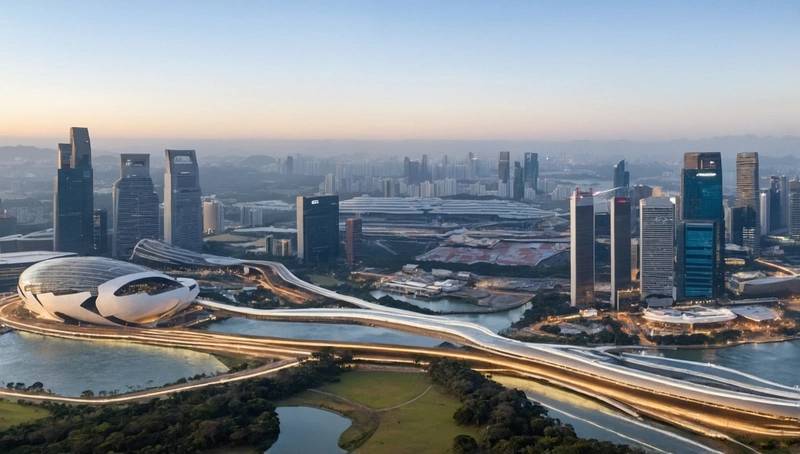
This week, a delegation of Singaporean firms is visiting South Africa to explore partnership opportunities in manufacturing, logistics and consumer goods. Trade between the two countries has almost doubled in the last four years.
Enterprise Singapore, Singapore's agency for trade and enterprise, stated that this mission was part of the Scale-Up Programme and aimed to link participating firms with South African counterparts, and potential partners, in a variety of sectors including agriprocessing and industrial supplies.
"South Africa is already a close partner of Singapore, and there are many Singaporean firms operating in South Africa," Rahul Ghosh said on Thursday. He was the director for Enterprise Singapore Middle East and Africa.
"In the longer term, this will lead to Singaporean businesses unlocking opportunities for South African business for win-win results, which is particularly important at this critical junction of global trade uncertainty and investment."
REDRAWING GLOBAL TRADE ROUTES
The visit coincides with the redrawing of global trade routes due to shifting tariff regimes, supply-chain disruptions and other factors. Countries are now forging new partnerships or strengthening existing ones to gain access to markets and raw materials.
The delegation is made up of steel infrastructure specialist Mlion Corporation as well as car leasing firm Lumens and snack manufacturer Cocoba.
Meetings with local and regional major players are being planned, including Tolaram Group, Denmark-based FLSmidth and Tolaram Group, to discuss possible collaboration and investment.
Ghosh stated that manufacturing, agriprocessing and logistics were identified as priority industries.
Official data show that the trade in goods between Singapore, South Africa and other countries reached $1.4 billion by 2024. This is almost twice as much as what was recorded in 2010. Colleen Goko is the reporter. (Editing by Anathi madubela and Mark Potter.
(source: Reuters)