
Latest News
-
The US finalizes a sharply lower vehicle fuel efficiency standard
Officials said that the?US?Transportation department will on Monday finalize a sharply lower vehicle's fuel economy standard through 2031. This is reversing an effort by the Biden Administration to force automakers into building more electric vehicles. Donald Trump announced that he has approved new fuel efficiency standards for cars, trucks and buses. He said this will reduce the cost of new vehicles. Sean Duffy, Transportation Secretary, said that "a major victory is coming for America's automobile workers on Monday." According to the department's estimates, new standards would reduce vehicle costs but increase fuel consumption. Trump's move comes at a time when American motorists are struggling with steeply higher fuel costs since the U.S. - Israel war began against Iran in February. The government under Democratic President Joe Biden 'tried to push automakers into building more electric vehicles in order to meet the rising fuel efficiency standards. Biden increased the required fuel efficiency of cars by 8% per year for model years 2024-2025, 10% per year for 2026, and 2% each year from 2027-2031. In December, the Trump administration proposed to retroactively reduce the fuel efficiency standard for 2022 model years and then raise it between 0.25 and 0.5% per year through?2031. The Transportation Department proposed that fleetwide fuel efficiency would average 34.5 miles per gallon (14,7 km per liter), down from the 50.4 miles per galon (21.4km per liter), under Biden. It estimated that its proposal would reduce average new vehicle prices by $930 per vehicle. The department stated that it would increase fuel consumption by 100 billion gallons by 2050. Fuel spending would also rise by $185 billion, and carbon dioxide emissions about 5%. Trump's decision?will allow automakers to offer consumers less-efficient vehicles. Pete Buttigieg who was the Transportation Department head under Biden said that lowering?standards would accelerate what Trump has already done: giving the future of clean tech to China, and forcing Americans to spend more money at the pump. Biden's focus was on reducing US greenhouse gas emissions, fossil fuel usage and accelerating the transition to clean energy. Clean-energy manufacturing and technology is a key component of the US's global leadership.
-
Falling oil prices provide support for bonds in trouble
US Treasury yields stabilized on Friday, with benchmark 10-year note yields moving lower for the day as oil prices fell, after having earlier reached new'multi-decade highs', and traders priced in more Federal Reserve interest rate increases. The AI industry continued to be a source of optimism, which boosted the stock market. The oil price fell by about 3% as traders grew more hopeful of a possible truce between Iran and the US. However, they were also concerned that the Houthi fighters' increased attacks on Saudi Arabia could cause a disruption in the Middle Eastern producers supply. The US Treasury yields are at their highest level since the financial crises, mainly due to persistent concerns about inflation. While the latest signs of 'diplomatic progress' in the Middle East may have temporarily eased geopolitical worries, the market is still unconvinced of the prospect of a normalization of the global energy supply," said Ian Lyngen, BMO Capital Markets head of US rates. The bond market is experiencing a daily downward trend. The benchmark 10-year Treasury Yield fell 0.37 basis point to 5.158% after earlier reaching 5.2297% - the highest since 2007. The 30-year bond rate rose by 2.63 basis points, to 5.4883%. It had previously reached 5.5319%. The ICE BofA MOVE Index is a measure for?bond market volatility. It has risen by about 30% in the last week. This is the biggest increase since April 2025's Liberation Day tariff chaos. A survey released on Friday showed that US consumer sentiment fell to a new low of four months in September, amid fears?that rising prices would reduce the purchasing power of households. Japan's 10-year bonds yield reached 3.121% elsewhere, a record level last seen in 1996. Five of the most influential central bankers in the Group of 10 have increased rates this month. The rest have signaled a pending hike or warned of increasing inflation. STOCKS STAY BOUGANT The stock market has remained resilient despite bond market turmoil. US stocks have rallied on AI-driven optimism, and hope for improved Middle East oil supplies. The Dow Jones Industrial Average increased by 0.93%. The S&P 500 rose by 0.51%, and the Nasdaq Composite grew by 0.48%. Microsoft's 2026 gain jumped to 7% after it unveiled new features in its Copilot application, such as a coding app and an AI agent that is always on. The MSCI?gauge for stocks around the world rose by 0.53%. The pan-European STOXX 600 rose by 0.35%. US President Donald Trump hosted Xi Jinping, the Chinese President, at 'the White House' on Thursday. The lavish summit was laden with symbolism, but lacking in substance. There were no signs of progress on thorny topics such as AI and trade, Taiwan, or even the 'war with Iran. DOLLAR OPTIMISM Analysts expect further Fed tightening to keep the US currency strong. Morgan Stanley analysts, led by David S. Adams, said in a report on Friday that they expect the dollar to remain strong through 2027. They cited?favorable rate differentials against peers, robust US economic growth and heightened political risks in Europe. The euro rose 0.14% to $1.1395. The dollar fell 1.01% against the Japanese yen to 157.22. Satsuki Katayama, Japan's Finance minister, said that Trump expressed concern over the yen during a meeting with Japanese Prime Minister Sanae Takayichi this week. Spot gold increased 0.31%, to $4.291.25 per ounce.
-
Vujcic, ECB's Vujcic, warns diesel prices could fuel inflation
The European Central Bank's Vice President Boris Vujcic stated on Friday that diesel prices are likely to stay high due to the?shrinking refining capacity around the world, which could?push? up inflation in other parts of Europe. As conflicts in the Middle East, Ukraine and elsewhere disrupt supply, diesel prices are at record highs. This adds to the inflation pressures within the fuel-importing Euro zone and complicates the ECB's attempts to control price increases. Vujcic said at an event held by the Federal Reserve Bank of Cleveland that "energy prices, especially diesel, will probably stay high for a long time and this?will feed?inflation, because diesel is used in many products." He said that drone attacks on Russian refining facilities had curtailed supply. Meanwhile, the Iran war disrupted traffic through the Strait of Hormuz. This week, the 'diesel market was again jolted by the US President Donald Trump who voiced his support for a possible ban on US diesel exports. Later, the US administration tried to downplay that possibility.
-
EU letter warns about energy price crisis and asks for countries to curb demand.
In a letter to countries that was seen by, the EU's energy chief warned of a looming energy crisis as the fallout from the Iran war has roiled oil and gas markets. In a letter sent to the energy ministers of EU member states, EU Energy Commissioner Dan Jorgensen stated that "we are facing a pricing crisis linked to a supply crises." Europe relies heavily on imported gas and oil. About 80% of Europe's gas needs are met by foreign suppliers. This leaves the continent highly vulnerable to global energy price increases caused by the Iran War's closure of the Strait of Hormuz. The Strait of Hormuz is normally used as a transit route of 20% of the world's oil. Europe is not facing a shortage of gas, but prices are soaring. Some countries are struggling to fill their gas storage before winter when home heating demand peaks. Gas Infrastructure Europe data shows that EU gas storage is 70% full, which is 12 percentage points less than the previous year. Jorgensen stated that the EU was better prepared than in winter 2021, when Russia reduced Europe's gas deliveries. This is due to increased LNG import capacity, renewable energy, and a reduction in gas demand. He urged the governments to intensify their preparations for winter. Jorgensen stated, "I invite you to take or continue to take measures that can sustain [gas-storage] injections or to reduce gas and electric demand for as long?necessary." Jorgensen suggested that such measures might include "limiting the temperature in public buildings", preventing "outdoor heating" and turning off unnecessary lighting. A spokesperson for the European Commission did not respond immediately to a comment request.
-
Atomic Eagle anticipates renewed interest in Niger financing after uranium transaction
The chief executive of Atomic Eagle said that an agreement reached between the government of Niger, and the uranium developer Atomic Eagle this week will help to improve the access to funding for uranium project in the West African country. The mining ministry announced on Wednesday that Niger had doubled its share in the Madaouela Uranium Project to 40%. This brought an end to the dispute with Australia's Atomic Eagle. According to the World Nuclear Association, in August, Ghana is Africa's biggest uranium producer, with about 336,000 metric tonnes of identified uranium reserves in 2023. According to data from the industry, spot uranium prices are nearly a fifth higher in August than they were a year ago, with an average of $89.68 per pound. Atomic Eagle CEO Phil Hoskins stated on Thursday that the recent support received by Global Atomic was a "fantastic indicator" that international finance would be willing to fund Niger uranium project again. NIGER TIGHTENS CONTROL OVER URANIUM SECTOR The military leaders who took power in 2023 through a coup tightened the state's control over Niger’s uranium industry, revoking all permits held by Orano, GoviEx and Atomic Eagle. This triggered arbitration proceedings, and raised investor concerns about resource nationalism. Hoskins stated that Atomic Eagle will update feasibility studies and?secure environmental permissions? in the next two-year period, with a view to bringing?the Madaouela Project?back to a construction-ready state. The agreement stipulates that Niger can hold 15% of the shares at no cost, and another 25% stake which it will have to fund. The CEO of Atomic Eagle said that the company had agreed to cover Niger's funding obligations for the project up to $40,000,000. Hoskins stated that he did not believe the deal would have any negative impact on the ability to develop the mine, or the economics. He added that the company was open to funding from other investors, such as China, in order for the project's development.
-
Official Syrian says that gasoline shipped to Syria is now being transported by road to Iraq
A senior Syrian oil official said that gasoline shipped to Syria is now moving via road to?Iraq. This creates a?two-way energy pathway through a route Baghdad uses to?export petrol since the disruption?to shipping across the Strait of?Hormuz. Iraq began using the Syrian route when the Iran War cut off its main Gulf trade routes, the Strait of Hormuz. Baghdad said that it would develop alternate routes through Syria, even if the traffic through Hormuz returns to normal. Before the establishment of the return leg, fuel oil was transported from?Iraq ports to Syrian ports. This week, the first cargo for Iraq, approximately?32.800 metric tons, on the Marshall Islands flagged tanker Avanti was unloaded at the Baniyas Refinery in?Syria before being loaded into trucks, according to Tareq Shallash. Director of the Refining Directorate of state-owned Syrian Oil?Company. Shallash stated that 77 tanker truck have already left Baniyas and are heading to the Iraqi border. The loading is still ongoing, and further shipments are expected. He said that the gasoline had not been produced in Syria or taken from stock intended for Syrian markets. Shallash, the company's CEO, said that UCC Holding in Qatar was the supplier of this operation and was responsible for its transportation. Saleem Al-Rikabi,?spokesperson for the Iraqi Oil Ministry?, told? When asked to comment on Friday, Iraqi oil ministry?spokesperson Saleem al-Rikabi said: LSEG shipping data shows that another Marshall Islands flagged tanker, Gaita loaded gasoline in the Port of Houston, before?sailing on to Baniyas, for discharge. Reports?in July indicated that Iraqi fuel oil, transported by road from Baniyas to the US and then by sea for a first time? had arrived in the US. Shallash stated that the current "transit contract" was only for gasoline. However, future agreements could expand it to include other petroleum products, crude oils, or other goods.
-
Oil prices ease slightly as stocks weather bond volatility
On Friday, global stocks posted their best weekly performance since early August as AI euphoria, and the prospect of a better Middle East energy supply won out over rising bond yields. Oil prices fell as traders considered the possibility of an agreement between the United States and Iran. Sources close to the talks said that negotiators were exploring a phased exit from the war, which would include reopening Strait of Hormuz. The bond market has been able to find some relief from the inflationary fears that were triggered by higher energy costs, thanks to a slight drop in oil prices. Jan von Gerich, Nordea's chief market strategist, said that markets tend to believe rumours about better news from the Middle East. "But there's no quick solution and the weekend is coming, so we might see some caution." Brent crude?remains above $100 per barrel, keeping yields on government bonds near recent highs. Japan's 10-year bonds yielded 3.115% - a level not seen since 1996. After last week's rate hike, inflation fears have boosted bets for multiple Federal Reserve?rate increases. The dollar is now on track to gain for a second consecutive week. The STOXX 600 index for Europe rose 0.6%. U.S. stocks futures were also higher, a good sign for Wall Street's opening later. MSCI's World Stock Index was slightly firmer than usual on Tuesday and is set to have its best performance in a week since the beginning of August. Xi Jinping, the Chinese president, is currently in Washington, D.C. for talks with Donald Trump. However, there have been few signs of progress on the thorny issue of AI, trade, Taiwan, or the Iran War. Under threat RISK ASSETS Investors are demanding ever higher returns on debt, especially long-dated bonds, due to inflation fears and fiscal pressures. Nigel Green of deVere Group Financial Advisors said, "The bond markets around the world are shrieking, and ignoring them could prove to be very costly." "Once the risk-free rate in the largest economy of the world is above 5%, then every asset must justify its value against this." "Equity, property, private debt, emerging market bonds -- nothing is immune." The benchmark 10-year Treasury rate was slightly higher today at around 5,17 percent, after a 20-basis point surge in two days to a new peak of about 5,22 percent. This was the largest two-day increase since April of last year, when Trump's Liberation Day Tariffs shocked markets. The 30-year US bond yields are at 5.47% after a 17-bps surge in the last two days. This is their highest level since 2004. Mortgage rates have risen to 7% due to an increase in US borrowing costs. The yields on euro zone bonds were lower than usual last Friday, but they are still poised to rise for the seventh consecutive week. Nordea's von Gerich said that the bond market has seen "violent moves" and these moves went further than economic conditions justified. He also noted that yields could continue to fall. Investors are preparing for more rate increases from major central banks. Five of the Group of 10 central banks that are most influential have increased rates this month. The rest have either warned of a rate hike or signaled a rise is on the way. Norway raised rates Thursday, and Sweden's Riksbank indicated that it would likely follow suit before the end of the year. The dollar is held steady by expectations of further Fed tightening. The dollar index, while a little lower on Friday was still set for a second consecutive week of gains. This week it has reached its highest level since late July. The dollar lost 0.4% to the yen, falling from a peak of three weeks. Japan's Finance minister Satsukikatayama reported that Trump expressed concern over yen strength during a meeting with Japanese Prime Minister Sanae Takaichi this week.
-
WTO's dispute body accepts Russia's panel request regarding EU carbon border levies
The World Trade Organization’s dispute settlement body has agreed to Russia’s request on Friday for a panel to examine the European Union’s carbon border tax. The dispute over the EU's Carbon Border Adjustment Mechanism began last year. Russia argued that the measure, which imposes carbon charges?on certain imported goods to match the costs of carbon faced by European producers, is discriminatory, and asked the WTO to decide whether it violates the international trade rules. The first request, made in July of this year, was not accepted. However, the second request received on Friday was. CBAM was designed to protect European industries from cheaper imports coming from countries that have weaker climate regulations. It has been criticized by trading partners such as?Brazil and South Africa, who claim that it penalizes developing economies. The EU offers allowances under its flagship policy to reduce greenhouse gas emissions, the Emissions Trading System. This is what Russia claims. The EU has expressed confidence that its measures are compatible and will take part in the proceedings.
Japanese auto industry asks for government assistance against US tariffs
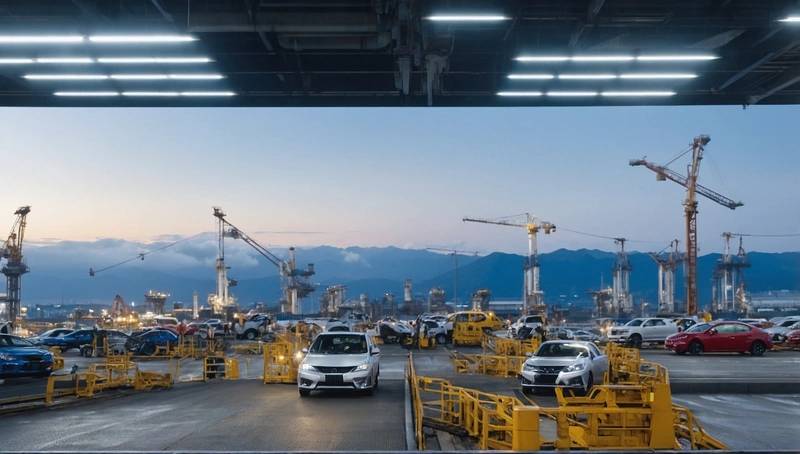
The Japan Automobile Industry Association urged the Japanese government to protect Japanese automakers against tariffs the United States could impose on autos and auto parts imported from Japan.
JAMA chairman Masanori Katayama expressed concern about the economic damage that could be caused to both Japan and the United States if President Donald Trump's government imposes high tariffs on imports of autos from Japan.
Trump announced last week that he would impose a 25% tariff on auto imports as early as April 2. Steel and aluminum will be subject to separate 25% tariffs starting March 12.
Katayama made his remarks in Tokyo at the beginning of a meeting between Trade and Industry Minister Yojimuto and Katayama. Toyota, Honda, and Nissan executives were also in attendance.
Japanese automakers will be vulnerable to any additional tariffs Trump imposes, especially on auto imports.
Toyota, Honda, and Nissan all produce some of their top-selling U.S. models either in Canada or Mexico. Subaru, Mazda and other smaller firms are also at risk.
Muto, a reporter, said that during the closed-door meeting, executives from the auto industry expressed concerns about being unable to pass higher costs due to higher U.S. Tariffs, and their economic impact.
On Tuesday, Muto had separate meetings with the steel and aluminum industries of Japan to discuss the tariff issue.
Tadashi Imai (also president of Nippon Steel) told reporters, before the meeting, that the main concern for the Japan Iron and Steel Federation was that protectionism could further depress the global steel markets.
(source: Reuters)