
Latest News
-
All bodies found in Washington State chemical accident: 11 confirmed dead
The death toll in the United States from a ruptured?chemical tank has risen to 11. The death toll from a?chemical tank rupture in the United States has risen to 11 as crews have recovered all nine bodies, according authorities. The tank that contained "white liquor", a chemical mixture of sodium hydroxide and sulfide, used to make 'paper pulp, imploded on Tuesday at the Nippon Dynawave Packaging plant. Kurt Stitch, Cowlitz 2 Fire & Rescue deputy chief, stated that the search for missing persons continued throughout the week as crews cleared debris from indoor?areas, and drones were flown over the perimeter. Officials have confirmed that the ruptured tank held about 900,000.000 gallons of white liquor. Tests also showed contamination of the nearby Columbia River. However, no negative health effects were detected in the air or drinking water of the city of Longview. Nippon Dynawave Packaging, Japan's wholly-owned subsidiary, was established in 2016 by Nippon Paper Industries, Japan's second largest paper manufacturer. The company acquired the Longview plant from Seattle-based Weyerhaeuser Timber for $225m. (Reporting and editing by William Mallard in Bengaluru)
-
PSG wins the Champions League with a shoot-out victory over Arsenal
Paris St Germain reclaimed their Champions League 'title' with a penalty-shootout victory? over Arsenal, after a 1-1 stalemate in a tense final at the Puskas arena on Saturday. Gabriel, of Arsenal, blasted his penalty over the?crossbar to give PSG a?4-3 victory? on spot-kicks. The French champions had the worst start possible after Kai Havertz scored an Arsenal goal?in just the sixth minute. He whipped a?rising shot?past PSG's goalkeeper Matvey Safonov. The PSG defence looked to be the most formidable in Europe, but Ousmane dembele equalized from the spot after a foul was committed by Cristhian Moquera against Khvicha Kvaratskhelia in the 65th minutes. PSG won the Champions League trophy for the second consecutive year after a scrappy extra-time period that could not separate both sides. (Reporting and editing by Christian Radnedge.)
-
Russia's Rosatom says Ukrainian drone struck Zaporizhzhia nuclear plant
Rosatom, the Russian state-owned nuclear energy company, said that a Ukrainian drone 'hit' the Zaporizhzhia nuclear 'plant', Europe's biggest, on Saturday. The drone did not damage any key equipment but left a hole in a wall of the turbine hall. The building housing the turbine hall of Power Unit No. 6 was struck by a Ukrainian combat drone kamikaze this afternoon. The explosion was caused by the subsequent detonation of 6. The explosion did not cause any damage to the primary equipment, but it tore through a wall in the turbine hall. Ukraine has not yet commented. Likhachev described the incident as "deliberate". The Zaporizhzhia Nuclear Plant was captured by Russia on March 20, 2022. It remains close to the frontline of the Zaporizhzhia area in the south-east Ukrainian region. It has?come in for some fire at times during the four-year war, raising?fears about a nuclear incident. Likhachev stated, "We are a step closer to an incident which?will affect those who live beyond the borders of 'Russia and Ukraine but still think they are totally safe." (Reporting by Anastasia Lyrchikova. Felix Light wrote the article. Mark Potter (editing by Felix Light)
-
Authorities claim that Ukrainian drones have struck a port and oil depot in southern Russia.
Authorities in the southern regions Rostov-Krasnodar reported that Ukrainian drones had struck a tanker overnight at Taganrog, a Russian port. They also reportedly hit an oil depot?in?Armavir. Yury Slyusar, Governor of the Rostov Region, said via Telegram that the fires in Taganrog's port and on the tanker had been put out. No oil spillage was reported. He said that two people were injured. Svetlana kambulova, the mayor of the?city, announced that a local emergency state, which was introduced on May 27th, had been prolonged. The Russian Defence Ministry announced that its forces?had?downed 127 drones over night. Authorities in Armavir in Krasnodar, which has 185,000 residents, reported that the fire in an oil depot located in the industrial zone of the city had been put out and there were no injuries. Slyusar, governor of Rostov, said that nearly 50 drones had been brought down in the region. Attacks were reported "across" the province, which borders Ukraine’s Donbas and is the focal point of the fighting between Russia & Ukraine. He said that only minor damage had been reported outside Taganrog. The commander of Ukraine’s drone forces claimed that they had hit Taganrog as well as an oil depot in Feodosiya, in Russian-controlled Crimea. He did not mention a strike against Armavir. Reporting by Felix Light, Writing by Ros Russell, and Kevin Liffey.
-
Authorities claim that Ukrainian drones have struck a port and oil depot in southern Russia.
Authorities in the southern regions Rostov and Krasnodar reported on Saturday that Ukrainian drones had struck a tanker overnight at the port of Taganrog in Russia and also hit an oil depot in Armavir. Yury Slyusar, Governor of Rostov Region, said via Telegram that the fires in Taganrog (a city with a population of 240,000) and on the tanker had been put out. No oil spillage was reported. He said that two people were injured. Svetlana kambulova, the mayor of the?city, confirmed that a local state of emergency introduced on May 27 had been extended. Authorities in Armavir in Krasnodar, a city with a population 185,000 people, reported that a fire at an oil depot located in the industrial zone of the city had been brought under control. Slyusar, Rostov's governor, said that nearly 50 drones were downed by the region. Attacks have been reported in the entire province which borders Ukraine’s Donbass, the focal point of the fighting between Russia and Ukraine. Only minor damage had been reported outside Taganrog. Reporting by Felix Light, Writing by Ros Russell; Editing by Ros Russel
-
Concerns about consumer demand lower LIVESTOCK CME cattle futures
Chicago Mercantile Exchange?cattle futures and feeder cattle?ticked down on Friday due to a technical setback.?As a result, 'Americans' concerns about their ability to afford beef grew. Gas prices are high and consumer sentiment is gloomy, raising fears that Americans will reduce their beef purchases. Beef is the most expensive protein in grocery stores. Dan Basse is the president of 'AgResource' Company. He said that they are 'looking at consumers' disposable income and wondering if they will 'pay higher beef prices'. Oil futures dropped more than 2% Friday, marking their steepest weekly decline since early April. Traders awaited news that the U.S.?Israel and Iran reached an agreement on a truce. Live cattle for August fell by 1.95 cents, to 239,05 cents a pound. August feeder cattle futures dropped 4.60 cents at 348.425 per pound. The U.S. Department of Agriculture reported on Friday that the value of 'boxed beef' had dropped by 26 cents, to $392.06 a hundredweight. Select?cuts, however, fell by $2.26, to $382.32 a hundredweight. According to HedgersEdge.com, the Packers lost about $266.90 per head of cattle they slaughtered last Thursday. This is an improvement from the previous week. CME's lean-hog market saw a drop of 2.625 cents to 99.50 cents for each pound. According to USDA, the wholesale price of pork cutout has risen 91 cents per cwt to $100.02. Reporting by Heather Schlitz, Editing by Daniel Wallis
-
IMF, World Bank and others warn that Middle East war strains energy supplies
The heads of the International Energy Agency, the International Monetary Fund (IMF), the World Bank, and the World Trade Organization warned on Friday that the war in the Middle East is straining the global energy supply and affecting vulnerable economies the most. The U.S. and Israel war against Iran has disrupted the trade, rattled the financial markets, and raised 'concerns about global energy supply, especially through Strait of Hormuz. This is a major route for oil and natural gas shipments. Global?institutions stated that the world's economy was resilient. However, the conflict disproportionately affected poorer countries by increasing fuel and fertilizer prices, increasing uncertainty, and creating job risks. In a joint press release, the heads of these groups met Thursday to discuss the economic impact of war. U.S. president Donald Trump said that he will decide on Friday whether to extend the ceasefire with Iran. This would include?opening up the waterway? and dismantling Tehran’s nuclear weapons capability. The institutions warned that if shipping 'flows' do not return to normal, the rapid depletion in global oil stocks ahead of the peak summer 'oil demand - in the Northern Hemisphere - would pose a heightened risk for fuel security and market conditions.
-
USITC says Russian palladium does not harm America cos, ends probe
The?U.S. has stated that Russian unwrought Palladium, which is used to reduce emissions from gasoline vehicles, doesn't?harm American companies. The International Trade Commission announced a decision?on Friday to end Washington's antidumping investigation. Last week, the U.S. Department of Commerce decided on a separate countervailing duty of 109.1%. Sibanye Stillwater, which produces in South Africa as well as the United States, and the United Steelworkers Union had asked Washington to consider imposing duties so that they could 'protect the long-term sustainability of U.S. supplies. The USITC has now concluded the investigation with its negative determination. USITC stated in a press release that its full report would be released on July 8th. "The U.S. industry is not materially harmed or threatened with a material injury by reason of the?imports from Russia of unwrought Palladium, which Commerce determined were sold at subsidized prices and below fair value in the United States," it said. Russian palladium exports to the U.S. increased from 23.8 tons a year ago - and 20.4 tons a year earlier - to 27.6 tonnes in 2024. Nornickel of Russia, the largest palladium producer in the world with a market share of about 40%, refused to comment on USITC's decision. As of Friday, palladium spot prices had fallen by?17% from the beginning of the year. They were currently at $1,355 an ounce. Reporting by Susan Heavey and Anastasia Lyrchikova, with additional reporting from Katharine Jackson and Ismail Shakil. Editing by Ismail Shakil & Chizu Nomiyama.
Investors were rattled by exchange outages before CME's collapse
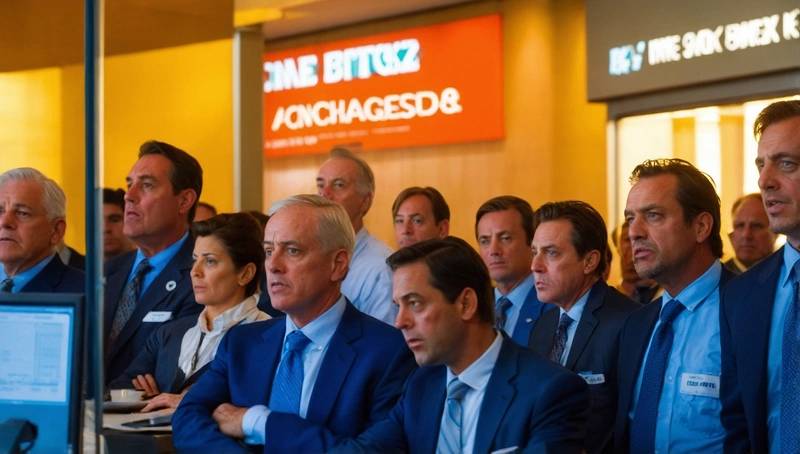
CME Group, one of the largest exchange operators in the world, suffered an outage lasting several hours on Friday. This affected trading on its currency platform, as well as futures including foreign exchange, commodities and Treasuries, and stocks.
Market participants reported that the outage began early in Asia and ended mostly by morning U.S. trade. It was one of longest in recent years.
Since the early 1980s, exchange outages caused by bugs in software, hardware failures and cyberattacks have caused disruptions to markets and undermined investor confidence.
Check out some of the major outages that have occurred:
A power outage on August 14, 2024, caused the Moscow Exchange to stop trading for over an hour.
The Swiss SIX Stock Exchange experienced its worst outage in recent history on July 31st, 2024. A technical glitch caused the trading to be halted twice for several hours across stocks, bonds and mutual funds.
Data and services of LSEG Group were unavailable on July 19, 2024, causing some disruptions in the financial markets. On that same day, a broader tech failure also caused a global uproar.
On June 3, 2024, a glitch at the New York Stock Exchange caused massive swings of shares in Berkshire Hathaway (Berkshire Hathaway) and Barrick. Trading halted in dozens of companies.
London Stock Exchange reports an incident on October 19, 2023, which forced them to stop trading in smaller UK shares. However, blue-chip stocks were not affected.
Refinitiv's news and data platform Eikon, which is operated by the London Stock Exchange Refinitiv, experienced a prolonged outage on August 2, 2021. This was its third such incident that year. *
Euronext, the pan-European financial market operator, experienced technical glitches that knocked index derivatives trading out for almost four hours on June 17, 2021.
The Australian stock exchange had to stop trading for 20 minutes due to a software issue on November 15, 2020. ASX, the operator of the bourse, re-opened trading one day later.
Qontigo, the index operator, informed its clients that Europe's STOXX key indexes would open more than an hour later on November 2, 2020 due to an "input data problem".
A hardware failure brought the Tokyo Stock Exchange to a halt on October 1, 2020, the worst outage ever for the third largest equity market in the world.
New Zealand stock exchange resumes trading on August 28, 2020, after four days of disruptions due to cyberattacks.
In July 2020, a software glitch caused the trading to be temporarily halted on Germany's electronic trade platform Xetra. This was the second time that the system had been down since April.
May 8, 2020: A software error caused the Moscow Exchange to suspend stock trading for 42-minutes.
TMX Group (Canada's largest stock exchange operator) experienced its second outage within two years when a hardware problem caused order entry problems, resulting in a shutdown of trading for almost two hours across three local bourses.
Nasdaq Inc.'s Nordic stock market and Baltic stock market were shut down twice by technical issues in one day, due to connectivity problems.
Hong Kong Exchanges and Clearing has suspended trading in derivatives for the afternoon on September 5, 2019. This is due to a bug that caused connectivity issues with the Hong Kong Futures Automatic Trading System.
August 16, 2019: The longest trading outage in the history of the London Stock Exchange was caused by a software problem that delayed the start for nearly two hours.
A technical problem with trade reporting caused the New York Stock Exchange of Intercontinental Exchange to suspend trading for a portion of April 25, 2018. This affected five stocks including Alphabet and Amazon.
Singapore Exchange has suspended trading in securities for the second half of the day because duplicate confirmation messages were generated.
A technical problem caused the NYSE to suspend trading on July 8, 2015.
March 31, 2015: ICE’s NYSE Arca suffered a technical problem that caused some of the most popular Exchange-Traded Funds to be temporarily unavailable for trading. Some investors paid more for their stocks than they would have otherwise.
A software bug caused connectivity problems to a data feed for the industry.
May 18, 2012: Facebook’s $16 billion initial publicly offered on the Nasdaq market was marred with technical glitches, which resulted in an opening that was delayed and left many traders in the dark about the trades that had been completed for several hours. This led to significant losses at a number of firms.
Bats Global Markets was forced to cancel their IPO after a series glitches due to a software bug.
May 6, 2010: Uncertain market conditions coupled with an aggressive, massive sell order of a popular futures product triggered a “flash crash” that sent the Dow Jones Industrial Average plummeting over 1,000 points and temporarily wiping out almost $1 trillion worth of market value.
On August 2, 1994, a squirrel chewed a power cable in Trumbull (Connecticut), where Nasdaq's servers were located. The backup power system of the exchange failed to kick in and caused a half-hour outage. On December 9, 1987, a squirrel had chewed through the power cable of Turnbull. This set off a series of events which shut down Nasdaq trading for almost an hour and half.
* LSEG pays news.
(source: Reuters)