
Latest News
-
Libya's Tripoli government asks court to annul Arkenu oil deal scrutinised by UN
Libya's internationally recognised government has asked a Tripoli court to annul a deal with an oil company that a report by UN experts in March said had moved more than $3 billion to bank accounts outside Libya, filings show. Arkenu Oil Company was set up in 2023 and soon became the first private company known to export crude oil from Libya, which has been divided between rival administrations since a civil war that broke out after a NATO-backed uprising toppled Muammar Gaddafi in 2011. Arkenu said it rejected the UN panel's characterisation of its revenue and in an email to on Tuesday added that the oil it produced and the proceeds generated were handled in accordance with its deal with Libya's National Oil Corporation. Prime Minister Abdulhamid Dbeibah of Libya's Tripoli-based Government of National Unity (GNU) gave instructions in April for authorities to take steps to end the 2023 production sharing agreement with Arkenu, citing widespread public opposition. The panel of UN experts on Libya said that Arkenu was the result of a "mutually beneficial deal" between Ibrahim Dbeibah, the prime minister's nephew and adviser, and Saddam Haftar, the son and deputy of Khalifa Haftar, a military commander who controls Libya's east and large parts of the south. Arkenu denied in the email to that Saddam Haftar had any direct or indirect ownership interest or management role in the company and said he exercised no control over it. An official at Saddam Haftar's office, when approached by for comment from him, said he had no connection to Arkenu, which was "a Libyan entity with a known board of directors" operating in accordance with Libyan law and granted licenses by the GNU. Libya's NOC is headquartered in Tripoli in the west, while many of its fields, pipelines and terminals are under the control of Haftar's Libyan National Army in the east and south. Shutdowns regularly impede Libyan oil output. A GNU official denied that Ibrahim Dbeibah had any connection with Arkenu when approached by for comment from him, pointing to a copy of its commercial registration, which did not list him among its partners or representatives. Concerns over the deal have led to intense political pressure on Abdulhamid Dbeibah, including from powerful groups in his hometown of Misrata, where the Haftars are mistrusted, said Jalel Harchaoui, a contributor to Britain's Royal United Services Institute think tank. An influential military body in Misrata publicly called earlier this month for an immediate end to the Arkenu deal, saying "Libyan oil is a red line". "Many Libyans are looking for answers on Arkenu, how it operates, and whether it delivers benefits to the economy. These concerns were only heightened after the release of the Panel of Experts report. But Libyans have seen little in the way of action or reassurance," said Chatham House analyst Tim Eaton. GNU SEEKS ANNULMENT OF AGREEMENT The GNU's cabinet had withdrawn its approval for the Arkenu arrangement in January 2025, a copy of the decision showed, though the contract has remained active. Court papers show the GNU suit now seeks to suspend and ultimately annul the deal between the NOC and Arkenu, which gave the latter a portion of the oil from two of Libya's biggest fields in exchange for investing in their development. "The government asserts that the contract was marred by legal and procedural irregularities," the GNU said. "It further argues that the company failed to meet the necessary legal and technical requirements to carry out oil development and production activities," the GNU added. Arkenu said it had not received a copy of the filing and that to its knowledge no proceedings had been served. "Arkenu's agreement with the NOC is a commercial agreement, endorsed by the Government of National Unity’s own Council of Ministers. Any attempt by the same government to annul it would raise serious questions, including as to the proper forum for a commercial agreement," it said. Tensions in Libya have eased considerably since Haftar was repelled from an attempt to seize Tripoli in 2019-2020, with the rival legislative bodies agreeing on a unified budget. Anas El Gomati, head of the Sadeq Institute think tank, said the legal challenge to the Arkenu deal should be read alongside Washington's recent push, led by presidential adviser Massad Boulos, for a new unity government. "Massad Boulos has threatened sanctions on anyone who spoils that deal, and this feels like Tripoli's reply," Gomati said.
-
Braskem secures preliminary creditor deal on out-of-court debt plan
Braskem said on Tuesday it had reached a preliminary deal with creditors to move ahead with its out-of-court debt restructuring plan. The Brazilian petrochemical company is now negotiating final terms, and said it has asked for a 20-business-day extension to submit a revised plan after Monday's deadline for a proposal designed to avoid court-supervised financial restructuring. Braskem shares fell 10.3% in Tuesday afternoon trading, nearly erasing a gain of almost 12% on the Sao Paulo stock exchange on Monday. A person familiar with the talks said the capitalization figures are not expected to change in the definitive plan, although details on certain guarantees and other final points still need refinement. As set out in the agreement's term sheet, the person added, Braskem plans a follow-on offering of up to $2.25 billion open to shareholders and third parties. Shareholders — effectively Petrobras — will backstop $1.3 billion, with commitments to be finalized when the updated plan is released. A group of Braskem bondholders confirmed the agreement in a statement to the market on Tuesday, saying the new debt will have no maturities or amortization payments before 2031 and will carry a weighted average annual interest rate of 10.5%, subject to reductions tied to credit rating upgrades and other conditions. Braskem, which has nearly $11 billion in debt, filed for out-of-court restructuring at the end of August. Three people familiar with the plan said the financial agreement puts the company on track for a complete turnaround within five years.
-
Iraq pushes OPEC+ to raise crude capacity estimate before 2027 quota talks
Iraq is pressing OPEC+ to increase its estimate of the country’s crude oil production capacity, four people familiar with the matter said, sharpening disputes ahead of a review that will shape how much members can pump next year. The review is the first ever by OPEC. It is meant to assess independently how much oil each member can produce and help the group set production targets for 2027. It follows the United Arab Emirates’ departure from OPEC and OPEC+ in May, after years of arguing that its quota did not reflect its investment in capacity. Angola quit OPEC at the start of 2024. Iraq is unhappy with the review’s preliminary findings, the people said, speaking on condition of anonymity. One of them said the exercise put Iraq’s production capacity at 4.9 million barrels per day. OPEC+, which includes members of the Organization of the Petroleum Exporting Countries and allies such as Russia, ordered the capacity review last year to help set 2027 quotas. Baghdad, where OPEC was founded in 1960, has pushed for higher quotas for years, arguing that it has invested in expanding capacity and should be rewarded. The review is sensitive because it seeks to establish how much oil each member can produce sustainably, a key metric in negotiations over output targets. OPEC+ is due to meet on November 29 and is expected to decide on its 2027 output policy. OPEC and Iraqi authorities did not respond to requests for comment. OPEC last week described the capacity exercise as a historic milestone. US consultant DeGolyer and MacNaughton, which is assessing capacity for all OPEC+ members except Russia, Iran and Venezuela, also did not respond to a request for comment.
-
Brazil zoo hails birth of Spix's macaw chick as boost for species' recovery
When a tiny blue chick finally broke free from its shell after weeks of anxious waiting, keepers at Brazil's Sao Paulo Zoo saw more than the birth of a bird; they saw a glimmer of hope for a species that has vanished from the wild. Aptly named Hope, the female Spix's macaw born in October forms part of a breeding program aimed at rebuilding populations of one of the world's rarest parrots. Known in Brazil as the Ararinha-azul, the species became internationally famous after inspiring Blu, the main character of the 2011 animated film Rio, a domesticated Spix's macaw who embarks on a journey to save his species. "We chose 'Hope' because we hope we can give a better future to this species," said Fernanda Guida, head biologist at the zoo's bird division. Hope's arrival followed a tense 28-day artificial incubation process. Zoo specialists removed the egg for monitoring and eventually intervened when the bird struggled to hatch. Brazil's environment ministry backs the zoo's program. "It was 28 days of suffering until we saw her hatch. She needed help, we had to remove her from inside the egg because she was badly positioned, and then she hatched," Guida said. Native to the Caatinga region of northeastern Brazil, Spix's macaws were pushed to the brink of extinction by deforestation and decades of trapping for the illegal pet trade. The species is classified as "extinct in the wild" by the International Union for Conservation of Nature (IUCN) Red List, meaning its survival has depended on captive populations. "That first hatching was a very important milestone for the conservation of the Spix's macaw," Guida said. "It's a long road ahead of us, but it's the path we hope will be very successful."
-
Israel kills senior Hamas security official in airstrike on Gaza
Israel killed a senior Hamas security official in an airstrike on Gaza on Tuesday which Prime Minister Benjamin Netanyahu said showed there was no escape from his country's "long reach." Naeem Abu Nahel, the director of Hamas' internal security apparatus in Gaza, was one of at least seven Palestinians killed in the Gaza Strip, including two police officers, Palestinian medics and police said. The interior ministry in Gaza, led by the Palestinian militant group Hamas, said Israel had "assassinated" Abu Nahel for his role in fighting collaborators and Israeli-backed armed militias seeking to topple the group in the tiny enclave. Netanyahu commended the Israeli military for killing Abu Nahel, whom he mentioned by name, less than two months after Israeli forces captured his predecessor in an undercover raid into Gaza. "No terrorist will manage to escape the long reach of the State of Israel," a statement issued by Netanyahu's office said. A key mission of Abu Nahel's internal security service is to counter Palestinians suspected of collaboration with Israel's secret service and gather information about its plans. The Israeli military and the Shin Bet domestic security service said in a joint statement earlier on Tuesday that they had struck a senior Hamas militant, without identifying him, adding that further details would be provided later. Netanyahu, who built his reputation as a security hawk, is serving as caretaker prime minister after his right-wing bloc lost its parliamentary majority in an election last month. President Isaac Herzog has tasked Netanyahu's centre-right rival Gadi Eisenkot with forming a government but he also lacks a majority and Netanyahu is battling to stay in power. ISRAELI AIRSTRIKES Palestinian medics said three people were also killed in an Israeli airstrike at a police post in Khan Younis in southern Gaza. The interior ministry in Gaza said two of them were police officers. Five other people were wounded in the attack, medics added. Another Israeli airstrike near the Netzarim corridor further north killed another three people, taking Tuesday's death toll to at least seven. The Israeli military said it had struck militants in both areas. An October 2025 US-backed ceasefire halted major fighting in the shattered territory, but has not stopped Israeli attacks on Gaza or secured Hamas' disarmament. Israel, which accuses Hamas of trying to regroup and rearm, has stepped up its attacks in Gaza in recent months. Hamas denies the Israeli allegations, saying it is committed to the ceasefire agreement and accusing Israel of trying to derail it. At least 1,600 Palestinians and five Israeli soldiers have been killed since then, according to respective Palestinian and Israeli tallies. Israeli troops now control around two-thirds of Gaza, up from more than half at the time of the ceasefire, with Hamas controlling a sliver of territory along Gaza's coast. Israel's assault on Gaza has killed more than 74,000 Palestinians since 2023, caused a hunger crisis, internally displaced Gaza's entire population and led to assessments of genocide from scholars and a United Nations inquiry. Israel has said its actions were in self-defence after Hamas-led militants killed 1,200 people and took more than 250 hostages in an attack on Israel in October 2023.
-
Big Tech could face billions of dollars in fines under Australian internet safety bill
Australia threatened internet companies including Google and Meta with fines of up to 5% of their global revenue if they fail to remove harmful content and addictive features. After striking a deal with the left-leaning Greens in the Senate, the centre-left Labor government said it would also give individuals the right to sue platforms for enabling wrongdoing under its proposed Digital Duty of Care law. The details, outlined on Tuesday, represent a sizable increase in the potential fine from the previously proposed A$109 million ($72.2 million) given that some platforms generate annual revenue of hundreds of billions of dollars. The agreement between the two parties means the bill is on track to pass through parliament and become law. "This is seismic reform, this is urgent reform and this is reform we will deliver to Australians in parliament this week," Communications Minister Anika Wells told reporters. The law would replace a grab-bag of enforceable codes of conduct drawn up by various online industries, from messaging apps to search engines to AI chatbots, with a single underlying law that forces them to proactively check for and stop harmful user experiences. Targeted harms include material involving child sexual abuse, non-consensual fake nude material, gender-based violence, self-harm promotion and terrorism. "It's about Australia taking action on the side of parents and children, not foreign-owned tech companies," Prime Minister Anthony Albanese told parliament. "World-leading reform and we are getting it done. Just like we have led the world when it comes to the under-16s social media ban. This is the next step." Though tech firms generally agreed with the government's aim of improving child protection and minimising harmful content, most opposed the bill on the grounds that it gave some discretion to government officials to decide what counted as harmful content. Even before the government raised the potential fine, industry groups had said the law might encourage platforms to become heavy-handed when deciding what content to take down as they sought to avoid punishment. A representative of the Digital Industry Group, a non-profit that advocates for tech platforms and criticised the bill, declined to comment since it had not seen a new draft of the proposed law. Spokespeople for Google, Meta and Snapchat declined to comment.
-
Army says detonation of lead explosives in Iowa will proceed on Wednesday
The US military will proceed on Wednesday with its plan to blow up a deteriorating stockpile of toxic lead explosives in rural Iowa, the Army's top civilian official said on Monday, after a federal appeals court gave clearance to the waste disposal operation. In an announcement late Monday on X, acting Army Secretary Adam Telle called the choice to move forward a "consensus decision" among all the federal agencies involved, as well as the courts and state officials. "Every expert agency agrees, and both Iowa's current and incoming governors say the call belongs to the experts," Telle said. "We are proceeding with the controlled removal in full coordination with all state, local and federal authorities." The Army sparked a public outcry last week when details surfaced of its plan to conduct two controlled detonations of 68 drums, or nearly 10,000 pounds (4,500 kilograms), of degraded lead azide, a chemical used in munitions, at the Iowa Army Ammunition Plant in Middletown, Iowa. Environmental groups immediately filed suit to block the plan, raising public safety concerns over the likelihood that the explosions would release a plume of toxic lead dust over homes, crops and livestock far beyond the detonation site, about 150 miles (241.4 km) southeast of Des Moines. The lawsuit challenged a special permit granted for the operation by the Environmental Protection Agency. The EPA countered that a managed detonation would be far less risky than an uncontrolled, spontaneous explosion of the highly volatile material, a scenario the agency said was growing more likely as the weather turns colder in Iowa. According to the EPA, any attempt to chemically neutralize or relocate the storage drums would also risk an uncontrolled blast. A three-judge panel of the 8th US Circuit Court of Appeals last Thursday issued a temporary stay blocking the EPA's permit while the court more thoroughly reviewed the case. But Trump administration lawyers filed a legal notice two days later asserting that the Army intended to carry out the controlled detonation with or without court approval, citing an emergency exemption to federal environmental laws. Then, in another twist on Monday, US President Donald Trump himself weighed in on the controversy, ordering the Army to hold off on its disposal plan until the appeals court had ruled in its favor. Trump also said Iowa's Democratic governor-elect, Rob Sand, should approve of such a decision or be held responsible for "any and all death or destruction" that might result from further delays. Sand, who does not take office until January and thus lacks any authority as governor until then, responded to the Republican president's Truth Social post on Monday by saying it was up to the Trump administration to decide what to do. "The administration should make this decision based on the information they have from the people they brought in to do the job months ago and have been on the ground in Middletown for weeks," Sand wrote. The current governor, Republican Kim Reynolds, said on Sunday that she had activated Iowa's emergency operations center to better coordinate between state and federal agencies, including the Army, the EPA and the US Department of Agriculture. Hours after Trump's edict on Monday pausing the Army's demolition plan, the 8th Circuit sided with the EPA and lifted the court's earlier stay, removing the final legal obstacle. But the status of the detonation plan remained unclear until Telle's announcement on Monday night.
-
Gulf stocks open higher as Asian rally lifts risk appetite
Major Gulf equities opened in the green on Tuesday, riding Asia's momentum as investors embraced risk again after Nvidia's Jensen Huang returned to the helm. MSCI's broadest index of Asia-Pacific shares outside Japan climbed 4%, bouncing back from an eight-month low and heading for its biggest single-day gain since July 31. Huang's return closed out a chaotic stretch that sent markets lurching and rattled the entire AI sector, which leans on Nvidia for its chips and even helps finance the huge infrastructure push. Saudi Arabia's benchmark index advanced 0.9%, with Al Rajhi Bank gaining 1.1% and oil major Saudi Aramco up 0.7%. Elsewhere, shares in Saudi Arabian Mining Company climbed 5%, recovering ground lost alongside gold prices. Still, buyers stayed wary of the ongoing danger in the Strait of Hormuz, as the Revolutionary Guards navy reported three tankers caught fire after hitting mines in the strait on Monday, according to Press TV. Brent crude futures fell 31 cents, or 0.4%, to $89.04 a barrel by 0810 GMT, after hitting their lowest since August 27 earlier in the session, as signs of rising crude supply offset the threat in Hormuz. Dubai's main share index added 0.6%, with top lender Emirates NBD rising 1.3%. Emirates NBD has committed 385 million dirhams ($105 million) to Samana Developers through a bilateral term loan and a Real Estate Regulatory Agency guarantee facility. The four-year facility funds land purchases and development, with repayments tied to receivables. In Abu Dhabi, the index rose 0.8%, with Abu Dhabi Commercial Bank jumping 4.4%. Morgan Stanley has become the latest major bank to turn constructive on UAE shares, lifting its recommendation to "overweight" from "equal-weight" on Monday. It said capital spending in Abu Dhabi and a rebound in Dubai outweighed regional tensions. The brokerage highlighted financials as a preferred sector and named Abu Dhabi Commercial Bank, Abu Dhabi Islamic Bank and First Abu Dhabi Bank among its favored banking exposures. The Qatari benchmark was up 0.4%.
Questions are raised about some trades made ahead of Trump's policy changes
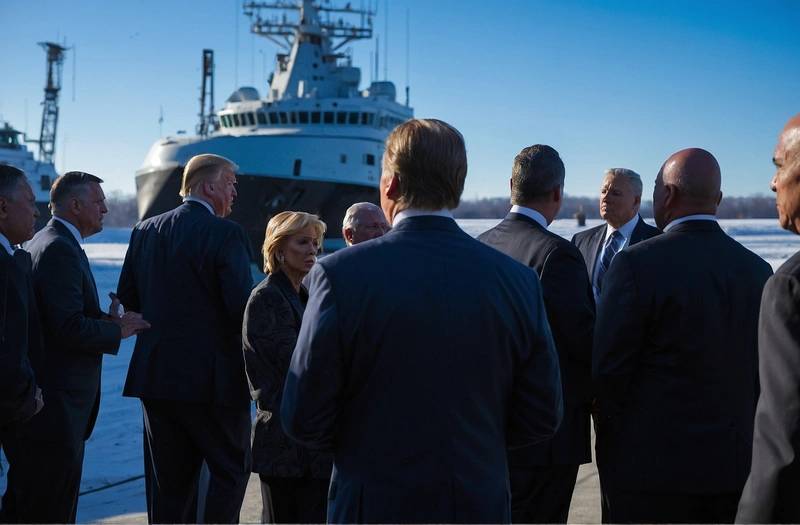
Experts have questioned whether some of Donald Trump's most important policy decisions were preceded by well timed bets.
This is a list.
March 23, 2026: IRAN ATTACK pause. An unidentified trader or traders placed $500 million in bets on Brent and WTI futures within a minute, shortly before Trump announced that he would delay the?attacks against Iran's energy infrastructure for five days. After Trump's announcement, oil prices dropped 15%.
LSEG data indicates that between 1049 and 10:00 GMT,?5,100?? lots changed hands. Selling dominated volume. Trump's announcement on social media at 1105 GMT caused over 13,000 lots, or 13 million barrels, to trade in just 60 seconds. Brent fell to $99 from $112 per barrel and WTI to $86 from $99.
February 28, 2026 – IRAN STRIKES KILLED SUPREME LEADER AYATOLLAH ALI KHAMENEI Wagers made on platforms such as Polymarket and Kalshi prior to the death of Iranian Supreme leader Ayatollah Ayatollah Khamenei heightened scrutiny over prediction markets. Democratic lawmakers called for a ban on wagers that are tied to military action, which could reward those who have privileged information.
A review of Polymarket’s website revealed that at the time, $529 million had been wagered on a variety of contracts tied to timing of U.S. - Israeli strikes against Iran. Another $150 million had been staked on Khamenei’s removal as supreme ruler. Prediction markets allow users to wager on real-world events through a range of tradable contracts.
Bubblemaps, an analytics firm, identified six accounts which made a total profit of $1.2 million from Polymarket bets funded just hours before the raids on February 28. U.S. Rep. Mike Levin from California highlighted one particular Polymarket bet that was placed just before the Iran strike.
Separately traders moved the opposite way on February 27 despite hotter than expected inflation data, which would normally prompt investors to sell long-dated Treasuries. They pushed yields on 10-year notes below 4%. Analysts say that such a shift to safe-haven assets is usually driven by macroeconomic events which are negative or imminent.
The Dow Jones U.S. Airlines Index fell 5.13% that day, as oil prices increased.
January 3, 2026 -- U.S. CAPTURE OF FORMER VENEZUELAN PRESIDENT NICOLASMADURO An unknown trader made a profit of approximately $410,000 in January after betting on the ouster Venezuelan President Nicolas Maduro.
Before the weekend raid on Maduro’s Caracas compound by U.S. Special Forces, a trader’s account at Polymarket had built up contracts that were?tied to Maduro’s removal. The terms implied high odds. These wagers, which were worth approximately $34,000 before his capture, soared in value when news of the U.S. military action broke on January 3.
Trading data shows that unidentified traders bet millions on the U.S. Stock Market rebounding in the moments before Trump's announcement of a tariff pause. This triggered a huge rally in April last year. Trump's Truth Social post pausing the tariffs was posted at 1:18 pm. ET on April 9 triggered a 9.5% increase for the S&P 500. Data from the market shows that certain options contracts saw a surge in trading activity before it. Around 1 p.m., 5,105 call options for SPY were traded. The average price of the SPY call options was $4.20.
These calls rose as high as 42 dollars, turning 2,14 million dollars into approximately $21.44 millions on paper.
Other SPY calls that bet on the ETF going above $509 were traded around 1:10 pm. ET; their value increased from $624,000 to $10 million at the end of the day.
The trader could not tell if the calls had been?all bought or sold by a single trader, or whether several traders were involved and if they had closed their position with a profit.
Kush Desai, White House spokesperson, said that government ethics guidelines prohibit federal employees from profiting from nonpublic information. In an email, he stated that any implication of Administration officials engaging in such activities without evidence was baseless and irresponsible.
(source: Reuters)