
Latest News
-
Trump backs a ban on the export of diesel
On Tuesday, President Donald Trump?said that he supported the idea of a 'ban on diesel exports. Some US?politicians have called for a 'ban on the export of diesel as a way to tame the rising cost of energy. The price of diesel has risen to record levels in Europe and America as the wars in Iran, Ukraine and Russia have sharply reduced exports by some of the largest producers such as Russia and Saudi Arabia. "I said let's send the diesel out. We make a great deal of diesel... I've asked for it. I've asked for it among my people," Trump said to?reporters before a meeting with Ukrainian president?Volodymyr Zelenskiy. Speaking at the same event, US Treasury Secretary Scott Bessent said that the administration was looking into whether or not a complete ban is feasible. Several Republican Senate candidates who are in the most competitive races for the mid-term elections on November 3, this week, called for the administration to implement an export ban to reduce the high cost of goods for Americans. Trump said he and Zelenskiy will discuss the Ukrainian attacks on Russian refinery sites. It is a serious blow to the Russians. "It's a serious hit to the price of diesel," Trump said. He also told reporters that the two leaders will discuss?working on a'solution' to end Russia's conflict in Ukraine. Trump stated, "I believe it will happen."
-
France increases targeted fuel price reductions, according to Finance Minister
The French government will provide targeted energy relief to those who are most affected by rising fuel prices. Finance Minister Roland Lescure announced new measures on Tuesday that would help families cope with the spike in fuel costs caused by the Middle East conflict. Fuel prices have been rising and prompted protests from fishermen. There are now calls for larger demonstrations to increase pressure on the government about living costs in advance of the upcoming presidential election. Lescure said at a press conference that "we are aware of the difficult situation for our citizens,?especially those who drive every day to work, and especially those with the lowest incomes." Home care workers and independent nurses, particularly in rural areas will have access to this?programme. The latest package will double the amount of aid available to commuters with low incomes and high mileage, increasing it from 3 million people to 5.5 millions. The government has also extended its support to the end of December, for those sectors that are most affected by rising fuel prices. These include fishing, agriculture and construction. Some fishermen who blocked Mediterranean ports to protest fuel prices will receive assistance covering up to 70%. They can also access zero-interest loans. The emergency energy relief spending, combined with the rising borrowing costs, has led to a sudden deterioration of France's already stressed public finances. This pushes its target for deficit reduction out of reach. David Amiel, Minister of Budget, said that the new measures would cost EUR450m, which brings?the total to date up to EUR1.4bn. Lescure stated that there was no concern at this time about fuel supply over the next 2 months. However, the situation should be closely monitored.
-
IMF warns Algerian FX reserves may fall by 61% in 2031
The International Monetary Fund announced on Tuesday that Algeria's foreign currency reserves will?fall sharply? over the next six-year period, from $51 billion in?2025 down to $19.8 billion by 2031. However, higher hydrocarbon revenue could offer an opportunity to rebuild buffers. IMF predicts that reserves will drop to $46.5 billion by 2026. They are expected to fall further in the following years: $27.8 in 2029; $23.5 in 2030; and $19.8 in 2031. The report said that a larger current account deficit in 2025 caused by higher imports and lower hydrocarbon exports had contributed to the decrease in Algeria's reserves of foreign currency. The IMF predicts GDP growth of 3.8% by 2026, after 3.9% growth in 2025. Growth will then slow to 3.1% in 2020, 3.0% growth in 2028, and 2.9% growth in 2030 and 2031. It said that 'Algeria can use higher hydrocarbon revenue to rebuild fiscal and?external?buffers. But it recommended a gradual fiscal -consolidation. The report also called for the continuation of?reforms in order to diversify and strengthen the private sector-led economy.
-
Oil drops below $100, Nasdaq records record high.
Tuesday, the Nasdaq's tech-heavy index hit an intraday high for the first time since?June. Meanwhile, oil prices fell to their lowest levels in two weeks as signs of a?improvement?in supply?in the Middle East. The tech stocks have regained the spotlight, as AI demand shows no signs of slowing down and corporate earnings remain resilient. Ulrike Hoffmann Burchardi is the CIO Americas at UBS and global head of Equities. She said: "We continue to maintain a positive outlook on AI, supported by increasing adoption and monetization as well as rising capital spending." The Nasdaq Composite increased 0.40% to 27,231.59, while the S&P 500 remained roughly flat and Dow Jones Industrial Average dropped 0.40%. The MSCI index of global stocks rose by 0.92 points or 0.08% to 1,153.33. The pan-European STOXX 600 rose by 0.2%. The fall in oil prices has heightened risk appetite. A senior Iranian official said on Tuesday that Tehran could reopen Strait of Hormuz in seven days, if the United States eases their military pressure and lifts the blockade of Iranian ports. Three sources informed on the issue also said that Saudi Arabia had restarted its East-West Pipeline, and that it could resume exports from the Red Sea Port of Yanbu on Tuesday. Brent crude fell to $99.92 a barrel, down by 0.43% for the day. U.S. Crude was down 0.47% on Monday. TRUMP-XI METING IS AWAITED Investors are watching the meeting between US president Donald Trump and Chinese president Xi Jinping this week for any signs that they can stop a further deterioration of relations. Xi arrived in Washington for the first in over a decade on Wednesday, boosting optimism about the extension of a trade truce and possible cooperation in AI. The big question for markets is what will happen after the one-year truce ends in November. While the tone of the market remains positive, there hasn't been an agreement reached yet, according to Jim Reid, a Deutsche Bank strategist. RATE INCREASES ARE ON THE WAY German and US bond yields dropped in tandem with oil. Investors are pricing in a second round of rate hikes by major central banks. This could limit the fall in debt yields. The 10-year Treasury yields in the US fell 0.17 basis points to 4.961% on Monday. The dollar rose 0.17% against the euro, to $1.1441. It was also down?0.03% on the Japanese yen at 157.33. Investors were disappointed by the Bank of Japan's decision to raise rates, which was a 31-year record. However, two dissenting votes as well as a lack of explicit guidance on hawkish policy left the yen vulnerable. Matthew Ryan, Ebury's head of market strategy, said that FX intervention is a blunt tool for stabilizing currencies. Without a forceful response from the Japanese authorities, it will be hard to stop the selling off in the yen. The Federal Reserve on the other hand, increased rates last week, and warned that its fight against inflation is not over.
-
Moroccan central bank sets benchmark interest rate at 2.5%
The?central?bank of Morocco kept its?interest rates at 2.25%, saying that current borrowing costs were?in line with the inflation outlook despite increased global economic uncertainty. The bank stated in a statement following its quarterly board that inflation will average 0.7% by 2026 after a fall in food prices. Next year it is expected to rise to 1.5%. Bank of America expects the energy bill for 'Morocco to increase by 28.4%, to 138 billion dirhams (about $14.5 billion), due to disrupted markets caused by the Middle East war. The impact of energy costs on inflation will remain "limited", the report said. It cited subsidies for public transportation, cooking gas, and electricity. The bank stated that Morocco's current account deficit will increase to 4,6% of GDP from 2,4% last year. The deficit would be reduced by increased exports of fertiliser and automobiles, as well as an increase in tourism revenues. The central bank of Morocco said that the country's foreign exchange reserves will grow to $54 billion by 2027. This is enough to cover 5.5 months worth of imports.
-
Data shows that India's Russian crude oil imports declined in August and then again in September.
Data from trade sources revealed that the share of oil imported by India from Russia fell in August. Meanwhile, supplies from the Middle East increased, as Abu Dhabi National Oil Co sold oil from this region outside of the Strait of Hormuz. ADNOC, the state-owned oil company of the United Arab Emirates, has boosted its shipping operations. It now transports oil from its fields in the Strait of Hormuz to storage and export terminals in Fujairah (Fujairah) and Sohar (Sohar), where it is sold. ADNOC also buys oil from other producers, such as Iraq, to resell. The data showed that India's Russian imports dropped by 16.5% from the previous month in August to 2.1 million barrels of oil per day. Russia was India's largest oil supplier. The UAE, Venezuela and Venezuela were the next two. Data showed that the world's third largest oil importer increased its?purchases of Iraqi crude oil by about a quarter, to around?171,000 barrels per day. Imports from the UAE dropped 5.4% in July to 620,000 bpd. Saudi Arabian crude oil, offered from ports outside of the Strait, grew 1.5% to reach 328,000 bpd. India increased its purchases of Russian crude oil following tensions between the United States and Iran that led to a?blockade? of the Strait of Hormuz. According to preliminary data, India's Russian crude oil imports fell to 1.9 millions bpd during September. Indian refiners are looking at spot markets to secure supplies for October and November, as they worry that if U.S. president Donald 'Trump' decides to impose a tariff of up to 100% on countries purchasing Russian oil, it may be necessary to reduce their purchases. New Delhi is currently negotiating a deal with Washington and has stated that it remains "firmly committed" in ensuring energy security for its people. It will continue to purchase supplies from a variety of sellers depending on the market dynamics. The data shows that India's total oil imports dropped 8.8% to 4,44 million bpd in August.
-
Sources: Congo to centralise mining investment agency as part of US deal
Four sources have confirmed that the Democratic Republic of Congo has been preparing to create a "one-stop" agency for major mining investment as part of its reforms related to its partnership with US minerals. The aim is to reduce red tape and to attract more Western capital to a sector dominated largely by Chinese companies. Congo is the second largest copper and cobalt producer in the world. It is the center of the 'competition between global powers to supply critical minerals essential for the energy transition and advanced manufacture. China, the US and the European Union all signed mineral agreements with Kinshasa in order to gain access to the vast resources. The US deal has already helped to boost Congolese sales of copper in the US and Europe. One-stop agency According to two government officials, one diplomat, and one mining analyst, the?planned agency will be open to Chinese investors and other foreign firms as well as US and European companies. They declined to name the sources because they weren't authorised to speak in public. The Congo's Mines and Finance Ministries did not respond to comments. According to government sources and an analyst, the reform led by the Finance and Economy Ministries would centralise the company registration, licensing and taxation processes for major mining investment, and reduce approval times that currently can take several months. An official in the government said that the agency will initially focus on joint venture projects valued at more than $1 billion and operating?under special tax regimes. He cited the Chinese-controlled Sicomines Copper and Cobalt Venture as an example. The official added that the?legislation creating the agency is still pending promulgation. Eric Ndeh of the civil society group Afrewatch, said that "the one-stop shop" is meant to cut through bureaucratic silos which have long complicated mining investments in Congo. Ndeh said that the agency should be operational by this year. Congo has said that its goal of attracting more Western investment was not to replace China, but to diversify funding sources and export markets. Ndeh stated that "the paradox is that the US-DRC mineral partnership, which was partly responsible for the reform, could make it easier to do business for Chinese investors as well as European and American ones,"
-
SEBI claims Adani companies paid 15 million rupees as settlement for disclosure violations
India's markets regulator announced on Tuesday that four Adani companies, including Adani Enterprises, and a former group firm, had paid a total of?15 million rupees (about $157,966.31) in settlement proceedings for alleged disclosure violations. In its order, the Securities and Exchange Board of India said that Adani Enterprises had failed to disclose an alleged related-party transaction in its annual report of the year ending?March 2013 AWL Agri Business Ltd, (formerly 'Adani Wilmar Ltd) and other companies were found to be in possession of audit or review reports signed by firms who did not hold a valid peer review certificate. SEBI sent these companies show-cause letters in 2024, detailing its allegations. The companies settled without admitting guilt or denying it. The regulator investigated a total of 24 cases after Hindenburg Research, a short-seller, claimed in January 2023 that Gautam Adani's group had manipulated its?share price by using tax havens. Adani's spokesperson?did not immediately respond? to a request for comment? on whether the settlement resolves all litigation. The group has denied these claims in the past.
Europe stocks continue record run on defence sector boost
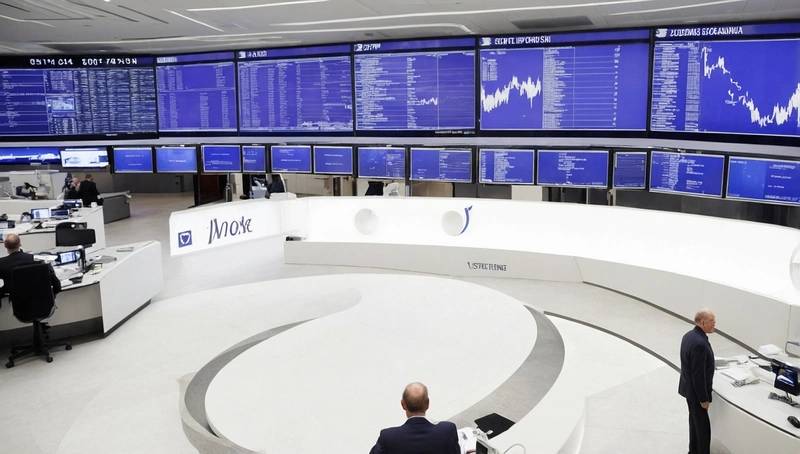
The European share market reached a new high on Tuesday, as defence stocks rose on the prospect of higher military spending in the area. However, a Capgemini led drop in IT shares capped the gains.
The STOXX 600 pan-European index rose by 0.2%, to a new record of 555.42. The aerospace and defense index jumped 1%.
After European Commission President Ursula von der Leyen announced that the Commission would propose an exemption for defense spending from EU budget limits, the sector grew by 4.6% Monday. This is its largest one-day increase since Russia invaded Ukraine, in February 2022.
Defense stocks gained on Tuesday. Italy's Leonardo rose 1.4%; Sweden's Saab increased by 1%; and Britain's BAE Systems advanced 0.5%.
Thyssenkrupp's warship division is being spun off and Thyssenkrupp has gained 2.7%. Its shares had risen nearly 20% Monday.
Capgemini, on the other hand, fell 6.2%, despite the fact that the French IT giant had reported an annual sales decline of 2%, which was above expectations.
IHG, owner of Holiday Inns, has lost 1.3% since the release of its results for 2024.
Antofagasta's core profit increased by 11%. (Reporting and editing by Savio d'Souza in Bengaluru, Pranav Kashyap from Bengaluru)
(source: Reuters)