
Latest News
-
European shares fall on AI concerns and inflation fears
European shares dropped on Monday, as technology stocks were under pressure following leaders of top AI companies who pushed for a slower pace of development. Meanwhile, a surge in global bond yields and oil prices dampened risk appetite. The pan-European STOXX 600 index was down by 0.5%, at 635.99. The majority of regional markets fell, but London and Zurich's indices rose by 0.4% and 0.8% respectively. As AI-linked stocks fell globally, technology shares were among the worst performers, falling 2.1%. Dario Amodei, CEO of Anthropic, called for companies to halt the advancements in AI models due to misuse concerns. This view was backed by xAI’s Elon Musk as well as OpenAI CEO Sam Altman. The STOXX 600 was led by the French chipmaker Soitec, which fell 12.5%. However, software stocks gained. Octave Intelligence, Capgemini, Sage and Relx all rose between 5% and 75%. Chris Beauchamp is the chief analyst at IG. He said, "These stocks were victims of SAASpocalypse on fear AI would wipe their businesses out." "Those fears were exaggerated, but if the AI giants put their foot down, the outlook for revenue for Sage, RELX, and their SAAS brothers globally becomes much brighter. Even if this only delays a long-term loss of biz." European miners declined 2.5% as a result of the weakness in commodity prices. Healthcare stocks rose 2.7%, bucking the trend. GSK grew by 4.7% following the positive results of two lung cancer drugs. This added to the momentum in this sector. Energy stocks fell 0.8% but crude prices rose 2% as supply concerns increased after new strikes on Saudi energy infrastructure, and attacks against ships in the Middle East. Recent oil prices have heightened inflation concerns, which has led to expectations that central banks around the world could raise interest rates this year. The European economies are especially vulnerable to rising oil prices, as they heavily rely on imports. ECB policymakers warned 'on Monday' that euro zone inflation may exceed high forecasts. Traders now price in an additional 25 basis-point ECB rate increase by the end of the year after last?week?s rate hike. Government bond yields soared as a result of the developments. The 10-year bund - considered to be the benchmark for the region - was at its highest level since mid 2009. The benchmark U.S. 10-year Treasury yields also rose to a psychologically important level of 5%. The U.S. Federal Reserve is widely expected to raise its main lending rate by at least 25 basis point this week --?in stark contrast to the split chances between a hike or a pause that were seen only a week earlier. After a close election, which reduced the influence of the far right, Sweden's opposition centre-left appeared most likely to win power on Monday.
-
German Finance Minister demands UniCredit CEO to meet certain conditions regarding possible Commerzbank acquisition
On Monday, German Finance Minister Lars Klingbeil outlined a list of demands to UniCredit CEO Andrea Orcel regarding the possible acquisition of Commerzbank by the Italian bank. The German Ministry of Finance said that these included Commerzbank staying listed on the stock market, maintaining its base in Frankfurt, and continuing to fund German medium-sized businesses?at home as well as abroad. After Berlin failed to stop a takeover, the meeting in Berlin marked an important turning point in the two-year struggle for control of Germany's largest bank. Klingbeil said, "In a productive discussion with Mr. Orcel I made it clear to him that future negotiations should be conducted responsibly." Orcel stated in a press release that the meeting was "a good and constructive first discussion that will be quickly followed by others." He said, "Both sides should now reflect on this initial discussion to find a way forward that is in the best interests of all stakeholders and shareholders."
-
The UK government is looking to buy out an insolvent steel specialist
The British government announced on Monday that it was drafting a plan to buy Speciality Steel UK, a manufacturer who formerly supplied the automotive, aero, and defence industries and entered liquidation at the end of August 2025. Speciality Steel was a part of Liberty Steel before it went into liquidation. Liberty Steel is owned by the commodities tycoon Sanjeev Gupta. The government announced that it was moving toward public ownership, after it decided it couldn't support a private sector bid. This company?has locations in Northern and Central England and supports more than 1,300 jobs. "We don't interfere in private companies lightly." "We cannot simply sit back and let the future of this company and its 1,300 employees be decided by default," said Jonathan Reynolds, business minister. Working towards public acquisition 'will keep options open while we work with workers, local leaders, industry, and investors to determine the best?long-term?"future? for these sites." The government stated that any purchase would be subject to a due diligence process and would be funded by existing government budgets. The government did not specify how much an acquisition might cost.
-
EPA will undo carbon emissions limits for power plants during G20 meeting
The U.S. Environmental Protection Agency will announce on Monday its final 'rule' that will repeal the Biden administration’s carbon emission limits for coal and gas fired?power plants. This is a major part of their broader efforts to undo U.S. Climate Policy that they claim has hindered American energy production. The announcement will take place on the sidelines a meeting of G20 energy Ministers in Houston, where global officials will discuss "regulatory efficiencies," expanding baseload power, and energy security. In June 2017, the Trump administration proposed to repeal rules that were written by former President Joe Biden in order to reduce emissions of carbon dioxide and mercury from power plants. Biden's carbon emission rules for power plants would have cut greenhouse gas emissions from 1 billion metric tonnes by 2047. This was a key part of the administration's effort to combat climate change. Nearly a quarter (25%) of the U.S. greenhouse-gas?pollution is attributed to the electricity sector. At the time, EPA administrator Lee Zeldin claimed that this move would save businesses $120 million a yearly. Environmental?groups have criticized the proposal saying that it would cause more harm to the environment and the public health. Denying a quarter of the climate pollution in the United States is reckless. ?It'll lead to more deaths and suffering due to intense heatwaves and dramatic?storms.
-
Rosatom, a Russian company, says that a new nuclear power plant in Hungary will be able operate even when the Danube River is low.
The Russian nuclear company 'Rosatom' said Monday that the planned expansion of Paks Nuclear Power Plant in Hungary will be able to run during low water levels on the Danube River. Paks, which provides nearly half of Hungary’s electricity, was only operating at 10% capacity for a few days in August because of record-low river levels and a prolonged heatwave. Alexei Likhachev, Rosatom's head, told reporters that "as everyone knows, it has happened on occasion when the River Danube ran low and additional measures have been taken to ensure water supply." "Our project includes a number?of solutions that allow it to function even when the water levels are lower than during this dry summer. This has been taken into consideration in the project. The project, worth 12.5 billion euros ($14.41billion) to expand the Paks nuclear plant by adding two VVER reactors made in Russia was awarded without a competitive tender to Rosatom's state-owned nuclear corporation. It has been delayed for years. The comments by Rosatom's chief follow the remarks of Hungarian Premier Peter Magyar in August, who said that plans to cool the nuclear power plant using the?Danube should be reviewed. Magyar, who was elected as Prime Minister in the spring, criticized Viktor Orban's?Paks-2 as being too expensive and needing a re-evaluation. Likhachev stated?on Monday? that the Russians are still willing to discuss Paks-2? with the Hungarians but have not received any proposals. "We are ready to dialogue at any level, whether it is at the expert or government level." "We are waiting for suggestions on how to organize this work."
-
Dangote, Africa's richest person, is aiming for his biggest deal ever.
Aliko Dangote, a serial entrepreneur who began his career by selling candy to schoolmates in northern Nigeria more than 50 years ago, is now preparing Africa's largest stock market listing. The sale of $1.6billion worth of shares in the giant Lagos oil refinery - a 'public offering' that will list the refinery in Nigeria in November - valued the company at $47.5billion. This deal represents the culmination in Dangote’s efforts over the past decade to build a mega-refinery that is now among the 10 largest refineries in the world. This is also the culmination of a career which has seen him go from a schoolyard sweets seller to Africa's wealthiest man. The 69-year old has no intention of stopping there. Proceeds from the IPO will be used to expand the Nigerian refinery and launch a project in Kenya that will see the capacity doubled. SUGAR CEMENT RICE SALT Born in Kano, a northern Nigerian state, in 1957, Dangote's maternal grandfather was the primary caregiver. He credits his grandfather with inspiring his business interest. In a 2015 interview, he stated that "when you're raised by entrepreneurial parents or grandparents you pick up this aspiration." It makes you more aggressive and think that anything is possible. I was unable, despite my repeated requests, to get an interview with Dangote. In 1977, after graduating from the university in Egypt, he started trading rice and sugar with a relative. In the early 1980s he founded Dangote Industries in which he holds 85%. He built it into a multinational conglomerate that includes sugar, salt, and cement. It operates in more than a dozen African nations. Dangote’s personal fortune is estimated to be between $31 and $35 billion. This was a result of his cement business, which has been very profitable. The government policies that encouraged domestic cement production have helped Nigeria to become self-sufficient in this?essential material for building, but they have also fueled criticisms that the lack of competition keeps prices high. ECONOMIC FOLK HERO FOR SOME, VILLAIN FOR OTHERS Influence came with wealth In a 2005 cable, leaked by U.S. diplomatic sources, they said that he had been hailed as an "economic folk-hero" by many, but viewed by others as a villain, because of his close proximity to the political world. They wrote: "The truth lies somewhere between these caricatures." Dangote is often described as being reserved by those who have met him, despite his wealth and power. "He has an instinct for opportunities and the discipline to make his ambitions real," said Kenyan author and businesswoman Gina Din Kariuki. "But it wasn't his ego that stayed with my, it was the humility he showed." He avoids flashy displays and drives himself. He has a habit of threatening to purchase his favorite soccer team, London's Arsenal. But he is proud that he keeps the majority of his wealth in Nigeria. Bismarck Rewane is the CEO of Financial Derivatives Company Ltd in Lagos, and has known Dangote since more than two decades. Some people have called him a control-freak. I see it more as a passion to get things done. Local fuel traders in Nigeria, however, accuse Dangote, of using political connections to squeeze out rivals. He argues his 700,000-barrels-per-day ?refinery can now meet Nigeria's fuel needs and is battling in court to end imports. Regulators have, however, warned against the risk of a fuel supply monopoly. The Dangote Group and Dangote neither responded to inquiries for comment regarding the allegations. He has stated that the listing will help to counter concerns about monopolies. He told a conference in 2013: "They'll say that we now have shares. So let everyone have a piece of it." Dangote's mission to push Africa towards self-sufficiency was brought into sharper focus by the Iran war, which exposed Africa's dependency on fuel imports. According to a source familiar with the talks, after the conflict raised concerns about fuel supplies, Kenya approached Dangote regarding the construction of an East African refinery. Dangote announced the project two months later with Kenyan and Ugandan officials. He said that it will begin this month.
-
Yemen's displaced yearn for stability and loved ones as Houthis advance
As the Houthi militants of?Yemen, who are Iran-aligned, swept across the battered coastline of?Red Sea, thousands of people panicked fled into makeshift camps. This added to a large population of internally displaced persons. Aisha Mohammed, like other people who fled coastal areas to reach the province of Taiz in southwest Saudi Arabia, left her three sons and two daughters trapped in their homes, as fighting transformed a vital trade route into a route for displacement. "They're being shot at and blocked." Right now, we can't reach them and they can't return to us. Muhammad said, "This is a test from God", as he boiled water in a black teapot on rocks over a fire. The International Organization for Migration (IOM), said on Sunday that more than 82,000 people had been displaced since the beginning of the month. This includes over 2,000 people who crossed the Gulf of Aden into Djibouti, in the Horn of Africa. Tehran is strengthening its hand in the conflict with the U.S. as the Houthis advance, already controlling most of Yemen's north and most populous areas. Another YEMEN CRISIS Yemen is no stranger to hardship. A long civil war between the forces of an internationally recognised administration, backed by Saudi Arabia, and the Houthis has created one of the worst humanitarian crises in the world. Yemen is mired in war since 2014 when the Houthis took over the capital Sanaa, prompting an intervention by Saudi Arabia the year after. The U.N.-brokered 2022 truce largely stopped major fighting despite it expiring six months after its signing. However, efforts to make the truce into a permanent political settlement have stagnated as regional tensions intensified. With their lightning-fast western offensive, the Houthis – mountain fighters in sandals that have become a force of up to tens or thousands of missiles and drones have opened a new theatre of war. They are now in a good position to tighten the grip on?the strategic Bab el-Mandeb Strait - a crucial chokepoint for shipping oil and commodities around the world - six months after 'the U.S. Amy Pope, director general of IOM, said: "Behind each number is a lost family." "Many people have been displaced more than once. They are crossing the ocean with nothing, because they have no choice. Yemen is a nation torn apart by poverty and war, and cannot "carry this crisis on its own." IOM shared a video showing Yemenis arriving in boats along Djibouti’s northern coast being given food and water by a refugee settlement nearby. Djibouti’s finance minister, Ilyas dawaleh, stated on Sunday that?the situation was "becoming more difficult for our nation, despite our commitment to humanitarian resources". Many in Taiz are longing again for stability, including Abdullah Qaiyd an elderly man with a walking stick. "Now look at us." We are shook and tormented to the core. "We long for basic livelihood and safety", he said.
-
Rosatom, a Russian company, says that a new nuclear power plant in Hungary will be able operate even when the Danube River is low.
Rosatom, the Russian nuclear state corporation, announced on Monday that the planned expansion of Paks nuclear power plant in Hungary would be able to function during times of low water levels along the Danube. Paks, which provides nearly half of Hungary’s electricity, was only operating at 10% capacity for a time in August due to the record-low river levels during a prolonged heatwave. Alexei Likhachev, the Rosatom chief, told reporters that "as everyone knows, it has happened before when the River Danube ran low and additional measures were taken to ensure water supplies." "Well, we have incorporated a number?of solutions which allow us to continue operating even when the water levels are lower than during that dry summer." This has been taken into account in the project. The project, worth 12.5 billion euros ($14.41billion), to upgrade the Paks nuclear power plant to a 2-gigawatt facility with two VVER reactors made in Russia was awarded to Rosatom without a tender to be held by Rosatom. This has been a long-delayed project.
Sandvik's Q2 profits are lower than expected and it says that tariffs have been mitigated
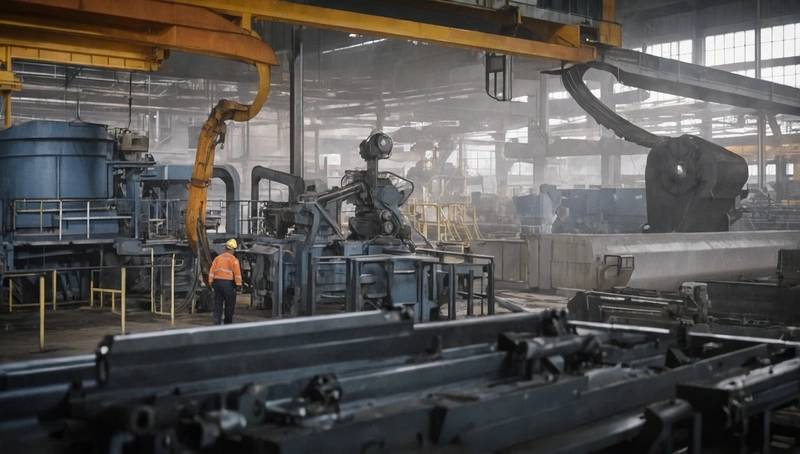
Sandvik, a Swedish manufacturer of metal-cutting equipment and mining equipment, reported on Wednesday a larger-than-expected decline in its core profit for the second quarter. However it said that tariffs had been fully offset.
The operating profit before amortization and items affecting comparableness fell 8% compared to a year ago, reaching 5.63 billion crowns (577 million dollars), versus a median forecast of 5.86 in a LSEG survey of analysts.
Items that affect comparability are mainly those previously announced
You can also find out more about our restructuring services.
Costs totaled a negative 643 millions crowns.
The company reported that it had implemented actions like rerouting trade flow and implementing tariff surcharges during the quarter.
In a recent statement, CEO Stefan Widing stated that "we will continue to take mitigation actions to limit any impact of new policies on trade if they ever become reality."
The company has
It would be able increase the production capacity at its U.S. plants. Last year, it accounted for more than 14% (or $140 million) of the group's revenue.
Sandvik is one of the Nordic's first industrial giants to announce its second-quarter results. Its large customer base, and short lead time for orders, make it a reliable indicator.
The organic value of orders received during the quarter increased 10% to 32.2 billion crowns.
At 1000 GMT, shares of the company rose 1%. This brings their year-to date rise to 17%. $1 = 9.7499 Swedish Crowns (Reporting and editing by Stine Jacobsen, Anna Ringstrom).
(source: Reuters)