
Latest News
-
What role does Aliko Dangote’s oil refinery play in his conglomerate business?
Nigeria's Dangote Group sells a 3,3% stake in the 700,000 barrels per day?oil refining plant to the public in what will be the largest such transaction on the continent. Answers and questions regarding the business conglomerate owned by Africa’s richest man, Aliko?Dangote. What is the size of Dangotes' business group? The 69-year-old entrepreneur is the owner of Dangote Industries Limited. This industrial group, which produces cement, sugar, and salt, is one of Africa's biggest. The company is also involved in the refining of crude oil, as well as other activities such as the production and distribution of petrochemicals, fertilisers, and power. Dangote Industries is his primary holding vehicle for the majority of operating companies which are privately owned. This changes with the listing the "refinery complex" located near Lagos. Which parts of the group are most important? Dangote Cement, Africa's leading cement manufacturer, has a capacity of 51.8 millions metric tons per year. Nigeria is responsible for 35.3 millions tons of this capacity. The company is also active in Cameroon and other countries such as the Congo Republic, Ivory Coast (Ivory Coast), Ethiopia, Ghana Senegal Sierra Leone South Africa Tanzania Zambia. It aims to increase total?capacity by 2030 to 80 million tons. The group's most ambitious expansion is in its refining division, the newest business. The refinery started processing crude oil in 2024. It produces petrol, jet fuel and liquefied petroleum gases, as well as by-products of chemicals such polypropylene. An adjacent plant, which produces fertiliser, has a capacity of 3,000,000 tons per year of urea and ammonia. It supplies Nigeria as well as export markets such Brazil, India Mexico and the United States. Sugar, salt seasonings, and other food items are among the group's consumer products. These activities are supported by the Dangote Group's storage facilities, pipelines, power plants and marine terminals. How did Dangote build the group? Dangote’s strategy is based on the import substitution, which means offering locally produced goods for Nigerians to replace those they have traditionally purchased from overseas. Cement was Nigeria's first big success. The investments in plants, quarries, and logistics have helped Nigeria to become a regional supplier. Dangote then applied the same strategy in his latest ventures in?refining, petrochemicals and fertilisers to reduce reliance on imports and serve the domestic and international markets. The group's investments are aimed at controlling costs and ensuring supplies. However, these investments come with a large capital expenditure and risks, such as construction delays and significant debt costs.
-
Nigerian billionaire Dangote launches Africa's largest share sale, the IPO of an oil refinery.
Aliko Dangote, the Nigerian billionaire who owns the oil refinery in question, launched the 'public offering' of the company on Monday. The sale opened up the plant to retail investors and raised money for the expansion. The offer to buy 4.1 billion ordinary shares for 525 Naira each began at 8am local time (0700 GMT), and will end on October 13th. The offer would have raised 2.15 trillion Naira ($1.6 billion) if fully subscribed. However, this could increase to $2.1 billion should the offer be?oversubscribed' and the company choose to use the greenshoe option in order to issue additional?shares. The refinery, built at a cost around $20 billion in the suburbs of Lagos has changed the fuel market of Nigeria since its start-up operations in 2024. Dangote supplies the majority of Nigeria's gasoline. The Iran War has also benefited Dangote financially, as it increased demand for Dangote jet fuel in Africa and Europe. Africa's richest person has made the offer to Nigerians who can buy as little as 10 shares via fintech and digital investment platforms. There is no restriction on who can buy these shares. "We want everyone... to own a share," Dangote stated at a signing event last week. The refinery currently processes 700,000 barrels of crude oil per day. It hopes to increase that to 1.4 millions barrels by the year 2029. Calculations show that the offer values this plant at $47 billion. Dangote said he expected interest in the IPO?to mirror a July private placement that was 3.7-times oversubscribed.
-
The CEO of Grupa Azoty says that the company could re-establish its fertilizer production in Poland in response to supply shortages.
The European Union's trade barriers and global supply disruptions have made this sector vital to the EU's food security. "Today, it appears that a major shift in direction has occurred. "We are talking about rebuilding production capacity and defining fertilizer as a strategic industry," CEO Marcin Celjewski said on Friday. Celejewski stated that in order to fully rebuild the capacity, EU support would be needed, including special funding and a regulatory framework supportive of this. He warned that it was still too early to "commit" to a new strategy for the company while the conflicts in Ukraine and the Middle East continue. Azoty, meanwhile, is taking advantage of a gap in supply created by new EU import tariffs, a carbon border tax, and other measures that have eroded the cost advantages enjoyed by foreign fertilizer producers, causing them to withdraw from the region. Celejewski stated that the company would revert its previous plans to close factories, and instead rely on imported ammonia, adding that new investments had already been made. It also considers land at its Police Plant in northwestern Poland that was previously intended for a?green ammonia hub' as an alternative for conventional ammonia investments. Celejewski, Azoty's CEO, said that the company has no intention of selling Compo Expert, a specialty fertilizer manufacturer which complements its core portfolio. Azoty, a state-controlled company, has been facing severe financial problems since 2022 because of high gas prices and massive debts tied to its flagship Polimery Police project. The 'chemicals manufacturer has agreed to sell Polimery Police to the state energy group Orlen. This pending court approval is pending while it finalizes a long-term restructuring of its debt with its creditors. Celejewski stated that the company would be reducing capital expenditures, even for profitable installations. The company will not have the funds to make major investments until the debt restructuring is completed.
-
Essar purchases UK petrol station operator SGN Retail and adds 118 sites
The company announced on Monday that India's Essar Group has acquired UK petrol station operator SGN Retail. This acquisition adds 118 sites to its network of fuel retail outlets, which it hopes to expand to 800 by 2031. Essar Energy Transition Retail (EET Retail), which operates 235 petrol stations, said that the acquisition would bring this number up to 235. EET Retail ?is part of Essar Energy Transition Fuels, which operates ?the 200,000-barrel-per-day Stanlow refinery in the United Kingdom. This acquisition will accelerate our?plan for a nationwide, vertically integrated platform with?800 sites. It is backed by direct refining supply, and will deliver competitive prices at UK petrol pumps to motorists," Arvan Ruia said, Chief Executive of EET Retail. Two sources familiar with the matter, who spoke on condition of anonymity, said that the deal was worth between PS400 and PS450 million (between $540.04 million and $607.55 millions). A spokesperson for Essar declined to comment on deal value. EET Retail announced that the acquisition would be financed by cash and a PS250 million senior debt facility provided by banks such as First Abu Dhabi Bank,?Macquarie Bank, Mizrahi - Tefahot Bank, Royal Bank of Canada, and SMBC Bank International.
-
Report: Himalayas nearing tipping point; millions of livelihoods on the line
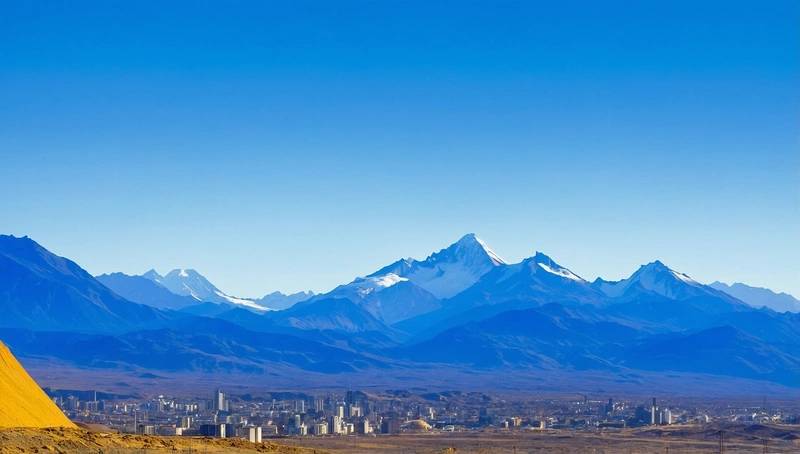
According to a study released earlier this month, the Himalayas is approaching a tipping-point as 'glaciers' melt faster now than they did a decade before. This threatens?water security, as the region is expected to reach "peak water" in the mid-20th century. The?findings?follow the collapse of an Himalayan Glacier in late August, along the Nepal-Tibet Border. This caused flash floods and cascading land slides in the valleys beneath. More than 5,300 people are missing in Nepal and China’s Tibet region. At least 1,300 deaths have been confirmed. The study concluded that as glaciers retreat they leave behind unstable glacial ice lakes, held back by nothing more than loose rock or?ice above valleys populated by millions of people. The study was created by Systemiq, a sustainability consulting firm, in collaboration with the Integrated Mountain Initiative (IMI), the Integrated Centre for Integrated Mountain Development, and India’s G.B. Pant National Institute of Himalayan Environment. The study revealed that the Himalayan glacier loss has accelerated over the past decades. Only 21 of the estimated 40,000 Himalayan glaciers in the Hindu Kush-Himalaya area, which spans eight countries, from Afghanistan to Myanmar was monitored on the ground. Nearly 200 glacial lakes were classified as "high risk" in India, and 56 as "very high", leaving millions of people exposed downstream. The region's "peak water", or the point at which river flows cease to rise and begin to decline, would have profound implications on water security. The Himalayas, which account for more than 20% in India's GDP and a major part of the nation's economic infrastructure, is a region that hundreds of millions of people rely on. The Himalayan region, which makes up about 18% of India’s land area, is responsible for approximately 35% of all natural disasters in the country.
-
MORNING BID EUROPE - Shipping oil becomes more difficult and expensive
Wayne Cole gives us a look at what the future holds for European and global markets. Brent oil is now back at $107 a barrel as the Houthis are closing in on Bab el-Mandeb. This is the second key route for oil exports from the Middle East. Ship tracking sites indicate that vessels continue to use the narrow waterway near the southern 'entrance to the Red Sea. However, the Houthis have reportedly warned them they will strike Saudi Arabian vessels if they try to pass. The Suez Canal is still open to tankers to reach Asian markets. However, the journey will take 22 days and cost a lot more in fuel and hiring. Last week, tanker rates reached record levels, and bunker fuel was in short supply. This increased the cost of shipping. Around 80% the world's commerce is transported by ships. Drone attacks from Iraq also targeted Saudi Arabia's East-West oil pipeline, which was carrying between 4 and 5 million barrels per day. The postponement of a Monday meeting between Iran, other Persian Gulf countries and the United States to discuss a safe route through the Strait further disappointed. This?left Brent at $107.81 per barrel, while U.S. crude rose 2.9% to $102.94. Federal Reserve doesn't want prices to remain high. The markets are now priced at 86% for a 25 basis point hike on Wednesday. This would be the first increase since mid-2023. Goldman Sachs and JPMorgan are among the major U.S. Investment Houses that switched their stance to a rate hike on Friday. Even Citi, which had long called for a rate cut, now admits one is likely to happen this week. Investors view this as a test for the credibility of the Fed under Chairman Kevin Warsh. However, it is likely to anger President Trump, who continues to make his novel argument that the U.S. has the lowest interest rates in the entire world. The concern over inflation is so great that even if the Fed keeps rates steady, longer-dated bonds will likely continue to yield more. In fact, the 10-year bond is already a hair away from the psychological barrier of 5.0%. If the Fed decides to hike rates, then the focus will shift to the dot plots in order to determine the likelihood of future moves. Warsh's press conference is also likely to be a focal point. Futures prices are pricing around 90 basis point? of tightening in the second half of next year. Markets suggest that the Bank of Japan is likely to raise rates on Friday by 25 basis points, to 1.25%. They also sound hawkish about a?further tightening of the currency. Markets indicate that the Bank of England will meet on Thursday, and there is only a 25% chance of an increase. However, it's likely to be split decision. Even OpenAI CEO?Sam Altman warned that AI may cause the extinction of humans by the end of this decade. SoftBank, a major loser in Japan and South Korea's tech share market, was blamed on the mounting political pressure to slow down work on AI. Market developments on Monday that may have a significant impact ECB Board Members Isabel Schnabel Piero Cipollone Pedro Machado and Christine Lagarde will be making appearances.
-
Nikkei reports that Chubu Electric's president will resign after nuclear data scandal
Nikkei reported that the president of Japan's?Chubu?Electric?Power is expected to resign following a?finding?that the firm?had?falsified?seismic?data in its application for restarting the Hamaoka Nuclear Power Plant. The paper reported that Chubu would withdraw its request to restart two nuclear units at the?plant. Chubu's Hamaoka nuclear plant in central Japan was undergoing a safety assessment in order to restart its reactors. Japan's nuclear regulator had suspended an investigation following the data scandal. On Monday, Chubu released its investigatory report. The incident could derail Japan’s efforts to restart its nuclear reactors. All 54 were shut down in 2011 after the Fukushima earthquake. In the first half of this year, Tokyo Electric Power restarted Kashiwazaki Kariwa, which is the largest nuclear power station in the world. The Nikkei reported that the resignations of Kingo Hayashi, President and Chairman of Chubu Electric, as well as Minoru Yasui who is currently an executive director, will be announced Monday. Separately Chubu?said that it altered documents submitted to Japan’s nuclear?decommissioning funds manager in relation to the No. 1 ?and No. There are 2 plants being demolished at Hamaoka.
-
As oil prices rise and rate hikes loom, shares in Asia plummet
On Monday, the Asian share markets fell as supply concerns caused oil to spike again. Investors braced themselves for interest rate hikes this week in both Japan and the United States. Brent oil prices rose 3% after new attacks on Saudi Arabia, and on ships in the Gulf. This came as nerves were tested following an attack on Saudi Arabia's oil pipelines and the Houthis' advance into Yemen. The meeting between Iran and Gulf Arab States, which was scheduled to take place in Oman on Monday, for the purpose of discussing a deal about opening the Strait of Hormuz has been postponed. Analysts fear that oil prices will remain high for a long time, causing inflation worldwide. A report showing an uncomfortably high U.S. consumer price index on Friday prompted the markets to estimate that 86% of the time, Federal Reserve rates will be raised by 25 basis points by Wednesday and again by December. This would be the first rate hike since mid-2023. Michael Feroli, JPMorgan's chief U.S. economist, said: "We expect the Fed will hike twice this fiscal year, in September, and in December." At this stage, failing words with actions could put the institution's credibility at risk. He added that the data will determine whether these actions are a recalibration of sorts or a start to a longer-term hiking cycle. "We expect the first scenario, but we see risks in the second." Brent futures rose last 2.6% to $107.36 per barrel after gaining almost?9% the previous week. U.S. crude oil rose 2.4% at $102.48 a barrel. South Korea's Nikkei dropped by 3.3%, while Japan's Nikkei declined by 1.7%. MSCI's broadest Asia-Pacific share index outside Japan fell 0.8%. In Europe, EUROSTOXX Futures dropped 0.5%. DAX Futures declined 0.4%, and FTSE Futures fell by 0.1%. S&P futures on Wall Street fell 0.5% while Nasdaq's futures dropped 1.1%. High Yields Test Evaluated Equities The yields on 10-year Treasury bills were slightly lower, at 4,967%. They had been heavily sold in recent weeks. In just one week, the yields on 2-year Treasury notes rose by 26 basis points. The yields on 10-year Treasury notes also increased by 19 basis points. Ben Snider is the chief U.S. Equity Strategist at Goldman Sachs. He said that strong corporate earnings will support Wall Street in case borrowing costs increase. He added: "Equity prices tend to fall when the Fed begins to raise rates, but we expect the bull to continue." "The S&P 500 generated an average return of -2.2% over a three-month period at the beginning of seven hike cycles in the past few decades." "Yet, the S&P 500 generated an average return +9% over the 12-month period following the first increase." The markets also suggest that the Bank of Japan is likely to increase its cash rate on Friday by a quarter-point, or 1.25%. BOJ will also be expected to sound more hawkish about further tightening, as it tries to prevent the yen from falling back to its 40-year low after it was helped by market intervention. The dollar held steady at 153.49?yen after falling around 4% in the past two weeks and moving away from its July high of 163.99?yen. The euro was also not much changed at $1.1592, after finding support at $1.1570 last Friday. The pound was unchanged at $1.3522, with the Bank of England likely to keep its rate at 3.75% Thursday. However, the decision may be divided again. Gold fell 0.3% on the commodity market to $4,336 per ounce, as bond yields increased, reducing the appeal of gold, which does not pay interest.
Minister: Chile will curb budget growth while Codelco accelerates recovery
The new Chilean finance minister said on Wednesday that the country will have a budget for 2026 with a "responsible increase" while the state-run Codelco tries to recover from production problems. Nicolas Grau, who was appointed by President Gabriel Boric in August, told reporters in his Santiago office that the budget for 2026, which is due to Congress, will have a "limited" increase in spending. Boric will announce the exact amount, but budget increases have been declining since 2023, when they grew by 4.2%. Grau stated that the average annual growth rate would be around 2% with this budget. He said that he would work with Congress to define a budget that is responsible, addresses the needs of the country and gives the next administration enough flexibility. Chile will hold a presidential vote in November, and Boric is not eligible to run again for reelection.
CODELCO’S RECOVERY OF COPPER Chile is the largest copper producer in the world, and its primary source of revenue. Codelco, the state-owned company, has struggled to increase production for many years. It cut its production target in August due to an accident that killed a worker at the mine's flagship El Teniente. Grau reaffirmed his confidence in Codelco’s strategy to close the production gap in previous years and highlighted initiatives such as its partnership with Anglo American for two adjacent deposits.
Grau stated that "Codelco is creating public-private partnerships to allow it maintain its leadership in copper."
SPEEDING UP PERMITTING WILL BOOST INVESTMENT According to Grau, he is confident that the economy will grow by 2.5% this coming year. This growth will be boosted by a 5% increase in investment for carbon-neutral initiatives such as clean energy and digital infrastructure. Grau has made reducing unemployment a priority for his final months in office. Jeannette Jara is the coalition candidate for the leftist government in the upcoming elections. "The latest data show that the unemployment rate is down a bit, but 8.7% still represents a high rate of unemployment. Grau stated that "we believe this rate must be reduced".
He said that policies such as pension reform and better permitting, a demand of large miners such as BHP and renewable companies like TotalEnergies, have led to greater economic growth. He acknowledged, however, that environmental permitting reform has made less progress than other categories. He said that although the executive branch made "significant" efforts to advance the reform, he could not predict if it would be approved under this administration. (Report by Fabian Andres Cambero, Editing by Alexander Villegas & Richard Chang)
(source: Reuters)