
Latest News
-
Bonds resume selling after bonds climb, but stocks rise following weak US job data
The dollar and major stock indexes fell on Friday, as expectations of a Federal Reserve rate hike this month dropped after weaker-than-expected US jobs data. The bond market resumed its ongoing selloff, which has seen global yields reach levels not seen for two decades. The closely watched Labor Department employment report revealed that nonfarm payrolls increased by 29,000 jobs in August, falling short of the 90,000 expected increase according to economists surveyed. The Labor Department's closely watched employment report showed that nonfarm payrolls?increased?by 29,000 jobs last month, short of the 90,000 expected gain according to economists polled by. After the report, bets on a Fed rate hike in October, after it raised rates last month for the first since 2023, dwindled. The Fed is now seen as having a 21% chance of raising rates by 25 basis point in October. This was compared to a 26% chance before the report. Joseph Purtell is senior vice president at Neuberger, and portfolio manager. He said that the labor market was not as hot as it had been in August. Purtell described the labor market as stable. As Friday's employment report came out, expectations for a rate hike in October had already begun to decline. This week, two top policymakers stated that they needed more data to decide 'what to do with interest rates next. LSEG says that the odds of a December rate hike initially decreased following the data, but then increased. Rates that are higher can be seen as negatives for stocks, because they raise the borrowing costs for consumers and businesses. The Nasdaq Composite gained 319.27 point to 27,190.86, a 1.2% increase. The Dow Jones Industrial Average?rose by 250.40 or 0.5% to 51,176.96. The S&P?500 grew by 56.27 or 0.7% to 7,722.72. The MSCI index of global stocks rose by 7.01 points or 0.6% to 1,140.27. The pan-European STOXX 600 rose by 0.75%. The dollar fell against the euro and the yen. The euro last rose 0.16% to $1.1259 The dollar fell 0.18% against the Japanese yen to 157.79. The gap between German and French yields is the widest since 2011. US Treasury yields initially fell following the jobs report, but later rose on the same day. Some investors noted that the jobs reports was not so poor that it eliminated chances for the Fed? to raise rates in the coming months. In recent weeks, global bond markets have steadily sold off as the US-Israeli conflict with Iran has pushed energy prices up. This has complicated the inflation outlook while further stretching already stretched public finances. Benchmark US 10-year yields closed the month of September with their largest quarterly increase since 1994. The yield on the benchmark US 10-year note was up 4.93 basis point at 5.283%. The yield on the 2-year note, which moves typically in step with Fed interest rate expectations, was up 4.63 basis points at 5.283%. The European Government Bond Markets remained volatile on Friday, with the difference between German and French 10-year Yields reaching the highest level since the Euro Zone Debt Crisis in 2011. German 2-year bond rates were flat at 3.05% after swinging between session lows of 2.943% to highs of 3.063%. French 2-year bonds were about 4 bps higher, at 3.73%. They had risen as much as 3.84% earlier. Italian 2-year bond yields are down 7 basis points at 3.547%. The yields on 2-year German bonds fell by nearly a quarter of a point this?week. Meanwhile, those on 2-year French debt rose nearly 14 basis points. Brent crude futures rose, while US West Texas Intermediate retained a part of its earlier losses. This was after European leaders accepted US President Donald Trump’s request for the release of diesel reserves. Brent rose 46 cents or 0.45% to $102.77 per barrel by 2:20 pm EDT (1820 GMT). WTI fell 1% to $91.90 per barrel.
-
US FDA links Mexico facility to outbreak of lettuce parasites after closing probe
The US FDA announced on 'Friday that it had concluded its investigation of a summer parasite epidemic, and linked the illnesses with recalled'shredded iceberg lettuce' from Taylor Farms de Mexico. The regulator stated that while 'investigators' could not determine definitively how the contamination occurred, tests showed the parasite cyclospora was present in the environment of the lettuce growing and processing. Investigators discovered the parasite during the investigation at the Taylor Farms?de Mexico processing facility as well as at a lettuce field in Mexico. The regulator confirmed that two samples collected during inspections in Mexico were positive for cyclospora. One sample was taken from the tank of wastewater that Taylor Farms de Mexico used to process its products, and?the second came from an irrigation ditch at a?iceberg-lettuce grower who had been identified as part of a traceback investigation by the US Food and Drug Administration. Taylor Farms de Mexico didn't immediately respond to our request for a comment. The FDA stated that the FDA's analysis of patient illness reports and supply chain tracking clearly supported the linkage between the recalled lettuce, and the multistate outbreak which caused intestinal?sickness. The regulator is still analyzing the results of the genetic testing on both positive samples. The FDA also announced a 10-point plan for preventing similar outbreaks before the growing season of 2027. Actions include:?more surveillance of produce historically associated with the parasite, increased outreach to growers, and an outbreak investigation report with recommendations for prevention. On?September 11, the US Centers for Disease Control and Prevention (CDCP) declared that the outbreak was over. The CDC received reports on September 14 of 19883 cases of cyclosporiasis that were confirmed in the laboratory and two deaths.
-
Global M&A deals slow down in the third quarter due to rising borrowing costs
M&A activity totaled $993 billion in the past three months, a 41% drop compared to second quarter 2026. This is the first quarter that has fallen below $1 trillion, since the second half of 2025. The ten megadeals worth more than $10 billion announced during the third quarter included Gold Fields' $25.7 billion bid to acquire Northern Star Resources and Banca Monte dei Paschi’s $32 billion offer for Banco BPM. This was the lowest quarterly number since the fourth quarter 2024. The surge in energy costs has fueled inflation and raised expectations about interest rates. The benchmark 10-year US Treasury Yield hit 5.34% Thursday, its highest since 2002 after posting the largest quarterly increase this century in three months up to September. John Collins, Morgan Stanley's global head of M&A, said that "at the margins (higher yields) makes valuations sometimes harder." "It's hard to quantify the impact, but I am not yet ready to declare a slowdown." The number of transactions fell by 8%, to levels not seen since the year 2020. Carsten Woehrn is Goldman Sachs’ co-head for M&A in Europe Middle East and Africa. If the current pace is maintained, he believes that the total value of the deals will surpass the peak in 2021. Woehrn stated that "Megadeals continue and we have seen significant activity in the past few months." Boards are feeling more pressure to close strategic deals. The?technology industry has seen unprecedented levels of investment, and strategic stake purchases of these companies have accounted for approximately one quarter of all global M&A deals so far in this year. Earlier this summer, Anthropic - the maker of Claude - and ChatGPT - the maker of OpenAI gathered tens billions of 'US dollars in investment. While US and European M&A fell dramatically in the last quarter, Asia Pacific M&A reached $242 billion. This is up 8% compared to the second quarter, and 36% compared to the same period last. The third quarter of this year saw a decline compared to the same period in the previous year. The cross-border business continues to be a major theme in this year, with a 32% increase compared to the same period of last year. We're seeing US companies considering acquisitions in Europe, for the first-time. They are taking advantage of the strong dollar. People are investing in the U.S. to take advantage of higher growth opportunities in the country, said Charlie Bouckaert. DEALMAKING AND TRILLION DOLLARS IPOs The new listings, especially in the tech sector, has given companies the currency they need to acquire rivals. SpaceX bought AI coding startup Cursor days after its blockbuster Nasdaq debut. The company's valuation soared to over $2 trillion. Collins stated that "one of the driving forces behind activity is that larger companies may be able to navigate the transition to?AI more effectively." SpaceX's June IPO helped to drive $215 billion in global initial public offerings (excluding SPACs) in the past year, the highest amount since 2021. This was despite a smaller number of deals compared to the same period in 2017. In the past three months,'stock sales' raised US$284 Billion, which is 26% less than proceeds raised in equity capital markets for the second quarter. However, this represents a 39% rise from the third?quarter 2025 thanks to offerings by SK Hynix, and Intel. Bankers warned that investors might be hesitant to invest in certain technology and AI deals. Andreas Bernstorff is the global head of equity markets at BNPParibas. Some IPOs were delayed in recent weeks as higher interest rates, and setbacks within the data center eco-system threaten to derail a slew new issues. Bankers are confident despite the uncertain future. Bouckaert stated that "strong secular trends, such as AI, are driving activity and we expect to see 2027 be another prosperous year."
-
Officials claim that Israeli settlers killed Palestinians in West Bank
Palestinian officials reported that Israeli militant settlers killed one Palestinian and injured the other in an attack on Yasuf village in the Israeli-occupied West Bank, on Thursday. According to the UN, Israel's military, including settlers, has killed over 80 Palestinians since the start of 2026 in the West Bank. Jumaa Abdul Fattah, head of the village council, said that settlers killed Mashour Yassin during an attack against his home, which was located on the outskirts Yasuf. Fattah claimed that the?assailants' came from a settlement outpost near the village, which was built about two months ago. He added, "The settlers have attacked the village continuously ever since the outpost's establishment." Israeli soldiers claimed that Palestinians threw stones at "Israelis approaching the village" and the military dispersed the villagers. The Israeli military also fired at the Palestinians. The report did not explain why Israeli settlers had encroached on the village. Fattah claimed that the settlers shot two Palestinians before Israeli soldiers arrived. The Israeli military didn't immediately comment on timing. The rights groups claim that the growing presence of settler on the outskirts of villages is part of a?campaign to seize land and to eat away at the?territory in which Palestinians?aim to create a state. Israel captured the West Bank of Palestine in 1967. Since then, the territory is under Israeli military occupation. The settlers are encouraged by the government of Benjamin Netanyahu who has overseen the massive expansion of Jewish settlements. Most countries and the UN consider Israeli settlements illegal under international law that governs military occupations. Israel disputes that interpretation, claiming the status of the territory is in dispute.
-
VAROPreem CEO: Europe's defense spending supports the shrinking refining industry
The CEO of Europe's largest refiner said that the sector's shrinking size is a result of the rising demand for fuel to support government defense plans. Data from the European Council show that in 2025, European Union member states' defense spending increased?for?the?11th consecutive year to EUR418.9 billion ($472 Billion), marking a 75 percent increase since 2021. Further gains are expected for this year. "Every conversation that I have with European governments is about resilience and continuity of supply. Dev Sanyal, CEO of VAROPreem, said on Thursday that the focus between 2015 and 2020 was to'shut down refineries. "European governments are aware that more fuel is needed. He added that there was a (also) need for more fuel because Europe wanted to gain a competitive edge in AI. FuelsEurope, an industry group, said that since 2009, 30 out of 100 European refineries have closed or been 'converted', and at least seven have been converted into biorefineries. This has severely reduced the production capacity for diesel, gasoline, or jet fuels in the European Union (EU), Britain, Norway, and Switzerland. "Now that defence spending is increasing, you realize that F-35s, Leopard tanks or US-made fighter planes don't run off biogas," said CEO of the Swiss-based VAROPreem. The company has refineries in Sweden and Germany, as well as refineries located in Switzerland, Germany, and Switzerland. According to the most recent Statistical Review of World Energy published by the Energy Institute, the refining capacity of EU countries, Britain and Turkey, as well as the Ukraine, Switzerland, and the Ukraine stood at 14,4 million bpd. This is down from the 17.5 mbpd of '2009. The price of diesel has risen dramatically since the Iran war cut off vital shipping routes and after sustained attacks on Russian refinery infrastructure. The benchmark European Diesel Futures Contract has reached highs of over $1,500 per metric ton, last seen after the Russian invasion of Ukraine 2022. Sources said that US retail diesel prices have hit a record of $6.50 a gallon in the last month. The US is increasing pressure on Europe to reduce diesel stocks.
-
Asia's gas margins skyrocket on outages and China export ban, traders claim
The 'gasoline margin in Asia reached a new record on Thursday, as a result of various refinery outages and reports that Chinese refiners had halted fuel imports for the month of October. The crack or refining profit. Brent crude oil rose by $50.53 to $50.53 for gasoline. Four people who were briefed in the matter confirmed that Chinese refiners had suspended oil exports to October. Beijing is looking to preserve its domestic stock, and this move will further depress fuel markets already under pressure due to war. Brent futures were rolled over to next month's contract on Tuesday, resulting in a drop in the crude oil price. This would have?contributed to the crack widening. News of China's?reduction in product exports also supported the tightening of the Asian market," Alan Gelder said, senior vice-president, refining chemicals and oil markets, at Wood Mackenzie. The price of benchmark fuel has risen to $150.69 a barrel, its highest level since March this year. A Singapore-based gasoline dealer said, "Inventories have been low and there are refinery problems too. This is pushing prices up." The state-run Mangalore Refinery and Petrochemicals Ltd. (MRPL) in India cancelled Wednesday three spot tenders for refined gasoline after a fire broke at a processing facility. The refiner told the exchanges that the export tender would be refloated shortly after an evaluation of the situation. Market sources reported that a major South Korean refiner shut down its gasoline production unit as well due to "some issues". Singapore, China, India and South Korea are the top gasoline exporters of Asia. Enterprise Singapore data showed that Singapore's stocks of light distillates, including naphtha, gasoline and other fuels, had fallen to a 5-year low, falling to 10.514 billion barrels during the week ending September 30. This was largely due to an increase in exports of transport fuels. The period saw a total of 187,000 metric tonnes (approximately 1.5 million barrels) in gasoline imports, while exports rose to approximately?672,000. Australia led the way with 189,000 tons of gasoline exported, followed by Indonesia with 160,000 tons. China led the way with nearly 78,000 tonnes of gasoline inflows, followed by South Korea with about 46,000.
-
Construction spending in the US surges in August
US construction spending surged unexpectedly in August, driven by non-residential buildings like offices and power plants. However, the trend was weak as higher mortgage rates weighed down on homebuilding. Census Bureau of the 'Commerce Department' reported on Thursday that construction expenditures jumped by 0.9% following a downwardly revised 0.1% drop in July. Economists surveyed by predicted construction spending would remain unchanged in August following a previously reported 0.5% decline in July. In August, construction spending fell 1.7% year-over-year. After falling by 0.2% in July, spending on private construction projects jumped 1.1% in august. Private non-residential investment increased by 1.0% in August. Spending on power plants increased by 0.9%, while expenditures on office projects rose by 4.6%. In August, investment in residential projects grew by 1.1%. This is likely due to renovations. The expenditures on single-family projects increased by 0.2% but fell 3.5% year-over-year. Since the US-Israeli War with Iran began in late February, the average rate for a 30-year fixed mortgage has increased by more than 100 basis points. This has affected demand and left an overhang of unsold homes on the market. Data from mortgage finance company Freddie 'Mac revealed that it?averaged 7.3%?last week. This is the highest level seen since January 2025. The spending on multi-family units, which make up a tiny part of the housing market in August, grew by 0.2%. Investment in public construction projects increased?0.2%, after increasing by 0.1%?in July. Construction spending by state and local governments increased 0.3% while federal government expenditures declined 0.7%.
-
EU governments spent EUR18 Billion in 2026 to cushion the energy price rise
The European Commission stated in a report that the EU 'governments spent EUR17.9billion this year to 'cushion the effect of higher oil and gas prices on households and businesses. In a document to guide the discussions of euro-zone finance ministers during a meeting on October 8, the Commission also encouraged governments to "invest in electricity grids" and to tax it less than gas to encourage them to move away from fossil fuels. The Commission stated that the euro zone's economic growth is expected to be slightly higher this year than the 0.9% growth forecast in May. However, next year, it will likely be lower than the 1.2% growth forecast last year. The Commission said that inflation is expected to be roughly in line with the forecasts of 3.0% for this year, and higher than 2.3% in 2027. The note from the Commission stated that "the borrowing costs of Member States have increased substantially, underscoring the need for fiscal caution." It said that "in this context, since onset of the Middle East Conflict 25 Member States have implemented fiscal policy measures in order to mitigate the impact of high energy costs on households or businesses, at a cost of EUR17,9 billion (0.1% GDP of EU-27) by 2026." "More that?two thirds of the funding is for untargeted prices measures, which are not in line with the need to?target short-term actions to the most vulnerable and minimise fiscal costs as well as be consistent with the 'need to decarbonise energy system. The yields of euro zone government bonds are near multi-year highs, and the escalating energy crisis continues to support bets that at least three European Central Bank rate increases will occur by late 2027. The Commission stated that if governments wanted to help consumers and businesses they should do it through well-designed short-term, targeted, and temporary measures. This is a lesson learned from the energy crisis of 2022-2023.
McGeever: Why Trump's tariffs have a lot of bark but little bite
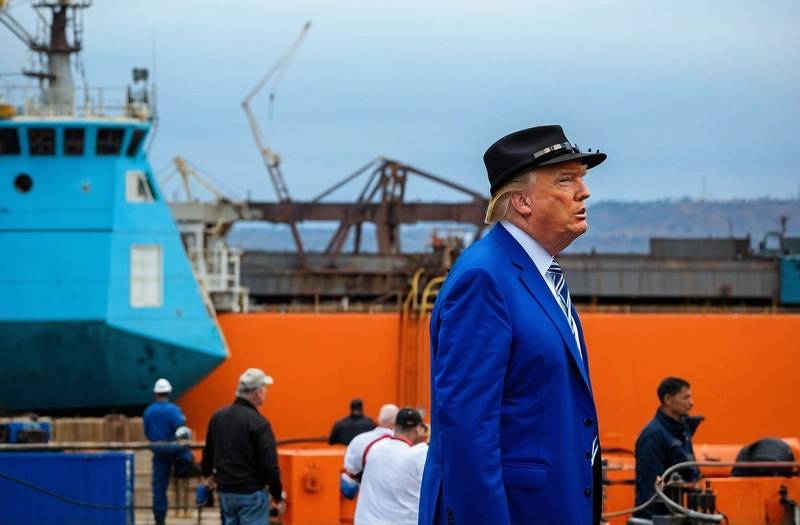
Donald Trump's favourite word is "tariff", and his continued use of the term last year caused fear in the markets, as the U.S. administration unilaterally implemented the most protectionist trade policies since 1930s. The bark was worse than the bite. Just over a month has passed since Trump declared "Liberation Day" and the average U.S. Tariff rate is lower in April 2025 than many had feared. The daily effective pre-substitution rate, at just over 10%, is four times higher than it was at the end of 2024. Tariffs are barely a?record in today's financial markets. This is partly because investors are more concerned about real wars than trade wars. The economic impact of Trump’s tariffs is also not as bad as many people feared. This could be because the trade war coincided a technological boom.
Perhaps that is too simplistic.
It may be years before the full impact of the redrawing of geopolitical and trade alliances in the world is known. Unexpected negative shocks could be on the way.
The fact that STATISTICALLY INSIGNIFICANT tariffs have had a muted impact on the economy over the last year is partly explained by a simple fact: Actual levies were lower than statutory rate. This is the main argument of a Brookings Institution article by Pablo D. Fajgelbaum of University of California, and Amit Khandelwal of Yale University. By December of last year, the authors found that 57% or so of U.S. imported goods were still duty-free. This includes the majority of goods imported from Canada and Mexico, under the United States-Mexico-Canada Agreement (USMCA).
The Trump administration will formally?declare Wednesday that it won't extend the 32-year old North American Free Trade Zone. But that only starts a new review process.
Tariffs at the border are often lower than headline rates due to legal loopholes or special agreements.
The retaliation to Trump's tariffs was mostly modest or short lived, with China being the only major trading partners who offered a firm and sustained response. Hyperscalers invested hundreds of millions of dollars in infrastructure and chips to boost global trade. According to the Brookings article, the net effect of tariffs has been only between 0.1% and 0.1% of GDP until December. The Brookings paper says that these?findings are in line with the analysis done by The Budget Lab, a Yale-based research group. It estimates that tariffs will cause the U.S. to be 0.1% less prosperous in the long term, which is the equivalent of $30 billion in 2025 dollars.
Other words, statistically significant, but not at all in the near future.
Markets vs Real Economy
Try telling that to U.S. customers, who are forced to pay 90% of Trump's Tariffs. In an April Federal Reserve report, the paper found that tariffs are solely responsible for the excess inflation of core goods from January 2025. The same paper, however, also indicated that the tariff pass-through is now essentially complete. It was, in other words, a price increase that happened only once, as the Trump Administration had claimed. If true, this would be good news for Americans whose personal savings rate, which has fallen to the lowest level in four years due to higher prices, is now below 3%.
There is also another side to the story. Tariffs are taxes that fall on the person who pays them. Usually, this is the consumer. They are a direct source of revenue for the government, reaching $264 billion in 2017. This is more than three times the revenue in 2024 and represents 0.83% GDP, which is the highest since over a century.
Theoretically, the revenue generated by tax cuts and higher spending should be able to offset some of the impact on consumers.
SLOW BURN?
But investors shouldn't become complacent.
Although trade uncertainty has decreased, it is still very high. According to the Tax Foundation, the U.S. tariff policies have changed more than fifty times since the start of Trump's second tenure. There's no reason to think that this is the end, considering the Trump administration's willingness to use tariffs to threaten foreign policy negotiations.
Investors have mostly ignored these concerns. Rebecca Harding, trade economist and writer whose latest book "The World at Economic War" was published in late 2012, says that markets have become detached from the reality of the economy. The cost of doing business internationally will continue to rise as a result of increased trade uncertainty.
Small and medium-sized businesses (SMEs) will struggle to keep up with the demands.
It's clear that the predictions of tariff doom by many economists have been wrong, but it could be just a question of timing. Brexit is a cautionary tale. The UK economy didn't immediately crash after Britain voted in 2016 to leave the European Union. There is no doubt that 10 years later, the economic damage has been severe.
It is still unclear whether the slow-burning economic impact of tariffs on the U.S. will be similar. However, it's worth asking.
You like this column? Open Interest (ROI) is your new essential source of global financial commentary. Follow ROI on LinkedIn and X.
Listen to the Morning Bid podcast daily on Apple, Spotify or the app. Subscribe to the Morning Bid podcast and hear journalists discussing the latest news in finance and markets seven days a weeks.
(source: Reuters)