
Latest News
-
Former West Ham goalkeeper Miklosko dead at 64
His family announced on Monday that former West Ham United goalkeeper Ludek?Miklosko, who was also a Czech Republic national, had died at the age of 64. Miklosko joined West Ham from Banik Ostrava and played for the club for eight years before moving to Queens Park Rangers. He retired in 2001. Ludo was a fan favorite at West Ham.?Miklosko made 373 appearances as a goalkeeper for the London club before becoming their goalkeeping coach. He returned to his home country and worked at a sports agency, helping develop young players. In 2022, he will return to Banik Ostrava as a board member and sporting director. Miklosko was first diagnosed with cancer in the year 2021. He announced in 2024 that he would stop chemotherapy to enjoy his life. West Ham said in a press release that "his famous song is sung at every match since then and in February of this year, a stunning tifo adorns the West Ham goalkeeper who will always hold a special spot in the heart of the West Ham family." "Rest in Peace Ludek. Our beloved, inspirational goalkeeper, and gentle giant of a man." Miklosko has represented Czechoslovakia and the Czech Republic on an international level throughout his career.
-
Kremlin applauds Trump’s request to Ukraine that it stop strikes on diesel plants
The Kremlin welcomed U.S. President Donald Trump's call for Ukraine to halt strikes against Russia's diesel-producing facilities. Trump called on Ukrainian president Volodymyr Zelenskiy on Sunday to stop attacking Russian diesel infrastructure. He said?the attacks are causing a fuel shortage?that "hurts the world". In recent months, long-distance Ukrainian drone strikes on oil refineries have reduced Russia's fuel supply. This has led to fuel shortages in the entire country. Ukraine claims that it is attacking Russian refineries to increase the costs for Moscow to continue its invasion of Ukraine. Dmitry Peskov, Kremlin's spokesman, said in a daily press conference that any call to the Kyiv government to stop attacking civilian economic infrastructure is welcome. Fuel shortages have affected the morale of many Russian regions, especially in advance of the September 18-20 parliamentary elections. Peskov said the global energy market was deteriorating due to "instability" and "new rounds of escalation within the Persian Gulf region". He also stated that an export ban on diesel would help boost the Russian domestic market.
-
The largest protests against the increase in fuel prices since Assad's fall are triggered by Syria
Fuel prices rose sharply over the weekend, triggering protests in a number of?Syria's cities. This is the largest demonstration in the country since the ouster of Bashar al Assad two years ago. Demonstrators blocked roads and burned tyres after the Syrian government raised the price of diesel by 40%, to $1.32 a litre. Price increases added to the pressures on Syrians who have been in economic crisis for years. According to the United Nations Development Programme, 90% of Syrians live below poverty level. This is compared to a third in 2011 before the Syrian Civil War began. The government has also increased the price of household and industrial gasoline by 9%. 95-octane gas was raised by 28%, to 195 pounds, and 90-octane by 26%, to 185 pounds. Some protesters demanded the dismissal the energy and economic ministers, as well as the CEO of the Syrian Oil Company. "We do not want higher wages." "All we want is lower fuel and diesel prices," Yasser Salam told Aleppo. Bassam al-Ali also protested in Aleppo and appealed to President Ahmed al-Sharaa directly, saying that the situation is untenable. "Border crossings generate millions of dollars." We do not want any new malls or roundabouts. "We just want to live," said he. RUSSIAN SUPPLY IS UNDER PRESSURE Abdulhamid Salat, spokesperson for the Energy Ministry, said that price increases are temporary and driven by increased global procurement costs as well as Syria's high dependence on imported goods. They could be adjusted up or down depending on changing conditions. Syria imports around 60,000 barrels per day of Russian crude oil this year. However, Damascus told Washington that it was willing to drastically reduce these purchases. The'supply' has been under increasing pressure due to the Ukrainian attacks on Russian refining facilities, which have led to a reduction in production. This is what prompted Moscow restricting exports of diesel and gasoline. Salat stated in a statement that prices reflected not just crude costs but also shortages of refined product and higher costs for refining and transport. The shortage of supplies has been exacerbated by the closure for three months of Syria's Baniyas Refinery, the largest in the country, to perform its first comprehensive maintenance. Diesel has also more than doubled in price. Benchmark Brent crude rose by about 44% from $72.48 a barrel to $104.61. Imad Abu Ras is a taxi driver of 44 years old. He said that passengers have already started to complain about higher fares. What is the answer? Steal? "We can't steal".
-
BIS: Global AI market momentum shows signs of vulnerability
Bank for International Settlements, the global central bank umbrella group, stated on Monday that the AI-linked rally which has seen world stocks soar over the past two years, is becoming more vulnerable. BIS reported that investors were becoming "increasingly conservative" when it came to the future profitability of AI investments. This was especially true as leverage at major U.S. technology firms continues to increase. Frank Smets is the BIS head of economics analysis. He told reporters that the AI momentum which propelled equity markets last year and contributed to global resilience has started to show signs of vulnerability. Comments were made Friday, ahead of publication on Monday. AI-related stocks fell sharply on Monday, after heads of several top AI companies warned that it was necessary to slow down the development of technology to avoid threats to humanity. The BIS report pointed out that geopolitical tensions, volatile energy prices and other factors have exacerbated the strains on the public finances. In addition to the long-held concerns about debt sustainability, the hundreds of billions in debt AI firms issue could also be contributing to a rise in the government bond market's borrowing costs. Smets, referring to recent pressures on bond markets, said that the problem was "related to fiscal fragility" which is accompanied by a higher level of uncertainty in the global economy. He added, however, that "no signs" of stress were visible in the overall market and that risk appetite among investors had been "remarkably resilient" over recent months. INFLATION COMMUNICATION The BIS, also known as the central bank of the world's central banking institutions, has issued regular warnings regarding global debt levels as well potential stock market bubbles. Smets stated that it is uncertain whether this resilience can be maintained, particularly if the upward pressure on yields continues. He also reiterated the warnings of BIS Chief Pablo Hernandez de Cos last week about the risks to financial stability posed by AI. Smets stated that "we are most concerned about the rapid rise in debt and leverage in this area (AI)." "And that many of these financing transactions are opaque. They are often not included in the balance sheet. "They have a circularity to them." The report looked at the private market funding which has poured into AI over recent years. The aggregate borrowing of tech firms has risen from $22 billion in 2010, or 22%, to more than $1 trillion or 44% by 2025. Total outstanding loans, of all types, amount to almost $2.5 trillion. One of its studies used AI to analyze thousands of central bank reports and speeches. The study showed that the "core inflation" metrics, which exclude energy price peaks or troughs, are cited more often and with greater variety. The trend reflected the changing economic conditions. However, the report said that "the increasing complexity of central banks' messaging could pose challenges to effective communication with public".
-
Natural gas prices are causing the ECB to focus on natural gas.
European Central Bank policymakers stated?on?Monday that euro zone inflation could be higher than already high projections. Recent energy price developments, in particular the rise in natural gas costs, are also concerning. The ECB increased some of its projections for inflation?last _week? when it raised interest rates. However, oil and gas prices have already risen well above "baseline" levels. This suggests that the high price growth may be more permanent than expected. Isabel Schnabel, ECB member and board member in Berlin, said that the recent developments in energy prices were quite alarming. Schnabel is a policy hawk who said, "It's not just oil." It's also refined fuels, such as diesel... And of course, gas is also very important for Europe, with its high levels. LEAVING ADVERSE AND MOVING TOWARDS SERIOUS In its projections, the ECB predicted that December gas futures would be EUR60.1, while an adverse scenario put it at EUR77. The current market price exceeds EUR83. Brent crude oil is trading at $107 a barrel, which is well above the price that the ECB assumed for its negative scenario. Peter Kazimir, the Slovakian central bank's chief, said that inflation risks were clearly on the rise. "I am now focusing more on the price of gas and electricity than on the oil and fuel. Expectations are also high for food inflation, which is so important to perceptions and expectations. The deterioration of the inflation outlook may lead to more rate increases, putting the ECB’s key rate (currently at 2.5%) in a zone that limits economic growth. Martins Kazaks, the Latvian central bank's chief, said that "the case is building for tightening". Kazaks stated that interest rates could need to enter restrictive territory. There's no secret threshold or higher bar for rates to rise above 2.50%. Some policymakers, however, were more cautious and argued the ECB'should stick to their meeting-by-meeting method and signal higher interest rates once more evidence has been amassed. European countries that depend on natural gas to heat their homes waited until the end of the Iran conflict and prices fell sharply before filling storage facilities. They are now rushing to store gas because storage levels are far below historical norms. This is helping to push the price of natural gas up four years. This will likely drive up the cost of heating and electricity for both households and businesses, and also fuel inflation. However, some economists claim that a sharp increase in renewables energy production and a decrease in energy-intensive industries like heavy industry have made the EU less sensitive to gas prices. The growth in food prices has been low. However, a combination of factors including the El Nino phenomenon, a European drought and soaring prices for diesel and fertiliser, which are key inputs to agriculture, will likely push prices up in the next few months. The next ECB policymakers' meeting will be on October 29. The financial markets have priced in a 60% chance that a rate increase will occur then. A move before the end of the calendar year has been fully priced.
-
Go slow with MORNING BID AMERICAS
The markets now expect that the Federal Reserve will raise interest rates on Wednesday as another surge in crude oil prices begins the week following more attacks and disruptions in the Middle East. The inflation report last week did not provide much comfort to the central bank's increasingly hawkish stance that its 2% inflation target would be reached any time soon. Energy prices are on the rise, but pressures on prices in other sectors and services are also a concern. The question for markets is not whether the Fed will increase rates this week but how much it will tighten up afterward. This will be influenced by the Fed's quarterly projections of economic growth and interest rates. As of now, futures strips are pricing up to four rate hikes. Brent crude oil surged to $108 per barrel after a weekend filled with fighting in the Middle East. The weekend also saw more ships targeted in the Gulf and the temporary closing of Saudi Arabia's East West pipeline. This could threaten up to 4% of the global crude oil supply. The scheduled Monday talks between Tehran, other Gulf countries and the United States on how to manage the Strait of Hormuz were also postponed. Other headlines this weekend focused on calls to "go slowly" with the rapid pace of AI development, following several apocalyptic statements from industry workers last week about potential threats to humanity. OpenAI's Sam Altman, the company's boss, said that the long-awaited IPO would be delayed to 2027. He called the idea of going public in 2019 "ill-advised". The U.S. president Donald Trump dismissed these warnings as absurd, whereas state-backed Chinese media referred to an article by Dario Amodei of Anthropic, which called for a slowdown in AI, as "Cold War tactics" aimed at China. AI-linked stocks dropped on Monday, amid safety warnings. Nasdaq Futures were in the red even before the bell rang, and Asian shares closed lower. This was mainly due to falls among big chipmakers. Chart of the Day Markets may need to factor in the possibility that a "go slow" push will also result in a slower build-out of AI infrastructure such as data centers, computing equipment, and chips. AI-related indexes are rising twice as fast as global benchmarks. MSCI's AI basket is up 120% or more since the launch in 2022 of OpenAI ChatGPT?model. Watch today's events * Canada August CPI (8:30 a.m. EDT) Listen to the latest episode of Morning Bid's daily podcast before you leave. We discuss AI safety, the surging price of oil and the possibility of a Fed rate increase this week. Subscribe to hear journalists discuss the latest news in markets and finance. Want the Morning Bid delivered to your inbox each weekday morning? Subscribe to the newsletter by clicking here. You can find ROI at the website and follow us on LinkedIn or X. The opinions expressed are solely those of the authors. These opinions do not represent the views of News. News is committed to the Trust Principles and a commitment to independence, integrity and neutrality.
-
Yemen's displaced yearn for stability and loved ones as Houthis advance
As Yemen's Iran aligned Houthi militants swept along the country's battered Red Sea coast, thousands of?panicked people fled into makeshift 'camps', adding to a vast 'population' already displaced internally. Aisha Mohammed, like other people who fled coastal areas to reach the province of Taiz in southwest Saudi Arabia, left her two daughters, and three sons trapped in their homes, as fighting transformed a vital trade route into a route for displacement. "They're being shot at and blocked. They cannot reach us right now and we can't?return them. Muhammad said, "This is a test from God", as he boiled water in a black teapot on a rock placed?over an open flame. Tehran is strengthening its hand in the conflict it has with the U.S. by the Houthis' advance, which already controls most of Yemen's north and most populous areas. Another YEMEN CRISIS Yemen is no stranger to hardship. A long civil war between the Houthis and forces of the internationally recognised Saudi-backed government has created one of the worst humanitarian crises in the world. Yemen is mired in conflict ever since the Houthis took over the capital Sanaa, in 2014. This prompted a Saudi-led intervention in the military the following year. The U.N.-brokered 2022 truce largely stopped major fighting despite it expiring six months after its signing. However, efforts to make the truce into a permanent political settlement have stagnated as regional tensions intensified. With their lightning-fast western offensive, the Houthis – mountain fighters in sandals that have become a force of up to tens or thousands of missiles and drones have opened a second theatre of war. They are now in a good position to tighten the grip on the strategic Bab el-Mandeb Strait - a crucial chokepoint for 'global oil and commodity shipping' - six months after Israel and the U.S. attacked?Iran. As fighting continues, the International Organization for Migration (IOM) estimates that 82164 people have been displaced in the poorest Arab country since September began. Some people are leaving the country. Amy Pope, the director general of?IOM, said: "Behind each number is a lost family." Many have been displaced more than once. They are forced to cross the sea without anything because they don't have any other option. Yemen is "a country torn apart by poverty and war,?and it can't carry this crisis on its own." Many, such as?Abdullah Qaiyd an elderly man with a walking stick, long for stability. "Now look at us." We are shook and tormented to the core. "We long for basic livelihood and safety," said he.
-
European shares fall as AI slowdown calls hits tech and oil surge weighs
European shares dropped on Monday, as technology stocks fell after leaders of top AI firms urged a'slower pace of development.' Meanwhile, another surge in oil prices dampened risk appetite. As of 0840 GMT the pan-European STOXX 600 index was down 0.3%, at 637.5, in choppy trade, with many major regional bourses trading downward. Technology shares were among the worst performers, with a 2% decline in line with their Asian and U.S. counterparts. Dario Amodei, CEO of Anthropic, called on AI companies on Saturday to slow down?the pace at which they advance their model capabilities because of fears about misuse. Benjamin Picton is a senior market strategist with Rabobank. He said: "That's an opinion that many of his tech peers?apparently hold. This puts founders in a unique position, not only agreeing but also favoring tighter regulations for their own businesses. Future growth will be throttled." Soitec, a French semiconductor company, was the biggest decliner in the STOXX with a 12.6% drop. Infineon, a German company, fell 7.6%. ASML, a Dutch firm, and ASMI, based in the Netherlands, both lost 5.2%. European miners declined 2.1% as they followed the weakness in commodity prices. London-listed Antofagasta fell 4%, while Germany's Aurubis dropped 3.2%. Healthcare stocks rose 2.2%, bucking the trend. GSK jumped 3.6% following the positive results of two lung cancer drugs. This added to the momentum in this sector. Oil stocks were not affected by the latest Houthi attacks in Saudi Arabia or Iranian attacks against ships in the Gulf, which compounded concerns about supply arising from a closed Saudi pipeline. Recent oil price spikes have brought inflation concerns to the forefront, further confirming expectations that central bankers?worldwide may increase interest rates in this year. The European economies are especially vulnerable to rising oil prices, as they rely heavily upon imports. The U.S. Federal Reserve will likely raise its main lending rate this week by at least 25 basis point -- a marked change from the split chance of a hike or a pause that was seen a week earlier. Last week, the European Central Bank raised rates. LSEG data shows that traders expect at least 25 bps more by year's end. The 10-year bond -- the benchmark for the region -- is at its highest level since August 2009. The centre-left opposition in Sweden looked to be on track to form the new government after preliminary results showed that it had a three-seat advantage over the ruling right-wing parties, with the majority of votes counted following Sunday's election.
Ukraine PM orders massive audit of mining licenses
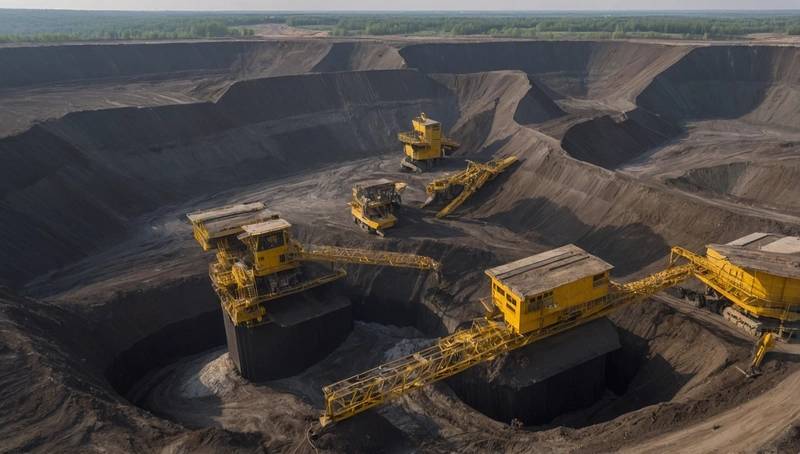
Yulia Shvyrydenko, Ukraine's prime minister, ordered the review of all mining licences for strategic minerals on Thursday. This was part of an effort to aid the war-ravaged Ukrainian economy and to secure new investments under a deal to sell minerals to the United States. Ukraine and the United States signed a deal on minerals in April that was heavily promoted Donald Trump, President of the United States. The deal envisaged that the Ukrainian government would send half the revenue it earns through mineral extraction to a joint U.S. and Ukrainian investment fund.
Svyrydenko announced on Thursday that the government would also run its tenders for extraction of gas at two sites in west Ukraine.
"We will check to see who is working and who has licenses that are not being used." Svyrydenko, a Telegram user, said that these facilities must either produce results or be returned to auctions.
Our natural resources should be used to boost the economy of Ukraine.
The European Union considers 22 minerals to be critical for the European Union's industries, including defence, high-tech appliances, green energy and ferro alloys, precious and nonferrous metals that are used in construction and some rare elements.
The United States' deal, which grants the latter preferential entry to Ukrainian minerals as an exchange for investment was seen as helping to rebuild the country's economy, which had been destroyed by Russia's invasion. It also helped Kyiv with its defence efforts.
Officials from the Ukrainian government have said previously that Ukraine has about 3,000 mining permits, and around 10% may be dormant. (Reporting and editing by Hugh Lawson; Olena Hartmash)
(source: Reuters)