
Latest News
-
The share of Chinese copper in LME stock rose to 44% by August
Data from the London Metal Exchange showed that, in August, 44% of all copper stocks were Chinese origin, up from 42% one month earlier. Overall inventories also increased. Total copper stocks in LME warehouses 0#MCUSTX-LOC> rose to 111.17 metric tons by the end August, up from 101.425 tons in July. Investors rushed to cover their bearish positions, pushing prompt copper prices sharply backwards, which attracted some inflows. The amount of 'Chinese Copper' available has increased from 49,400 to 66,350?tons. In August, 95% of the LME's aluminium was made up by aluminium from Russia, which is unchanged from last month, despite a small decline. The amount of Russian metal available fell by 2,750 tonnes to 230,050. The only other origin available, Indian, remained unchanged at 12,450 tons. Many traders shun Russian aluminum - even though metal produced prior to mid-April, 2024 is still eligible for trading. To comply with Western sanctions, aluminium produced in?Russia before that date will be?banned from the LME warehouse system. At the end of December, the share of?nickel of Chinese origin remained stable at 70%.
-
BHP is facing a class action lawsuit funded by an Australian union after labour disputes escalate
A mining union in Australia is funding a BHP class action that could affect up to 7,000 employees. This is the latest labour dispute involving the world's largest listed miner, which also faces its first major strike for a quarter-century. The Mining and Energy Union, (MEU), has announced a class action to compensate mineworkers who were illegally forced to work during the Christmas and Boxing Day holidays in 2019 at the Daunia Mine in central Queensland. In a press release, the union stated that if the suit is successful it could result in "millions of dollars in compensation". The case will be heard on November 9, 2026. BHP Operations Services had been found to have violated the National Employment Standard in its rostering workers during that period by a federal court. A court in November 2025 ordered the mining giant, to compensate 85 Queensland workers who were employed by its labour-hire division after finding that they had been illegally forced to work Christmas Day and Boxing Day 2019 without having a reasonable right of refusal. MEU General President Grahame Kelly stated that the union could pursue "further collective actions" on behalf of groups of mineworkers whose work was unlawfully forced to be done on public holidays. The miner has also been engaged in "protracted wage negotiations" with unions in Port Hedland where 150 workers walked off the job in what was 'the first major industrial action in over two decades. The talks are still unresolved. Hersh Oberoi is the global research director of Balfour Capital. He said that "the particular case is not what's most important. It's the pattern." A series of labour disputes is increasing pressure on BHP’s employment model, and strengthening unions’ bargaining positions. "In terms of compliance, the solution?is administrative and not expensive." The cumulative impact of labour disputes on BHP and its relationship with unions is the greater challenge. BHP didn't immediately respond to an inquiry for comment.
-
Health ministry: Indonesian wildfires double respiratory infections in a single week
Data from Indonesia's Health Ministry showed that respiratory infections due to hazardous?wildfire air pollution have doubled in a little over a week. The Indonesian archipelago has been hit by fires that have ravaged vast stretches of peatland and forest. This has caused hazardous emissions, especially in the provinces of Sumatra, and Borneo. The wildfire season this year is the worst in 11 years, as "super El Nino" weather conditions cause temperatures to rise and droughts to be punishing. The country is responsible for one-third of global fire emissions. According to statistics presented at a press briefing by Widyawati, spokesperson for the health ministry, 113,336 people were suffering from respiratory diseases related to wildfires as of September 9. This is up from 50.891 in September 1. Widyawati (who goes by one name) said that more than 12 million people were exposed to the haze from fires in seven provinces. She said that nearly a million masks, hundreds of oxygen concentrator units, and thousands medical workers were deployed in the affected areas to help residents deal with pollution. The process of adding medical personnel and supplying various supplies continues. We will continue monitoring which areas need more healthcare workers, and dispatch them to those areas. Singapore and Malaysia also have unhealthy air quality due to?transboundary haze. Berton 'Panjaitan is the spokesperson for Indonesia’s disaster mitigation agency. He said that Japan sent three CH-47 Chinooks to help Indonesia fight fires. They began trial flights on Friday. He said that the helicopters will help with Indonesian military water bombing operations in West Kalimantan, Borneo. These operations are expected to begin either on Friday or on Saturday. Malaysia, which shares land borders with Indonesia on Borneo?has offered to help Indonesia with its aerial firefighting capability, according to a letter sent by the country's Environment Minister to his Indonesian counterpart. Panjaitan stated that Jakarta is conducting inter-agency consultation to discuss Malaysia's offer. According to government statistics, between January and July of this year, around 202,000 hectares or almost 500,000 acres were burned. Environmental group YKAN estimates that 600,000 hectares of land were also damaged by fires in August.
-
Gold drops as dollar yields increase ahead of inflation data
Gold lost ground on Thursday as it erased earlier gains. This was a result of a stronger dollar and higher bond yields. Investors were also awaiting key U.S. data on inflation to get clues about the Federal Reserve’s interest rate path. Gold futures in the U.S. fell 0.7%, to $4,427.80 per ounce, while spot gold dropped 0.4%, to $4385.40 an ounce, by 1125 GMT. I think that part of the decline in metals prices is due to the U.S. Dollar coming back ahead of inflation data. Fawad Rasaqzada is a Forex.com market analyst. He said that the bond yields are expected to rise even further in the U.S. The U.S. Dollar Index rose, making greenback priced bullion costlier for overseas buyers. The markets are waiting for the U.S. producer prices?index due at 1230 GMT. Consumer price inflation will be released on Friday. The latest energy-induced inflation pressure has pushed global bond yields up. Benchmark 10-year Treasury yields have reached their highest level since 2023, as the U.S. Treasury's buyback program of longer-dated securities also disappointed. "Concerns are growing about the bond markets in the U.S. as long-dated yields continue to rise, despite the Treasury Buyback Program .... which is a mere 'drop in the ocean.'" Razaqzada said. Gold is typically under pressure from rising bond yields, as they increase the cost of holding a non-yielding investment. Most?economists surveyed by the Fed expect interest rates to remain unchanged at the September 15-16 meeting and for the remainder of the year. CME FedWatch Tool shows that traders still price in a 62% probability of a rate increase next week. On the geopolitical scene,?U.S. Donald Trump has said that he expects the war against Iran to end following the midterm elections in November. He also?threatened to attack again a site associated with Iran's nuclear program. Brent crude prices hovered around $100 per barrel. Silver spot fell by 2.2%, to $65.75 an ounce. Platinum dropped 3%, to $1.838.21. Palladium was down 2.3%, to $1.322.00.
-
Reports of White House hesitation over tariff plans cause copper to fall
The White House is still deciding on refined copper tariffs, and officials are assessing the concerns that higher prices could increase manufacturing costs. The price of three-month copper at the London Metal Exchange dropped 3.1% by 1039 GMT to $14,312 per metric ton after reaching a session high of $14.875 earlier. COMEX copper futures for October fell 4.2%, to $6.5355 a lb or $14,408 per ton. This reduced the premium over LME prices. Before the mid-term election in November, President Donald Trump's administration is under pressure to show that its policies are reducing costs for American businesses and consumers. Ole Hansen is the head of commodity strategy for Saxo Bank. He said that "that update sent the cat amongst pigeons." The price of copper, which is widely used in construction and power, increased by 16% in the United States this year, as more metal was imported into U.S. stores ahead of possible tariffs on refined imports. This has sparked concerns about availability in regions that traditionally consume copper. After months of inflows, the COMEX copper stocks have reached a new record of 696 259 tons. Hansen said that the price levels at present could be determined by whether inventories become stranded or if they return to global markets if tariffs are not introduced. The premium for the LME Cash Contract over the benchmark?three-month contract was higher after the report was published Thursday For the first time since late July, sank below a discount. Last year, the discount was $13.5 per ton. This indicates that concerns over a "shortage" of supplies in the near future have decreased. Other?LME Metals: Aluminium fell 1.5% to $3,308 per ton. Zinc fell 2.2% to $3.962.50. Lead eased by 0.4% to $1.907. Tin lost 0.2% at $54,845. Nickel was down 0.9% to $16,740.
-
Singapore's oil product inventory reaches two-month highs
Singapore, Asia's main fuel trading hub, has seen its oil product stockpiles rise to a two-month high, according to government data released Thursday. The increase in stocks of light and middle distillates was also noted. Enterprise Singapore reported that the combined onshore oil products inventories stood at 40.47 millions barrels for the week ending September 9. This compares to 39.04million barrels one week earlier. Multiple?trade sources this week said that September exports to Asia are expected to remain robust for diesel and jet-fuel, but may slow down for gasoline because of margin concerns. Diesel was the major concern in some Western regions. STOCKS GO UP IN MIDDLE AND LIGHT DISTILLATES Middle distillates inventories rose to 8 million barrels again, following a drop in net exports of jet fuel and Kerosene. Net exports of jet fuel and kerosene fell by 11% compared to a week earlier, while imports from China continued for the second consecutive week. The net exports of diesel and gasoil rose more than 30 times compared to a week ago, while imports dropped by nearly 80%. Exports mainly go to Malaysia and China. The stocks of light distillates, which includes naphtha, gasoline and other products, reached a new high for a month at 11,87 million barrels. The period saw a total of 185,000 metric tonnes (approximately 1,6 million barrels) in gasoline imports, while the exports were around 390,000 metric tons. Malaysia led the way with a volume of about 100,000 tons. Indonesia was close behind at 71,000 tons. South Korea led the way with nearly 99,000 tonnes of gasoline inflows, followed by China with?about 52,000 tonnes. About 206,000 tons of naphtha were imported (roughly 1.8 millions barrels). The largest contributor was Russia, with nearly 89,000 tonnes. India came in second at 36,000 tons. Singapore exported approximately 34,000 tons (all shipments were to China) of naphtha. RESIDUAL FUELS STOCKS AT A TWO WEEK LOW The residual fuel oil inventories fell to a 2-week low. Imports were more than halved. The data shows that stockpiles are down 0.5% from the previous week, at 20,36 million barrels (3.21 millions tons). Imports of fuel oils dropped by over 50%, to 451,000?tons. India was the largest supplier for the week. Refiners have been exporting supplies via tenders. Brazil and Mexico were also important suppliers as traders shifted arbitrage cargoes. Exports of fuel oil rose 4.5% in the same period, to 155,000 tonnes. Bangladesh and China were major outlets.
-
MORNING BID AMERICAS - Forever war?
The energy and bond markets have been on edge again after U.S. president Donald Trump stated that the Iran War would not end before the midterm elections in November. This came as the Gulf was hit with the most intense attacks in the conflict to date. Markets are awaiting the likely rise in interest rates by the European Central Bank and the first U.S. On Thursday, we'll have an update on inflation as Treasury Secretary Scott Bessent appears to have failed with his bond-buyback operation. On Wednesday, crude oil reached its highest price since late May, above $100 per barrel, and the 10-year Treasury yields were at their highest for three years. They are now rapidly approaching the 5% mark. This came after the largest wave of attacks against oil tankers since the Iran War began six months ago. In the meantime, some investors were disappointed by a $6 billion buyback on Thursday of bonds with longer maturities. They had hoped for more. In a primetime address on Wednesday, President Trump said that the end of the "war" and the relief in fuel prices would come only after the midterms. This comment saw the six-month Brent crude oil futures move further towards $90/bbl. The Wall Street Journal reported that top White House advisors, including Vice-President JD Vance, Secretary of State Marco Rubio and others, privately warned Trump about the possibility of the conflict extending through his remaining presidency. Trump also promised in his speech that every American would receive $5,000 if Republicans won the midterm elections. This would cost the Treasury over $1 trillion. It would likely be forced to borrow this amount. The U.S. producer prices inflation?data will be released on Thursday, after the ECB's policy decision. It is expected to be a quarter point increase to 2.5%. This comes just as European Natural Gas Futures have reached their highest level in three years. Meanwhile, Anthropic employees' headline-grabbing predictions about the end of humanity sparked new fears in the AI industry about software companies being damaged by new models. There were also more reports about rogue AI agents. The markets won't have the ability to price this, but may be forced to take into account the regulation of AI development that these types of apocalyptic predictions call for. Chart of the Day On Thursday, the ECB will likely increase its key policy interest rate to 2.5% by a quarter of a percentage point. This is because energy prices spiked due to Iran. The financial markets expect two more rate increases in the next year. Watch today's events * U.S. PPI for August (8:30 am EDT), weekly claims of unemployment (8:30 am EDT), existing home sales in August (10am EDT). * European Central Bank announcement of interest rates (8:15 am EDT) * U.S. 30 year bond auction (1 pm EDT) Check out my latest column about the signs that the Trump administration may be moving toward a weaker currency - and what obstacles such a plan might face. Listen to the most recent episode of Morning?Bid's daily podcast. Subscribe to the Morning?Bid daily podcast and hear journalists discuss the biggest news in finance and markets. Want to receive the "Morning bid" in your email every morning? Subscribe to the newsletter by clicking here. You can find ROI's website and follow us on LinkedIn or X. The opinions expressed are solely those of the authors. These opinions do not represent the views of News. News is committed to the Trust Principles and a commitment to independence, integrity and neutrality.
-
Health ministry: Indonesian wildfires double respiratory infections in a single week
Data from the Indonesian health ministry on Thursday showed that respiratory infections due to hazardous wildfire smoke pollution have doubled in just over a fortnight. The Indonesian archipelago has seen fires rage across vast tracts of forest and peatland, which have caused hazardous emissions to "surge", notably in the provinces most affected on the islands Sumatra, and Borneo. The wildfire season this year is the worst in 11 years, as "super El Nino" weather conditions cause temperatures to rise and droughts to be punishing. The country's fire emissions now make up a third the total global. According to statistics presented at a press briefing by the spokesperson for the health ministry, Widyawati, the number of people with respiratory diseases caused by wildfires rose to 113 336 on September 9. This is up from 50 891 on September 1. Widyawati (also known as Widya) said that more than 12.5 million people were exposed to the haze from fires in seven provinces. She said that nearly a million masks, hundreds of oxygen concentrators, and thousands medical workers were sent to the affected areas to help residents deal with the pollution. The process of adding medical personnel and supplying various supplies continues. We will continue monitoring which areas need more healthcare workers, and dispatch them to those areas. Singapore and Malaysia also have unhealthy air quality due to transboundary haze. Berton Panjaitan is the spokesperson for Indonesia's disaster management agency. He said that Japan sent three CH-47 Chinook helicopters to help Indonesia fight fires. They began trial flights Thursday. He said that the helicopters will help Indonesian forces in their water bombing operation, which is set to begin either Friday or Saturday on Borneo's West Kalimantan. Malaysia's environment ministry wrote to its Indonesian counterpart that the country, which shares a border with Indonesia in Borneo on land, had also "offered" to help Indonesia with aerial firefighting. Panjaitan stated that Jakarta is conducting inter-agency consultation to discuss Malaysia's proposal. According to government data, between 'January and July of this year', fires destroyed around 202,000 hectares or almost 500,000 acres?of land. According to YKAN, environmental group, another 600,000. hectares of land were destroyed by fire in august.
Sources say Phillips 66 will begin laying off workers at its Los Angeles refinery in December.
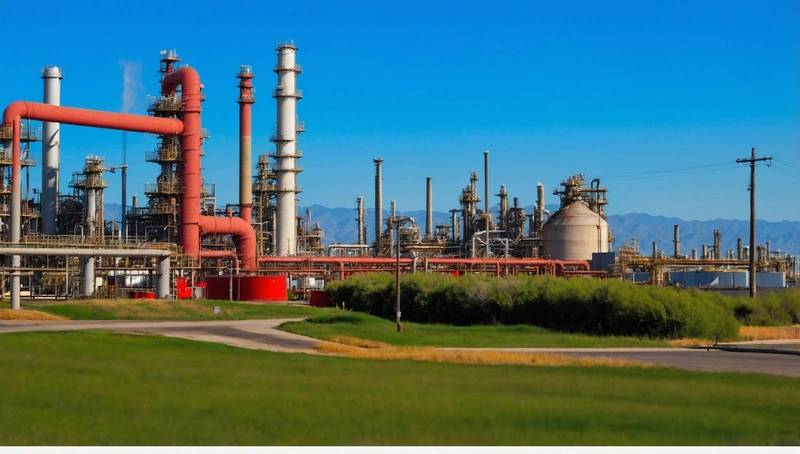
Phillips 66 is expected to lay off most workers at its 139,000-barrel-per-day Los Angeles-area refinery in December, sources familiar with the matter said on Thursday.
The company announced that it would shut down the facility in October and start winding down its operations in October 2025. Two months later, the company will start reducing its workforce.
About 600 employees work at the Los Angeles facility, along with 300 contractors. The United Steelworkers Union represents over half of the hourly employees.
Sources said that a few of the retained employees will be transferred to Phillips 66 Los Angeles Marine Oil Terminal.
Phillips 66, a Phillips 66 spokeswoman said: "Since it was announced that these facilities would be idled, Phillips 66 is committed to helping its employees and contractors make this transition."
The spokesperson refused to comment on the plans following the closure of Los Angeles' refinery.
Valero Energy announced in 2013 that it would close its Benicia refinery (145,000 bpd), one of the two refineries remaining in the state.
Two refineries in the state produce about 20% of the gasoline that is sold.
(source: Reuters)