
Latest News
-
The House is visited by MORNING BID AMERICAS
Treasury yields on 10-year U.S. Treasury notes have risen to their highest level in 19 years. This is just as Treasury Sec. Scott Bessent is preparing to speak to Congress, and the Federal Reserve begins its two-day critical meeting. Government bonds sold across the globe overnight as the prospect of rising interest rates and energy prices remained a primary aggravating factor. Japanese 10-year yields rose back to above 3%. Brent crude prices rose above $107 a barrel again on Tuesday after a brief drop on Monday, following President Trump’s suggestion that Russia and Ukraine could reach an agreement to spare their energy infrastructure during the war. Bessent will appear before the House Financial Services Committee today to discuss a number of thorny topics: his apparent failure to cap Treasury yields, Japan's joint intervention to lift the yen and the war on Iran, as well as the president's promise to provide Americans with $5,000 checks for a $1.3 trillion total cash injection. Bessent's opinion on what the markets expect to be a quarter point Fed rate increase on Wednesday will also make headlines. U.S. Bond markets are now trying to price in up to four rate increases over the next 12 months. The doomsday AI narratives, and calls for a halt in AI development, spilled over into chip stocks, and the SOX semiconductors index fell more than 5% on Monday for the first time since July. This dragged the S&P 500 and Nasdaq down into the red. Trump refused to accept calls for additional restrictions on AI, saying that the existing guardrails were sufficient. A sweep of Chinese economic data was mixed, with retail sales falling short and house prices continuing to decline. The world stock market and Wall Street Futures are both in the red as we approach Tuesday's opening. Chart of the Day This week, the 10-year Treasury yield in the United States, which is the benchmark for long-term borrowing rates by the government and the wider economy, reached its highest level since the eve before the global financial crisis of 2007. The recent efforts of Treasury Secretary Scott Bessent to 'calm the markets via a number of small buybacks' have failed. Bessent will be speaking to the House Financial Services Committee of Congress on Tuesday. Watch today's events The Fed's two day policy meeting starts * U.S. Treasury Sec. Scott Bessent Appearance Before Congress (10 am EDT) * U.S. bond auction for 20 years (1 p.m. ET), New York Fed Manufacturing?survey in September (8:30 am EDT). Check out my most recent column to see why AI could be too big and slow. Listen to the Morning Bid Daily Podcast, in which we discuss all that Scott Bessent has to do as he prepares to head to the Hill later today. Subscribe to the podcast and hear journalists discussing the latest news in finance, markets, and markets. Want to receive Morning 'Bids in your email every morning? Subscribe to the newsletter by clicking here. You can find ROI's website and follow us on LinkedIn or X. The opinions expressed are solely those of the authors. These opinions do not represent the views of News. News is a non-partisan organization that adheres to the Trust Principles and values integrity, independence, freedom from bias, and impartiality.
-
South Korea and Kazakhstan sign MoU to explore mineral trade, explore atomic energy
Seoul reported that South Korea and Kazakhstan signed an 'understanding' on Tuesday regarding cooperation in the peaceful use of nuclear energy. Their leaders also pledged to work together on a range of issues, including trade, energy, critical minerals, and AI. The South Korean Presidential Office said that President Lee Jae Myung of South Korea and President Kassym Jomart Tokayev of Kazakhstan discussed the potential for future cooperation in a period of economic turmoil. According to the president's office, Lee told Tokayev that Kazakhstan has a great deal of potential for future high-tech industry. On Tuesday, 13 documents were signed. These included the MoU on Atomic Energy as well as agreements on crude oil, science and technology. Details were not immediately available. Lee will host Tokayev, as well as the leaders of other Central Asian nations on Wednesday to discuss expanding their cooperation. Seoul pursued its so-called New Northern Policy, launched in 2017, to deepen economic ties with Central Asia as well as other Eurasian countries. The energy-poor nation is seeking to diversify the supply of energy and minerals and increase industrial exports. Han Seong-sook, the South Korean Prime Minister, told business leaders in a forum that it was time to expand trade beyond crude oil and uranium. He also said they should include lithium and other critical minerals. Newsis reported that she invited companies to use?South Korea?s advanced technology to explore and produce?Kazakhstan?s rich mineral resources in order to address the growing uncertainty of global supply chains.
-
China's aluminium production reaches record levels in August, with a capacity cap in sight
Data showed that China's aluminum production reached a record high in August. Strong margins encouraged smelters, despite the?long-standing national capacity cap, to maximize?output. Data from the National Bureau of Statistics revealed that production?rose by 4.7% compared to a year ago, reaching 3.98 million metric tonnes. The output of the world's largest aluminium producer increased to just under 3.9 million tonnes in July, and was near to the previous monthly record of 3.979 millions tons that was recorded in June. China produced 31,12 million tons in the first eight months of this year, an increase of?3.9% over the same period the previous year. The country's 45 million-ton maximum capacity would be exceeded if production?were to increase at that rate. Since 2017, China has tightened its controls on the aluminium smelting capacities. In 2025, China will produce 45.02 millions tons of primary aluminum. This is a 2.4% increase from the previous year. Strong margins have supported higher output despite the increase in prices due to the disruption of supply caused by the Middle East?war. Benchmark three-month aluminum has gained 8% this year and was up by?1.82% during August. In August, the production of ten?nonferrous?metals, such as copper, aluminum, lead, zinc, and nickel, increased 1.6% compared to a year ago. The production of 10 metals from January to August increased by 2.9%, reaching 55.58 millions tons.
-
Syngenta files Hong Kong IPO with the aim of raising at least $5 billion.
Two people who have direct knowledge of this matter say that the Swiss company Syngenta Group, which produces seeds and agrichemicals, has filed confidentially for a Hong Kong IPO, with a goal to raise at least five billion dollars. One of the sources said that the Basel-based firm, controlled by the Chinese state-owned Sinochem hopes to launch its offering as early as this year or, if not, as early as 2027. Sources said that depending on the response of the market, the size of the offering could reach $10 billion. According to LSEG, if the offering size is that large, it will be Hong Kong's largest IPO since 2010. Hong Kong's IPO industry is booming. Initial public offerings and secondary listing have raised $45,8 billion this year compared to $24 billion during the same period in last year. Sources who refused to be identified because the information wasn't public said that the timing, size of the offer and valuation of the company had not been finalised. Syngenta responded to the question by saying "We don't comment on market speculation." Sinochem didn't immediately respond to an inquiry for comment. Bloomberg News reported the filing for the first time on Tuesday. The company was said to be considering raising $5 billion. Sinochem would be able to revive its efforts to bring?Syngenta?public after the company canceled a Shanghai listing planned for 2024. GLOBAL GIANT FARMING Syngenta is a company that sells seeds, crop protection products such as insecticides, fungicides and herbicides. It also provides digital and biological farming products. According to its website, it has over 50,000 employees spread across?90 different countries. Syngenta has reported a decrease in sales and profits for the second quarter following its exit from low-margin business in China. Sales fell 7% in the third quarter to $5.7 billion. Earnings before interest, taxes, depreciation and amortisation, or EBITDA, dropped 2%, to $1 billion. EBITDA increased by 4% when currency was adjusted. Syngenta appointed?Hengde qin, its chief operating officer, as its new CEO in July. He will take over from Jeff Rowe who is due to return home to the United States at the end of August.
-
Half of Russia's top diesel-producing refineries cut back output after drone strikes
According to calculations based upon data provided by fuel market participants, half of Russia's top six diesel-producing refineries had to significantly halt or reduce production in September as a result of damage caused by drone attacks. The U.S. president Donald Trump highlighted the Russian fuel shortage on Sunday when he asked Ukrainian President Volodymyr Zelenskiy to stop attacking Russian diesel infrastructure. He said the attacks are causing a fuel shortage that "hurts the world". Ukraine, which regularly faces Russian attacks on their own energy infrastructure, claims that refineries are legitimate military targets. According to GasBuddy's price tracker, the U.S. average price of diesel, used in trucks, trains and ships, rose above $6 per gallon on Thursday for the first. This is a negative development for Trump as he prepares for November's midterm elections. MOSCOW FORCED to Restrain Exports Diesel is used extensively in agriculture, which has been under pressure before the Iran War, and now faces a fourth year in a row of declining margins due to resurgent dry spells, high input prices, and the fallout from Trump's trade policy. In recent months, Ukrainian drone attacks against Russian refineries have caused a drop in fuel production and forced Moscow into limiting the export of gasoline, jet fuel, and diesel. According to market data, six plants -- Omsk Refinery, Kirishi Taneco Volgograd Refinery, NORSI Perm -- are responsible for approximately half of Russia's production of diesel. Sources claim that Kirishi is now fully closed, and the Volgograd refinery, NORSI, and other plants are only operating at a quarter of their capacity. Diesel production in these plants is at a level that's several times below normal. Taneco's drones attacked the company on Sunday. However, sources say it is not possible to determine what impact this attack will have. IEA: RUSSIAN?REFINERIES HIT ONCE EVERY THREE DAYS According to the Paris based International Energy Agency (IEA), in the first eight month of 2026 a Russian refinery has been successfully attacked?on average, every three days. According to estimates by traders, Russian diesel exports were less than 1 million metric tonnes in June. The combined exports for diesel and gasoil amounted to about 1.8 millions tons. Diesel exports were about 2.5 million metric tons per month a year ago, when refineries operated normally. This includes gasoil of lower quality. According to LSEG, Turkey and Brazil were the biggest buyers of Russian Diesel for many months. They took at least half the available cargoes prior to the restrictions coming into effect in July.
-
Officials say that Indonesia will open its planned commodity exchange on January 4th.
The chief supervisor of the commodity market said that Indonesia will start trading at its new commodity exchange on January 4, 2027. Tin and ferronickel are expected to be included in the opening transactions. According to a presentation made at a parliamentary meeting by Sarjito (as he is known), the chief supervisor, a man who goes by one name, state miners will be among the initial participants in the exchange. The commodity exchange known as ICOMEX is part of the President Subianto’s drive to expand state control over vast?natural resources in Indonesia and their proceeds. In a fiery speech delivered last month, Prabowo stated that Indonesia would prefer to keep its resources rather than sell them at too low a price. Friderica Dewi, Chairperson of the Financial Services Authority(OJK), stated that the exchange will help combat under-invoicing as well as end "transfer-pricing" practices for commodity exports. The OJK is expected to release regulations for the exchange by September '17, and the bourse would be created that same day. The license will be granted on January 1. "Trading is expected to begin in early January of 2027 through the ICOMEX entity," referred to by?Sarjito, referring to the name of planned exchange.
-
Source: RBI issues a caveat after rejecting Tata Sons' bid to avoid listing
Sources familiar with the situation said that the Reserve Bank of India, the country's central bank and regulator of banking, has preemptively approached the courts to seek to be heard on any matter related to the listing of Tata Sons. This move comes after the RBI rejected Tata Sons’ application to deregister from the non-banking finance company (NBFC) category, a decision which pushes the holding firm closer to a listing on the stock exchange. ? The BBC reported on Saturday the RBI's decision to impose a ban in a letter sent to Tata Sons. Local media reported that certain factions within the group had resisted being listed. Source: The RBI filed what is called a "caveat" in legal terms in the Bombay High Court. This will allow it to be heard by the court if someone challenges the central bank's decision or requests a stay. The source explained that this was "a routine measure" to make sure the court heard the appeal or stay request. Tata Sons and RBI did not respond to requests for comments sent by. Tata Sons is the holding company for the Tata Group. It has businesses such as Tata Consultancy Services, Tata Motors and Tata Steel. The shares of the group companies increased on Tuesday. The RBI has jurisdiction over it as it's?currently registered? as a core investing company. According to RBI regulations, all nonbank financiers, including core investment firms?with assets in excess of 1 trillion rupees ($10.45billion) or with access to public funds must list. Tata Sons reported a standalone asset of 1.75 trillion rupees in March 2025. This is the latest available data.
-
Indonesia's Pertamina promises to boost fuel supply in Makassar City to reduce 1-km-long lines
Pertamina, Indonesia's energy company, announced on Tuesday that it had stepped up its efforts to make more fuel available at Makassar in eastern Indonesia. In the past week, a queue of more than one kilometre long formed outside the gas stations. Energy Minister Bahlil lahadalia stated that customers are scrambling to get fuel at subsidised prices in order protect themselves from the oil price increases caused by the Middle East war. The government has promised to maintain subsidised prices until the end of this year. He said that the problem is now that many people are switching to subsidised fuel because of the price increase. "That's?what's happening to a certain extent in Makassar." Bahlil stated that "no matter what the global price of fuel is, we won't increase the subsidised fuel prices." A shortage of supplies has forced the authorities in Makassar (a city with 2.8 million residents) to implement emergency driving restrictions. They have also implemented a policy that allows civil servants to work from home. Pertamina announced in a press release that it had extended the hours of operation at its gas stations, and boosted the?subsidised supply to meet the increasing demand and reduce?queues. We apologize for the inconvenience. Deny Sukendar, a Pertamina official, said that the company has implemented recovery measures. According to a?witness, the lines of cars?queuing up at gas stations in Makassar were still about 100 metres long on Tuesday. On Monday, around 150 students and workers protested against the shortages at Pertamina offices in Makassar.
NEO Energy’s CEO Steps Down
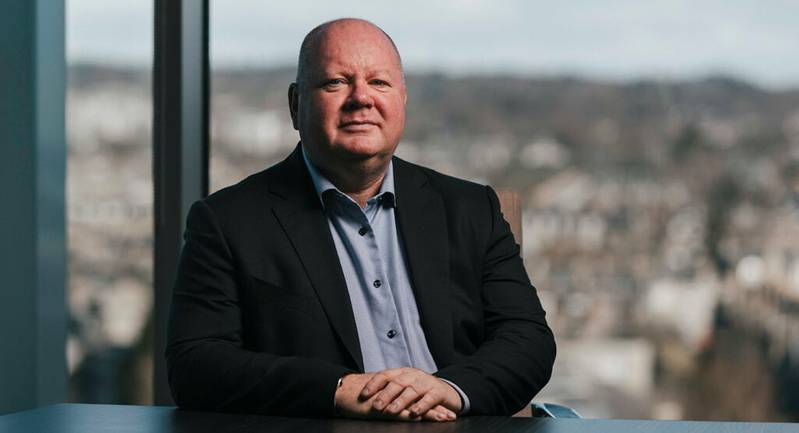
Oil and gas company NEO Energy has informed its chief executive officer (CEO) Paul Harris has stepped down from the position after less than two years at the position.
Paul Harris will support the business until the end of year to assist with an orderly transition of his responsibilities, after which he will retire.
Andy McIntosh has been appointed as CEO who will succeed Harris.
Also, NEO Energy said its chief technical officer Martin Rowe resigned, and after the end of the year, he will depart the business.
Row will be succeeded by Craig McKenzie. Both McIntosh and McKenzie are internal appointments having previously worked as General Counsel & Director of Business Services, and Head of Operations respectively.
In addition, Martin Bachmann (Chairman), David Gair (non-executive Director) and Fiona Hill (non-executive Director) have each stepped down from their board positions.
John Knight has been appointed as Executive Chair of the Board alongside his fellow non-executive Directors Einar Gjelsvik, Tim Dodson and Grethe Moen. Kristin Gjertsen has also joined the NEO Board as a non-executive Director.