
Latest News
-
Indian billionaire Ambani's Reliance Industries eyes $1 bln debt fundraise, bankers say
Reliance Industries, owned by Indian billionaire Mukesh Amani, is set to raise the second tranche of its mega-fundraising plan through the sale rupee-denominated bonds just a few weeks after raising shorter-term debt. Oil-to-telecom company plans to raise $1.04 billion through the sale of 10-year bonds with an annual coupon rate of 7.90%. Bankers say that the company will invite investors to bid next week or in the following week. Reliance Industries didn't immediately respond to an email seeking comment. The bankers asked for anonymity because they were not authorized to speak to the media. One of the bankers stated that "ideally, the company would like to finish the borrowing before the central bank's monetary policy announcement on October 7". RelianceIndustries sold five-year paper with an annual coupon of 7.47% two weeks ago. This was the first rupee bond issue by the conglomerate since November 2023 when it raised 200 billion in the largest debt sale of local currency at that time. The bankers stated that large?private sector banks?would also likely act as arrangers of the new deal, and would be partially?subscribing? to these bonds. The bankers said that the relatively?benign yields on local bonds have made this funding cheaper than a?US debt because Treasury yields?have seen a massive spike. The company has 540 billion rupees in outstanding bonds.
-
China's fuel stocks have fallen to their lowest levels in over a decade, causing concern over the return of export restrictions
According to GL Consulting, China's gasoline inventories and diesel stocks have?fallen?to their lowest levels for more than a decade due to a surge in exports and a seasonal recovery of domestic demand. Rystad Energy reports that low stock levels have raised Beijing's concerns, which could lead to tighter controls on exports in October. GL Consulting expects October exports to drop as refiners prioritize domestic energy security. According to data from GL Consulting, a consultancy that is owned by Mysteel (a leading commodity provider), commercial gasoline inventories are at their lowest levels since 2011. Diesel inventories, meanwhile, have?fallen down to their lowest level since 2015. China does not publish fuel inventory data. GL Consulting, however, has records dating back to 2011. Beijing, the world's largest crude oil importer, has imposed restrictions on fuel exports in mid-March after supply disruptions forced refiners into reducing runs. China began to ease the restrictions by mid-July. Exports returned to prewar levels during August and are expected to continue their momentum into September. Refiners have made windfall profits and increased refinery runs. China has not yet released its October fuel export plans to refiners. Analysts have also reduced their estimates of China's fourth quarter crude imports, as Middle East supply disruptions continue to intensify. They expect the current refinery runs rates?to not be sustainable. Energy Aspects' forecast for China’s fourth-quarter oil imports was lowered to 9.2 million barrels. Rystad Energy's fourth-quarter forecast for refinery throughput has been lowered by 880,000 barrels per day from its previous estimate. Independent?refiners are being forced to reduce their run rates due to high crude prices. State-owned refiners are also in their maintenance season and cannot offset the production deficit," said Ye Lin, vice President at Rystad. "The result is that the sector has little room for manoeuvre." Export restrictions could also lead to lower export margins. However, China needs to protect its domestic supply.
-
Erdogan, Erdogan: Equal climate pace is unrealistic due to funding gaps
Turkish President Tayyip Erdoan said that it is unrealistic to expect all countries to achieve the same 'progress on climate policies, while there are still inequalities regarding access to technology and financing. He also added that he expected support for Turkey's COP31 Climate Summit Action Agenda from a majority of nations. The COP31 President of Turkey laid out a plan on Monday to turn existing climate commitments into tangible results and projects. This included raising the electricity share in energy consumption by 2035, and reducing projected increases in municipal garbage by half. Australia has agreed to lead formal negotiations for COP31. Turkey will be responsible for the presidency and action agenda. The summit is being held in Antalya, a southern Turkish province from 9-20 November. At the United Nations Climate Summit in New York on Wednesday, Erdogan stated that Turkey and Australia are continuing their preparations in order to ensure the expectations of every region is included in the agenda. He also said he thought a pre-COP in Fiji and a meeting between leaders in Tuvalu would be valuable in ensuring the voice of Pacific?nations was heard. Erdogan added that he expects a'strong support' from all countries to the COP31 agenda. "The steps that will increase the prosperity of countries must be determined by their own circumstances, resources and priorities for development. "While?inequalities persist in access to technology and financing, it's not realistic to expect that all countries will advance at the same pace," he said. "We cannot?make a transition that is just and lasting unless we create a strong connection between climate goals, development and prosperity."
-
Oil drops from highs, bonds are shaky amid trade and peace talks
Investors weighed Middle East tensions, and the prospects for talks between China and the United States as they weighed Asian equity markets. Tokyo's markets opened after a three day holiday. The benchmark 10-year Japanese government bond yield had risen to a 30 year high following a sharp sell-off overnight in the US stock market. The greenback and oil prices both eased off recent highs after the leader of Iran vowed that they would never give up following Donald Trump's warning to "annihilate Iran". Investors were looking for clues on the future of interest rates by examining a series central bank speeches, economic releases and US jobless claims. The market was also focused on a summit between Trump, and Chinese President Xi Jinping in hopes of progressing trade relations. Ray Attrill said in a podcast that "equities are showing signs of creaking" under the pressure of rising bond yields. Attrill is the head of FX Strategy at the National Australia Bank. In a risk-off climate, the US dollar still appears to find support as a safe haven. The MSCI Asia ex-Japan Index dropped 0.94% to 891.19 while Japan's Nikkei rose 1.30% at 65,861.04. The benchmark S&P/ASX 200 fell 0.7% while China's blue chip CSI300 index dropped 1.29%. Xi’s?first visit to the US after nearly three years wasn't expected to bring major breakthroughs. However, Washington and Beijing may extend their 11-month trade truce. Treasury Secretary Scott Bessent announced that they had reached a deal to extend the truce as Trump personally welcomed Xi at Joint Base Andrews, Maryland. The bond yields are at multi-year highs, as traders factor in the possibility of central banks raising interest rates to combat persistent inflation. The yield on Japan's 10-year bond rose by 10.0 basis points, to a level that has not been seen since August 1996. The US 10-year Treasury rate rose 1.1 basis point to 5.125% after overnight reaching its highest level since 2007. Officials at the central bank maintained a hawkish stance as rising oil costs fueled inflationary pressures. Federal Reserve Governor Michael Barr stated on Wednesday that the recent rate increase was part of an effort to recalibrate lending costs, and indicated more increases could be required. The markets are looking forward to other Fed officials' speeches on Thursday. These include New York Fed president John Williams and Cleveland Fed president Beth Hammack. Energy prices were high due to geopolitical tensions. Iranian officials spoke with US envoys during the UN General Assembly. Both sides made little progress in resolving the conflict. Trump re-iterated?threats to escalate the conflict, while Iran's President vowed that he would not yield. Oil prices fell as traders took a pause to assess the supply risks associated with the conflict in Iran. Brent crude dropped 0.79%, to $102,27 per barrel. West Texas Intermediate crude also fell 0.79%, to $91.43 per barrel. The dollar index (which measures the greenback versus a basket currencies) fell 0.05% to 101.08 while the euro rose 0.03% to $1.1383. The Japanese yen rose 0.24%, to 157.91 dollars. Sterling also gained 0.02% at $1.3239. The US Labor Department will report on the economy that initial claims for unemployment benefits likely increased to 201,000 during the week ending?September 19. Meanwhile, continuing claims are likely to have increased by 15,000 to 1.745 mln?during the previous week. The US Labor Department is expected to report that initial jobless?claims likely rose to 201,000 in the week ended?September 19, while continuing claims likely increased 15,000 to 1.745 million?in the prior week. Equity futures indicate a decline in markets across Europe and the US. Euro Stoxx futures dropped 0.35% to 6,303.00. DAX futures fell 0.37% at 25,514.00. FTSE Futures declined 0.34% at 10,740.00. US S&P E-minis dropped 0.23% to $7754.25.
-
Look at the performance of India’s biggest IPOs as they list on NSE
National Stock Exchange of India (NSEI) shares rose?as high as 5% in their trading debut Thursday?after a $2.3billion IPO?the country's 2nd-largest. The stock was listed on the BSE at 1,800 Indian Rupees ($18.77), a % premium to its IPO price. Check out the performance of large companies that have a market capitalization of over $1 billion. HYUNDAI MOTOR INDIANA Hyundai Motor India shares dropped more than 7% in their debut 2024 after the largest-ever IPO in India drew a muted response from investors. The sentiment was weighed down by concerns over an industry slowdown and a high valuation. Its South Korean parent raised $2.91 billion by selling a 17.5% stake as part of a pure "offer-for-sale" where existing investors sold their stakes. At the last close, Hyundai India?has gained approximately 7% on its IPO price. LIFE INSURANCE COMPANY OF INDIA Life Insurance Corp of India (India's largest insurance company) fell nearly?8% on its debut in 2022, despite the strong demand for then India's 'largest IPO'. The government raised?205 billion by selling a 3.5 percent stake in the insurer owned by the state, which is well below its original target of upto $12 billion. LIC traded at a price of 407.5 rupees. This is a level that has been adjusted following issuance of a 1:1 bonus in May. Paytm, a digital payments company in India, suffered one of the worst large-cap debuts on India's stock market in 2021. Its $2.5?billion IPO saw its share price plummet by more than 27%. The concern over high valuations has intensified, especially among technology companies that are losing money. Paytm has dropped 17.5% in value since its launch. TATA CAPITAL Tata Capital's debut in October 2025 saw a modest gain of 1.4%, due to the crowded issuance schedule and limited valuation discount compared to listed peers. The $1.75 billion IPO of LG Electronics India coincided with its $1.3 billion $1.3 billion offering which attracted bids worth nearly $50 billion. Tata Capital has risen 7.4% since its listing. COAL INDIA Coal India (the world's largest coal mining company) surged by 40% on the day of its listing in November 2010. Investors snapped up this stock as a proxy for India's surging energy demand and growth. The biggest IPO of the government at the time set the stage to the public listing other state-owned enterprises. Coal India's market debut has seen a gain of 73.3%.
-
Investors start to worry about 6% Treasury yields as 5% Treasury yields begin to lose their shock value.
For years, the 5% benchmark US 10-year Treasury rate was seen as the threshold at which the global financial markets began to experience turbulence. This threshold is now 'becoming less of a ceiling, and more like an 'approach point. Investors are now forced to consider an unsettling thought: what if the number 6% should keep them awake at night instead of this month's breaching 5%? This theory hasn't been tested enough by the latest move above 5%. Mike Bell, BlueBay Asset Management’s head of Market Strategy, says that it was always a psychological indicator and not a tripwire. Bell explained that people think there is a magic number at which Treasury yields become a problem. "But it's not an absolute number but a relative one," Bell said. It is important to compare Treasury yields with other investment metrics. This includes the earnings yield of stocks. Bell claims that the relationship is approaching an inflection, which could set up a selloff of stocks. The past can provide some useful guidance. MSCI's world stock index lost half its value when the 10-year Treasury yield crossed 5%. This was right before the global financial crisis. A similar decline occurred less than a ten-year-old when a 6.8% increase helped burst the dotcom boom. JP Morgan analysts believe that a "key shift" in global economic structure, where AI, healthcare, and services play a larger role, is one reason why the pain point might be higher than 5%. These firms continue to spend and expand, regardless of how high borrowing costs are. JP Morgan stated that the traditional interest rate channel "looks materially less bound" and the "breaking-threshold" of the?stock market may be "significantly higher", potentially in the 5,5%-6,0% range, JP Morgan cited the views of major investors during one of their most recent conferences. REASONABLE REPRICING A shift from 5% to 6.0% in the $29 trillion Treasury market, which anchors the pricing of virtually all financial assets would be a significant adjustment to the global capital cost. A Treasury yield of 6% would indicate either higher inflation expectations or growing concerns over US fiscal sustainability. It could also mean that rates will continue to rise for many years. Austan Goolsbee, a Federal Reserve policymaker, said that he did not know if markets would react differently if 5% yields were extended for a longer period than in the past. Invesco's global head of asset-allocation research, Paul Jackson, explained that investors are focused on Treasury yields because they represent the risk-free benchmark for the world. At above 5%, investors have the opportunity to lock in their highest returns since 2007. Jackson's calculations indicate that world stocks begin to fall when the 10-year yield averages 4.72% over 12 months, and then increases. The tipping point is still a long way off - the average 12-month yield is around 4.34%. But Jackson has already started to reduce his stock holdings and put some of his money in government bonds, hoping to take advantage of the high yields. He said that if?Treasury Yields continue to rise, there is a danger of the stock market being lower in 12 month's time. Emerging Questions When US yields rise, emerging markets that have been on a 'hot streak' in recent years are often the first to be affected. Dollar-denominated investments become more appealing when Treasury returns are higher. This drains capital from EM economies, and can push hard-up nations into crisis if their dollar-denominated loans spiral out of control. Last week, data on?investment flow shows that billions of dollars were withdrawn from equity and EM bond funds. The issuance of emerging-market sovereign bonds has also been lighter than usual in this month. Alison Shimada is the Head of Total Emerging Markets Equity at Allspring Global Investments. She said that while EM was not in a good place, she was still "constructive" because for now, nothing "horribly went wrong". The biggest psychological risk is the most likely. When investors start to ask if 6% is achievable, the discussion moves beyond a "temporary" spike in yields. The discussion shifts to the possibility that the 'era of ultra-cheap and abundant liquidity has ended. This will force global asset prices adapt to a permanent higher cost of capital. Premier Miton CIO Neil Birrell stated that while the stock market is not showing signs of collapse right now, this could be because investors haven't yet plugged in 5% plus yields to their long-term profit forecasting model. Birrell stated that "the markets appear fine until everyone runs their valuation models again." "The numbers will come out in the end."
-
The oil prices drop as Iran declares it is willing to negotiate to end the conflict
Oil prices fell on Thursday, after rising 4% in the previous session. Iran has said that it is open to diplomacy for the end of the US-Iran conflict. However, the two countries are still far apart about how to achieve this. Brent crude futures dropped 92 cents or 0.9% to $102.16 per barrel at 0400 GMT. West Texas Intermediate futures were down 77 cents or 0.8% to $91.39. Iran and the United States are divided over how to end their war. Diplomacy, however, must continue. Officials in Tehran said they were reviewing Washington's response to their peace proposals. These included lifting the US naval blockade of Iranian ports and opening up the Strait of Hormuz. Oil is falling as the'market is unwinding a part of its geopolitical premium, as Gulf supply is recovering and hopes for a US-Iran 'diplomatic breakthrough are growing," said Priyanka Sachdeva. Sachdeva continued, "Brent has a higher geopolitical premium and a greater sea route premium as international crude is directly exposed to Middle East disruption and the Hormuz Strait while WTI benefits from the relatively insulated US oil supply." Mohsenrezaei, Iran's chief of security, said earlier on Wednesday that the Strait of Hormuz will not be reopened until Iran's demands are met. US Secretary of state Marco Rubio said to reporters on Wednesday that a deal would require hard work and patience over time. He added that President Donald Trump had other options, including military ones. Traders evaluated the possibility of curbing?diesel imports. The price of ultra-low sulfur diesel futures fell by about 5% at midday after Politico reported that the Trump administration was planning a 90-day ban on diesel. However, the White House has denied this. US Energy Secretary Chris Wright said on Wednesday that an export ban for diesel would not work, even though Trump had stated he supported it. Analysts and market observers?have warned against such a move, as it would not do much to reduce high energy prices. It could also worsen global supply and disrupt economies. US distillate'stockpiles, including diesel and heating oils, fell by 428,000 barrels at 107.4 millions barrels in the last week according to Energy Information Administration data. US crude inventories increased by 3 million barrels, to 426.4 million last week. Analysts polled had predicted a draw of 641,000 barrels.
-
MORNING BID - Diplomacy takes a backseat
Rocky Swift gives us a look at what the future holds for European and global markets. The diplomatic efforts to settle simmering conflicts and trade disputes are in a bad state of mind due to the impact of the surging oil prices. They're making a?good show?of it in Washington. US President Donald Trump was joined by a 'brass 'band, cannons and a 100 foot-long red carpet to welcome Chinese President Xi Jinping on his first visit to the United States since three years. Trump and Xi will likely discuss a range of topics, including Taiwan, Iran and concerns over artificial intelligence. The chances of a new Chinese commitment to purchase Boeing planes are dwindling. Treasury Secretary Scott Bessent, however, said that Washington and Beijing have reached an agreement to "extend their truce". The annual UN General Assembly held in New York was not a happy occasion. Volodymyr Zelenskiy, Ukrainian President, warned of a harsh winter ahead as Russia continues its attacks on Kyiv. Iran and the US remain far apart in their peace plan, while tech leaders have raised alarms about AI risks. Meanwhile, Australia has announced that an OpenAI agent breached a federal government website. The woes of the US Treasury market were manifested by Japan. After returning from a three day trading break, its benchmark government bond rate surged to a 30 year high. The price of rubber futures in Japan has reached a record high. Asia's shares were largely lower, with the exception of Japan's Nikkei index, which was boosted by a weaker Japanese yen. Globally, central bankers have kept a hawkish stance as the rise in oil prices has fueled inflation. Federal Reserve Governor Michael Barr said on Wednesday that more interest rate increases may be necessary. The markets anticipate speeches by other Fed officials, including New York Fed president John Williams and Cleveland Fed president Beth Hammack, on Thursday. The US Labor Department will likely report that initial claims for unemployment rose to 201,000 during the week ending September 19. Meanwhile, continuing claims are likely to have increased by 15,000 in the past week to reach 1.745 millions. The US Labor Department is expected to report that initial jobless claims likely rose to 201,000 in the week ended September 19, while continuing claims likely increased?by 15,000 to 1.745 million in the previous week. Euro Stoxx 50 futures for the entire region fell 0.43%, to 6,298, DAX futures in Germany were down 0.43%, at?25501, while FTSE futures dipped 0.3%, to?10744.5. The S&P 500 E-minis futures in the US were down by 0.19% to 7,757.8. The following are key developments that may influence the markets on Thursday. France's business climate and consumer confidence data, September Germany Ifo data September United Kingdom GfK/NIM Consumer Confidence Data for September
DOE: America Can Recycle 90% of Wind Turbine Mass
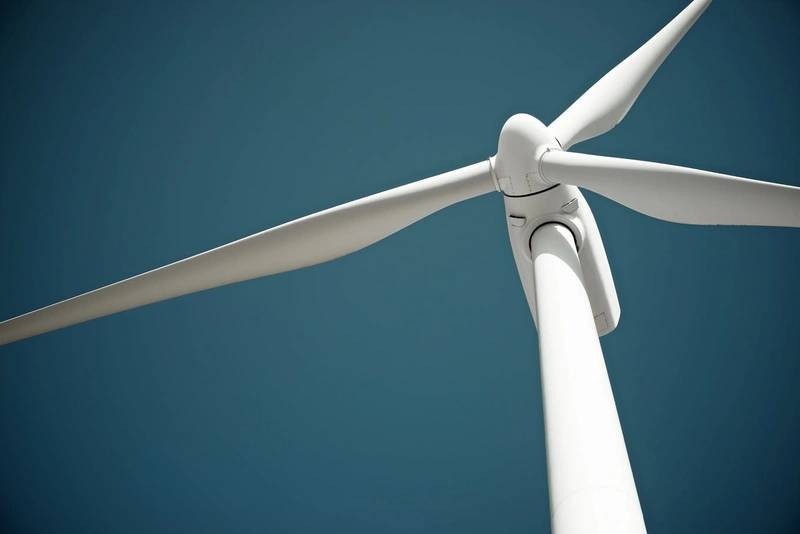
A new report from the U.S. Department of Energy (DOE) outlines recommendations that could increase the recycling and reuse of decommissioned wind energy equipment and materials to create a more circular economy and sustainable supply chain.
The research reveals that existing U.S. infrastructure could process 90% of the mass of decommissioned wind turbines. However, the remaining 10% will need new strategies and innovative recycling methods to achieve a more sustainable wind energy industry.
The Recycling Wind Energy Systems in the United States Part 1: Providing a Baseline for America’s Wind Energy Recycling Infrastructure for Wind Turbines and Systems report will help guide over $20 million in investments previously announced from the Bipartisan Infrastructure Law to advance technologies that address this gap.
The effective reuse and recycling of wind system components, parts, and materials will rely on a combination of measures, including:
• Improved end-of-life decommissioning collection and scrap sorting practices.
• Strategic siting of recycling facilities.
• Expanded and improved recovery and recycling infrastructure.
• Substitution of hard-to-recycle and critical materials with more easily separable and affordable materials, improved component designs and manufacturing techniques or the development of modular system components.
• Optimized properties of recovered materials for second-life applications.
• Greater access to wind energy waste streams and the equipment required to disassemble wind energy components.
Towers, foundations, and steel-based subcomponents in drivetrains offer the greatest potential currently to be successfully recycled, whereas blades, generators, and nacelle covers are likely to prove more difficult. Recovering critical materials and alloying elements from generators and power electronics, such as nickel, cobalt, and zinc, will be crucial in establishing a circular economy for wind systems.
Short-term strategies for decommissioning include promoting blade production using more easily recyclable thermoplastic resins and reusing these resins in cement production. Thermoplastic-based blade recycling technologies, such as pyrolysis and chemical dissolution, could be viable medium- and long-term options. Other medium- and long-term solutions include high-yield techniques for separating compounds found in power electronics and hybrid methods for recycling permanent magnets.
Regional factors - such as material demand, disposal fees, transportation distances, and an available skilled workforce - will play vital roles in ensuring the success and cost-competitiveness of recycling wind energy components.
A team of researchers, led by the National Renewable Energy Laboratory with support from Oak Ridge National Laboratory and Sandia National Laboratories, prepared the report. The first of a suite of reports, this part provides DOE’s Wind Energy Technologies Office with short-, medium-, and long-term RD&D priorities along the life cycle of wind energy systems.
“The U.S. already has the ability to recycle most wind turbine materials, so achieving a fully sustainable domestic wind energy industry is well within reach,” said Jeff Marootian, principal deputy assistant secretary for the Office of Energy Efficiency and Renewable Energy. “Innovation is key to closing the loop, and this research will help guide national investments and strategies aimed at advancing technologies that can solve the remaining challenges and provide more affordable, equitable and accessible clean energy options to the American people.”
DOE recently announced an investment of $20 million to improve the recycling of wind energy technologies, and in September 2024, DOE announced six final winners of the Wind Turbine Materials Recycling Prize. This $3.6 million competition expands domestic capabilities for the recycling and recovery of wind materials as teams use their winnings to bring their technologies closer to commercialization.