
Latest News
-
Tata Group boardroom conflict rocks India's largest conglomerate
India's Tata Group - which owns Jaguar Land Rover, Air India and other companies - is experiencing its worst crisis for years. The board of its holding company is at odds with its charity arm, and questions are being raised about the future prospects of the 158 year-old conglomerate. Here's an explanation of the complex dispute that has engulfed the Salt-to-aviation Group, with annual revenues exceeding $180 billion. What is the tussle about? Tata Sons has been at odds with its controlling charity, Tata Trusts. Issues include a possible listing of Tata Sons as well as a mounting loss for Air India and the planned exit of a minor shareholder. Tata Sons' board, which is the holding company of the group, reappointed Natarajan Chandrasekaran to its chairmanship for a further five years, Thursday, in spite of opposition from Tata Trusts. Tata Trusts protested publicly against Chandrasekaran’s reappointment. They called it a breach of internal rules and opposed any listing of Tata Sons on the stock exchange, warning that it would “destroy” the character of the group, which is majority owned by charities. Who Runs the Powerful TATA Trusts and What's Their History? Tata Trusts is the owner of 66% of Tata Sons and is headed by Noel Tata. Noel Tata was a founding member of this conglomerate. Dividends from operating companies are paid to public charities through Trusts. The Tatas, Parsis descendants of Zoroastrians that fled Persia are believed to be have settled in Western India around the eighth century. Chandrasekaran, who is not a Tata, joined the Tata group in 1987. Why can't trusts assert their demands? Tata Trusts are facing their own problems that are affecting the control they have over the conglomerate. The Trusts is an umbrella for affiliated charities. Sir Ratan Tata Trust alone owns 23,6% of Tata Sons. The charity regulator barred the trust from convening trustees over a dispute about how they were selected, leaving them unable to make decisions. The charity arm would appear to be able to override any decision made by?Tata Sons, given its 66% stake. The regulatory bar prevents it from holding a meeting and therefore preventing the charity arm from pushing its agenda. WHAT IS THE SIZE OF THE TATA GROUP? WHO ARE IT'S CLIENTS? Tata Group, founded in 1868, operates in over 100 countries on six continents. Tata Sons is the parent company of more than 30 Tata firms, including Tata Motors, Tata Consultancy Services and Tata Steel, one of the oldest steelmakers in the world. Apple, Tesla and Starbucks are among its clients. Tata companies generated combined revenues of $185 billion during the last financial period. Tata's site states that its 26 listed companies have a combined capitalisation of $277 Billion as of March 31 2026. Each business is run by an independent board of directors and management. What is the Charity Arm's view and disconnection from the TATA SONS Board? Tata Trusts argues that any decision to list Tata Sons and any chairman's nomination must be voted on by both Trusts nominees - Noel Tata, and Venu Srinivasan - the other key actor in the "saga". Noel Tata was against the Chairman's reappointment but Srinivasan wasn't. This shows divisions among Trusts nominees. Noel Tata argues that the reappointment was illegal because the two trustee votes diverged. Tata Sons? view is that there was nothing wrong because the reappointment had been done by a majority vote. Why is a public listing such a big sticking point? The dispute came days after Reserve Bank of India denied Tata Sons request for exemption from rules that would have required it to list. Noel Tata, however, is against a listing on the stock exchange. Tata Trusts issued a statement on Thursday night saying that the holding company should explore other options. They argued the Tata operating model was unique, as the majority shareholder of the Tata group is a charitable organization. A "listing" would destroy the character of the Tata operation and go against the core principle. Shapoorji Pallonji Group - the second largest shareholder in Tata Sons - has backed the potential listing of Tata Sons. The group is led by Shapoor Mistry whose sister married Noel Tata. What happens now? Legal experts believe that Tata Trusts could approach a court in order to overturn the appointment of the Tata Sons Chairman and the decision of the board to consider an IPO, despite the objection of the majority shareholder. Tata Trusts can also use the annual general meeting in December of Tata Sons to block Chandrasekaran’s reappointment. But they must first resolve their internal disputes.
-
Data shows that fuel prices in Ukraine rose by as much as 10% in September.
Fuel news agency Enkorr reported that retail prices of motor fuel have risen in Ukraine by 8-10% since the beginning of the month. This is in line with the rises in European prices. Diesel has also climbed close to the psychological threshold price of 100 hryvnias per litre ($2.24). The Russian missile attack on Ukraine has destroyed the country's entire oil refining capacity. Fuel prices have been affected by the U.S. and Israeli war against?Iran. Enkorr data showed that average petrol prices rose 10% in September to 88.3 Hryvnias a litre on September 17 while diesel prices? climbed 8% to 97.2 Hryvnias a litre. In a recent report, Enkorr stated that wholesale diesel fuel offers above 100 hryvnias a litre were already available in certain Ukrainian regions. "The government asked market makers to delay price adjustments until external markets reversed. This hope, however, has yet to materialise: European quotations are a little lower but still too high for domestic prices," Enkorr said. Diesel fuel is primarily used by agricultural machinery, which runs on diesel. Russia has intensified its?attacks against Ukrainian petrol stations in both the capital Kyiv and the frontline eastern regions where it aims to disrupt military logistics. Ukraine also targeted Russian refineries causing major disruptions to Russian fuel supply.
-
Shooting at a southern Philippines school leaves four dead and one injured
The provincial governor reported that at least one person was killed, and four more were injured in a shooting on Friday in the southern Philippines. This incident comes after two school shootings in June that occurred in the southern part of the country. School shootings in the Philippines were rare until recently. The Department of Education expressed its deep concern over the shooting reported in Banga Town, South Cotabato. Reynaldo Tamayo, the provincial governor,?told that at least one person had died and four others were injured but did not provide any details about the shooter or victims. Police had confirmed earlier that a shooting took place. Last month, a student live-streamed his killing of another student before committing suicide in Zamboanga. At least three students were killed in June and 20 more injured when two students opened fire on campus at a Tacloban public high school. Although illegal firearms are still in circulation, the?Philippines' gun ownership regulations are relatively strict, and include background checks, psychological evaluation requirements, and other measures. The incident also follows another high-profile one in Thailand, in which a student shot at a school on the outskirts Bangkok.
-
Tata Sons' rift with India's Tata Group has seen the market value of Tata Group companies drop by $3.2 billion.
Investors have reacted negatively to the uncertainty surrounding the listing of Tata Sons and its leadership following a public disagreement. The sale came just a day after the board of Tata Sons moved to comply with Reserve Bank of India regulations that could force the holding company, Tata Sons, to list. They also extended Chairman N. Chandrasekaran’s term by 5 years. The move follows a growing disagreement between Tata Sons, the Indian conglomerate's largest shareholder, and Tata Trusts over "aspects of governance" and "succession planning". Calculations based on LSEG show that by 10:45 a.m. Friday, the market value of listed Tata Group Companies had fallen to $268.5 billion from Thursday's close. Tata Chemicals fell 8.37% and Tata Investment Corporation dropped 3.67%. Tata Motors'?Passenger vehicles dropped by 2.77%, while utility?Tata Power fell by 0.56%. Tata Motors shares fell by 0.79%, Tata Elxsi fell by 0.82%. Tata Capital shares rose by 0.91% while Tata Steel's stock was up 0.15 %. The declines on Friday reversed some gains made by group stocks following the news of Chandrasekaran’s reappointment. Tata Trusts (which owns 66% in?Tata Sons) opposed the listing as well as the reappointment of the CEO after market hours on Thursday. This revealed a growing rift between the group's 158-year old leadership and its future structure. The trusts called Chandrasekaran’s reappointment “illegal” under Tata Sons’ articles of incorporation and opposed listing plans. Tata Trusts said that Shapoorji Pallonji Group - Tata Sons second largest shareholder - had proposed to monetise part of its 18.4% share through a two tranche buyout, which would have yielded at least $2.61bn over 18 months. Tata Trusts Chairman Noel Tata stated that the buyout can be funded by Tata Sons internal cash flow, through sales of listed stocks, bringing investors into newer businesses, or by listing some of their companies. The Shapoorji Pallonji Group on Friday expressed its support for the potential listing of Tata Sons. This could change the ownership structure of the group.
-
Stocks rise and yen falls as BOJ split vote hike tempers hawkish bets
Asian stocks rose Friday, helped by lower oil prices, while investors struggled to deal with the global central banks' efforts to reign in inflation. Japan also added another rate hike, but with a dovish spin that pushed down the yen. This week, monetary policy will be the focus as the??six-month-old war in the Middle East continues to show no signs of ending. Oil prices are still above $100 per barrel while inflation worries spread across the world. The Japanese currency fell by 0.7%, to 157.1 dollars, after the Bank of Japan increased rates to a high of 1.25 percent, as was expected. However, the move enraged yen-bears, with two members of the board opposing the increase. Fred Neumann is the chief Asia economist for HSBC. He said that the tone of the statement and the two dissenters to the decision raise rates leave lingering doubts about the central bank's willingness to tighten monetary policy. Investors will be looking for clues to see if officials are willing to increase interest rates in December. The Nikkei soared nearly 2% as the yen dropped. Japanese 2-year government bonds yields, which are the most sensitive to expectations of monetary policy, fell by 4 basis points, to 1.82%. European stock futures fell 0.35%, signaling a lower opening. Check out Yen's Reality The yen has rallied this month as investors in Japan have begun to repatriate their money. However, some of these gains were lost when the US central bank turned hawkish. If the markets do not think he is hawkish, the yen could fall back to 160 levels. Prashant Nnewnaha, senior rate strategist at TD Securities said that the BOJ reiterated their concerns about underlying inflation deviating upwards from its 2% goal, but "we do not see a smoking-gun supporting a double hike in October". He said, "We will continue to call for rate increases roughly every three months with the next 25bps increase in December." The BOJ's decision concludes a series of meetings at which central bankers have increased their hawkish rhetoric. On Thursday, the Bank of England warned that it might 'have to raise rates if the Middle East conflict drags on.' Meanwhile, the Fed raised interest rates for the first three-year period on Wednesday and indicated more would be done in the months ahead. Last week, the European Central Bank also warned about the need to tighten further as it raised rates. Australia's top banker, who is a hawkish voice himself, said that some of the inflation risks on the upside flagged by policymakers were manifesting themselves. The governor of the Reserve Bank of Australia Michele 'Bullock said that a key issue facing policymakers this month at their policy meeting will be whether or not three rate increases this year will be enough to get inflation back to its 2%-3% target. RETRADING OIL PRICES LIFTS SENTIMENT Brent crude futures fell as much as 1.5 percent to $103.29 per barrel, despite concerns over Saudi Arabia's strikes against Yemen's Houthis. A report citing three Iranians familiar with the issue, said that China had asked Tehran to help rein-in?the Houthis following their military blitz in the past week. After another massive sell-off last week, the bond prices have also stabilized. The 10-year US Treasury has now risen above 5% and is at its highest level since 2007. The last time it was at 4.936%. The broadest MSCI index of Asia-Pacific stocks outside Japan rose by about 1%. The KOSPI, South Korea's tech-heavy index, grew by over 2%. The euro was unchanged at $1.148 but is on track for a weekly 1% decline, which will be its largest drop since June.
-
Barclays supports the November BoE increase, but warns that Middle East conflict may spur more
Barclays anticipates that the Bank of England will increase rates by 25 basis points in November, after keeping them steady. They cite a "dramatically altered" medium-term outlook for energy and warn of a possible further tightening if the Middle East conflict continues. Barclays joins J.P. Morgan, which has also warned about the possibility of further rate hikes due to the Middle East Crisis. J.P. Morgan had previously predicted that the BoE would raise rates in November 2026, and then cut rates twice in 2027. BoE?kept rates at 3.75% as expected on Thursday, but also forecasted?that inflation would top 4% by early next year. The minutes of the meeting also had a more hawkish tone, signaling that the central bank may join other countries in Europe and the US to raise borrowing costs. Saudi Arabia and Yemen's Iran backed Houthis exchanged new strikes across their borders on Thursday, extending the Middle East War?front. Meanwhile, the US has not held peace talks with Iran since an interim deal reached in June failed within weeks. In a note published on Thursday by Barclays strategists, led by Jack Meaning, they said that if the conflict in the Middle East continued, there was potential for a further quarter-point rise in February 2027. According to LSEG data, the markets are pricing in a 63% probability of a BoE increase in November. Another rise is expected in December. Bank of Japan raised interest rates on Friday to a 31 year high. The Bank of Japan has also signaled its willingness to continue pushing up borrowing costs as the Middle East conflict continues to spread and add to global inflation pressures. Goldman Sachs, which also anticipates an increase in November, has noted that weaker economic data or a drop in energy prices may still keep policymakers from raising rates. Morgan Stanley argued that rates are 'likely to stay unchanged for a prolonged period', but that if commodity prices do not ease, they could lead to rate increases in November and February.
-
Morning Bid EUROPE-BOJ struggles to keep up with hiking partners
Tom Westbrook gives us a look at what the future holds for European and global markets. As expected, the Bank of Japan increased interest rates. However, it lowered the yen's value by sounding less hawkish than other central banks. The 'hike', which comes just three months after the last rate increase, is a significant break from the pattern of twice-yearly increases. Even Friday's decision was dovish, with two dissenting voices. By the middle of next summer, it is expected that US interest rates will increase by three. Two more are expected for Japan. The?newsconference of BOJ Governor Kazuo Ueda will be closely monitored to see if he can meet these expectations. Australia is expected to see two more increases, even though its rates already rank highest among the G10. On Friday, Reserve Bank of Australia Governor Michele Bullock warned that some upside risks to inflation were manifesting. Saudi Arabia and Yemen, whose Houthis are backed by Iran, exchanged new strikes on their border Thursday. Yemenis fled to the Red Sea in boats to escape the fighting as the Middle East war spread and created new threats to global oil supplies. The hope that traders would find new ways to sell crude kept the price of crude from rising further. They are now hovering at just over $100 per barrel, and have risen nearly 15% this month. China has privately asked Tehran to help reinin Yemen's Houthis following an appeal by Saudi Arabia to Beijing?after the Iran-backed group’s military blitz last week?, according to three Iranian sources who are familiar with the issue. Stock markets in Asia were relatively stable thanks to the positive lead provided by Wall Street. The markets appeared relieved at the fact that the Fed was taking serious steps to dampen inflation. The following are key developments that may influence the markets on Friday. BOJ Ueda News Conference - UK retail sales, US industrial production Bowman and Schmid, Fed's Bowman & Schmid speak
-
Stocks increase as oil prices drop, and yen falls after BOJ increases as expected
The dollar held steady on Friday, as investors reacted to global policymakers stepping up their efforts to curb inflation. The Bank of Japan also joined the fray by delivering an expected rate increase that left the 'yen soft. This week, the focus is on monetary policy responses as the six-month long war in the Middle East continues to show no signs of ending. Oil prices remain above $100 per barrel while inflation worries are stoked around the world. In response to the BOJ's decision to raise interest rates to an all-time high of 1.25 percent to avoid the risk of inflation exceeding the BOJ's 2% target, the yen fell 0.5% at 156.75 to the dollar. The yen has gained nearly 2% in the past month. By a vote of?7-2, the board decided to increase its policy rate. Toichiro Sato and Ayano Asada, board members, dissented. The tone of the statement and the two dissenters?for raising rates leave lingering doubts about Japan's central banks willingness to tighten monetary policy. Fred Neumann is chief Asia economist for HSBC. Investors will be looking for signs that officials are willing to increase interest rates in December. The yen rose this month as investors in Japan began to repatriate their money. However, this week the yen lost some of its gains after the US central bank took a more hawkish stance. "Governor Ueda?will need to convince the markets that BOJ is inclined towards a faster rate hike," said Sarah Hammoud. Currency strategist at Commonwealth Bank of Australia. "We expect BOJ to raise rates again in December." "We consider that the risk is Ueda failing to meet the market's expectations." Ueda will hold a press conference to explain his decision at 3:30 pm (0630 GMT). Bank of England warned Thursday that it might have to raise rates if the Middle East conflict continues. The Federal Reserve, meanwhile, raised rates for the first time in three-years on Wednesday and indicated more would be coming in the months ahead. Last week, the European Central Bank also warned of the need to tighten further as they raised rates. Australia's top banker, who is a hawkish voice himself, said that some of the inflation risks on the upside flagged by policymakers were beginning to materialize. Michele Bullock is the governor of the Reserve Bank?of Australia. She said that a major question facing policymakers this month at their policy meeting would be whether or not three rate increases this year will be enough to get inflation back to its 2%-3% goal. RETRADING OIL PRICES LIFTS SENTIMENT Brent crude futures fell as much as 1.5% to $103.29 per barrel as hopes of alternative?ways? for oil from the Middle East reached markets, even though concerns lingered about Saudi Arabia's strikes against Yemen's Houthis. This, along with the overnight rally on Wall Street led by battered tech stocks, helped boost risk appetite. Bond prices also stabilized following another brutal sell-off this week that took the 10-year US Treasury above 5% and to its highest level since 2007. The 10-year US Treasury reached its highest?since 2007 after another brutal selloff this week. The broadest MSCI index of Asia-Pacific stocks outside Japan grew by about 1% in Asia. Japan's Nikkei rose by 0.8%, while South Korea's KOSPI, which is dominated by technology, jumped over 2%. The euro held steady at $1.148 but was on track for a weekly 1% decline, the biggest since June. Spot gold increased 0.5% to $4.361 per ounce.
IDOM, RENK Group to Lead Construction of ORE Catapult's New OW Test Facilities
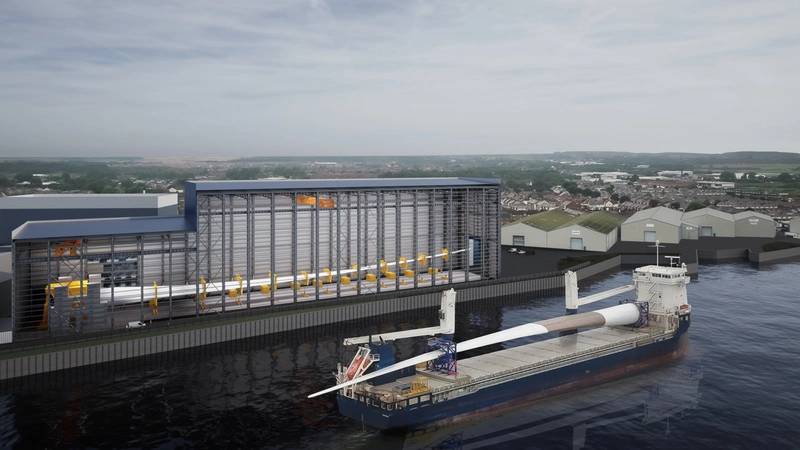
The Offshore Renewable Energy (ORE) Catapult has selected IDOM and RENK Group as preferred contractors to support the development of its new blade testing and upgraded drive train testing facilities.
The news follows the $114 million investment ORE Catapult secured from UKRI in May 2024 to expand and upgrade its testing facilities and enable the evolution of the next generation of wind turbines in the UK.
IDOM, a multinational provider of professional services in engineering and architecture, will take the lead on the construction of a brand new 150-meter blade test facility that will offer certification testing having been designed to exceed requirements of the next edition of blade test standard IEC61400-23.
RENK Group, a German manufacturer of high-efficiency propulsion and drive train technology systems, will lead on the installation of a new test rig at the Catapult’s drive train facility in Blyth, that will see capacity increased from 15 MW to an initial 23 MW.
Both blade and drive train capabilities will have the capacity for further expansion, to 180 meters and 28 MW respectively, to meet future industry demand.
“The upgrade to our blade and drive train test and validation capabilities is a vital part of our future roadmap, a critical contribution to UK's Net Zero and Energy Security Strategy and is much needed by the sector to facilitate a rigorous approach to wind turbine technology development.
“Following a robust procurement process, we are delighted to be working with IDOM and RENK during the pre-construction phase of this project as we work through the fine details of how to deliver two such critical projects side by side,” said Tony Quinn, Director of Technology Development at ORE Catapult.
These late-stage research and development facilities, combined with ORE Catapult’s extensive expertise in test and demonstration, will ensure that turbine manufacturers can accelerate their technology development in the UK with reduced risk and enhanced reliability for a new wave of larger, more efficient machines.