
Latest News
-
New Hope coal miner in Australia pays out highest dividends since 2022
New Hope Corp, a thermal coal -miner in Australia, declared its 'largest ever final dividend' on Tuesday. This was despite the fact that their annual profit had more than halved and they missed expectations. The shares rose to their highest level in over 3-1/2 years. Rob Bishop, CEO of. "We had a good year and we were able to pay out a large dividend," said he. New Hope announced a final dividend per share of 30 Australian cents for fiscal 2026. This is the highest since 2021 when it was 31 cents and surpasses last year's 15 Australian cents. The company's shares rose by as much as 4.1% in the early trading, reaching their highest level since January 2023. As of 0056 GMT, the broader market was down 0.5%. Sales and production of saleable coal increased by 7.6% and 11.8% respectively. This was due to the ramp-up at its New Acland Mine in Queensland, and the strong performance in the second half of the year at the Bengalla Mine in New South Wales. The annual net profit after taxes fell by 63.4% compared to the previous year, falling to A$161 million ($114.94 millions), the lowest level since fiscal 2021 when A$79million was recorded. Visible Alpha's estimate of A$182.2 millions was also not met. New Hope said that its earnings were negatively affected by a decline of 8.8% in the average realized sales price to A$143.2 per tonne. This was due to unfavourable exchange rate fluctuations, as well as an increase in the percentage of sales with high-ash across the group. The company's Bengalla Growth Project and ramp-up at the New Acland Mine?also contributed to the decline in profits. The company stated that it expects thermal coal prices will be well supported in the medium to long term, due to a shortage of supply caused by ageing assets and a lack of investment in new projects.
-
Asian shares fall as oil prices and yields increase ahead of Fed and BOJ meetings
Asian shares struggled on Tuesday, as investors considered Middle East tensions. Industry figures also called for a halt in AI development. Meanwhile, higher oil prices and bond yields heightened caution ahead of 'key' central bank meetings taking place in the U.S. Yemen's Houthis, who are aligned with Iran, launched a new offensive on Saudi Arabia Monday. Riyadh had blamed Iran-backed fighters based in Iraq for an assault on the east-west oil pipeline of the kingdom that could disrupt up to 4% global supply. Gulf Arab states have also delayed planned talks with Iran. Brent crude was up by 1.21% at $106.96 a barrel, while U.S. Crude rose 1.27% to $102,68 per barrel. In a recent note, Yokoo Akihiko, an analyst at Mitsubishi UFJ Bank said that the markets are likely to continue to focus on the possibility that higher crude oil costs could contribute to 'inflationary forces, and in turn, drive interest rates higher. Leading AI figures have called for a'slow down in development of AI technology. This has continued to resonate through the markets, even as U.S. president Donald Trump has played down concerns about misuse. He said that existing U.S. protections are adequate and China would benefit from any doubts regarding AI development. MSCI's broadest Asia-Pacific share index outside Japan fell 0.12%. South Korea's 0.25% drop led the way. Japan's Nikkei index edged up 0.19% after reversing its early losses. Shares of chip-related companies were mixed. South Korea's Samsung Electronics lost 0.2%, while Japan's Kioxia rose 3.3%. Federal Open Market Committee will begin its two-day session later that day. The markets have priced in a 90% probability of a rate increase, which would be the first since mid-2023. Morgan Stanley analysts said in an?address that "while inflation continues to decelerate" recent upside surprises have made the pace of disinflation slower and less convincing. They expect a 25 basis point hike on Wednesday and December. "We can see both arguments for a hike or a hold. However, signs of second-round impacts from energy prices and strong demand linked to AI-related investments, as well as a neutral rate which is temporarily higher and concerns over credibility, mean that the balance of risk now argues in favor of a slightly more restrictive policy." Overnight, the benchmark yield on 10-year U.S. Treasury bonds reached 5% for first time in 2023. Germany's 10-year yield rose above 3.51% to its highest level since 2009, and U.S. Treasury bond yields also touched 5% overnight. Tuesday, Japan’s benchmark 10-year government bond rate jumped back to 3%. Bank of Japan will likely raise its interest rate to 1.25% by 25 basis points at the conclusion of its two-day session on Friday, and signify that more tightening is to come. The Bank of Japan is looking to bolster the yen following intervention that helped move the currency away from a low for 40 years. The dollar index, which measures greenbacks against a basket including the yen, and euro, increased 0.05%, to 99.53. Meanwhile, the euro fell 0.03%, to $1.1543. The dollar rose 0.17% against the Japanese yen to 154.61. Spot gold fell 0.15%, to $4,291.59 per ounce. Spot silver dropped 0.31%, to $63.03 per ounce.
-
SB Energy will sell shares worth up to $500,000,000 to Japanese investors as part US IPO
A filing on Tuesday showed that the SoftBank Group-backed Data 'centre developer SB Energy will sell up to $500 million worth of shares to Japanese investors as part a a U.S. public listing. The filing stated that the firm would issue new shares to the Japanese investors and the funds raised would be used for "general operating costs" for the development of data centres, "power generation", and other infrastructure projects. The filing did not disclose the size of the U.S. Initial Public Offering. SoftBank could be looking for a $50 billion valuation for SB Energy. SB Energy's investment prospectus from September reported that Nvidia had committed to investing $1.5 billion at the IPO price in a private placing, while OpenAI was issued warrants valued at approximately $5.5 billion. Investor interest in artificial intelligence led to a flurry of 'public listing' in related firms this year. SpaceX listed in June, and Anthropic is preparing to list in the second half of.this year. Japanese investors?secured a total of $2.2 billion in SpaceX shares at its IPO.
-
Interior Secretary Burgum: US wants to issue deep sea mining permits in a few months
The Trump administration announced on Monday that it was close to approving permits to'mine' the deep sea as part of an broader effort to increase U.S. access to the vital minerals needed across the U.S. economy. Interior Secretary Doug Burgum told a G20 gathering in Houston of energy ministers that the permits could be issued within months, as the administration pursues its strategy of "energy add" to expand the supply chains of the country and its allies. Donald Trump, since returning to office in 2017, has taken steps to bolster the deep-sea mine industry. However, he still hasn't issued operational permits to allow it to move forward. Many environmentalists are concerned that seabed mining could lead to irreversible biodiversity losses. The Pacific Ocean, and other parts of the world are believed to have large quantities of polymetallic nodules (potato-shaped rocks) that can be used as building blocks for electronic vehicles, weapons and electronics. Burgum stated that "those nodules we have to vacuum up from the sea floor (are filled with?critical minerals we need." Burgum said that part of the solution is to ensure that we have a diverse, reliable, and affordable supply of essential minerals. In the last 18 months, U.S. exports of critical minerals, especially those processed in China by Chinese companies, have been limited as Beijing limits its exports. This has increased pressure on Washington, which is now urging it to support efforts to increase domestic mining. Burgum responded to Burgum's question about when the federal government could issue permits for deep-sea diving: "Those discussions are taking place right now." He added that "you'll hear more in the coming weeks and months because there's exciting developments on that front." Burgum's Interior Department supervises the Marine Minerals Administration which must approve all?permits for mining?U.S. Territorial waters. The MMA review would begin with a lease to allow private companies to have exclusive access to a part of the seabed. Then, a review process would be conducted to determine if an operational permit was needed. This would include a variety of scientific data. Separately Trump wants the Commerce Department to issue international permits. This could lead to a conflict with the United Nations' International Seabed Authority, which has tried to set standards for more than 25 year. The Metals Company, a privately-held company, and Impossible Metals are among the companies that have requested permits for seabed mining. Other companies have also applied for exploration permits.
-
Texas penalizes data centers for violating water laws
On Monday, the 'governor' of Texas, a state that is one of the fastest-growing areas for artificial intelligence infrastructure, instructed'state regulators to penalize any data centers who fail to provide details regarding their water usage. Texas, which has halted new data center connections to the state's?electrical grid, pending an assessment of the facilities' water and power use, amongst other issues, re-examines its regulations for server warehouses. Governor Greg Abbott has directed the Texas Water Development Board to "impose legal consequences" to data centers and large water-using entities that fail to report their water usage. Abbott's office issued a statement saying that "major water users including data centers appear to have violated civil and criminal laws by failing to provide TWDB the required information about water usage." The 'Texas water regulator tries to survey data centres about their 'water use and consumption expectations. The data center will be denied new or renewed environmental permits if it fails to submit the survey by the deadline.
-
Interior Secretary: US oil export ban unlikely lower energy prices
U.S. Interior Secretary Doug Burgum stated on Monday that a ban on U.S. fuel or oil exports was unlikely to help lower energy prices for consumers in the midst of the Iran War. Burgum, speaking to reporters at the G20 meeting on energy in Houston, said: "We'd consider an export prohibition if it actually could lower prices. But that's not true." Burgum, a Trump appointee, stated that a ban on the export of oil, gasoline, or diesel could result in retaliatory measures from other countries. This could harm consumers in California, whose energy imports are largely dependent on. Burgum stated, "We stopped exporting products, and then someone said, "We're not going to export to California." Burgum stated that California has already shut down several oil refineries which has contributed to the rise in fuel prices. Burgum stated that California already has the highest gas and diesel prices in the nation due to their policies. We don't want to make it worse. The Trump administration has run out of options to reduce prices for diesel and oil, which recently reached a record-high above $6 per gallon, and are even higher in California. The White House is considering how it can use the Cold War Defense Production Act in order to increase U.S. refinery capacity.
-
US EPA will undo carbon emissions limits for power plants during G20 meeting
The U.S. Environmental Protection Agency announced Monday rules to repeal former President?Joe Biden?s limits on carbon emission from coal-and-gas-fired power stations and to prevent future climate regulations of these facilities. The move is part President Donald Trump’s effort to undo U.S. Climate Policy, which his administration claims has hampered energy production. The announcement was made at the sidelines of the G20 Energy Ministers' meeting in Houston this week, where global officials will discuss "regulatory efficiencies," expanding baseload power, and energy security. EPA Administrator Lee Zeldin stated that 'new measures to prevent future regulation on greenhouse gas emissions in the power sector would enable the U.S. build new generating infrastructure to meet the skyrocketing demand for electricity. He said that the Americans have demanded more common sense from federal agencies under President Trump’s leadership at a press conference held in Houston. "That means reducing red tape so that we can build a new power-generating system." Environmental groups slammed this new proposal. They said that it would be more expensive in terms of damage to the public and the environment. Nearly a quarter (25%) of U.S. emissions are attributed to the electricity sector. In June 2017, the Trump administration proposed to repeal regulations written by Biden that would have reduced emissions of mercury, carbon dioxide and other air pollutants at power plants. Biden's carbon emissions rules for power plants would reduce greenhouse gas emissions by one billion metric tonnes by 2047 as part of his administration’s fight against climate changes. This rule would have required that coal-fired power stations and new natural gas-fired generators install equipment to capture emissions in the next decade before they reach the atmosphere. This requirement made zero-emissions options like solar and wind attractive. Denying the existence of climate pollution that accounts for a quarter in the United States is reckless. Maggie Coulter said on Monday that it would 'lead to greater suffering and loss of life from extreme heatwaves, severe storms and destructive 'wildfires', similar to those we have seen this summer. According to a report by a reporter, Under Secretary of Energy Kyle Haustveit said that the new regulations would boost 'coal-fired electric power in the U.S. which has been steadily declining due to the availability and cheaper natural gas. He said, "President Trump has ended the war against beautiful, clean coal." "Coal has many advantages: it is affordable, reliable and secure."
-
VTB sanctions imposed by the U.S.
Treasury Department: The United States imposed Iran-related Sanctions on Monday against?Russia's VTB Bank Public Joint Stock Company accusing it of involvement in Iranian sanctions evasion. Washington is seeking to increase economic pressure on Tehran. This action is a continuation of the sanctions that were imposed in 2022 against VTB, Russia’s second largest?lender. The bank was targeted following Moscow's full-scale invasion into Ukraine. Treasury Secretary Scott Bessent stated that "Under Operation Economic Outcast Treasury will continue to target those who provide material or financial support to the Iranian regime to enable it to maintain its terrorist enterprise." Treasury will not tolerate any regime support and will continue to expose and isolate Iran’s "enablers." Bessent warned that the Trump administration will sanction a "large bank" as it continues to exert economic pressure on Tehran in order to end a six-month conflict between the U.S. and Iran. Since the conflict began in February, the 'United States' has taken a number of economic measures to target Iran, including oil exports, shipping networks, channels for weapons procurement, financial intermediaries and digital asset exchanges.
Dong Fang Offshore Orders Another CSOV from Vard
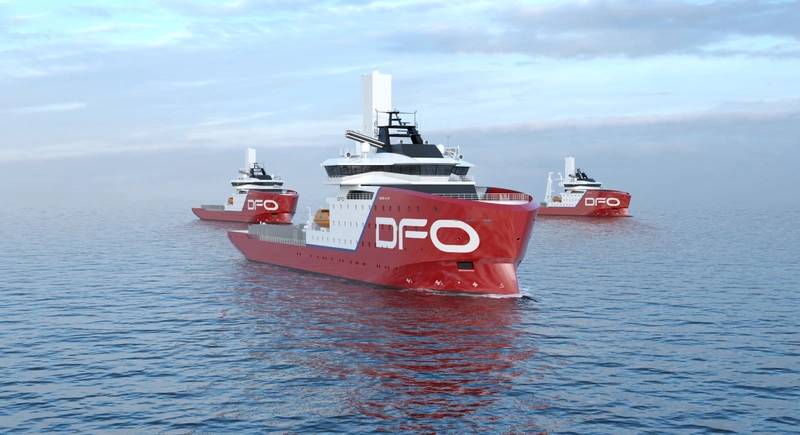
Vard has secured a new contract with Taiwanese-based Dong Fang Offshore (DFO) for the design and construction of one Commissioning Service Operation Vessel (CSOV), a sister vessel to the two CSOVs ordered in May 2024.
After sealing the contract for two CSOVs in May 2024, Taiwanese DFO is adding a third vessel of the same design, the VARD 4 39.The design is the result of collaboration between DFO and Vard.
The design gives a highly versatile all-round platform for sustainable wind farm support operations both as a service vessel for the wind farms and for the building and installation phase.
Upon delivery, the CSOV will start a minimum 15-year service contract for an undisclosed wind farm customer in Taiwan.
The CSOV has been developed with large design flexibility to accommodate future operational demands.
The design has focus on low environmental footprint with efficient machinery and propulsion set-up for high station keeping capabilities, improved workability, and operational reliability, and a hull shape that supports the fuel efficient CSOV operation.
The 102.7-meter-long vessel, with a beam of 19.5 meters, is further prepared with a large external deck for future integration of a modular power and fiber optic cable lay and repair spread.
The design includes a full electrical equipment package as part of a forward-leaning strategy in environmentally friendly design, allowing for the delivery of enhanced reliable operations onboard the ship.
This includes a battery package, crane and W2W gangway system. The CSOV is also prepared for future fuels. The vessel has an aggregated hotel capacity of 120 people, whereof 90 is allocated in large single cabins. Operational centers such as offices, briefing rooms, conference room and dayrooms have been designed to meet a high standard in the market.
“We are delighted to return to Vard for the construction of the third CSOV is in our series of high performing CSOVs for the Taiwanese market, continuing the strong teamwork and momentum together with the team in Vard Vung Tau.
“The vessel design has been developed to specifically address the many unique challenges operating offshore Taiwan, and it is humbling to see another customer place their trust in DFO to deliver long term O&M services, on a solution that we have developed together with Vard.
“This order marks the third O&M service contract for an CSOV that DFO has been awarded in Taiwan, continuing the DFO strategy of building ships against high quality contracts with long-term, forward-thinking customers, and cementing DFO’s place as the O&M service provider of choice within Taiwan”, said Polin Chen, CEO of DFO.