
Latest News
-
Republicans could have gerrymandered themselves into a Latino problem the size of Texas
South Texas is a long stretch of highways with flat terrain, dotted with pump jacks and mesquite trees. Gas stations in South Texas have prices that voters say shouldn't be so high. This territory went heavily for Donald Trump in the 2024 election, but could change again in 2026. The trip took us from the outskirts San Antonio to McAllen via historic ranchlands and more than 30 Latinos who all had the same refrain: "as president, Trump missed a great opportunity to lower prices in this vast expanse where trucks and beef barbacoa reign supreme." Many people are not convinced that the Republican Party cares about them. Frustration over Trump's immigration policy and economic pressures is on the rise, which exposes cracks in what Republican officials had hoped would be a durable political realignment of Latino Americans. According to the latest tracking poll by /Ipsos, Trump's nationwide approval rating has dropped to 33%. This is the lowest level since he returned to office. This uncertainty is a problem to Texas Republicans who redrew the congressional maps last summer, betting that the Latinos who helped Trump win in 2024 would stay in their column. David Wasserman is an elections analyst for the nonpartisan Cook Political Report. Texas Republicans wanted to change several districts to be more favorable for their candidates in the 2026 elections. They based their changes on Trump’s performance from 2024, which was the best showing by a Republican candidate among Latino voters this century. Rather than dilute Latino voters' power, many newly-configured districts remained heavily Latino. This included Texas's 15th and 35th Congressional district. Latinos make up 74.5% in District 15. According to the redistricting study by the state, Latinos make up 51.6% of District 35. Both districts are more competitive. The political forecasting site Sabato’s Crystal Ball rates the 15th district as a Tossup, while the 35th district is rated as Lean Republican. Cook Political rates 15th District as Lean Republican. A Texas Southern University survey conducted in August 2026 found that Democratic candidates were leading in three South Texas congressional districts, including the fifteenth. Nearly 50 interviews with analysts, activists and pollsters, as well as voters, support the notion that some Latinos who voted Trump in South Texas are open to Democrats. Saul Guajardo of McAllen is one of them. He voted three times for Trump. He said, "I was a conservative and far-right." "I am more willing than ever to vote Democrat." Guajardo said he and his wife Terrie live paycheck-to-paycheck, despite steady incomes. According to AAA, the average cost of gasoline in McAllen was $4.09 per gallon on September 22. Terrie said Trump’s "crackdown" on immigration enforcement was too harsh, because it has permanently divided some families who are trying to build a new life in the U.S. Many Latinos have a negative view of Republicans, according to a recent poll. A survey of 1,000 Latinos conducted by?Cook Political for TelevisaUnivision and?Cook Political in September found that 18% who voted for Trump do not support him anymore, and nearly two-thirds would vote less for candidates who support Trump’s immigration policies. Both parties see these shifts as the reason for both the promise and danger of Latino voters. They have shown less loyalty to parties than they do to elected officials who promise them economic improvement. "You're not talking to a brick wall, because they will all vote Democrat or Republican," said Daniel Alegre CEO of Spanish language media company TelevisaUnivision. "They will all vote for the candidate who makes their lives better." Republicans reject the idea that Latinos are turning away from them. Christian Martinez, National Republican Congressional Committee Hispanic Press Secretary, said Democrats responded to the decline in support from Hispanics with "denials, excuses and condescension" instead of addressing the concerns that drove working-class voters towards Republicans. CANDIDATE QUALITY Redistricting could backfire in the 15th District. In its re-configured form, it would have given Trump a 18-point victory in 2024 compared to a 2-point margin in 2020, and a 14-point defeat in his first presidential election in 2016. Bobby Pulido is a singer who has been a celebrity long before he entered politics. His hit song, "Desvelado", has been streamed on Spotify for nearly 610,000,000 times, and he's won two Latin Grammy Awards. His economic message and cross-over appeal has made the district one of the most closely watched races in the state. In a late August Texas Southern University survey, Pulido led De La Cruz by five percentage points. Pulido, dressed in a blue jeans, cowboy boots and a cowboy cap, travels around South Texas at weekends to attend quinceaneras, the traditional Latino 15th birthday party for girls. He often ends his surprise -- and free -- visits with a gift: a white cap with pink lettering that reads "Make Quinceaneras great again." Pulido claimed that Democrats lost support with Latinos in South Texas due to their failure to address economic concerns, which are most important to working families. He also said that both major parties misunderstand the electorate. Pulido said, "As a Democrat I believe that we misunderstand Hispanic voters and, frankly, I don't think Republicans get it either." "We're not looking for handouts. We're proud." "We just want to work, make something for our families and work towards making our children prosper better than we did." Pulido surprised Melody Silva, her family and 200 friends who had gathered to celebrate Melody's quinceanera on August 1. They cheered louder after he announced his candidacy for Congress and screamed at him when he appeared on a stairway. Michael Silva, Melody Silva's father, a McAllen police officer said: "He has such deep roots in the Valley." "I feel that he is not only representing the Valley but also the raza - the people - for us, locals." His name recognition appears to be his strongest suit. Pulido was a familiar name to the dozen voters interviewed at a Beeville outdoor market held monthly, about 180 miles north. The campaign of De?La?Cruz did not respond when asked for comment. Ramon Barrera (36), known on social media as "The Texas Tea Guy", sees a shift in the sentiment. He shares short TikTok posts "spilling tea" on politics and community issues. He also drives his Dodge Ram 3500 around South Texas to meet locals while looking for old furniture. He described himself as conservative, but was not firmly aligned to either party. He described Trump's presidency as a disappointment. This opened the door for him vote for Gina Hinojosa and Pulido, both Democrats running against Greg Abbott who is seeking a 4th consecutive term. He said, "The S&P looks great but our wallets do not."
-
FOREX Dollar at 2-month highs, as Fed outlook is 'dominant.'
On Wednesday, the dollar rose to its highest level in over two months as a result of expectations that interest rates will be raised in the near future. However, easing oil prices may alter global inflation and monetary policies outlook. The euro dropped to its lowest level since late July, and last fell by 0.25% to $1.142. The pound fell 0.3% to $1.3305. The dollar index (which measures the US currency in relation to six other currencies) was 0.244% higher at 100.79. Recent rate hikes by major central banks and their hawkish rhetoric have taken center stage on the currency markets, as the US/Israeli conflict against Iran is driving oil prices up and fueling inflation fears. Investors now expect further rate increases and Federal Reserve officials have indicated this week that more policy tightening could be forthcoming if the inflation does not subside rapidly enough. Francesco Pesole, a ING strategist, said: "It is another sign that Fedspeak and the hawkish Fedspeak are enough to keep USD on demand." The oil markets are still in the spotlight. Brent crude futures climbed back to $99 per barrel after a five-day decline, fueled by hopes that the UN General Assembly would pave the path for a solution to the seven-month Middle East conflict. Brent futures are up 37% since the conflict began at the end February. Physical prices in Europe are at least 75% more expensive and in the US, they're at least 40% higher. It remains to be determined whether this will evolve into a more sustained drop. Pesole stated that from a rates perspective oil floats around $90-100/bbl is unlikely to cause a dovish change in expectations. The price of crude oil may have dropped from its recent highs, but the prices for refined products are still very high. Diesel, the fuel that powers most vehicles, is at record-high prices in Europe and in the US. US President Donald Trump stated on Tuesday that he supports the idea of a ban on diesel exports as a means to lower domestic costs - something analysts claim could cause more harm than good for global supply. Trump said in his UN speech on Tuesday that he would annihilate Iran without a deal to end the conflict, but also hinted at a possible agreement soon, as diplomatic efforts continue in New York. Michael Wan is a currency analyst with MUFG. He said, "The good news about oil prices is that they have moderated a bit from their highs. However, the 'path forward' remains unclear due to the lack of clarity surrounding a possible solution of the conflict." Investors also await a high-stakes summit between Trump?and Chinese president Xi Jinping, as both leaders are seeking stability in a relationship that is under pressure due to a wide range of issues. The?Japanese currency was trading at 157.8 yen per dollar. Traders remain cautious of the possibility of an intervention, after last week's Bank of Japan rate hike that reached a 31-year record high failed to convince?investors of further increases. Analysts believe that the Japanese markets will be closed on Monday for a holiday. This 'period of reduced liquidity' is an ideal time for the authorities to act if necessary. Williams of Intouch said that "160 per US dollar remains the risk. But officials have moved away from telegraphing an intervention and any fixed level. So the cap could be earlier and take other forms."
-
European stocks rise as oil prices fall, AI hype lifts tech
European stocks rose on Wednesday, as oil prices dropped for the sixth consecutive session. Meanwhile, a new wave of AI optimism boosted tech stocks worldwide. Saudi Arabia has reportedly resumed operations on its East-West Pipeline. It may have also re-started exports through the Red Sea port of Yanbu. US President Donald Trump said that talks with Iran had progressed in New York, but threatened to "annihilate the country" if an agreement was not reached. Brock Weimer is an analyst at Edward Jones. He specializes in investment strategy. The markets are watching reports that he may hold discussions with Trump. The global interest rate outlook will be impacted by a sustained return of oil flows through the Strait of Hormuz. But caution is still necessary as past optimism has deteriorated quickly. Cole Smead is the CEO and portfolio manager of Smead Capital Management. Brent crude futures dropped 0.40% to $98,83 per barrel, while the pan-European STOXX 600 rose?0.17%. Futures for the S&P 500 benchmark and the tech-heavy Nasdaq 100 were both up 0.10% apiece on Wall Street. After four days of gains, the MSCI index of global stocks was stable. ASIA RIDE AI WAVE As consumer demand for AI-based apps continues to drive tech stocks, Asian stocks are on the rise. The renewed buzz around AI has helped South Korean shares?gain 0.9%. Samsung is up almost 1%. Taiwan's benchmark rose 0.8%, to reach near all-time highs. Data hardware has seen a boost from the strong consumer uptake of Meta's Muse Agent, which has topped US App Download Charts in the last two weeks. Analysts now want to know how CC, a product similar from Alphabet Labs and Google, will perform with consumers. Xi Jinping, the Chinese president, arrives in Washington in the afternoon amid speculations that a trading truce will be extended between the two nations and that there may be collaboration on AI. The Japanese markets were closed due to a holiday, but Nikkei Futures traded at 66 775, about 1,760 above the Nikkei cash close on Friday. "We expect strong reopenings in Japan tomorrow with another move down in crude and calm conditions in Treasuries and rates, as well as the Nasdaq Cash and Futures markets printing new highs," said Chris Weston. Semis have also had a strong session, recording a sixth day of gains. SoftBank's debt deal of $10 billion and above has also attracted interest of more than $20 billion, according to reports. This would be one of the biggest junk bond deals in history. The drop in oil has helped Treasury futures to move higher, keeping 10-year bond yields below the pain threshold of 5.0%. Both Tom Barkin, President of the Richmond Fed and Susan Collins, president of the Boston Fed, expressed support on Tuesday for the recent increase in interest rates due to inflation concerns. The dollar's technical background improved as the prospect of higher interest rates helped it to eke out multiple-week highs against the Euro, Sterling and Canadian Dollar. The euro was pinned at $1.1414 - a two-month low. Analysts pointed out that a Trump call to ban US exports of diesel could be bad news for European inflation, since the region relies heavily on US fuel shipments. The dollar held firm against the yen, at 157.76. Speculators were wary of provoking more Japanese intervention if it rose above 160.00.
-
Copper and industrial metals are falling as the dollar strengthens
Copper fell on Wednesday as a result of?gains made by the US dollar. This also impacted?other industrial materials. By 7:00 AM GMT, the benchmark three-month copper price on the London Metal Exchange was down 0.66% to $14,651 per metric tonne. The Shanghai Futures Exchange's most traded copper contract fell 0.21% to 110,990 Yuan ($16.549.37) per ton. Investors now expect further tightening by central banks. The US dollar has hit a high of two months on the prospect of interest rate increases in the near future. The?expensiveness of the dollar can make dollar-denominated products such as copper more expensive for buyers who use other currencies. The red metal in China has not been as popular. The Yangshan Premium The price of a ton of copper in China fell to $117 on Tuesday but was still higher by 62.5% than it was at the beginning of the month. The Chinese demand was boosted because of the purchases made before the smelters shut down for their public holidays. The next holidays in China are from September 25-27 and October 1-07. The US has been importing a lot of copper in recent months, which helped to support the price. However, the demand for the metal weakened when it was reported that US officials are worried that tariffs could increase the costs for manufacturers. Analysts from the Chinese broker Jinrui Futures said in a report that "US weekly imports are down." SHFE nickel, meanwhile, was up by 0.97%. Prices on the LME rose late Tuesday, after PT Indonesia Morowali Industrial Park said that a water shortage had forced some smelters in Indonesia to reduce their nickel pig iron output. Aluminium lost 0.78% on the LME, while?zinc, lead, and nickel all lost 0.59%. Tin was only up 0.04%. Aluminium fell 0.14% on the SHFE. Zinc dropped 0.64%. Lead lost 0.61%. Tin dropped 0.09%.
-
Portugal claims that China's State Grid will not be affected by the entry of REN into grid operator REN
Portugal's government has said that its purchase of a'stake' in the power and gas grid operator 'REN' will not have any impact on China's State Grid's 25% stake, which it wants to'remain' a 'key shareholder'. The Chinese state-owned utility acquired a 25% stake in REN during this period, and became its largest shareholder. The Portuguese government intends to increase its stake to up to 20%. In a late-night statement, the?Finance Ministry stated that Lisbon informed Beijing?that State Grid's 25 percent stake in REN would not be affected by the entry of the state into REN capital. It said: "On?the?other hand, it's in the interest of the Portuguese government for State?Grid?to remain a reference shareholder? in REN." The Ministry of Energy said that the growing geopolitical insecurity and the strategic importance of energy infrastructure justifies its investment in REN. It argues that electricity and natural gas networks are crucial to energy security, energy transition, industrial growth and attracting investments. The report said that the move was "part of a global movement towards greater government participation in strategic sectors". It noted that Portugal was the only European Union member without a stake in its national electricity grid operator. According to the ministry, most EU countries still retain significant state shares or state ownership in their national electricity grid operators. The investment will give REN's strategy a long-term alignment with national priorities and allow the state to have greater control over a strategic asset. The decision was also justified by the 'geopolitical changes and the increasing importance of electricity, in particular, in the drive to electrify and modernize the economy, as well as attract investment into artificial intelligence and data centers.
-
South Korea: Trump welcomes progress on US strategic investment projects
Seoul's Presidential Office said that during a 30-minute discussion on the sidelines of the UN General Assembly on Wednesday, South Korean President Lee Jae Myung welcomed "significant progress" on strategic investment projects. The meeting took place after the South Korean Industry Ministry briefed legislators on Tuesday about implementation plans under countries' $350-billion investment package. A Texas gas-fired project was identified as a possible first investment as well as potential investments in nuclear energy, and an Alaskan Liquefied Natural Gas project. National Security Advisor Wi Sung Lac told a press briefing that "the two leaders appreciated the significant progress in discussions between the two countries on strategic investment project." Wi reported that based on the Joint Fact Sheet released after their November summit, Lee and Trump agreed to continue and deepen discussions and cooperation on nuclear fuel enrichment, reprocessing and reprocessing. They also agreed to discuss nuclear-powered subs, shipbuilding, and the transfer of Wartime Operational Control (OPCON) by the US to South Korea. Wi reported that Trump reaffirmed his willingness for dialogue with North Korea. The two leaders agreed to stay in close contact in pursuit of peace. According to Wi, Lee said that the US-China Summit scheduled for Thursday will be important for regional development, including South Korea's relations with China. The White House didn't immediately comment on Trump-Lee's meeting. The State Department reported that US Secretary of State Marco Rubio called on Friday for the quick execution?of South Korean investments commitments?during a meeting?with?South Korean foreign Minister Cho Hyun. In a blog post, Lee stated that he and Trump had a detailed discussion on the progress of investment projects. They also reaffirmed the commitment to strengthening the alliance. GOLF DISCUSSED NORTH KOREA Lee had earlier told the UN General Assembly on Wednesday that Seoul would work to create a lasting peace framework and support efforts for reviving dialogue with North Korea. He also sought broader international support for these efforts. Separately, a senior official of the South Korean government told media that Lee told Trump that he hoped that Trump would advance engagement with North Korea. Trump responded that he was willing to do so. Media reports stated that Trump had also stated he has a good relationship Kim Jong Un. However, there is no indication of any contact taking place at the moment. According to the official, Trump and Lee also spent a lot of time discussing OPCON transfers. Trump reportedly gained a better understanding about Seoul's stance. The US side emphasized the need to complete the process and meet the requirements as quickly as possible. Officials said that the South Korean side expressed a desire to speed up talks about developing nuclear submarines and outlined plans for increased defence spending. Officials were quoted saying that progress in discussions on investment in US projects had helped pave way for the summit. Initially, it was not expected to happen. Officials said that the two leaders were briefed about the 'negotiations' and they welcomed the progress. However, discussions are still ongoing on the specifics of the package, and the manner in which it will be announced. The official quoted by the media said, "The larger framework is almost completed." Lee said later on X, that Trump reminded him about their plan to golf together that was first discussed in France, in June. He hoped that they could continue the discussion at the G20 Summit in Miami, later this year.
-
Asia stocks rise on tech wave, but oil prices continue to fall
On Wednesday, Asian shares aimed for a sixth consecutive session of gains as the consumer appetite for AI apps continued boosting tech stocks. Meanwhile, oil prices dropped further due to'reports about increased supply from the Middle East. Saudi Arabia has reportedly resumed exports through the Red Sea port Yanbu and may already have done so, according to sources. US President Donald Trump claimed that talks with Iran had progressed in New York, but threatened to "annihilate the country" if no deal was reached. The markets are agog at reports that he could hold talks with Trump. Brent futures fell 0.9% to $98.37 per barrel, while US crude fell 1.3% to $89.32 per barrel. Xi Jinping, the Chinese president, arrives in Washington at the end of the day amid speculation that a trade truce will be extended between the two nations and that there may be some cooperation on AI. The renewed buzz about AI has helped South Korean shares?gain 0.5%. Samsung is up more than 2%. Taiwanese stocks have firmed by 0.7%, nearing all-time highs. MSCI's broadest Asia-Pacific share index outside Japan rose 0.3%. It has now been rising for six days in a row. Chinese blue?chips fell 0.5%. The Japanese market was closed due to a holiday. However, Nikkei Futures traded at 66.735, nearly 1,700 points higher than the Nikkei Cash close on Friday. "We expect strong reopenings in Japan tomorrow with another'move lower' in crude and calm conditions for rates and Treasuries. The Nasdaq Cash and Futures markets will also print all-time highs," Chris Weston said, the head of research at broker Pepperstone. "Memory stock has taken the 'leadership baton. Backed by another strong session, semis have recorded their sixth consecutive day gains." CONSUMERS FALL FOR AGENTS OF AI Data hardware has seen a boost from the strong consumer adoption of Meta's Muse Agent, which topped US app charts for downloads in the last two weeks. Analysts now want to know how CC, a product similar from Google Labs, will perform with consumers. SoftBank's debt deal of $10 billion and above has also attracted interest of more than $20 billion, according to reports. This would be one of the biggest?junk bonds deals ever. S&P 500 and Nasdaq Futures on Wall Street were both slightly firmer. In Europe, EUROSTOXX Futures, DAX Futures and FTSE Futures all rose by almost 0.4%. Oil prices dropped, which helped Treasury futures to rise and keep 10-year yields under the?5 % pain barrier. Investors priced in the possibility of further tightening by the Federal Reserve, and the yields on two-year bonds reached their highest level since mid-2024. Both Tom Barkin, President of the Richmond Fed and Susan Collins, president of the Boston Fed, expressed support on Tuesday for the recent increase in interest rates due to concerns over inflation. The futures market indicates that 54% of the time, the Fed will raise interest rates again in October. By year-end, 33 basis points tightening is priced into the markets. The prospect of higher interest rates has helped the dollar to reach multi-week highs against the Euro, Sterling and Canadian Dollar, improving its technical backdrop. The euro is stuck at $1.1430, near its two-month low. Analysts pointed out that a Trump call to 'ban U.S. Diesel exports' could be bad news for European inflation, since the region relies heavily on U.S. fuel shipments. Europe is already facing a natural gas shortage that could drive energy prices up into the winter. Dollar was slightly firmer against the yen, at 157.60. Speculators were wary about drawing Japanese intervention if it went beyond 160.00. Gold fell 0.3% on the commodity market to $4,341 per ounce, and copper has risen 18% this year.
-
Andy Home: Indonesia's nickel production limits are not convincing the market.
Indonesia has learned that gaining a dominant position on the nickel market is easy. It is much more difficult to use its influence on supply to control the prices. Southeast Asia now accounts for more than 60% of the global production of a metal that is used both by stainless steel manufacturers and battery makers of electric vehicles (EVs). Indonesia's dramatic rise to become a?nickel power? is due to a 2020 ban on exports, which forced operators into building domestic processing capacity. The country has become a'model for other developing nations, especially those in resource-rich Africa. It's also worth noting how difficult it can be to match demand with supply when you are the largest producer in the world. TAMING THE TIGER Jakarta has cut mining quotas this year, tightened environmental controls and lowered ore prices to curb its nickel industry. The London Metal Exchange nickel prices reached a high of $20,000 per tonne in May after a commitment to reduce mining quotas to between 250 million and 260 million tons from the 379 million metric tonnage last year. As the market has lost confidence in Jakarta's ability to tame this nickel tiger, the price has dropped back to $16,500. The dilemma for policymakers has been how to reduce nickel output without affecting their nickel processors. Some of them have only just begun ramping up their production this year. The mid-year review has led to higher allocations for specific operators. French mining group Eramet has restarted operations at Weda Bay after having been forced to suspend its work in May due to exceeding its 2026 quota. It is hard to determine the full extent of this upward trend, since neither?Jakarta or its nickel operators reveal details. It's also clear that some operators have adapted to lower mining rates in the country by importing, primarily from Philippines. According to the World Bureau of Metal Statistics, which gathers data from government sources, Indonesia increased imports of Philippine ore from 15.3 to 11.4 million tonnes last year. Arrivals were also up?67% from January to July. Solomon Islands is also a regular source of smaller imports. According to the Indonesian Nickel Miners Association, if all of Indonesia's nickel-processing plants operated at full capacity, 315 million tonnes of ore would be needed each year. It is still a very difficult task to balance the captive demand and mining rates. Expectations that are tempered At the beginning of this year, the nickel market was hopeful that Jakarta would be able to do enough to stop another year of global surplus supply. In April, the International Nickel Study Group dramatically revised its estimate of expected market balance for 2026 to reflect lower production in Indonesia. The forecast for this year was a modest deficit of 32,000 tons, compared to a 261,000-ton expected surplus at the previous meeting in October 2025. The global stock of refined nickel has been steadily increasing. The combined inventory of the LME and Shanghai Futures Exchange, on and off warrant, is currently 478,000 tonnes, which can supply the global market with enough product for seven weeks. The surplus could be greater than the visible stock. China is stockpiling metal in order to take advantage of the low prices. In the first seven month of 2018, the country imported 170,000 tons (up 28 percent year-on year) of refined nickel, the highest rate since 2016. China's refined nickel output has grown at an accelerated rate, thanks to Indonesian raw material flows. This suggests that some of the imports may be for strategic purposes rather than commercial ones. WAITING FOR DEMAND Jakarta can take heart from the fact that it would have had a much larger surplus this year if it hadn't done anything to limit its production growth. The price of coal is now above $16,000 per tonne, not below as it was in 2025. Even some Indonesian producers are still struggling to break even. More demand is what Indonesia and the nickel markets really need. There are signs of hope. According to Worldstainless, stainless steel production increased by 5% annually in the first half 2026. EV sales are increasing everywhere except the US market. There's still a lot nickel in the exchange storage that can be used to meet any surges in demand. This means Indonesia has a long way to go to control production and price. You like this column? Open Interest (ROI) is your new essential source of global financial commentary. Follow ROI on LinkedIn and X. Listen to the Morning Bid podcast daily on Apple, Spotify or the app. Subscribe to the Morning Bid podcast and hear journalists discussing the latest news in finance and markets seven days a weeks.
Acteon and Applied Fiber to Optimize Mooring Solutions for Oil and Gas, Floating Wind
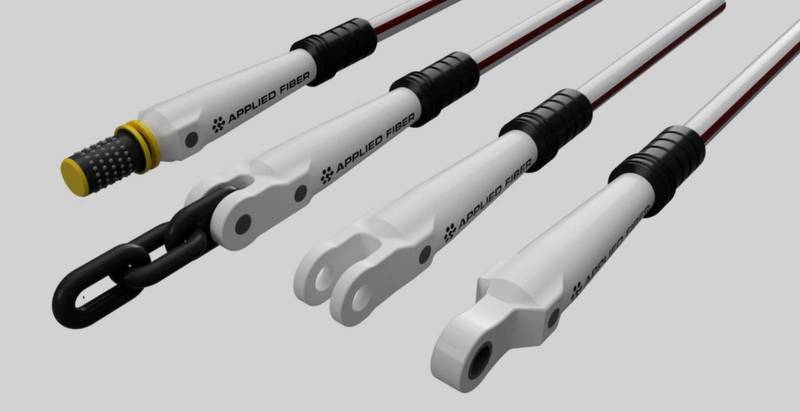
Acteon, through its moorings and anchors business line, InterMoor, and Applied Fiber have signed a Memorandum of Understanding (MoU) to collaborate on mooring solutions for various global offshore markets, from oil and gas to gigawatt-scale floating offshore wind.
Through the MoU, the companies agree to jointly explore developing optimized mooring solutions using Applied Fiber’s socketed termination technology for fiber ropes and Acteon’s mooring experience.
Another area of joint work will be the field of real-time condition monitoring of mooring lines.
Both MoU partners will jointly develop concepts for exporting real-time condition monitoring data directly from the mooring lines for integration into digital twin models to reduce the risk of mooring line failure.
“Teaming up with Applied Fiber is a sensible step which will allow us to deliver an even more standardized and intelligent rope-based mooring solution, a crucial element, especially in the context of large permanent systems for floating wind farms,” said Tom Fulton, Head of Renewables and Mooring Development at Acteon.
“This is an incredible opportunity for both companies, each a leader in their respective fields. Our complementary technologies including Acteon’s extensive operational knowledge will undoubtedly lead to new solutions for an emerging market with very different requirements,” added Richard Campbell, CEO at Applied Fiber.