
Latest News
-
Source: RBI issues a caveat after rejecting Tata Sons' bid to avoid listing
Sources familiar with the situation said that the Reserve Bank of India, the country's central bank and regulator of banking, has preemptively approached the courts to seek to be heard on any matter related to the listing of Tata Sons. This move comes after the RBI rejected Tata Sons’ application to deregister from the non-banking finance company (NBFC) category, a decision which pushes the holding firm closer to a listing on the stock exchange. ? The BBC reported on Saturday the RBI's decision to impose a ban in a letter sent to Tata Sons. Local media reported that certain factions within the group had resisted being listed. Source: The RBI filed what is called a "caveat" in legal terms in the Bombay High Court. This will allow it to be heard by the court if someone challenges the central bank's decision or requests a stay. The source explained that this was "a routine measure" to make sure the court heard the appeal or stay request. Tata Sons and RBI did not respond to requests for comments sent by. Tata Sons is the holding company for the Tata Group. It has businesses such as Tata Consultancy Services, Tata Motors and Tata Steel. The shares of the group companies increased on Tuesday. The RBI has jurisdiction over it as it's?currently registered? as a core investing company. According to RBI regulations, all nonbank financiers, including core investment firms?with assets in excess of 1 trillion rupees ($10.45billion) or with access to public funds must list. Tata Sons reported a standalone asset of 1.75 trillion rupees in March 2025. This is the latest available data.
-
Indonesia's Pertamina promises to boost fuel supply in Makassar City to reduce 1-km-long lines
Pertamina, Indonesia's energy company, announced on Tuesday that it had stepped up its efforts to make more fuel available at Makassar in eastern Indonesia. In the past week, a queue of more than one kilometre long formed outside the gas stations. Energy Minister Bahlil lahadalia stated that customers are scrambling to get fuel at subsidised prices in order protect themselves from the oil price increases caused by the Middle East war. The government has promised to maintain subsidised prices until the end of this year. He said that the problem is now that many people are switching to subsidised fuel because of the price increase. "That's?what's happening to a certain extent in Makassar." Bahlil stated that "no matter what the global price of fuel is, we won't increase the subsidised fuel prices." A shortage of supplies has forced the authorities in Makassar (a city with 2.8 million residents) to implement emergency driving restrictions. They have also implemented a policy that allows civil servants to work from home. Pertamina announced in a press release that it had extended the hours of operation at its gas stations, and boosted the?subsidised supply to meet the increasing demand and reduce?queues. We apologize for the inconvenience. Deny Sukendar, a Pertamina official, said that the company has implemented recovery measures. According to a?witness, the lines of cars?queuing up at gas stations in Makassar were still about 100 metres long on Tuesday. On Monday, around 150 students and workers protested against the shortages at Pertamina offices in Makassar.
-
NEWS MAKER: From a schoolboy sweets seller to Africa's richest person, Dangote is eyeing his biggest deal yet
Aliko Dangote, a serial entrepreneur who began his career by selling candy to classmates in Northern Nigeria more than 50 years ago, is now preparing Africa's largest stock market listing. The'sale' of $1.6 billion in shares of his giant Lagos oil refining company -- an initial public offer that will see the'refinery - list in Nigeria in November -- valued the company at $47.3 billion. This deal represents the culmination in Dangote’s efforts over the past decade to build a mega-refinery that is now among the 10 largest refineries in the world. This is also the culmination of a career which has seen him go from a schoolyard sweets seller to Africa's wealthiest man. The 69-year old has no intention of stopping there. Proceeds from the IPO will be used to expand the Nigerian refinery and launch a project in Kenya that will see the capacity doubled. SALT, SUGAR, CEMENT AND RICE Born in Kano, a northern Nigerian state, in 1957, Dangote grew up primarily with his maternal grandfather. He has credited him for encouraging his business interest. In a 2015 interview, he stated that "when you're raised by entrepreneurial parents?or grandparents you pick up this aspiration." It makes you more aggressive and think that anything is possible. I was unable, despite my repeated requests, to get an interview with Dangote. In 1977, after graduating from the?university of Egypt, he started trading rice and sugar with a relative. In the early 1980s he founded Dangote Industries. He now owns 85% of it. It is a multinational conglomerate that operates in over a dozen African nations. Dangote’s personal fortune is estimated to be between $31 and $35 billion. This was a result of his cement business, which has been very profitable. Nigeria became largely self-sufficient in the building material after government policies?fostered local cement production?. However, they also fueled criticism that prices were high because of limited competition. ECONOMIC FOLK HERO FOR SOME, VILLAIN FOR OTHERS Influence came with wealth In a 2005 cable, leaked by U.S. diplomatic sources, they said that he had been viewed by some as an "economic folk-hero", but by others he was seen as a villain, because he was suspected of using his close proximity to politics for his business. They wrote: "The truth lies somewhere between these caricatures." Dangote is often described as being reserved by those who have met him, despite his wealth and power. Gina Din Kariuki, a Kenyan author and businesswoman, said: "He has an instinct for opportunities and the discipline to make his ambitions real." "But it wasn't his ego that stayed with my, it was the humility." He avoids flashy displays and drives himself. He has a habit of threatening to purchase his favorite soccer team, London's Arsenal. But he is proud that he keeps the majority of his wealth in Nigeria. Bismarck Rewane is the CEO of Financial Derivatives Company Ltd in Lagos, and has known Dangote more than two decades. Some people have called him a control-freak. I see it more as a passion to get things done. Local fuel traders in Nigeria, however, accuse Dangote, of using political connections to squeeze out competitors. He argues his ?700,000-barrels-per-day refinery can now meet Nigeria's fuel needs and is battling in court to end imports. Regulators have, however, warned against the risk of a "fuel supply monopoly". The Dangote Group and Dangote neither responded to inquiries for comment regarding the allegations. He has stated that the listing will help to counter concerns about monopoly. He told a conference in 2013: "They'll say that we now have shares. So let everyone have a piece of it." Dangote's mission to push Africa towards self-sufficiency was brought into sharper focus by the Iran war, which exposed Africa's dependency on fuel imports. According to a source familiar with the talks, after the conflict raised concerns about fuel supplies, Kenya approached Dangote regarding the construction of an East African refinery. Dangote announced the project two months later with Kenyan and Ugandan officials. He said that it will begin this month.
-
India's met-coke imports reach record levels despite antidumping levies
Executives said that India's met-coke imports will reach a new record high this year, despite the?antidumping levy implemented in July. Domestic?shortages? and strong demand from pig-iron producers are driving higher overseas purchases. India, which is the second largest crude steel producer in the world after China, will import 6 million metric tonnes of met coke during the fiscal year, which began in April. This represents a 32% increase from the previous year, mostly from Indonesia and Poland. Steelmakers have been opposing import restrictions for more than a month, claiming that domestic production is not enough to meet the demand. In a previous report, the federal ministry of steel supported the steelmakers in their efforts to withdraw the anti-dumping duties. In July, the government imposed a 5-year anti-dumping tax on met-coke. Met coke can be used to make pig iron, a product intermediate used to manufacture steel. Indonesia is a major supplier of steel, with a total import volume of 2.1 million tonnes this year. This represents a 165% increase from the previous year. The executive stated that domestic coke production rose by only 6% on an annual basis, which is below the demand for steel and pig iron. PIG IRON DRIVES IMPORTS The executives stated that pig iron producers import large amounts of met coke to avoid the import duties when they convert the coke into pig iron. They said that because of this exemption, imported met?coke is cheaper than local coke. The executives stated that the lower prices of Indian pig-iron have helped it to gain market share over Ukraine. According to commodities consultancy BigMint, Indian pig iron can be purchased for $50 less per tonne. Brazil, Ukraine, and India are the main importers of U.S. goods, which amounts to 4 to 5 millions metric tons. According to BigMint, the price of met coke in August rose by 24% compared to a year ago, to 35,850 rupees ($375.63). "Met coke is increasing because of the rise in coking coal," said Monica Bachchan Duvvuri of Metalogic PMS. She said that met coke could go up 3-4% in price this week. Last week, it was reported that the steel price is expected to increase further in the next few weeks due to rising coking coal prices.
-
Sources say that Samsung's India Public Policy Chief resigns
Two sources familiar with the resignation said that Rajiv Aggarwal - Samsung's India head of public affairs and ESG - resigned on Tuesday after nearly four years in a?the job. It was unclear why he resigned. Aggarwal is serving his last week as Samsung India's head of government relations. The sources declined to identify themselves because the information was deemed confidential. The 57-year old former Indian bureaucrat who has worked at Uber and Meta declined to comment. Samsung Electronics didn't respond to any questions. Samsung and Apple had to contend recently with the Indian government's demands to pre-install apps that were run by state agencies, which they opposed due to?privacy concerns. Samsung is one of the companies that has contested in court a policy by the Indian government that increased payments from businesses to electronic-waste recycling firms. It shares a 16.2% market share with Oppo, and is just?behind the market leader Vivo. It was India's number one smartphone player in 2023. In 2023, it was India's No.
-
French and Benelux stocks: Factors to watch September 15
Here are some company news and stories that could impact the markets in France and Benelux or even individual stocks. EIFFAGE: Eiffage, a French construction group, was selected to carry out civil engineering work at the Neomat CAM plant in Dunkirk. The project represents an investment of nearly EUR 500 million. Construction and development work will continue through 2028, employing up to 400 workers. EXAIL TECHNOLOGIES Exail Technologies, a French high-tech firm, announced that its preliminary first-half operating profit rose by 61% on an annual basis to EUR46.07 million ($53.07m). The company has postponed the full announcement of first-half earnings until September 24. The first-half cash flow of Exail Technologies was characterized by a rise in working capital of approximately EUR70 million. However, very significant cash inflows are expected in the second part of the year. GENFIT: After a significant reduction in mortality among severe COVID-19 patients, Genfit, a French biopharmaceutical firm, is moving nangibotide to a Phase 2A ACLF trial in the fourth quarter 2026. Data are expected in 2027. Nangibotide showed a favorable safety profile in four clinical trials. TOTALENERGIES: TotalEnergies, a French energy major, and the Iraqi Government have agreed to begin discussions on large-scale energy projects that will boost Iraqi oil production and contribute to the energy transition of the country. Separately the company announced an EUR100 million partnership to use AI models from Mistral in order to support TotalEnergies geosciences exports. The French insurance company has released financial targets for the period of 2027-2029. AXA targets a payout ratio of 75% and expects to generate approximately EUR25 billion in cumulative organic cash. The?company stated that it now expects its underlying earnings growth to be in the range of 6%-8% and its return on equity at the upper end of its target range of 14%-16%. Pan-European ?market data: European Equities speed guide................... FTSE Eurotop 300 index.............................. DJ STOXX index...................................... Top 10 STOXX sectors........................... Top 10 EUROSTOXX sectors...................... Top 10 Eurotop ?300 sectors..................... Top 25 European pct gainers....................... Top ?25 European pct losers........................ Main stock markets: Dow ?Jones............... Wall Street report ..... Nikkei 225............. Tokyo report............ London report ........... Xetra DAX............. Frankfurt items......... CAC-40................. Paris items............ World Indices..................................... Survey of global bourse outlook ......... European Asset Allocation........................ News in a nutshell: Top News ............. Equities.............. Main Oil Report ........... Main currency report .....
-
Former DeepMind researcher from Google adds to the warnings that AI will 'kill humans'
Former Google DeepMind employees warned on Monday that AI technology could "kill off all humans", and that time was running out for the avoidance of this outcome. The public is becoming more concerned about the potential danger of AI. Anthropic researcher Jacob Coxon announced last week that he was resigning, partly because "people who are building AI believe it will kill us by the end the decade." Evan Hubinger, an anthropologist, responded to?Coxon’s comments by saying that he agreed with him and believed that there was a higher than?10% probability that AI would kill all humans in the next decade. Bilal Chughtai, a writer for X, wrote: "I recently resigned... from Google DeepMind where I worked on AGI alignment and safety research." "I honestly believe that AI could kill us all, and we may be running out of time." Chughtai was a research engineer at Google DeepMind and worked as such until July 2026. His LinkedIn profile states that he left the company. Google didn't respond to an outside of regular business hours request for "comment". Anthropic CEO Dario modei, in response to recent concerns, called for a halt in the pace of AI?development. He received rare support from SpaceXAI’s Elon Musk and OpenAI CEO Sam Altman, sparking a discussion on AI "doomerism." Chughtai said that steering AI safely is?possible, but coordination would be required "to avoid the manic race between AI companies." He added, "We must pace AI development at a rate that the society can handle. Emerging risks should be addressed before extreme harm occurs." The President Donald Trump has, however, dismissed the warnings. He said on social media that the AI industry's calls for regulation are a "hoax."
-
Arbitration sought by Combined BHP Ports Unions over wage dispute
The union announced on Tuesday that it would take BHP, the world's largest?miner, to arbitration if the two parties could not agree on the?terms of a new wage?deal in Western Australia for the Port Hedland Iron Ore Operations. Port Hedland, the largest iron ore export center in the world and BHP's main shipping gateway to the Pilbara region, is the hub for BHP Pilbara operations. The union, which represents 450 workers on the site (operators and maintenance), will apply for a "intractable bargaining statement" which allows the Fair Work Commission to determine the terms of the agreement. Over the past nine months, both sides have been in talks to determine a wage agreement that will last four years. They've met almost weekly in recent weeks, with Fair Work Commission as a facilitator. ".....BHP refuses to negotiate an accord that reflects their specialized skills, the extreme conditions they work in and the personal sacrifices made by the employees who have generated more than $13 Billion in profits for the company?this past year", the Combined BHP Ports Unions stated in a press release. In response to a?request for comment, a BHP spokesperson stated: "Our focus is on delivering an?fair?and reasonable?agreement." BHP offers a 17% increase in pay for most workers over the four-year agreement. This includes a 'transition payment' of A$25,000 (17,802.50 USD) spread over two years as well as a rise in roster allowances. The union claims that 40% of workers would be worse off if this proposal were to go through.
Misunderstanding General Average Concepts Could Harm Offshore Operators
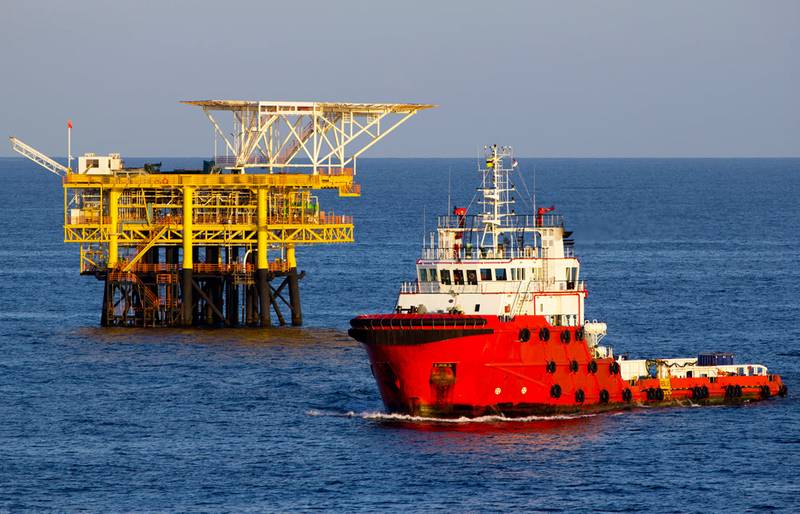
At a recent seminar in London organized by the International Underwriting Association of London (IUA) and the Association of Average Adjusters (AAA), participants heard how ignoring or not fully understanding the concept of General Average (GA) when concluding charter-party contracts for offshore services could cause problems in the event of an incident or accident.
Michiel Starmans, a Fellow of the AAA and Director Legal Department of the Spliethoff Group and Alf Inge Johannessen, an Associate of the AAA and Senior Claims Manager at DOF, spoke at the seminar and explained the issue:
“General Average is a simple cost sharing agreement where all parties involved in a common maritime adventure contribute to indemnify the party who incurred costs or suffered a sacrifice of their property to save other property involved in the adventure from common peril,” Johannessen explained. “So that might include ordering a tug to assist a vessel which has run aground or jettisoning cargo to save the ship,” he said.
But should offshore vessels be treated differently from traditional merchant vessels transporting cargo from one port to another?
Starmans argues not. “More often than not, offshore vessels are carrying cargo or property owned by a number of different entities, this might include cargo to construct a floating wind turbine, cable loaded on a carousel, or a subsea vehicle. All this cargo/equipment has a value and is likely to be insured with separate insurers.
“General Average applies to all property in peril in a common maritime adventure, and this clearly includes moving cargo/equipment from a storage port to an offshore construction or operational site. It will also cover the period the vessel is working on the site,” he said. “The principles of General Average apply equally to the offshore sector as they do to any common voyage.”
The speakers went on to reference a series of common charter-parties used in the offshore sector such as Heavycon 2007 (voyage charter for super heavy and voluminous cargoes), Heavyliftvoy 2009 (voyage charter for the mid-sized heavy lift sector carrying specialist cargo), Supplytime 2017 (time charter for offshore support vessels and any other vessels carrying cargo and/or equipment for Charterers) and Windtime 2013 (time charter for transfer of personnel and equipment to and from wind farm installations).
“All these contracts (except Heavyliftvoy 2009) include a knock-for-knock clause,” said Starmans. “This means each party would bear its own losses in the event of an incident, so any damage to the vessel would be the responsibility of the vessel owner and costs associated with cargo loss or damage would be for the charterers or their insurer to cover. General Average and knock-for-knock can perfectly exist next to each other in the same contract (as has been the case since Supplytime 1975), but extra attention is required that General Average is excepted from the overriding application of the knock-for-knock clause.
“As from Windtime 2013, the General Average clause has been omitted. This gives rise to two issues: The first is that just because a General Average clause is not included does not mean that GA does not exist. GA is embedded in the law of all maritime countries, in English law, for example, it is contained within the Marine Insurance Act. This means that GA principles can always be relied on by a party wishing to make a GA claim, but omitting to include a GA clause in the contract is likely to make such a claim more contentious (adjustment as per the uncertain law of the place of destination instead of the well-known York-Antwerp Rules). "
This has the potential to impact a number of insurance covers including Hull & Machinery, Cargo, Construction All Risks (CAR) and subsea equipment insurance for ROVs and other subsea vehicles.
An added issue would be P&I cover. Usually, the P&I Club would cover any unpaid cargo contribution to GA, if the cargo interests are able to prove a breach of contract by the owner. However, if GA is specifically excluded then the unrecoverable GA contribution from cargo, equipment or property owned by the charterers will not be recoverable from the P&I Club as there had not been a breach of the contract of carriage.
The speakers were keen that those involved in the offshore sector were fully aware of the principles of GA and how it applied to their business.
Summing up, Johannessen said: “General Average is there as a matter of law, whether or not it is mentioned in the charter-party. Including a GA clause in the charter-party is an advantage to secure certainty as to how GA should be dealt with. If contracting out of GA, parties should be fully aware of the implications and consider securing special insurance cover for what cannot be recovered from other parties. To avoid full GA procedures for smaller GA situations, parties should ensure that the vessels involved have a reasonable GA Absorption Limit in their H&M policies.”
The seminar was held in London on November 13, 2024 and chaired by Ann Waite, Honorary Chair of the Association of Average Adjusters.