
Latest News
-
Sources say that ADNOC, the UAE's oil company, buys millions barrels of Iraqi crude.
Three people with knowledge of the matter said that Abu Dhabi National Oil Co (ADNOC), a trading firm in the face of supply disruptions caused by the Iran War, has purchased millions of barrels of discounted crude oil from Iraq's State Oil Firm. Two Iraqi energy sources reported that the state company through its trading arm was the largest lifter of Iraqi oil in August and September, helping to boost Iraqi exports, which had been severely cut in the early months of the war. One of the Iraqi sources said that ADNOC had agreed to purchase 32 million Iraqi barrels for $24.90-$27 per barrel in August, and another 40 million barrels for $27 in September. This included 10 million barrels with a $18 discount, and 30 million barrels with a $25 discount. According to the second Iraqi source, despite Iraq's state oil marketing organization SOMO having allocated ADNOC a total of 32 million barrels for August, ADNOC lifted 20 millions barrels because of export restrictions and Basra Oil Company not being able to secure enough?crude. ADNOC has so far lifted 14 millions Iraqi barrels in September, a person told me. Third source claimed that ADNOC had purchased about 20 million barrels from Iraqi?state owned SOMO? in tenders for a discount between $25 and $27 per barrel. Other companies are also buying Iraqi crude. SOMO offered August loading cargoes?at steep discount, attracting other buyers, including Chinese state-majors PetroChina and Zhenhua Oil as well as TotalEnergies and?Vitol. Trafigura Mercuria, and Cathay?Petroleum.
-
Kremlin accepts Trump's idea for energy truce in Ukraine and calls for sanctions to be removed
The Kremlin welcomed on Tuesday a U.S. suggestion for a 'Russia-Ukraine moratorium against attacking each other’s energy infrastructure. Donald Trump, the U.S. president, said on Monday that Ukraine had agreed with Russia not to meet each other's targets in terms of energy production. However, neither side confirmed this agreement. On Tuesday, Russia struck petrol stations in Kyiv and Ukraine claimed it had hit a Russian oil refinery. Dmitry Peskov, Kremlin spokesperson, told reporters Trump's idea was "very good", but that it would take more to lower global fuel prices. "It's important to guarantee safe navigation and commercial shipping here, including for oil tankers." Peskov stated that the Kyiv regime had not shown any interest in ensuring such security. "The second thing to do is, of course lift the sanctions (against Russia), and these illegal restrictions on energy supply. Only then will the world be adequately supplied with petroleum products. Global markets will stabilize and prices will fall. Peskov stated that Russia will stay in contact with the Americans regarding Trump's proposal. Volodymyr Zelenskiy, the Ukrainian president, said that Kyiv would only support a ceasefire in the energy sector if Washington could guarantee that Moscow was truly ready to end its conflict with Ukraine. The Ukrainian strikes on energy plants have led to fuel shortages this summer in Russia. This has caused the country to restrict its exports. This has led to a shortage of jet fuel, gasoline and diesel on the energy markets. Ukraine, which is regularly attacked by Russia on its own energy infrastructure, claims that refineries are legitimate military targets. Trump asked Zelenskiy to stop attacking Russian diesel infrastructure on Sunday, saying that the attacks are causing a shortage of diesel which is "hurting?the world". The Kremlin stated on Monday that global market turmoil was primarily?due to conflict in the Gulf. Trump launched military attacks on Iran in Febrary and Tehran responded by closing the 'Strait of Hormuz', which had been used to transport about a fifth of global oil and gas supplies. Russia and Ukraine also hit each other's ships in the Black Sea and Azov Sea. This escalation in violence has pushed up the price for grain, which both countries are major exporters.
-
Traders say that Orlen, a Polish oil company, is rushing to find alternatives to Saudi Arabia's oil supply.
Five industry sources have confirmed that the Polish integrated oil company Orlen is rushing to replace Saudi imports with crude oil shipments?from North Sea and further afield. Orlen, one of Europe's largest oil companies, is a major customer of Saudi crude. However, the conflict in the Middle East has escalated in recent weeks. Houthi attacks on Saudi installations by the Yemeni Houthi have led the Polish company to seek alternative sources of supply. Orlen bought'several cargoes' of crude oil at spot tenders between Friday and Monday. Two traders reported that Orlen purchased North Sea grades, including Grane, Johan Sverdrup, and Johan Castberg. Two sources said that the company also bid for grades from further afield, including U.S. WTI Midland as well as Kazakh CPC blend. The tender results could not be confirmed directly with the counterparties. Orlen declined comment on specific commercial transactions but stated that it manages its supply portfolio to ensure uninterrupted operation of the refining assets. Orlen's spokesperson said that "adjusting and optimizing purchase volumes is a part of the Orlen Group operations. It's driven by current production requirements and changing market conditions." The spokesperson confirmed that feedstock deliveries are currently proceeding as usual to the?Orlen refineries.
-
Imports of palm and soyoil from India in August rose on the back of stocking
As refiners stockpiled ahead of the festival season in India, soyoil imports to India reached a record high in August. The world's largest importer of vegetable oil, Indonesia, Malaysia, and Argentina, could move more palm oil and soybean oil, supporting benchmark palm and soyoil prices. In a recent statement, the SEA (Solvent Extractors' Association of India) reported that India's imports of palm oil in August grew by 7% over the previous month, to reach 782,761 metric tonnes, the highest level since February. The industry group reported that imports of sunflower oil decreased by 36%, to 160 639 tons. Imports for soyoil increased 26%, to a record high of 628 736 tons. The total edible oil imports increased by 1.5%, reaching a record high of 1,57 million?tons after a surge in palm and soyoil shipments. Mumbai-based dealer of a global trading house said that refiners have increased their purchases in order to build up stocks before the festival season. India celebrates several festivals between August to November when the demand for edible oil is at its peak. A New Delhi-based dealer from a global trade house said that soyoil was available at competitive prices, compared to palm oil. This should help keep September shipments above 600,000 tonnes. The 'war' has?disrupted the sunflower oil shipments in the Black Sea Region. He said that this is also causing refiners' to increase their purchases of soyoil. Industry officials said last week that India's aggressive buying of vegetable oil has caused congestion in major ports. Ships are delayed by up to 10 days while shore tanks fill and refiners struggle with clearing incoming cargo. India imports a majority of its palm oil from Indonesia and Malaysia. Soyoil, sunflower oil, and other oils are mainly imported from Argentina, Brazil and Russia.
-
The House is visited by MORNING BID AMERICAS
Treasury yields on 10-year U.S. Treasury notes have risen to their highest level in 19 years. This is just as Treasury Sec. Scott Bessent is preparing to speak to Congress, and the Federal Reserve begins its two-day critical meeting. Government bonds sold across the globe overnight as the prospect of rising interest rates and energy prices remained a primary aggravating factor. Japanese 10-year yields rose back to above 3%. Brent crude prices rose above $107 a barrel again on Tuesday after a brief drop on Monday, following President Trump’s suggestion that Russia and Ukraine could reach an agreement to spare their energy infrastructure during the war. Bessent will appear before the House Financial Services Committee today to discuss a number of thorny topics: his apparent failure to cap Treasury yields, Japan's joint intervention to lift the yen and the war on Iran, as well as the president's promise to provide Americans with $5,000 checks for a $1.3 trillion total cash injection. Bessent's opinion on what the markets expect to be a quarter point Fed rate increase on Wednesday will also make headlines. U.S. Bond markets are now trying to price in up to four rate increases over the next 12 months. The doomsday AI narratives, and calls for a halt in AI development, spilled over into chip stocks, and the SOX semiconductors index fell more than 5% on Monday for the first time since July. This dragged the S&P 500 and Nasdaq down into the red. Trump refused to accept calls for additional restrictions on AI, saying that the existing guardrails were sufficient. A sweep of Chinese economic data was mixed, with retail sales falling short and house prices continuing to decline. The world stock market and Wall Street Futures are both in the red as we approach Tuesday's opening. Chart of the Day This week, the 10-year Treasury yield in the United States, which is the benchmark for long-term borrowing rates by the government and the wider economy, reached its highest level since the eve before the global financial crisis of 2007. The recent efforts of Treasury Secretary Scott Bessent to 'calm the markets via a number of small buybacks' have failed. Bessent will be speaking to the House Financial Services Committee of Congress on Tuesday. Watch today's events The Fed's two day policy meeting starts * U.S. Treasury Sec. Scott Bessent Appearance Before Congress (10 am EDT) * U.S. bond auction for 20 years (1 p.m. ET), New York Fed Manufacturing?survey in September (8:30 am EDT). Check out my most recent column to see why AI could be too big and slow. Listen to the Morning Bid Daily Podcast, in which we discuss all that Scott Bessent has to do as he prepares to head to the Hill later today. Subscribe to the podcast and hear journalists discussing the latest news in finance, markets, and markets. Want to receive Morning 'Bids in your email every morning? Subscribe to the newsletter by clicking here. You can find ROI's website and follow us on LinkedIn or X. The opinions expressed are solely those of the authors. These opinions do not represent the views of News. News is a non-partisan organization that adheres to the Trust Principles and values integrity, independence, freedom from bias, and impartiality.
-
South Korea and Kazakhstan sign MoU to explore mineral trade, explore atomic energy
Seoul reported that South Korea and Kazakhstan signed an 'understanding' on Tuesday regarding cooperation in the peaceful use of nuclear energy. Their leaders also pledged to work together on a range of issues, including trade, energy, critical minerals, and AI. The South Korean Presidential Office said that President Lee Jae Myung of South Korea and President Kassym Jomart Tokayev of Kazakhstan discussed the potential for future cooperation in a period of economic turmoil. According to the president's office, Lee told Tokayev that Kazakhstan has a great deal of potential for future high-tech industry. On Tuesday, 13 documents were signed. These included the MoU on Atomic Energy as well as agreements on crude oil, science and technology. Details were not immediately available. Lee will host Tokayev, as well as the leaders of other Central Asian nations on Wednesday to discuss expanding their cooperation. Seoul pursued its so-called New Northern Policy, launched in 2017, to deepen economic ties with Central Asia as well as other Eurasian countries. The energy-poor nation is seeking to diversify the supply of energy and minerals and increase industrial exports. Han Seong-sook, the South Korean Prime Minister, told business leaders in a forum that it was time to expand trade beyond crude oil and uranium. He also said they should include lithium and other critical minerals. Newsis reported that she invited companies to use?South Korea?s advanced technology to explore and produce?Kazakhstan?s rich mineral resources in order to address the growing uncertainty of global supply chains.
-
China's aluminium production reaches record levels in August, with a capacity cap in sight
Data showed that China's aluminum production reached a record high in August. Strong margins encouraged smelters, despite the?long-standing national capacity cap, to maximize?output. Data from the National Bureau of Statistics revealed that production?rose by 4.7% compared to a year ago, reaching 3.98 million metric tonnes. The output of the world's largest aluminium producer increased to just under 3.9 million tonnes in July, and was near to the previous monthly record of 3.979 millions tons that was recorded in June. China produced 31,12 million tons in the first eight months of this year, an increase of?3.9% over the same period the previous year. The country's 45 million-ton maximum capacity would be exceeded if production?were to increase at that rate. Since 2017, China has tightened its controls on the aluminium smelting capacities. In 2025, China will produce 45.02 millions tons of primary aluminum. This is a 2.4% increase from the previous year. Strong margins have supported higher output despite the increase in prices due to the disruption of supply caused by the Middle East?war. Benchmark three-month aluminum has gained 8% this year and was up by?1.82% during August. In August, the production of ten?nonferrous?metals, such as copper, aluminum, lead, zinc, and nickel, increased 1.6% compared to a year ago. The production of 10 metals from January to August increased by 2.9%, reaching 55.58 millions tons.
-
Syngenta files Hong Kong IPO with the aim of raising at least $5 billion.
Two people who have direct knowledge of this matter say that the Swiss company Syngenta Group, which produces seeds and agrichemicals, has filed confidentially for a Hong Kong IPO, with a goal to raise at least five billion dollars. One of the sources said that the Basel-based firm, controlled by the Chinese state-owned Sinochem hopes to launch its offering as early as this year or, if not, as early as 2027. Sources said that depending on the response of the market, the size of the offering could reach $10 billion. According to LSEG, if the offering size is that large, it will be Hong Kong's largest IPO since 2010. Hong Kong's IPO industry is booming. Initial public offerings and secondary listing have raised $45,8 billion this year compared to $24 billion during the same period in last year. Sources who refused to be identified because the information wasn't public said that the timing, size of the offer and valuation of the company had not been finalised. Syngenta responded to the question by saying "We don't comment on market speculation." Sinochem didn't immediately respond to an inquiry for comment. Bloomberg News reported the filing for the first time on Tuesday. The company was said to be considering raising $5 billion. Sinochem would be able to revive its efforts to bring?Syngenta?public after the company canceled a Shanghai listing planned for 2024. GLOBAL GIANT FARMING Syngenta is a company that sells seeds, crop protection products such as insecticides, fungicides and herbicides. It also provides digital and biological farming products. According to its website, it has over 50,000 employees spread across?90 different countries. Syngenta has reported a decrease in sales and profits for the second quarter following its exit from low-margin business in China. Sales fell 7% in the third quarter to $5.7 billion. Earnings before interest, taxes, depreciation and amortisation, or EBITDA, dropped 2%, to $1 billion. EBITDA increased by 4% when currency was adjusted. Syngenta appointed?Hengde qin, its chief operating officer, as its new CEO in July. He will take over from Jeff Rowe who is due to return home to the United States at the end of August.
OPEC⁺ Faces Moment of Truth on Planned Output Increase
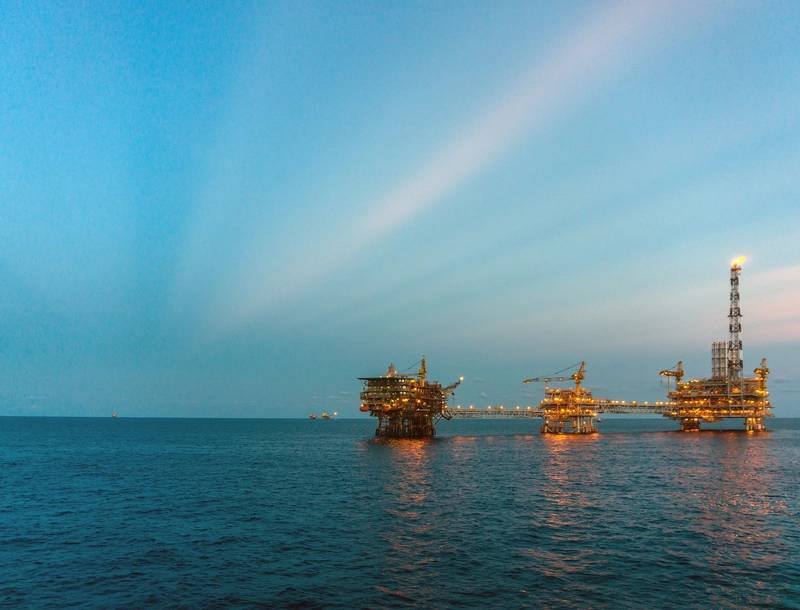
In the next few weeks, Saudi Arabia and its OPEC⁺ allies must take a delicate decision about whether to proceed with planned production increases from October, or postpone them because of an uncertain economic outlook.
The recent slides in front-month Brent futures prices, calendar spreads and refinery margins, amid concerns about the outlook for petroleum consumption, have dramatized the danger of getting it wrong.
Boosting production despite downward revisions to consumption growth and a continued output increases from rivals in the United States, Canada, Brazil and Guyana risks another accumulation of inventories and slump in prices.
But postponing risks conceding even more market share to western hemisphere rivals and tempting some OPEC⁺ members to break ranks and increase output unilaterally.
Planned output
Saudi Arabia and other OPEC⁺ members are enforcing three separate tranches of production cuts put in place since late 2022 to drain excess petroleum inventories and support prices.
All OPEC⁺ members are supposed to be participating in an official collective cut of 2 million barrels per day (b/d) agreed in October 2022 at a time of uncertainty about the economic and oil market outlook.
In addition, some members are meant to be enforcing an additional voluntary cut of 1.66 million b/d agreed in April 2023 and another voluntary cut of 2.2 million b/d agreed in November 2023 to support market stability.
In June 2024, ministers agreed to unwind the last of these voluntary cuts gradually - beginning in October 2024 and finishing by September 2025.
They also agreed to permit the United Arab Emirates to increase its output progressively by an extra 300,000 b/d - starting in January 2025 and also finishing by September 2025.
Under this plan, total OPEC⁺ production is scheduled to increase by roughly 180,000 b/d each month in the fourth quarter of 2024 and then by 210,000 b/d each month in the first nine months of 2025.
From the beginning, however, ministers emphasised the scheduled production increases were conditional and could be "paused or reversed subject to market conditions".
In the next few weeks, OPEC⁺ must decide whether to proceed, or modify or postpone these increases in the light of renewed concerns about the health of the global economy and oil demand.
Prices and spreads
Oil prices and spreads are currently about the same or weaker than they were when ministers agreed to the second set of voluntary cuts in November 2023.
Inflation-adjusted front-month Brent futures have averaged $79 per barrel so far in August 2024 (42nd percentile for all months since 2000) down from $84 in November 2023 (49th percentile).
Brent's six-month calendar spread has traded in an average backwardation of $2.50 this month (73rd percentile) somewhat stronger than $1.63 in November (57th percentile).
But inflation-adjusted refinery margins for making two barrels of gasoline and one barrel of distillate from U.S. crude have been $22 this month (43rd percentile) down from $24 in November (50th percentile).
With the exception of calendar spreads, which are moderately bullish, other price indicators are consistent with a rough balance between production and consumption at the moment.
Every one of these indicators has weakened materially since ministers made the provisional decision to increase production in June 2024.
Global inventories
Commercial stocks of crude and refined products in the advanced economies belonging to the Organization for Economic Cooperation and Development amounted to 2,761 million barrels at the end of June.
Stocks were 120 million barrels (-4% or -0.71 standard deviations) below the ten-year seasonal average and the deficit had almost doubled from 66 million (-2% or -0.44 standard deviations) in November 2023.
The deficit was the widest for almost two years since September 2022, according to data from the U.S. Energy Information Administration (EIA).
Since late June, U.S. commercial crude inventories have continued to decline further and faster than usual, adding to evidence of a tightening market.
U.S. crude inventories declined in seven of the eight weeks since June 21 by a total of 35 million barrels, according to the EIA.
U.S. crude inventories typically decline over July and August as refineries ramp up processing to meet elevated demand for gasoline during the summer vacation period.
But the seasonal depletion this year was the second-largest in the last decade after 2017, indicating global supplies likely continued to tighten at the start of the third quarter.
U.S. crude inventories were 9 million barrels (-2%) below the ten-year average on Aug. 16 down from a surplus 6 million barrels (+1%) on June 21.
Most of the depletion occurred at refineries and tank farms in Texas and Louisiana along the Gulf of Mexico, the most closely integrated with global oil markets.
Gulf Coast crude inventories declined in seven of the last eight weeks by a total of 25 million barrels, compared with an average depletion of 10 million over the previous decade.
Tactical considerations
By early August, portfolio investors had cut their combined position in crude and fuels to some of the lowest levels since 2013.
Hedge funds and other money managers held a combined position in the six most important futures and options contracts equivalent to just 226 million barrels (3rd percentile for all weeks since 2010) on Aug. 13.
The position was down from a recent high of 524 million barrels (40th percentile) at the start of July and 338 million barrels (14th percentile) in November 2023.
In recent weeks, fund managers have reduced their positions in response to increased uncertainty about the outlook for the major economies and global oil consumption.
It is unclear to what extent they have also reduced positions in anticipation OPEC⁺ would proceed with scheduled output increases, and therefore how much of the increase if any is already discounted in prices.
If the scheduled increase has been fully discounted, deferring some or all of it could spark a sharp rally in prices, accelerated and amplified as fund managers try to rebuild positions.
If it has not been discounted at all, proceeding risks sparking an even deeper fall in prices as funds sell more contracts.
Strategic choices
Looming over all these tactical considerations is the outlook for the global economy in the rest of 2024 and in 2025.
Global manufacturing and freight activity has flat-lined or weakened since April, which has resulted in petroleum consumption growing much more slowly than seemed likely at the start of the year.
In response to economic softening, it seems likely the U.S. Federal Reserve and other central banks will trim interest rates to stimulate consumer and business spending.
OPEC⁺ must decide whether to focus on the current softness (which favours a postponement) or the stimulus and anticipated recovery (which could lead to faster oil consumption and favour pressing ahead).
The most cautious approach would be to wait for the economy to accelerate and a rise in oil prices before proceeding, delaying some or all of them for a few months.
If the group is more confident in the economic and consumption outlook, it might go ahead anyway, daring to prove the hedge fund sceptics wrong
(Reuters - Editing by David Evans)