
Latest News
-
Oil prices fall as markets watch for clues about Gulf supplies
The oil prices lost some of their gains on Thursday despite the escalating attacks across the Gulf. Investors' attention shifted to the supply flow through the major chokepoints within the region. Brent futures dropped 96 cents or 1.06% to $89.78 per barrel as of 0418 GMT. U.S. West Texas Intermediate (WTI), crude oil, fell 64 cents or 0.76% to $83.82 per barrel. Brent and WTI both rose by 6.56% during the previous session, one of the biggest spikes in the Iran War. This was after the pause of hostilities that occurred on Tuesday following a 5% drop. The prices of gasoline and diesel rose after U.S. president Donald Trump warned on Wednesday that he would hit Iran "very, very hard"? following an Iranian missile strike on Tuesday against a U.S. military base in Jordan. In retaliation to drone attacks launched by Iraq against?Saudi oil sites, the U.S., Saudi Arabia and other countries attacked paramilitary groups in Iraq backed by Iran. This was the first time Saudi Arabia had publicly joined U.S. aerial strikes. U.S. Central Command reported that the U.S. carried out attacks against Iran for two hours on Wednesday. This?ended the lull of U.S. attacks on Iran which began at the weekend. "Trump's hit hard' rhetoric caused the price spike instantly but it looks like the market has fully priced in (that) and is considering the TACO possibility right now," Lin Ye, vice-president of commodity markets for oil at Rystad, said. She was referring to Trump Always Chickens out. Ye said that the market follows a pattern. Geopolitical headlines trigger rapid price spikes. However, these gains are usually short-lived because actual supply flows and simultaneous diplomatic efforts determine how long they persist. The price of crude oil is being controlled as it continues to flow from the Gulf region, despite the Strait of Hormuz almost shutting down. Iran shut down the waterway - through which a fifth or more of the global oil and natural gas flowed before - after the U.S. vs. Israel 'war' began on February 28. Rystad Energy estimates that about 13 million barrels of oil per day from the Gulf still reach markets. Even after the Iran-aligned Houthis of?Yemen imposed a Naval Blockade on Saudi Arabia on the Red Sea, July?20 disrupting shipping through the Bab el-Mandeb strait. Some cargoes have still flown to the markets, especially on tankers connected with China. While overall volumes have been reduced, oil continues to leak out through a variety of channels. Additional workarounds are also being explored. In a note, IG analyst Tony Sycamore stated that the 'longer this situation continues, the more these alternate routes and methods will erode Iran’s leverage over Strait of Hormuz. Reporting by Mohi N. Narayan and Colleen H. Howe, Beijing. Editing by Lincoln Feast & Christian Schmollinger.
-
Asian stocks stumble after a rout; Fed leaves markets guessing about rates
Asian stocks were choppy in trading on Thursday, after a week of market turmoil sparked by AI fears. A divided Federal Reserve remained steadfast on interest rates, leaving bond markets unsure about the next move. Brent futures fell below $90 a barrel after jumping by 7% the day before as fighting escalated in the Middle East. Data showed that tankers were still making their way out of this region despite continued strikes. Investors were confused by the Fed's split decision on whether it would raise rates to combat inflation. The yields on longer-dated U.S. Treasuries reached 19-year-highs. This week, Asian chipmakers were at the forefront of the news after a brutal sell-off in South Korean stocks wiped out more than $2 trillion from the market value. Investors are now worried about the return on their AI investments. Vasu Menon is the managing director for investment strategy at OCBC. He said that the markets would remain volatile in the short term due to the uncertainty surrounding U.S.?monetary policy and the steepening of Treasury yield curve. KOSPI fell 0.6% during choppy trades, and is on course for a weekly drop of 15%. This selloff prompted Finance Minister Koo Yun-cheol, to apologize for the introduction of leveraged ETFs for single stocks, and led to authorities announcing market stabilisation measures. MSCI's broadest Asia-Pacific share index outside Japan was flat, after swinging between gains and losses. Japan's Nikkei rose by 1.2%, but was still on track for a 3.7% decline in the entire week. Gina Kim, portfolio manager of emerging market equities for Nordea Asset Management in Singapore, said: "Given the fact that the fundamental thesis is intact, it does seem like there's a panicky, irrational element to the current sales." "I can't comment on the exact moment that panic will end, but I would look at margin balances for retail investors in Taiwan and Korea. Kim said that both are falling, but that we'd like to see a leveling off. Samsung Electronics, a chipmaker, said that its operating profit increased 19-fold in the second quarter to a new record. This helped boost investor sentiment. The earnings reports of Microsoft and Meta, two megacaps in the AI race, showed starkly different fortunes. Microsoft's shares rose after it assured investors that they would continue to generate cash until fiscal 2027, despite its heavy spending. Meta's stock dropped, however, following a 91% decline in free cash flow for the second quarter. Nasdaq Futures rose by 0.7% during Asian hours, while European Futures gained 0.3%. FED LOOK TO MARKETS AS CUES Kevin Warsh, Fed chair, spoke at a media conference after the meeting. He promised to control inflation. However, he did not give any indications of what steps the central banks might take. Warsh pointed out that bond yields have risen significantly since the Fed’s last policy meeting. This is a reflection of market expectations for higher interest rates. He welcomed the move, but stressed that it didn't obligate the Fed to confirm those expectations through policy actions. Blerina Uruci, T. Rowe Price's chief U.S. economics officer said: "To me, this is a way to say that the market has already done the Fed’s job." Warsh's hawkish tones will not suffice in the end to guarantee price stability. Markets will soon learn that Warsh and FOMC are not going to deliver on policy outcomes just because they have been priced by the market if there is no forward guidance. The confusion caused the yields of 30-year U.S. Bonds to fall from their peak in June 2007 (5.2273%) late in New York Trading. Fed funds futures now indicate that there is a 60% probability the Fed will?raise rates at its September meeting and have 33 basis points of tightening already priced in. Kerry Craig, global asset manager at J.P. Morgan Asset Management and J.P. Morgan Asset Management's strategist for global markets, said that the Fed will continue to be questioned about its credibility. The gap between the Fed’s words and actions could pose a problem for market pricing. A new chair is faced with a divided committee, and a bond markets that are beginning to doubt the central bank's determination. (Reporting from Ankur Banerjee, Rae Wee and Shri Navaratnam in Singapore. Editing by Christian Schmollinger & Shri Navaratnam).
-
Copper and base metals benefit from the softer dollar
The price of copper and other industrial metals jumped on Thursday as a result of a weaker dollar after the U.S. Federal Reserve announced that it would maintain interest rates at their current level. Benchmark three-month?copper?on London Metal Exchange was?up 0.7% to $13,676 per metric tonne by 0300 GMT. The Shanghai Futures Exchange's most traded copper contract was up 0.12% to 104,920 Yuan ($15.520.25) per ton. Dollar falls to one-week lows as markets digest a possible less hawkish Fed rate path after policymakers voted to keep rates stable on Wednesday. A cheaper dollar can boost ?greenback-denominated commodities by making them more affordable for buyers using other currencies, and higher interest rates can ?weigh on growth-dependent commodities by dampening economic activity. Kevin Warsh, the chair of the Federal Reserve Board, downplayed recent oil price increases and pledged to adhere to the central bank's target inflation rate. According to CME Group's FedWatch, the markets now price in a 58% probability of a rate hike in September. This is down from an 81% chance before the policy announcement. Red metal also benefited from the pressure on inventories, concerns about supply and good demand in China. Stocks of copper at LME registered warehouses On Wednesday, the number of available stock grew to 101,975 tonnes, after material was returned to warrant. This halted a downward trend that saw stocks drop by 4.83% from Wednesday to Wednesday. Aluminium remained in demand. It was up 0.35% at the LME, and 1.07% at the SHFE. The supply of 'light metal' has been affected by the ongoing fighting in the Middle East, a major producer, while the US continued to wage war. New strikes were launched against Iran. LME aluminium inventories The vast majority of the remaining stocks are of Russian origin which many traders avoid. Zinc gained 0.52% on the LME, while lead gained 0.34%. Nickel fell 0.27%, and tin grew by 0.46%. On the SHFE, tin rose 0.87%, while lead, zinc, and nickel all gained.
-
Asian stocks are choppy following a rout; Fed uncertainty on interest rates
Asian stocks were unable to find direction on Thursday as investors grew increasingly nervous about the AI trade. The Federal Reserve, divided, kept interest rates unchanged, which left bond markets wondering where rates will go. Brent futures fell below $90 per barrel after a jump of over 7% the day before as the 'fighting' in the Middle East intensified. However, data shows that tankers continue to leave the region despite continued drone and missile strikes. Investors were confused by the Fed's split decision on whether it would raise rates to combat inflation. The yields on longer-dated U.S. Treasuries reached 19-year-highs. This week, Asian chipmakers were the focus of attention after a sell-off in South Korean shares that erased more than $2 trillion from the country’s equity market. Investors worried about the returns on massive AI spending. The KOSPI gained 4% on Thursday in choppy trade, but it is now facing a 12% drop for the week. This prompted Finance Minister Koo Yon-cheol apologized for introducing single-stock leveraged exchange-traded funds. Gina Kim is the portfolio manager of emerging market equities for Nordea Asset Management, Singapore. She said that the current sales appear to have an "irrational and panic-like" element. "I can't comment on the exact moment that panic will end, but I would look at margin balances for both Taiwan and Korea retail investors. Kim said that both are falling, but we'd like to see a leveling off. Samsung Electronics, a chipmaker, said its operating profit increased 19-fold in the second quarter to a new record. This helped boost investor sentiment. MSCI's broadest Asia-Pacific share index outside Japan grew by over 1% during early trading. Japan's Nikkei rose 2%, but is still on track for a weekly drop of 3%. The earnings of U.S. megacaps Meta, and Microsoft highlighted the contrast in fortunes between the two companies who are able show their ability to generate money even while they invest to build out AI Infrastructure. Microsoft's shares rose after it said that it expected to continue generating cash until the fiscal year of 2027, which just began. Meta reported a 91% decline in its second-quarter cash flow and sent its stock down. Nasdaq Futures rose by 1.2% during Asian hours, while European Futures gained 0.3%. FED LOOK TO MARKETS AS CUES Kevin Warsh, Fed chair, spoke to the media after the meeting. He pledged to keep inflation in check but declined to give any direction on what actions would be required by central banks. Warsh pointed out that bond yields had risen since the Fed's most recent monetary policy meeting -- investors had priced in rate increases -- a move he welcomed, but said it didn't mean that central bank action was required to confirm it. The yields on 30-year U.S. Bonds were?at 5.2273%, after reaching their highest level since June 2007. Chris Weston is the head of Pepperstone's research. He said, "We heard a pretty?defiant... message about getting inflation back on target. However, there was very little substance as to how this would be achieved." Fed funds futures implied that the Fed will raise rates by around 60% at its next meeting in September. By year's end, 33 basis points would be priced in. Kerry Craig, global strategist at J.P. Morgan Asset Management and J.P. Morgan's Global Market Strategist, said that the Fed will continue to be questioned about its credibility. The gap between the Fed’s words and actions could pose a problem for market pricing. A new chair is faced with a divided committee, and a bond markets that are beginning to doubt the central bank's determination. (Reporting from Ankur Banerjee in Singapore and Rae Wee; Editing by Christian Schmollinger).
-
Ampol's Lytton quarter refining margin has more than tripled on the back of higher oil prices
Ampol, Australia's refinery, reported on Thursday a 255% increase in its second-quarter margins. This was attributed to a rise in oil prices due to the Middle East conflict as well as disruptions in shipping through the Strait of Hormuz. The top fuel retailer in the country said that its Lytton refinery margin?rose from $8.71 to $30.93 a barrel, compared with a year ago. Ampol shares rose by 3.4% to their highest level since April 2024. The higher refining margin highlights how geopolitical tensions - in the Middle East - boosted profitability during this period as concerns over fuel supply disruptions pushed up prices. Ampol stated that the closure of the Strait of Hormuz for a prolonged period of time has reduced crude oil supplies to Asian refiners. This in turn has led to a reduction of refinery activity, and a rise in refined fuel margins due to the product shortages. Fuel retailer said that its replacement cost operating profit EBIT for the first half of this year is expected to be around A$1.35billion ($965m), which is more than?triple what it was a year ago. The total volume of sales for the second quarter was 6,176 millions litres, up from a year ago's 6,304 million litres. Ampol has also reported a production impact of?about 300 million litres? (ML)?from planned maintenance?shutdowns between August andOctober.
-
Oil prices continue to fall as tankers continue to travel through Middle East conflict zones
Oil prices lost some of their gains as oil tankers 'continued their journey out of the Middle East despite the escalating tensions in the region, and the U.S. - Iran war spreading beyond the main fronts. Brent?futures dropped 79 cents or?0.9% to $87.30 per barrel at 0015 GMT. ?U.S. West Texas Intermediate crude (WTI), which is the most widely traded oil in the United States, fell 76 cents or 0.9% to $83.70 per barrel. Brent closed up 7.91% and WTI was up 6.56% during the previous session, in one of most dramatic spikes in the Iran War. This reversed a 5% drop on Tuesday following a pause of hostilities between the U.S. and Iran war. Preliminary shipping data revealed that 39 commodity ships transited the Bab 'el-Mandeb Strait on Tuesday. This was the highest number of vessels since July 19. Only a handful of ships crossed the Strait of Hormuz. While overall volumes have been reduced, oil is still leaking out of the area through multiple channels. Additional workarounds are also being explored. "The longer this situation continues, the more these alternate routes and methods will erode Iran’s leverage over the 'Strait of Hormuz", IG market analyst Tony Sycamore stated in a recent note. Strait of Hormuz is the most important oil shipping route in the world, and around a quarter of all global oil and natural gas flowed through it. The strait has been mostly blocked since the U.S. - Iran war began in February, despite diplomatic efforts to find a solution. A senior Iranian official stated on Wednesday that Iran had rejected an Omani proposal for regional joint management. U.S. and Saudi strikes?hit Iran backed paramilitary in Iraq on Tuesday, marking the first time Saudi publicly joined U.S. aerial strikes in response to drone attacks against Saudi oil targets launched from Iraq. It was the first time since the weekend that President Donald 'Trump called off an air campaign due to dwindling supplies of munitions. Iran said it also fired on U.S. base in Jordan, and hit three tankers that were transiting Strait of Hormuz via an unauthorised route. Saudi Arabia, according to sources on Wednesday, is seeking to form a coalition in order to protect Red Sea shipping against Houthi attacks. The Iran-backed 'group in Yemen' announced on July '20 that they would impose a maritime blockade on Saudi Arabia on the Red Sea. They also said they would expand attacks on oil tankers, opening a new front in Iran War, in a bid to disrupt shipping through the Bab el-Mandeb strait. This is the second-most important oil shipping route. (Reporting and editing by Lincoln Feast.
-
US Dollar stocks fall after Fed keeps rates unchanged
The dollar fell on Wednesday, U.S. stock prices extended their losses, and interest-rate-sensitive two-year Treasury yields declined after the Federal Reserve kept interest rates unchanged. Meanwhile, oil?prices soared in response to renewed attacks across Middle East. The ?Fed's decision was largely expected, but three of the 12 members ?of ?the policy-setting Federal Open Market Committee dissented from the move that left the benchmark interest rate in the 3.50%-3.75% range in favor of a quarter-percentage-point hike. After major airstrikes resumed, oil prices rose by about 8%. This raises the possibility of further disruptions in already strained global energy supplies. This rally was boosted by data from the industry showing a decline in U.S. oil inventories. Bill Merz is the head of capital market research and portfolio development at U.S. Bank Wealth Management, Minneapolis. Oil prices rose, and expectations were raised that the U.S. The central bank may raise rates this week despite the fact that inflation in June was lower than expected. JP Powers said that this was expected after the June inflation print showed progress. "But with each meeting, we are creating more uncertainty than ever before." Fed funds futures traders now price in 60% odds that a rate increase will occur in September. The bigger question is how much pressure they will have to exert in order to raise rates in September. The market is expecting the next rate hike in September, as the inflation rate is high and crude oil prices are surging. The Dow Jones Industrial Average dropped 2.2% to 51,594.86, while the S&P 500 fell 1.5% to 7,316.39, and the Nasdaq Composite declined 1.7% to 24,442.94. The MSCI All Country World Price Index dropped by 1.1%, to its lowest level in June 2011. The yield on the benchmark U.S. 10 year notes increased 7.53 basis to 4.679%. This is due to concerns over future inflation. The dollar index (which measures the greenback versus a basket including the yen, the euro and others) fell by 0.45%, while the euro rose by 0.54% to $1.1447. Worries about tech giants The global markets have been volatile in the past month, as investors questioned the sustainability of AI spending. This is due to signs that U.S. major companies continue to invest billions of dollars into AI at the expense free cash flow. Meta missed earnings on Wednesday and lowered its annual capital budget forecast range as the social media giant focuses on building data centers to increase its AI computing power. The focus is now on returns, not spending plans. Investors are looking for evidence that AI capex generates revenues right now and also strengthens the future growth prospects," said Gina Martin Adams. Gina Martin Adams is chief market strategist at HB Wealth. As China's competition intensifies in both the race to develop advanced chip technology and its cheaper AI models, investors are becoming more scrutinizing. Amazon.com and Apple are expected to release earnings this week. Even though SK Hynix reported a six-fold increase in its quarterly profit, it fell short of expectations. Its shares dropped 9.6%. South Korea's KOSPI fell 6% in a single day after falling more than 10% and reaching a new three-month low. South Korea will impose additional restrictions on leveraged single-stock exchange-traded fund (ETFs) in response. This includes a cap on an individual's investments of up to 20%. The pan-European STOXX 600 fell by 0.3% while the FTSEurofirst 300 index in Europe fell by 0.4%.
-
US stocks continue to fall after Fed maintains rates
?U.S. Stocks remained lower for the day. Interest-rate sensitive yields on 2-year Treasury notes reversed an earlier rise and the dollar fell?on Wednesday, after the Federal Reserve kept interest rates steady. This was a move which economists had expected. The ?decision to leave the benchmark interest rate in the 3.50%-3.75% range drew dissents from three of the 12 members of the policy-setting Federal Open Market Committee that "preferred" a quarter-percentage-point hike at this meeting. The recent rise in oil prices, due to the return of the war against Iran, had some expecting that the U.S. Central Bank would raise rates this week. The U.S. central bank is still raising rates despite the fact that June's inflation data was lower than expected. JP Powers is chief investment officer of TWA Wealth Partners. He said that this was expected after the June inflation print revealed some progress. "But with each meeting, we are now creating more uncertainty than ever before." The Dow Jones Industrial Average fell 1.55% to 51,928.87. The S&P 500 dropped 0.50% to 7391.31 while the Nasdaq Composite declined 0.37% to 24784.10. The yield on the interest rate-sensitive 2-year Treasury note was unchanged at 4.277%. The yield on the benchmark U.S. 10 year notes increased 3.67 basis points, to 4.641%. The dollar index (which measures the greenback in relation to a basket including the yen, the euro and other currencies) fell by?0.25%, falling from 101.17. The oil prices rose by around 7% as major airstrikes resumed across the Middle East. This quelled hopes of an imminent end to the?Iran war. The rally was exacerbated by data from the 'industry showing a decline in U.S. oil inventories. Bill Merz is the head of capital market research and portfolio development at U.S. Bank Wealth Management, Minneapolis. EARNINGS TO SET TONE Investors will also be waiting for a wave key earnings. Microsoft and Meta are due to report their results after the close of markets, followed by Amazon.com, and Apple later in this week. The global markets have been volatile this month, as investors question whether the AI spending boom will last. This is despite signs that U.S. major companies are continuing to invest billions in the technology and continue to drain cash from their free flow. "The focus is shifting away from budgets to return on investment." Investors are looking for evidence that AI capex generates revenues right now and also strengthens 'the future growth prospects,' said Gina Martin Adams, chief strategist at HB Wealth. As China's competition intensifies in both the race to develop advanced chip technology and its cheaper AI models, investors are paying more attention. The expectations have become so inflated that SK Hynix shares fell 9.61% despite a six-fold increase in its quarterly profit. South Korea's KOSPI - which has become emblematic for the wild swings of AI sentiment - fell almost 6% in a single day, after falling more than 10% and reaching a three month low. South Korea's finance ministry announced on Wednesday that it would introduce new restrictions on leveraged exchange-traded products, such as ETFs with single stocks. These will include a cap on individual investors who invest in these products. The pan-European STOXX 600 fell by 0.29% while Europe's FTSEurofirst 300 fell by 0.36%. The MSCI All Country World Price Index was down 0.45% in the last few days and had earlier dropped to its lowest level since 11 June.
Van Oord Expands its Trencher Fleet
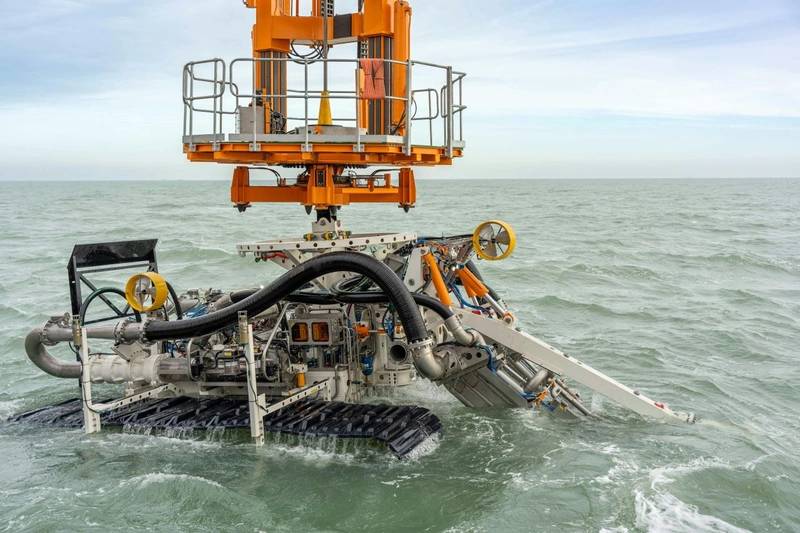
Dutch offshore installation firm Van Oord has introduced Jet-It as the latest unit to join its trencher fleet, following the completion of a test campaign in the North Sea.
Building on the expertise gained from its previous trenchers, Dig-It and Deep Dig-It, Van Oord has developed another trencher dubbed Jet-It.
With the addition of the latest unit, Van Oord now operates three trenchers, all designed for the purpose of cable burial.
While Dig-It and Deep Dig-It feature mechanical cutting and jetting technology, the Jet-It is equipped with jetting technology only.
According to Van Oord, it boasts an efficiently designed system which uses high-pressure water to fluidize the substrate and create a trench.
“Each trencher in our fleet has its own strengths, allowing us to tailor our approach to soil conditions, trench depth, and project requirements. With the arrival of Jet-It, we can offer even greater efficiency in subsea cable installation,” Vann Oord said on social media.
It is said to be ideally suited for the burial of inter-array and export cables in sandy and light clay soils.
With two high-pressure, frequency-driven water pumps, it is capable of trenching to depths of up to 3 meters. Multiple integrated sensors enable the trencher to operate at high speed with great precision.
Designed for fast mobilization, the Jet-It can be deployed on any vessel in a single lift, Van Oord said.