
Latest News
-
Documents show that multiple unions have threatened strikes at Barrick’s flagship Mali Gold Mine.
Documents seen on Friday show that unions representing the workers at Barrick Mining's Loulo-Gounkoto Gold Complex in Mali have issued a series strike notices to management. This raises the risk of disruptions of work starting September 28th at one of Mali’s largest gold producing operations. Unions representing the workers of SOMILO SA (which operates the mines in the complex) and GOUNKOTO SA (which operates the mines within the complex) filed the notices. Separate notices of strike were filed by Barrick’s contractor for catering and support staff, Food & Events Africa (FEA), and workers at Mali's mining regulatory and other mining administration offices. The unions announced that they would start a strike at the end of this month if their demands for overtime pay, reimbursements of mission expenses, and implementation of labor agreements are not met. Barrick and Mali’s Mines Ministry did not respond immediately to requests for comments. MALI TIGHTENS GRIPS ON MINING SECTOR Mali is one of Africa’s biggest gold producers. It has tightened its grip on mining as it seeks to increase revenues. After a dispute lasting almost a full year, the military-led government handed back operational control to Canadian miner Barrick. The mining process has begun again, but the ramp-up is gradual. According to Barrick, the complex will produce about 190,000.00 ounces in the first half 2026. This is well below the pre-dispute level. SOMILO SA (which operates the Loulo Mine) and GOUNKOTO SA (which operates the Gounkoto Mine, located nearby) have both called for four-day strike action from September 28 until October 1. They cited management's failures to respond to demands made in February. Separately unions representing FEA workers, who provide catering and support services in Loulo and Gounkoto have called five-day strike from September 28 to October 2. They accuse management of not honouring agreements on overtime pay and benefits. The unions that represent workers at Mali’s mining regulator, the National Directorate of Geology and Mines and other mining administration organizations have also called a 72-hour walkout from September 29 until October 1, over unpaid wages, allowances and bonuses in the mining sector. Mali is reopening its mining licensing regime following a two-year-long freeze, which was tied to the cleaning up of the mining cadastre. According to decrees, the authorities have renewed 14 exploration permits for gold and lithium since August 21. These permit holders include units of First Lithium as well as Cora Gold.
-
Germany to reduce energy tax in order to lower petrol prices
People with knowledge of the matter?said?on Friday that the German government had agreed to tax reductions which will reduce gasoline prices by EUR0.17 ($0.1952) per litre as a response to rising fuel prices. Sources who spoke under condition of anonymity said that the move included a?EUR0.14 reduction?in energy tax as well as an additional EUR0.03 reduction in sales tax. After Chancellor Friedrich Merz had promised to provide relief to consumers affected by the soaring gas prices, this decision was made. The decision came after extensive negotiations between the federal government and states governments on how to finance these cuts. Merz's approval rating has plummeted to new lows as a result of the Iran War, which has pushed benchmark oil prices above $100 per barrel. The national average daily price of a litre of E10 gas hit a new record earlier this week. Sunday, in the two most populous and rural areas of Germany, Mecklenburg and Western Pomerania (both heavily rural and sparsely-populated), Merz's conservative Christian Democrats are expected to be heavily punished. The results of the election will be closely monitored after the far right Alternative for Germany (AfD), party, came close to winning an absolute majority at a separate vote in the eastern state Saxony Anhalt on September 6th. In Mecklenburg/Western Pomerania the incumbent state premier,?Manuela Schwasig, has accused Merz of allowing fuel prices to?surge and called for a cap on fuel prices, based upon the Luxembourg model, which sets a maximum price across the country. The government reduced the energy tax in May and June this year. This effectively brought down the price of petrol and diesel by 17 cents a litre. There were calls for the reductions to be extended. The 'Bild' newspaper reported that Berlin was 'also working on an gasoline price cap which would be dependent on the price of oil, and plans are subject to discussions with the heads Germany’s regional states.
-
Gold prices rise to a one-week high and are expected to gain weekly on the back of lower oil prices
The gold price rose on Friday to its highest level in a week, as lower oil prices eased fears of inflationary pressures. Gold spot was up 1.2% to $4,390.11 an ounce at 2:14 pm EDT (1812 GMT) after reaching its highest level since the 11th of September earlier in that session. Bullion is up 1% this week. US gold futures closed 0.6% higher, at $4424.90. Oil has been the primary driver of inflation, so a reduction in oil prices will reduce the pressure on inflation. Investors in precious metals had anticipated a rate hike (in the US) and took short positions, hoping to profit from the expected drop in gold. These positions were 'rapidly unwound,' said Chris Gaffney. EverBank president of world markets. Brent crude oil prices continued to decline for the third consecutive session, as concerns about Saudi Arabian supply disruptions were tempered by fears of a widerning conflict in the Middle East. The lower oil prices have provided some relief to inflation fears, but the threat of a Middle East shock is still a major concern. Dollars have risen to their highest level in more than a week, making bullion priced in greenbacks expensive for those who hold other currencies. On Wednesday, the Federal Reserve increased interest rates by one quarter percentage point. It now ranges between 3.75% and 4%. The Fed also indicated that there would be more increases in the coming months. CME FedWatch shows that traders now expect a 55% probability of another rate hike in the US when central bankers next meet in October. Gold is traditionally seen as a hedge against inflation, but higher interest rates may reduce its appeal by making assets with a yield more attractive. The Bank of Japan also raised its interest rates to their highest level in 31 years and indicated that it was willing to continue to raise borrowing costs. Gold demand in India this week was subdued as buyers held back purchases in anticipation lower prices. Premiums in China, however, remained stable, supported by robust demand for investment. Gaffney said that gold is currently testing resistance near the $4,400-$4,440 range. A move above this level of resistance could "clear" a path for higher prices. Spot silver increased 2.3% at $66.70. Platinum gained 2.2% at $1,812.50. Palladium rose 1.5% to $1,310.20. All metals are headed for gains this week.
-
Dillard's will move its primary listing to Texas when the new stock exchange takes off
Dillard's announced on Friday that it will transfer its primary listings - from the NYSE - to the Texas Stock Exchange. The company joins a growing list of companies moving to this fledgling bourse aiming to compete with the two dominant 'US national' stock exchanges. Texas has been promoting itself as a corporate-friendly, lightly regulated alternative to US coastal states. TXSE supporters say that the new exchange will reflect this environment and counter the trend towards "more regulation and more taxation" at New York and other established financial hubs. In addition to the fashion retailer, regional lender Origin Bancorp and Texas?Capital Bancshares have announced that they will be moving their listings from the New York Stock Exchange or the Nasdaq respectively, to the TXSE. The three companies will begin trading on the new exchange?in October. TXSE touts 'Texas' friendly laws and regulations' to attract listings. However, in order to take advantage of the legal and regulatory protections offered by the state, the companies listed on the exchange must be Texas-incorporated. Exxon Mobil, Elon Musk’s Tesla, and SpaceX are among the major corporations that have relocated to Texas. They cite a state law from 2025 which strengthens corporate defenses in?shareholder suits. These companies have not, however, shifted their main stock listings to the TXSE. BlackRock, Citadel Securities, and Charles Schwab are among the Wall Street investors who have backed this new exchange. According to an SEC filing, Kelcy Warren is a Texas billionaire who is the executive chairman of Energy Transfer and also has a stake in TXSE Group. The pipeline operator announced earlier this month that it would be moving its primary listing to the TXSE in early October. It joined other companies, including USA Compression Partners, Sunoco LP and SunocoCorp LLC. The four companies all have their headquarters in Texas.
-
Treasury yields increase as central banks intensify their inflation battle
On Friday, global equity markets fell and Treasury yields increased as the markets neared the end of a turbulent period marked by the efforts of central banks around the globe to curb inflation. Wall Street's three main indexes fell, with real estate, materials and utilities stocks leading the declines. The Dow and S&P 500 were both on course to lose money for the week, but the Nasdaq would post a gain. The Dow Jones Industrial Average dropped 0.4%. The S&P 500 declined 0.2%. And the Nasdaq Composite decreased 0.1%. Stocks in Europe dropped 1.1%, and they were heading for a loss of 5% per week. MSCI's global index of stocks fell by 0.2%. This week the focus has been on monetary policy, because the Middle East war is approaching its seven-month mark and shows few signs of ending. The conflict keeps oil prices at $100 per barrel, fueling inflation fears. This has led to an increase in the yields on major government bond markets. Kieran Osborne is the chief investment officer of Mission Wealth. The Fed has clearly stated that it will likely raise rates again and central banks around the world are on a path to try to curb inflation. The Middle East situation does not appear to be going away anytime soon. CENTRAL BANK MOVES After the Bank of Japan raised interest rates to a record high of 1.25 percent, the yen fell and Japanese government bonds declined. Two board members dissented from the decision. The Japanese yen fell 0.6% to 156.88 dollars per dollar. The Japanese currency is up 1.8% this month due to expectations that the BOJ will increase rates faster and signs of early repatriation by Japanese investors. The BOJ's decision concludes a series of meetings at which central bankers have increased their hawkish rhetoric. The Federal Reserve raised interest rates on Wednesday for the first time in three years and adopted a more aggressive approach to inflation. This shook the yen which was on track for its worst performance against the US dollar for two years. It fell 2.6%. The Bank of England left the UK rates unchanged on Thursday, but warned that it might have to raise them if Iran's war continues. Last week, the European Central Bank also emphasized that it was necessary to tighten further as they raised their rates. Australia's top banker said on Friday that some of the inflation risks have materialized. The euro dropped 0.1% to $1.1455 The dollar index, which measures greenbacks against a basket including the yen, the euro and other currencies, increased by 0.1%. OIL PRICES RETREAT Brent crude futures dropped 0.1% to $104.67 following reports that China had asked Tehran to rein in the Houthis, after their military offensive over the last week. This, along with the hope that Gulf exporters may find alternate routes to ship their oil, has put crude 'futures' on course for a week-long decline. After another week of brutal selling, bond yields have risen. The 10-year U.S. Treasury Yield is now at its highest level since 2007. The last increase was 5.32 basis points to 4.947%. In the past week, yields in Britain and the Eurozone also reached multi-year highs. However, by Friday they were just a little higher. Spot gold increased 0.3% to $4.352.77 per ounce.
-
US factory production drops in August, but outlook is clouded by rising prices
The US factory output unexpectedly dropped in August. Higher oil prices and increasing interest rates may have offset some of the benefits of an artificial intelligence buildout. This will likely keep activity low for the remainder of the year. The Federal Reserve reported on Friday that output had declined after seven consecutive months of growth. US central bank raised interest rates for the first time since three years on Wednesday. It also warned that borrowing costs would continue to rise in the months to come. The oil prices are above $100 per barrel and there is no end to the US-Israeli conflict with Iran in sight. Samuel Tombs is the chief US economist for Pantheon Macroeconomics. He said: "Looking forward, we believe manufacturing output will increase a little more over the coming months, but it will not match the pace of the first half this year." Some manufacturers will likely find that the demand for their products softens when they pass higher energy prices on to consumers. The manufacturing output fell by 0.3% in August after a 0.2% increase that was not revised. The economists polled had predicted that production would rise by 0.3%. In August, output increased 0.9% year-over-year. According to some economists this modest growth indicates that the Trump administration’s aggressive trade policies have not rejuvenated the nation’s industrial base. The sector's production, which represents 9.4% of GDP, has seen a surge in recent months, as companies rushed to place orders in order to avoid shortages and higher prices due to the Middle East war. The production of durable manufactured goods dropped by 0.5% in August. The production of motor vehicles and their parts fell by 1.2% in the second consecutive month. Computers and peripheral equipment production fell by 1.4% but increased by 5.5% year-over-year. The production of communications equipment grew by 0.8%. Although semiconductors and electronic components?production?dipped by 0.1% from a year ago, this category increased 12.4%. The AI spending spree cushioned manufacturing import tariffs. Some economists still believe in a strong performance in manufacturing this year despite the recent sharp increase in US Treasury yields and the Fed's decision of raising its benchmark overnight rate by 25 basis point to 3.75%-4.00%. POSSIBLE TAILWIND FROM HIGHER Defense Spending Bernard Yaros is the lead U.S. economics at Oxford Economics. He said: "We are still expecting manufacturing activity to increase through next year. The AI infrastructure buildout plays a major role in our optimistic outlook." The demand for AI is still strong enough to withstand higher rates for longer and geopolitical risk. Increased defense spending is also a tailwind. Businesses that have been running out of inventory for five consecutive quarters could also boost manufacturing by restocking their inventories to meet a robust demand. However, some economists argue that this trend may be overshadowed due to rising costs. The production of nondurable goods was unchanged in August after a 0.4% drop. The rise in textile production, apparel and leather goods were offset by the decline in plastics and rubber products and in petroleum and coal. Christopher Rupkey is the chief economist of FWDBONDS. He said that the factory output has begun to show signs of a decline. This could get worse if geopolitical factors intensify, and diesel prices don't drop. The White House Economic officials have said that higher diesel prices could start to undermine the picture of a manufacturing renaissance painted by White House economists. Last month, mining production increased by 0.1%, matching July's increase. Oil and gas drilling increased by 0.9%, after increasing by 5.2% in the previous month. Utilities output jumped 1.8%, after a 0.5% increase in July. The overall industrial production remained unchanged in August, after gaining 0.2% during July. In August, industrial output increased 1.4% year-over-year. The capacity utilization rate for the industrial sector - a measure of how firms use their resources - remained unchanged in August at 76.3%. This is 3.1 points below the average for 1972-2025. The manufacturing sector's operating rate fell by 0.3 percentage points, to 75.7%. The operating rate is 2.5 percentage points lower than its long-term average. Carl Weinberg is the chief economist of High Frequency Economics. He said, "There's no evidence that tariffs are creating new jobs for manufacturing or industry."
-
Gold prices rise to a one-week high and are expected to gain weekly on the back of lower oil prices
Gold prices reached a new weekly high on Friday. They were also on course to achieve their first gain in four weeks, as lower oil prices eased fears of inflationary pressures. However, a stronger dollar tempered gains. Gold spot was up 0.3% to $4,352.39 an ounce at 11:17 am EDT (1517 GMT) after reaching its highest level since the 11th of September earlier in session. Bullion is up 0.2% this week. US gold futures slipped 0.2% lower to $4,390.30. Oil has been the primary driver of inflation, and a reduction in oil prices will reduce inflation pressures. Investors in precious metals had expected an increase in the (US) interest rate and took short positions, hoping to profit from the anticipated selloff of gold. These positions have been quickly unwound," Chris Gaffney said, president of EverBank's world markets. Brent crude oil prices continued to fall for a third consecutive session, as concerns about Saudi Arabian supply disruptions were tempered by a growing fear of a Middle East conflict. The lower oil prices have provided some relief to inflation fears, but the threat of a Middle East shock is still a major concern. Dollars have risen to their highest level in more than a week, which makes greenback bullion pricey for those who hold other currencies. On Wednesday, the Federal Reserve increased interest rates by one quarter point to a range of 3.75-4%. It also indicated that there would be more rate increases in the months ahead. According to the CME FedWatch tool, traders now expect a 58% probability of another rate hike in the US when central bankers next meet in October. Gold is often viewed as a hedge against inflation, but higher interest rates can make yield-bearing investments more appealing. The Bank of Japan also raised its interest rates, reaching a record high of 31 years. It signaled that it was prepared to continue pushing borrowing costs up. Gold demand in India remained subdued as buyers waited for lower prices to purchase, while premiums in China were stable, backed by a robust investment demand. Gaffney said that gold is currently facing resistance in the $4,400 to $4,440 area. A move above this level of resistance could open up a new path for higher prices. Spot silver increased 1.8% at $66.37. Platinum gained 1.7% at $1,798.30, and palladium rose 1% to $1,303.46. All metals are headed for gains this week.
-
US wants to expand uranium enrichment faster in order to avoid supply shortages
Two officials from the United States Department of Energy said that the United States wants suppliers to speed up development of uranium-enrichment capacity in order to avoid potential'shortages' as interest grows in nuclear energy. Several countries are looking to increase nuclear power, either by building new reactors or reactivating power plants that have been mothballed. This is to meet the rising demand for electricity, which is largely due to artificial intelligence. According to UxC, the industry consultancy, uranium prices have almost tripled in five years due to increased interest. James Danly, U.S. Deputy Energy Secretary, said at a nuclear summit in Paris co-hosted with the Organisation for Economic Co-operation and Development (OECD) in Paris: "Our goal is to resolve as many bottlenecks and restrictions as quickly as possible." "If we want to have this nuclear revolution, we won't be able do it without fuel." "We want as much capacity at home as possible as soon as possible," Danly said. FRANCE RELYS MORE THAN ANY OTHER LAND ON NUCLEAR POWER Nuclear power is still a controversial topic. Nuclear power can generate huge amounts of energy without adding carbon to the atmosphere to warm it, but its waste is difficult to manage and costs are high. The extreme heat in?Europe this summer led to nuclear plant shutdowns, as they could not be cooled. France is the only country in the world that relies so heavily on nuclear energy to supply 70% of its electricity. The World Nuclear Association (part of the OECD) has revealed that the US is not only the world's largest nuclear energy producer, but also the one that supplies the majority of its electricity. The U.S. opened its last commercial nuclear power plant in 2024, after years of delay and billions of dollars over budget. The U.S. plans to restart nuclear plants that were shut down, but none have been online yet. The uranium used in large conventional reactors has a lower enrichment than that required to make weapons. Michael Goff is the US principal assistant secretary for the Department of Energy. He said that Washington wants to encourage the companies which enrich uranium in order to fuel nuclear power plants to increase their capacity to enrich as soon as possible. This includes Orano?of France and US companies such as?Centrus?and General Matter?. The use of milestone-based contracting is one way to encourage this. Goff stated that around $900 million of government funding for new facilities are tied to the companies meeting development deadlines. Goff stated that "one of the most important things we did was to ensure that Russia would not be able to re-enter the fuel service industry in our country." The United States has prohibited the import of Russian-enriched Uranium since 2022 when Russia began its war against Ukraine. However, companies may obtain temporary waivers in order to avoid shortages. Goff stated that there are no plans to extend the waiver system, which expires in 2028.
Iberdrola gets Portugese nod for Wind Farm Start
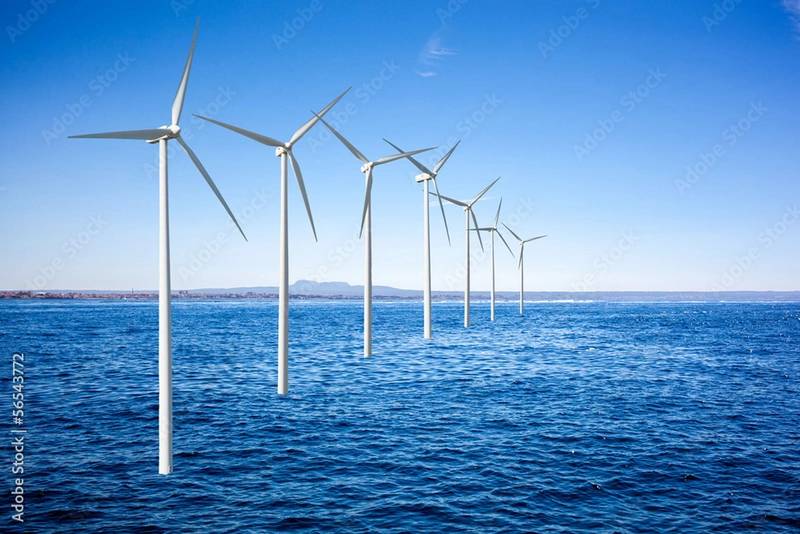
Iberdrola has received a production license from the Portuguese Directorate-General for Energy and Geology of Portugal (DGEG), taking another step towards the construction of the largest wind farm in Portugal.
Located in the districts of Vila Real and Braga, in northern Portugal, with a total investment of around €350 million, this project reinforces Iberdrola's commitment to environmental goals, being the first to combine wind and hydro energy. This implies sharing of the connection point and the evacuation line of electricity produced, which will include an expansion of the substation, already foreseen in the initial design of the project.
With an installed capacity of 274 MW and a production capacity of 601 GWh per year, equivalent to the consumption of 128,000 homes, the infrastructure will be integrated into the Tâmega Electroproduction System (SET). Taking advantage of the existing connection point in Ribeira de Pena, the project will sign a long-term supply contract, also known as PPA – Power Purchase Agreement.
The project, formed by the Tâmega Norte and Tâmega Sul wind farms, is part of the agreement signed with the Norwegian sovereign wealth fund, managed by Norges Bank Investment Management. The incorporation of wind energy into the SET will increase the contribution of clean, competitive and low-cost energy to the Portuguese electricity system, ensuring the supply of the maximum amount of green energy, originally authorized for each project, for as long as possible.
The reduction in CO2 emissions comes not only from the production of 100% green energy but also from the construction of the project, which, by sharing its location with the SET, significantly reduces the environmental impact by using existent infrastructures, roads and facilities.
In addition, at peak times, the creation of around 700 jobs (in the areas of civil engineering, turbine assembly, substations and transmission lines), will strengthen the country's energy independence, representing a significant contribution to achieving the goals of the National Energy and Climate Plan.
Alejandra Reyna, Managing Director of Iberdrola Renewables Portugal: "We have taken an important step towards starting the construction of the largest wind farm, and the first hybridisation project to combine wind and hydro energy, in Portugal. This project is further evidence of Iberdrola's commitment to promoting the energy transition in Portugal, where it has already invested more than 2 billion euros in renewable energies over the last 20 years. The commitment to electrification, through renewable energies and the focus on innovation show our commitment to building a sustainable, reliable and affordable future."
Advanced technology and local economic impact
The wind project has been awarded to Vestas and will include the installation of 38 state-of-the-art wind turbines, the Vestas Enventus V172, with a unit capacity of 7.2 MW and a cube height of 114 metres.
The alternation between both technologies will significantly reduce the dependence on intermittent environmental conditions and the limitation that comes from the lack of resources such as wind, promoting greater stability in the production of renewable energy and optimization of infrastructure.
As in all of Iberdrola's renewable energy projects in Portugal, the focus on local suppliers will be central: companies such as CJR and Conduril-Socorpena will also be involved in the development of the basic infrastructure, while Painhas and Proef will contribute to the construction of the substation and power lines, which will come into action as early as 2025.
Innovative environmental measures
Preservation of the ecosystem is a highly important component in the construction of this type of project. Iberdrola will implement continuous monitoring of ecological systems during construction, including birdlife, flora, habitats and archaeology, with a view to mitigating possible impacts, identifying new minimizing solutions and deepening knowledge of local biodiversity.
Tâmega Power Plant System
The Tâmega Power Plant is one of the largest hydroelectric projects in Europe in the last 25 years. With a total investment of more than 1,500 million euros, it consists of three plants: the Alto Tâmega Hydroelectric Power Plant, with an installed capacity of 160 MW, the Gouvães Pumped Storage Plant (880 MW) and the Daivões Power Plant (118 MW), the latter two in operation since 2022.
The three plants add up to an installed capacity of 1,158 MW, which represents an increase of 6% in the total installed electrical power in the country. Thus, the complex has the capacity to produce up to 1,766 GWh per year, enough to meet the energy needs of neighboring municipalities, as well as the cities of Braga and Guimarães (440 thousand homes). In addition, this renewable infrastructure has a storage capacity of 40 million kWh, equivalent to the energy consumed by 11 million people 24 hours a day in their homes.
The SET makes it possible to eliminate the emission of 1.2 million tons of CO2 annually, the equivalent of removing approximately 260 thousand combustion cars from the roads per year. It also allows diversifying production sources, avoiding the import of more than 160 thousand tons of oil per year. The positive impact on the region makes it possible to foster economic activity and employment through the creation of up to 3,500 direct jobs and 10,000 indirect jobs throughout its construction, 20% of which come from neighboring municipalities through more than 100 suppliers, 75 of them Portuguese.